
Concrete Doesn't Sink
Without a Reason.
We Find It. Fix It. It Stays Fixed.
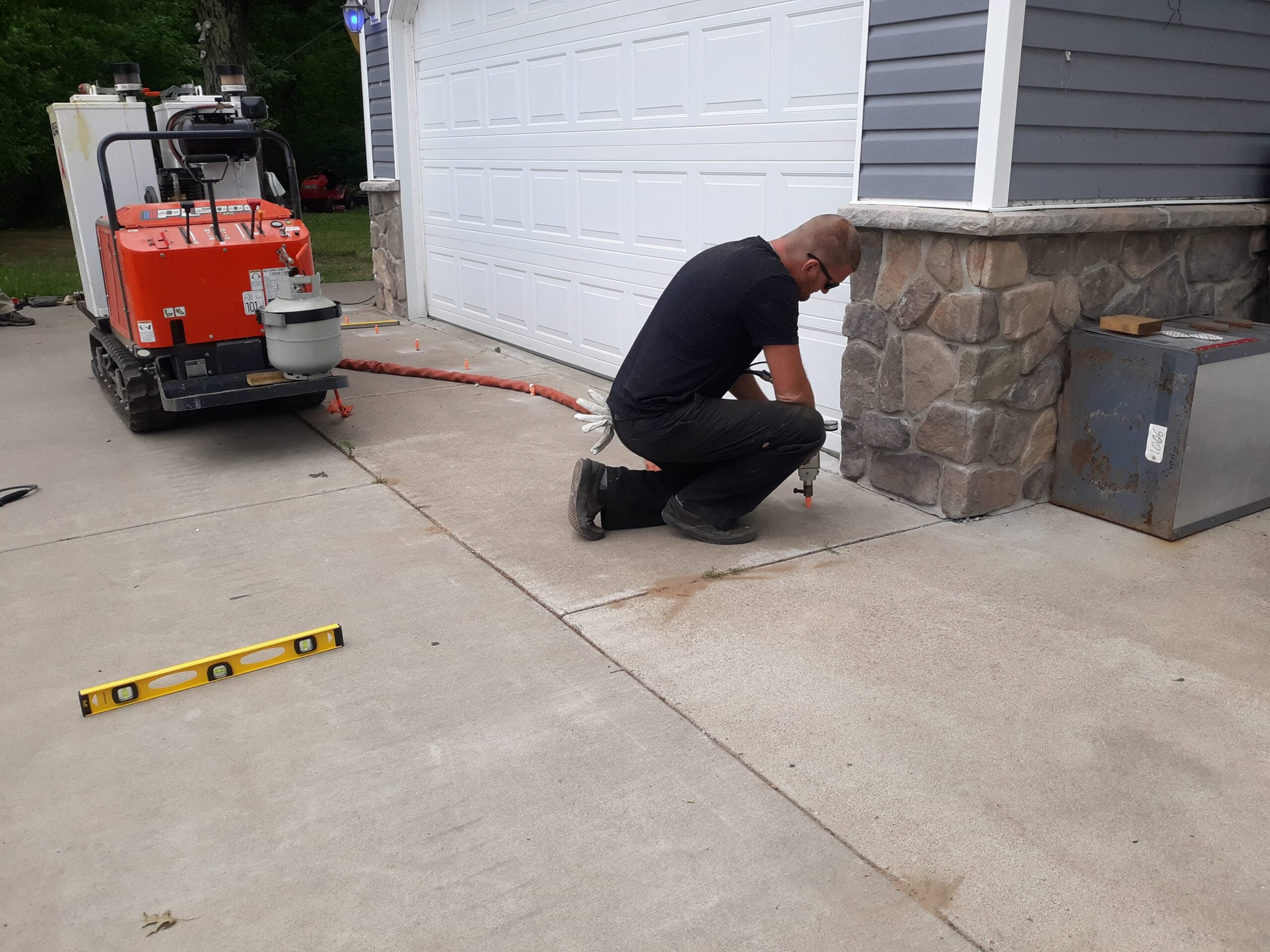
Most leveling crews lift the slab and leave. We diagnose the void beneath it, stabilize the failing soil, then lift with precision, so your concrete stays level through every brutal Upper Midwest winter.
✓ Free estimate ✓ No obligation ✓ No pressure ✓ Same-day response
What Upper Midwest Property Owners Say About TCS
The Problem Isn't the Concrete.
It's What's Underneath It.
Sinking slabs are a symptom. The real culprit is always subsurface, eroded soil, collapsed voids, and moisture pathways that widen with every freeze-thaw cycle. Lift the slab without fixing those, and you're back to square one by next spring.
Hidden Voids Form Underground
Water erodes the soil beneath slabs over time, creating hollow air pockets. The concrete above has nothing solid to sit on, and eventually drops. Those voids keep growing after every rain and every thaw.
Northern Freeze-Thaw is Brutal
In Minnesota, North Dakota, and Wisconsin, frost penetrates 4+ feet into the ground. Soil expands, contracts, and shifts every season, and any crack in the surface becomes a new drainage channel straight to the void below.
Most Repairs Only Last a Season
A crew that lifts the slab without filling the void underneath is just delaying the problem. The concrete settles again, often lower than before, because the underlying soil failure was never corrected.
Water is Always the Trigger
Snowmelt, poor drainage, and utility trenches create consistent water migration paths under your slab. Until those paths are sealed and the soil is stabilized, the sinking cycle continues, every single year.
If Your Contractor Doesn't Assess for Voids First, You're Paying for a Temporary Fix.
TCS was built on one principle: diagnosis first, void assessment second, lift third. We identify every subsurface void and soil failure point before a single drill hole is made. That's why our lifts hold through two, three, and four freeze-thaw cycles when other crews' work settles by October.
How We Lift Concrete That Actually Stays Lifted
Every TCS project follows the same rigorous sequence, no shortcuts, no guesswork.
Diagnose the Root Cause
We assess the slab, map subsurface voids, and evaluate soil stability and water infiltration paths. No lift begins until we understand exactly what caused the settlement.
Step 1: Free AssessmentFill Voids & Stabilize Soil
High-density polyurethane foam is injected through penny-sized holes directly into the void zones, completely filling every hollow, compressing loose soil, and cutting off water migration paths permanently.
Step 2: The Foundation FixPrecision Lift to Grade
With the subsurface stable, the slab is raised back to its original position with millimeter-level control. Foam cures in 15 minutes. Holes are patched. You're driving on it the same day.
Step 3: Permanent ResultsReady to see if foam lifting is right for your project? Start with a free, no-pressure estimate.
Get My Free EstimateConcrete Lifting Services Across the Upper Midwest
 For Homeowners
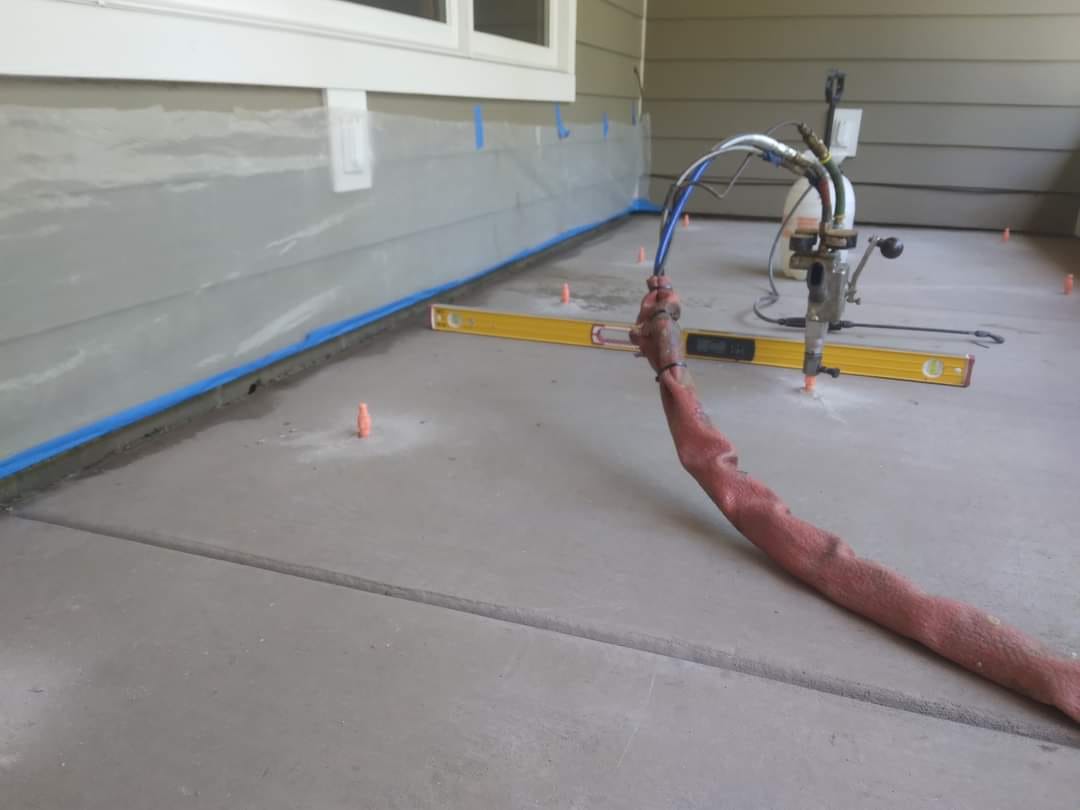
Residential Concrete Lifting
A sunken driveway, settled garage floor, or tilted sidewalk panel isn't just an eyesore, it's a trip hazard, a drainage failure, and a sign that the soil beneath is actively moving. Polyurethane foam injection addresses all three through small, penny-sized holes that leave almost no trace. Cures in minutes. Drive on it the same afternoon.
- Driveways, garage floors, and aprons
- Porches, patios, and pool decks
- Sidewalks and walkways
- Vastly superior to mudjacking, lighter, faster, longer-lasting
 For Business
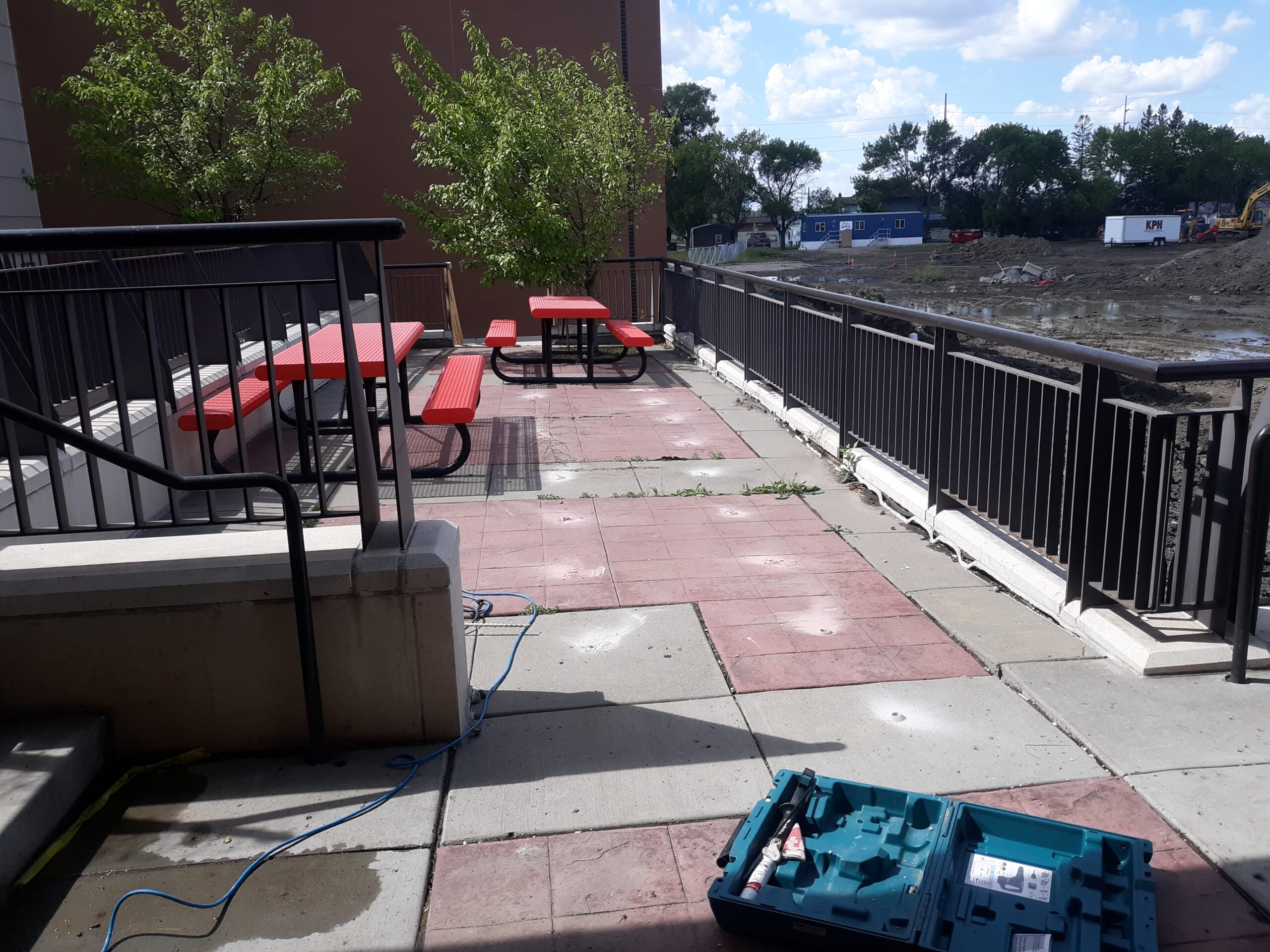
Commercial Concrete Lifting
Settled warehouse floors, uneven loading docks, and sinking commercial parking areas create serious liability exposure and operational disruption. TCS runs multiple high-output rigs with full material capacity, so large-scale commercial lifts are completed on the schedule they were planned around, with zero mid-job supply delays.
- Warehouse and industrial floors
- Loading dock approaches and transitions
- Parking lots and commercial driveways
- Multi-rig capacity, no project too large
 Infrastructure
Highway and Infrastructure Lifting
TCS's background in highway lifting and critical infrastructure undersealing is the foundation everything else is built on. That means millimeter-level lift control across massive slab areas, consistent foam density at high injection volume, and void filling that addresses subsurface erosion at true infrastructure scale.
- Highway panel lifting and undersealing
- Bridge approach slab stabilization
- Airport and municipal infrastructure
- Every residential job gets the same highway-grade standard
What We Lift, Level & Stabilize
🎯 Precision Foam Slab Leveling
Real-time response monitoring during injection ensures exact lift without overcorrection or induced cracking, a skill built from highway-grade tolerances.
🕳️ Void Filling & Soil Stabilization
We pressure-fill every identified void and seal moisture pathways, treating the cause, not just the symptom. That's what makes lifts last.
🚗 Driveway & Approach Leveling
Transition zones between driveways and streets are high-risk erosion points. We target those critical zones to stop the settlement cycle for good.
🚶 Sidewalk & Walkway Leveling
Non-invasive lift restores safe, ADA-compliant walking surfaces the same day, no concrete demolition, no debris, no days-long closures.
Polyurethane Foam Lifting
vs. Traditional Mudjacking
| ⚡ Polyurethane Foam (TCS Method) |
Mudjacking | |
|---|---|---|
| Material Weight | ~2 lbs/ft³, featherlight | 100+ lbs/ft³, adds load |
| Cure / Dry Time | 15–30 minutes | 24–48 hours |
| Same-Day Use | ✓ Yes | ✗ No |
| Drill Hole Size | Penny-sized (~5/8") | Golf ball-sized (1.5"+) |
| Void Filling | Complete, expands to fill all cavities | Partial, heavy slurry misses voids |
| Freeze-Thaw Performance | Excellent, waterproof, doesn't erode | Poor, slurry washes out over time |
| Expected Lifespan | 20+ years | 5–10 years |
| Soil Stabilization | ✓ Yes, compresses loose soil | ✗ No |
| Water Resistance | ✓ Fully waterproof | ✗ Water-soluble over time |
Mudjacking can still be a solution in specific situations, we'll always recommend what's right for your project, not what's easiest for us.
Find Out Which Method You Need, FreeWhy Upper Midwest Property Owners
Trust Technical Construction Solutions
Highway-Grade Precision on Every Job
TCS was built from highway lifting and infrastructure undersealing, the most demanding tolerance environment in concrete work. That exacting standard applies to every residential driveway and commercial floor we touch, not just state contracts.
Diagnosis-First, Always
Every project begins with a full void and soil assessment. We don't lift until we understand what caused the settlement. That single step is what separates a permanent repair from a repair you'll be redoing in two years.
Foam Technology Is Our Foundation
TCS was founded specifically around advanced polyurethane foam application, not as an add-on service but as the entire business. That depth of expertise shows in how precisely foam is mixed, injected, and monitored on every single lift.
Engineered for Northern Winters
Every technique we use accounts for the Upper Midwest's brutal freeze-thaw cycles, 4-foot frost penetration, and spring snowmelt infiltration patterns. Lifts are designed to survive the seasons here, not just survive inspection day.
Multi-Rig Capacity: No Mid-Job Failures
We operate multiple dedicated high-output rigs with full material transport capacity. Large-scale commercial projects don't get delayed by supply runs or equipment limits. The job finishes on the timeline it was scoped around.
Honest Estimates. No Hidden Gaps.
Every estimate reflects the full scope: void assessment, correct foam volume, soil stabilization. No padding, no underbidding to win the job. What you're quoted is what the project actually requires to stay fixed long-term.
Our Primary Service Hubs
🏔️ Minnesota Operations
🌾 North Dakota Operations
🌲 Wisconsin, South Dakota & Iowa
Frequently Asked Questions
How long does the foam lifting process take?
Most residential projects, a driveway, sidewalk panel, or patio, are completed in 2 to 4 hours, including diagnosis, void filling, and the lift itself. Larger commercial projects may take a full day or multiple days depending on slab area and void volume. We give you a project-specific timeline during the free estimate so there are no surprises.
How soon can I drive or walk on my concrete after lifting?
Polyurethane foam cures fully within 15 to 30 minutes. In almost every case, driveways are ready for vehicle traffic the same day, often within the hour after we finish. This is one of the largest practical advantages over mudjacking, which requires 24–48 hours of curing before use.
What actually causes concrete to sink in the first place?
Concrete sinks when the soil beneath it loses its ability to support the weight above. The primary causes in the Upper Midwest are: water erosion that creates subsurface voids, freeze-thaw cycling that shifts and displaces soil over multiple seasons, poorly compacted fill soil (common near utility trenches and new construction), and organic soil decomposition beneath older slabs. The slab itself is almost never the problem, it's always what's underneath.
Is polyurethane foam lifting better than mudjacking?
For the vast majority of projects, and especially in the Upper Midwest, yes, significantly. Foam is lighter (won't add problematic load to weak soil), cures in minutes vs. 24–48 hours, fills voids completely (mudjacking's heavy slurry misses small cavities), and is fully waterproof so it won't erode or wash out with freeze-thaw cycles. It also lasts 20+ years vs. 5–10 for mudjacking. The main scenario where mudjacking may be considered is deep, large-volume void filling at commercial scale, and we'll tell you honestly if that applies to your project.
How do I know if there are voids under my concrete?
Common signs of subsurface voids include: a hollow or drum-like sound when you tap the slab, visible cracks running parallel to the edge of the slab, sections that have settled unevenly or at an angle, areas where water pools after rain or snowmelt, and concrete that has settled after a previous repair. If you're not sure, the free estimate includes a void assessment, we'll tell you exactly what's underneath before any work is quoted or started.
Will the drill holes be visible after the job is done?
The injection holes are approximately 5/8" in diameter, roughly the size of a penny. After injection, each hole is filled and patched with a color-matched concrete patch. They're noticeable up close if you're looking for them, but from normal viewing distance they blend into the surface. Most homeowners describe the result as "barely visible." The finished surface is a significant improvement over the uneven, cracked slab you started with.
Do you service rural areas or just major cities?
We serve both urban and rural communities across MN, ND, SD, WI, and IA. Our equipment capacity allows efficient crew mobilization beyond major metro areas. If you're outside a listed city hub, call us at (218) 820-9340, coverage confirmation typically takes one quick conversation.
How much does concrete lifting cost?
Cost depends on the number of panels being lifted, the volume of void fill required, and site-specific conditions like access and slab thickness. Foam lifting is consistently less expensive than concrete replacement, typically 25%–50% of the replacement cost. The only way to give you an accurate number is a site assessment, which is why the estimate is free and carries zero obligation. We'd rather give you an honest price on-site than quote low and surprise you later.
Have a question that's not listed here? Call us directly, we answer questions directly, without pressure.
Don't Wait Until
the Concrete Cracks.
Every freeze-thaw cycle makes subsurface voids larger. The longer a slab sits on failing soil, the more it shifts, and the more a repair costs. A free estimate takes one conversation. We'll tell you exactly what's underneath and what the right fix looks like.
✓ No obligation · ✓ No pressure · ✓ Same-day response · ✓ Serving MN · ND · SD · WI · IA