
Top-Rated Spray Foam
Insulation in ND & MN
Not a general contractor with insulation on the side. A specialized spray foam operation built around foam technology from day one, with the equipment, experience, and capacity to handle residential, commercial, and agricultural projects across the Upper Midwest.
✓ Free estimate ✓ No obligation ✓ No pressure ✓ Same-day response
What Upper Midwest Property Owners Say About TCS
You Had It Insulated.
So Why Are You Still Losing Heat?
It almost always traces back to the same source: the wrong system went into the wrong application, or the contractor who did the work lacked the equipment and expertise to execute it consistently. In the Upper Midwest, that mistake shows up fast.
Single-Rig Operations Miss Coverage
A one-rig operation stretched across too many jobs applies foam at inconsistent pressure and temperature. This produces variable coverage that leaves thermal gaps you cannot see until the first cold season reveals them in your energy bill.
Northern Winters Expose Every Gap
Minnesota, North Dakota, and Wisconsin winters push sub-zero temperatures for weeks at a time. Fiberglass batts compress and shift. Blown-in settles and loses R-value. Every gap in the building envelope becomes a direct line for heat loss and moisture infiltration.
Wrong System for the Application
Open-cell foam in a rim joist, blown-in in an agricultural metal building, batt insulation in a crawl space, these mismatches are extremely common and extremely costly. Selecting the right foam system for the specific substrate and climate conditions is not optional.
Moisture Gets In Where Foam Doesn't
Penetrations, rim joists, and transitions are the spots most crews skip or rush. Those gaps are where moisture infiltrates, condenses, and begins degrading the structure from inside the wall assembly, invisibly, for years before the damage surfaces.
A general contractor managing a large commercial build outside Sioux Falls had worked with three different insulation crews across a multi-building project. Each crew completed its section, but building envelope performance was highly inconsistent. Some sections held heat well. Others did not.
The issue was not the design. Each crew had brought different equipment capacity and different application discipline to the exact same specification. When TCS came in for a remediation assessment, two of the three sections needed supplemental sealing at rim joists and penetrations that should have been completely addressed in the original application.
That Inconsistency Is What Happens When Insulation Is Treated as a Commodity.
TCS was built around one standard: the right foam system, applied at the right pressure and temperature, with zero skipped steps at penetrations, rim joists, or transitions. That standard does not change based on project size, schedule pressure, or how many jobs are on the board that week.
How TCS Delivers Insulation That Actually Performs
Every project follows the same rigorous sequence. No shortcuts. No skipped penetrations. No guesswork.
Free Site Assessment
We assess the building, identify thermal gaps, moisture infiltration points, and substrate conditions. The right foam system is selected before a single drum is opened, not after the rig is already running.
Step 1: Diagnose FirstRig Calibration and System Setup
Material temperature, spray pressure, and ratio are calibrated precisely for the specific foam system and site conditions. This is where single-rig operations lose consistency. TCS holds this standard across all three rigs.
Step 2: Calibrate to SpecPrecision Application, Zero Gaps
Foam is applied at the correct thickness from the first stud to the last rafter, sealing every penetration, rim joist, and transition. No sections skipped. No shortcuts at the hard-to-reach spots where air infiltration is highest.
Step 3: Full Envelope SealedReady to see which foam system is right for your project? Start with a free, no-pressure site assessment.
Get My Free EstimateExpert Spray Foam Insulation Services Across the Upper Midwest
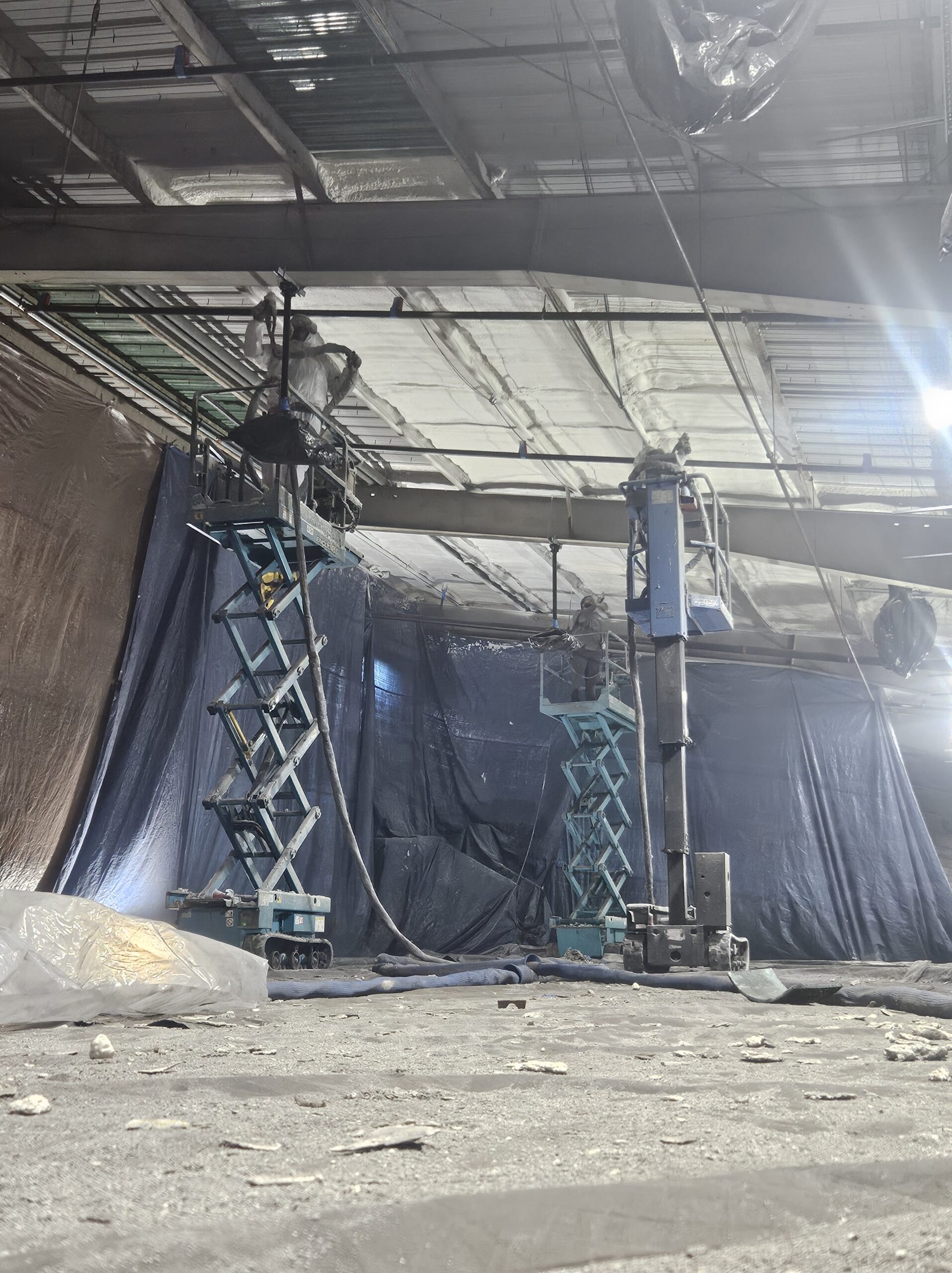
 For Homeowners
Residential Spray Foam Insulation
Closed-cell spray foam is the highest-performance insulation system available for stopping heat loss, blocking moisture infiltration, and reducing energy costs year-round. In a climate where temperatures push well below zero for weeks at a time, the air-tight seal spray foam creates is not a premium option. It is the performance standard that older insulation types cannot match.
Fiberglass batts compress and shift over time. Blown-in settles and loses R-value in the cavities where air movement is highest. Spray foam expands on contact and bonds permanently to the substrate, sealing every gap, crack, and void in a single application.
- Attics, rim joists, and basement walls
- Crawl spaces and under-slab applications
- Lake cabins, retrofits, and new construction
- Right foam system for each specific application
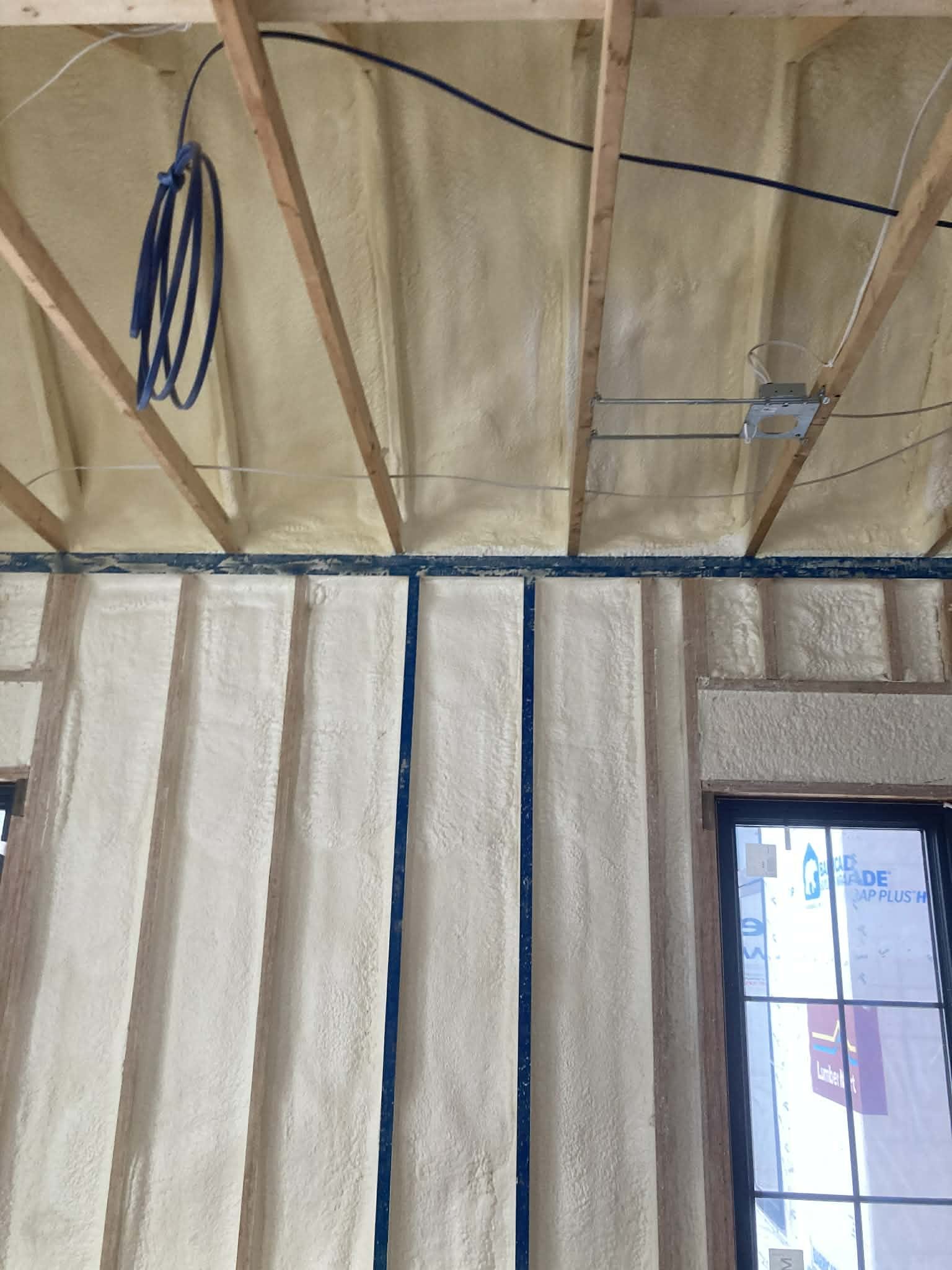
 For Business
Commercial Spray Foam Insulation
Large commercial projects require more than good foam. They require an insulation operation with the equipment capacity to deliver consistent coverage across large building volumes without the production delays that single-rig operations create on sprawling jobs. TCS runs three dedicated spray foam rigs and a 44-foot commercial trailer that can transport ten sets of foam, multiple scissor lifts, and large-scale equipment in a single mobilization.
For general contractors and facility managers managing construction timelines across Midwest states, that operational capacity means the insulation phase never becomes the variable that stalls the schedule.
- Manufacturing plants, warehouses, and retail
- Multi-building commercial developments
- Consistent coverage across large footprints
- Three rigs, zero mid-job supply interruptions
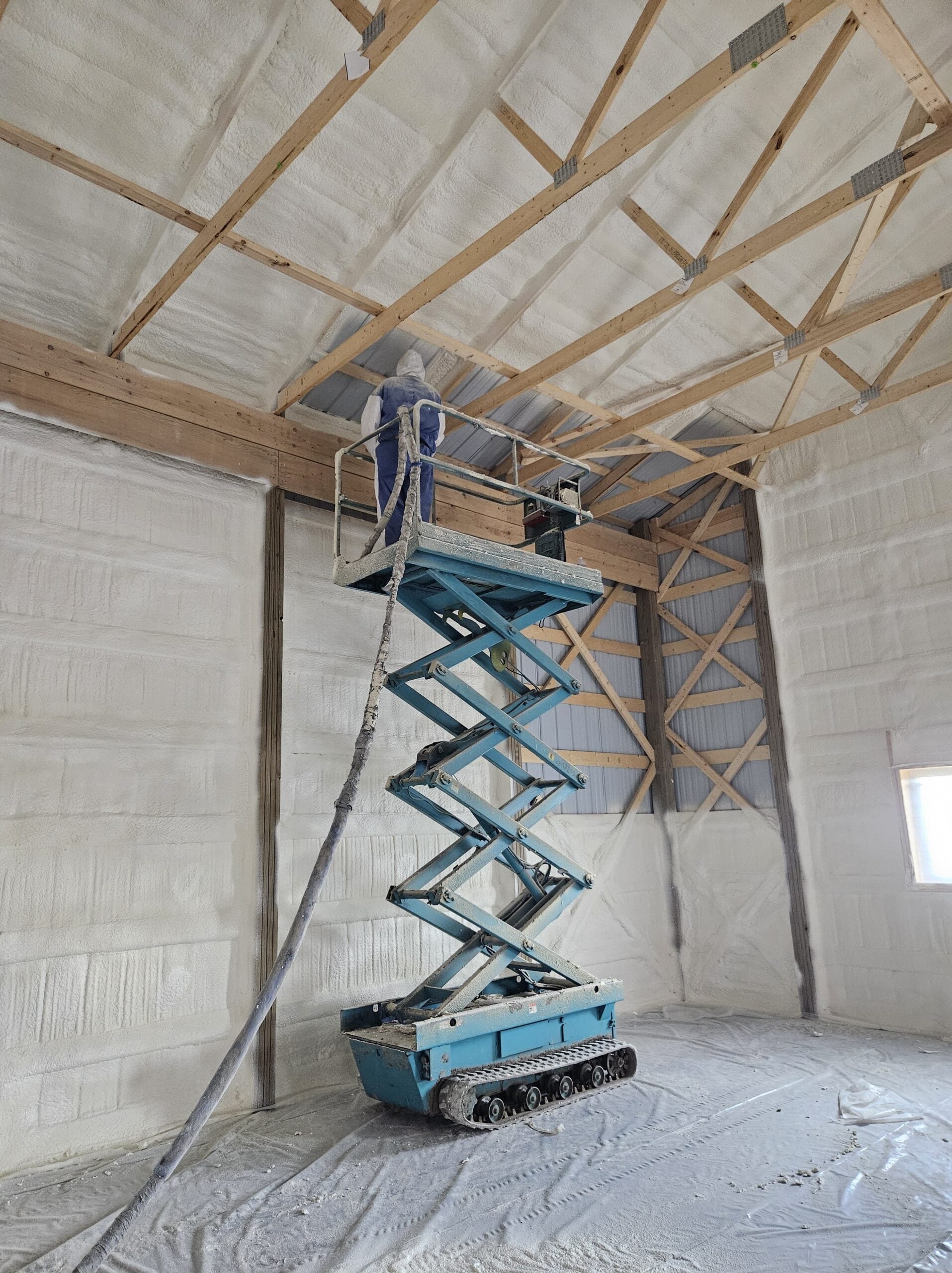
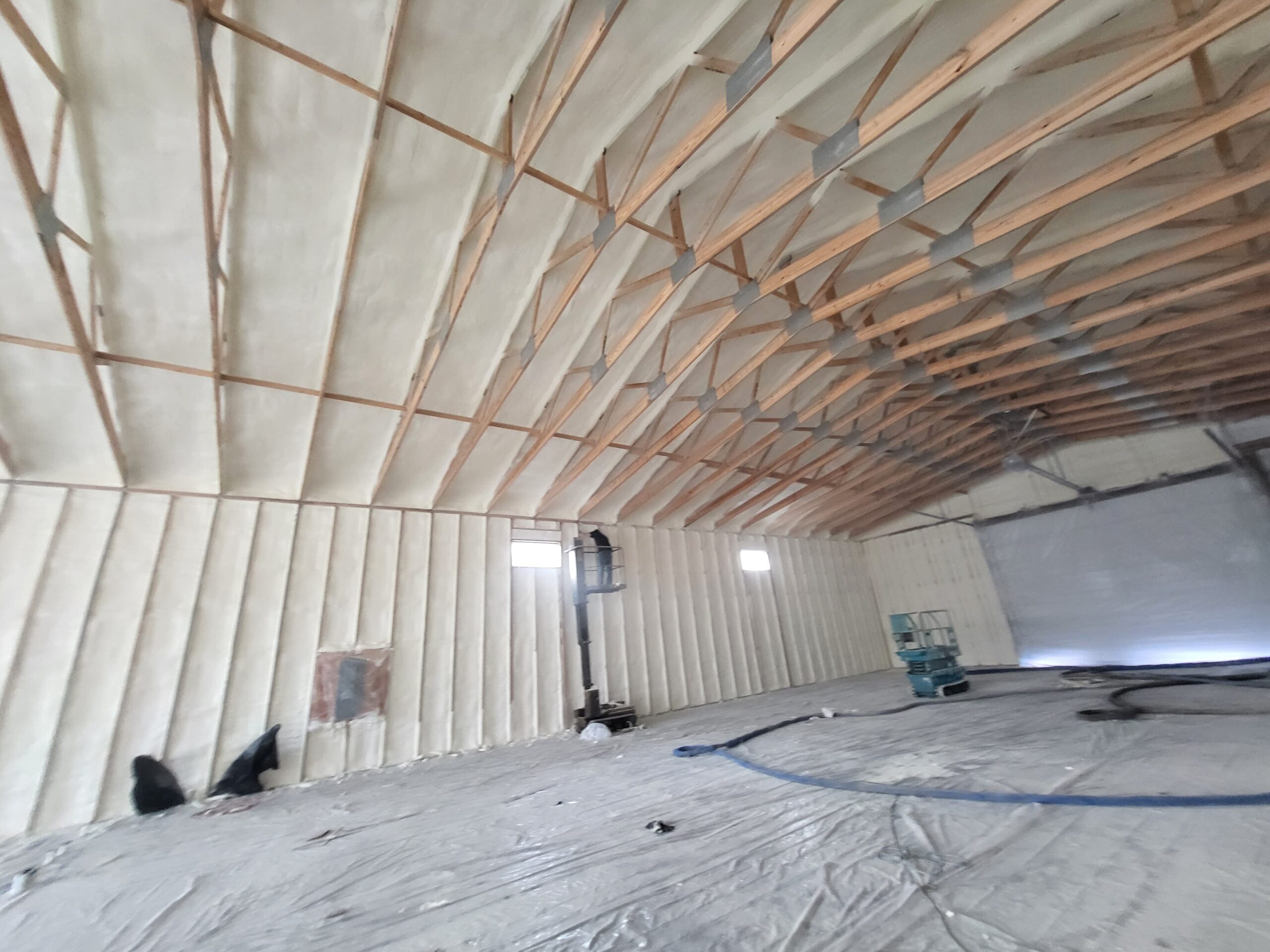 Agricultural
Agricultural and Pole Barn Spray Foam
Agricultural facilities across rural Minnesota, South Dakota, North Dakota, Wisconsin, and Iowa present unique insulation challenges that standard residential systems were not designed to handle. Massive open volumes, exposed metal framing, and the critical need to control condensation on metal surfaces that collect moisture and degrade stored equipment, feed, and grain.
Closed-cell spray foam bonds directly to metal framing, controls condensation at the surface, and provides both air sealing and high R-value insulation in a single application. It holds structural performance through the severe temperature swings agricultural buildings endure year-round.
- Pole barns, machine sheds, and grain storage
- Condensation control on metal surfaces
- Livestock facilities and hog confinement buildings
- Protects livestock, machinery, and harvest
Our Full Range of Insulation Services
🌊 Blown-In Insulation
Highly effective thermal protection for attics and existing wall cavities with limited access. A seamless efficiency upgrade for older structures across the Upper Midwest.
🏠 Batt Insulation
Fiberglass and mineral wool installed with precision, often used alongside foam systems on select residential applications for balanced acoustics and thermal control.
🏘️ Pole Barn Insulation
Heavy-duty spray foam application tailored for agricultural and rural commercial structures to halt condensation, draft, and energy waste inside large metal buildings.
🌳 Crawl Space Insulation
Dedicated moisture control and thermal barrier systems that dramatically improve ground-floor comfort and prevent rot or mold development in residential and commercial buildings.
Under-Slab Insulation
Continuous thermal break solutions installed before concrete pours for new construction, preventing radiant heat loss into frozen ground all winter long.
Why It Matters for Your Project
Most insulation contractors across the Upper Midwest run one rig and schedule projects entirely around what that single setup can realistically handle. TCS built its entire operation with the exact opposite philosophy.
Three dedicated spray foam rigs and a 44-foot commercial trailer allow TCS to take on multiple concurrent projects without stretching equipment or crew capacity across more work than the operation can handle properly. For homeowners, that means significantly faster scheduling. For commercial clients managing large construction timelines, it means the insulation contractor who shows up has the firepower to actually finish on time.
"A general contractor TCS worked alongside on a large agricultural development in central Minnesota said afterward that TCS was the first insulation crew he had worked with who arrived with everything, foam, lifts, and crew, staged and ready on day one. The project finished on schedule. That outcome is what operational capacity actually looks like in practice."
Heavy-duty capacity ensures material temperatures and spray pressures remain absolutely consistent, guaranteeing flawless foam application from the first stud to the last rafter, on every single project.
Why Upper Midwest Property Owners and Contractors Trust TCS
Foam-First From Day One
Spray foam is not a secondary service TCS added to a general construction list. It is exactly what the company was built around. Freddy Lewis's background in foam technology and field construction gave TCS a technical foundation that general contractors who later added insulation simply do not possess.
Three Rigs, One Standard
Running three dedicated spray foam rigs means absolute consistency across all projects. You receive the exact same equipment calibration, the same application discipline, and the same crew expectations on every single job, regardless of scale or location across the Upper Midwest.
Engineered for Northern Winters
Every foam system TCS installs is specified and applied for cold-weather performance, sub-zero temperature retention, freeze-thaw cycling resistance, and moisture vapor control in climates that test insulation significantly harder than the rest of the country.
15+ Years of Field Experience
Founded and led by someone who spent over a decade and a half working directly in the field. That background means every foam application is informed by a construction systems understanding that goes far beyond insulation alone, including framing, moisture management, vapor control, and foundation performance.
Family-Built, Field-Proven
TCS started with a single used foam rig and built into a three-rig regional operation through flawless field results and direct contractor referrals. That organic growth reflects exactly the kind of performance record that earns repeat business and long-term contractor relationships.
Fair Pricing, No Skipped Steps
Every estimate reflects what the project actually requires: the correct foam system, proper application thickness, and no skipped steps at penetrations, rim joists, or difficult air infiltration points that less careful crews leave unsealed. What gets quoted is what gets properly done.
Our Primary Service Hubs
🏔️ Minnesota Operations
🌾 North Dakota Operations
🌿 Wisconsin, South Dakota & Iowa
Frequently Asked Questions
What is the difference between open-cell and closed-cell spray foam?
Closed-cell foam is denser, fully waterproof, and provides a higher R-value per inch, typically R-6 to R-7 per inch. It also adds structural rigidity to the substrate and acts as a complete vapor barrier. This is the system TCS uses most frequently for Upper Midwest applications, especially rim joists, foundations, crawl spaces, and agricultural metal buildings where moisture control is critical. Open-cell foam is softer, less dense, and more vapor-permeable, with an R-value around R-3.7 per inch. It works well for interior sound dampening and specific attic applications where vapor permeability is intentional. TCS will recommend the right system for your specific substrate, climate zone, and project goals during the free assessment.
How long does spray foam installation take?
Most residential projects, a rim joist, attic, or crawl space, are completed in one to two days. Larger whole-house applications and commercial projects vary based on square footage and building complexity. Agricultural and pole barn projects depend heavily on the total interior surface area being insulated. TCS provides a project-specific timeline during the free estimate so there are no surprises on scheduling or crew duration.
Is spray foam worth the higher upfront cost compared to fiberglass or blown-in?
In the Upper Midwest, yes, significantly for most applications. Fiberglass batts compress over time, lose R-value where air movement is highest, and do nothing to stop moisture infiltration. Blown-in settles in wall cavities and attics. Spray foam bonds permanently to the substrate, seals every gap in a single application, and does not degrade or shift over time. The energy cost reduction in a Minnesota or North Dakota home insulated with closed-cell foam typically delivers payback within 4 to 8 years, depending on the building and prior insulation condition. For agricultural buildings where moisture control directly affects stored equipment and livestock, the payback is often faster.
Can spray foam be installed in an existing home or only during new construction?
Both. New construction is the ideal time to install spray foam since all framing cavities, rim joists, and penetrations are fully accessible. But spray foam is also highly effective as a retrofit in existing homes. Attics are the most common retrofit application, followed by rim joists accessible from the basement, crawl spaces, and exposed wall cavities during renovations. TCS will assess your existing building during the free estimate and identify which areas will deliver the highest performance return.
How does spray foam perform through Minnesota and North Dakota winters?
Closed-cell spray foam was specifically developed to perform in exactly these conditions. It maintains its R-value, structural integrity, and vapor control performance through repeated freeze-thaw cycling and sustained sub-zero temperatures. Unlike fiberglass or blown-in insulation, it does not absorb moisture, compress under temperature swings, or allow convective air movement through the insulated cavity. TCS specifies foam systems and application thicknesses explicitly for Upper Midwest climate zones, not generic national standards that underperform in true northern winters.
Do you insulate pole barns and agricultural buildings?
Yes. Agricultural and pole barn insulation is one of TCS's core service areas across Minnesota, North Dakota, South Dakota, Wisconsin, and Iowa. Closed-cell foam bonds directly to metal framing, controls condensation at the surface level, and seals the entire building envelope in a single application. This is critical for buildings storing livestock, equipment, grain, or feed that are exposed to the severe humidity swings and temperature extremes characteristic of the Upper Midwest. TCS's equipment capacity, including the 44-foot commercial trailer, makes it possible to mobilize efficiently to rural locations that smaller single-rig operations cannot service effectively.
What states do you service?
TCS serves Minnesota, North Dakota, South Dakota, Wisconsin, and Iowa, including rural and agricultural areas across all five states. Primary service hubs are in Brainerd, Baxter, St. Cloud, Duluth, Grand Rapids, and Bemidji in Minnesota, and Fargo, Bismarck, Grand Forks, Horace, and West Fargo in North Dakota. If you are outside a listed hub city, call us at (218) 820-9340 and we will confirm coverage for your location directly.
How much does spray foam insulation cost?
Cost depends on the foam system selected (open-cell vs. closed-cell), the total surface area being insulated, application thickness required for your climate zone, and site-specific conditions like access and substrate type. Spray foam costs more upfront than fiberglass or blown-in, but it eliminates the air sealing work that other systems require separately and outperforms every other insulation type in long-term energy retention in the Upper Midwest. The only way to give you an accurate number is a site assessment, which is why the estimate is completely free with no obligation. We would rather give you an honest price on-site than quote low and revise later.
Have a question that is not listed here? Call us directly. We answer questions directly, without pressure.
Your Building Is Losing Heat.
Let Us Find Out Where.
One free site assessment is enough to identify every thermal gap, moisture infiltration point, and insulation failure in your building. We will tell you exactly which foam system is right and what it will cost, completely without pressure or obligation.
✓ No obligation · ✓ No pressure · ✓ Same-day response · ✓ Serving MN · ND · SD · WI · IA