
Top-Rated Blown-In & Batt
Insulation in MN & ND
Not a crew that fills attics and moves on. A construction-backed insulation operation with the system range, field experience, and regional coverage to stop heat loss in the spaces where your building is losing it most.
✓ Free estimate ✓ No obligation ✓ No pressure ✓ Same-day response
What Upper Midwest Property Owners Say About TCS
You Have Insulation.
So Why Are You Still Losing Heat?
Across the Upper Midwest, the same two failure points appear again and again: coverage depth that settled below its rated R-value, and thin spots at the exact locations where heat loss is highest.
Settling Kills R-Value Over Time
Blown-in insulation applied at the correct initial depth settles meaningfully in the first few years. A crew that installs to the bare minimum rated depth is actually installing below that rating by the first winter, without the homeowner ever knowing.
Thin Spots at Eaves and Top Plates
Eave areas and sections over top plates are consistently the thinnest points in every attic a fast crew touches. These are also the exact zones where warm interior air meets cold exterior structure, making them the primary heat loss channels in the entire building.
Wrong System for the Application
Contractors who carry only blown-in recommend blown-in for every job. Contractors who carry only batts recommend batts. The right answer depends on the application, not on what the truck happens to carry. Mismatched systems underperform regardless of installation quality.
Wall Cavities Blown at Wrong Density
Blown-in insulation in an existing wall cavity must reach the correct fill density or it voids, shifts, and settles within the wall assembly. Underdensity is invisible from the outside and produces R-values significantly below what was specified on the invoice.
A homeowner outside Fargo called after his energy audit flagged significant attic heat loss despite having blown-in cellulose installed two years prior. When TCS went into the attic, average depth across the field was within range. But eave areas and top plate sections were consistently thin, in some spots down to two inches.
That is exactly where the heat was going. The original crew had prioritized speed over coverage, and the homeowner had been paying for that decision in every heating bill since. TCS brought depth and coverage up to a uniform standard. His energy auditor confirmed significant heat loss reduction the following winter.
Blown-In That Looks Right From the Hatch Is Not the Same as Blown-In That Performs Through a Northern Winter.
TCS starts every project with a coverage assessment before any material is loaded. Access assessment first. Coverage mapping second. Application third. That sequence is the only way to guarantee the thermal envelope performs at its rated value from eave to ridge, through every season.
How TCS Installs Insulation That Actually Holds Its R-Value
Same sequence on every project. No speed-over-coverage shortcuts. No skipped eave sections.
Coverage Assessment First
We access the space, map existing depth at framing members, eave areas, and top plate zones. This identifies exactly where heat is escaping before a single bag of insulation is loaded, not after the job is done and the hatch is closed.
Step 1: Assess Before ApplyingSystem Selection for Each Zone
Blown-in for attic floors, existing wall cavities, and irregular spaces. Batts for open framing in new construction. Spray foam for rim joists and specific air sealing points. The right system goes into the right location, not the same system everywhere.
Step 2: Match System to ApplicationUniform Coverage, Eave to Ridge
Correct depth across the full attic floor. Full fill density in every wall cavity. Batts cut to fit every penetration point. Depth verification at all framing, eave, and top plate zones. The result is an R-value that holds through an Upper Midwest winter, not just through inspection.
Step 3: Verified, Not AssumedWant to know which system is right for your attic, walls, or building? A free assessment gives you a clear answer.
Get My Free EstimateBlown-In and Batt Insulation Services Across the Upper Midwest
 Uniform Coverage
Attic Blown-In Insulation
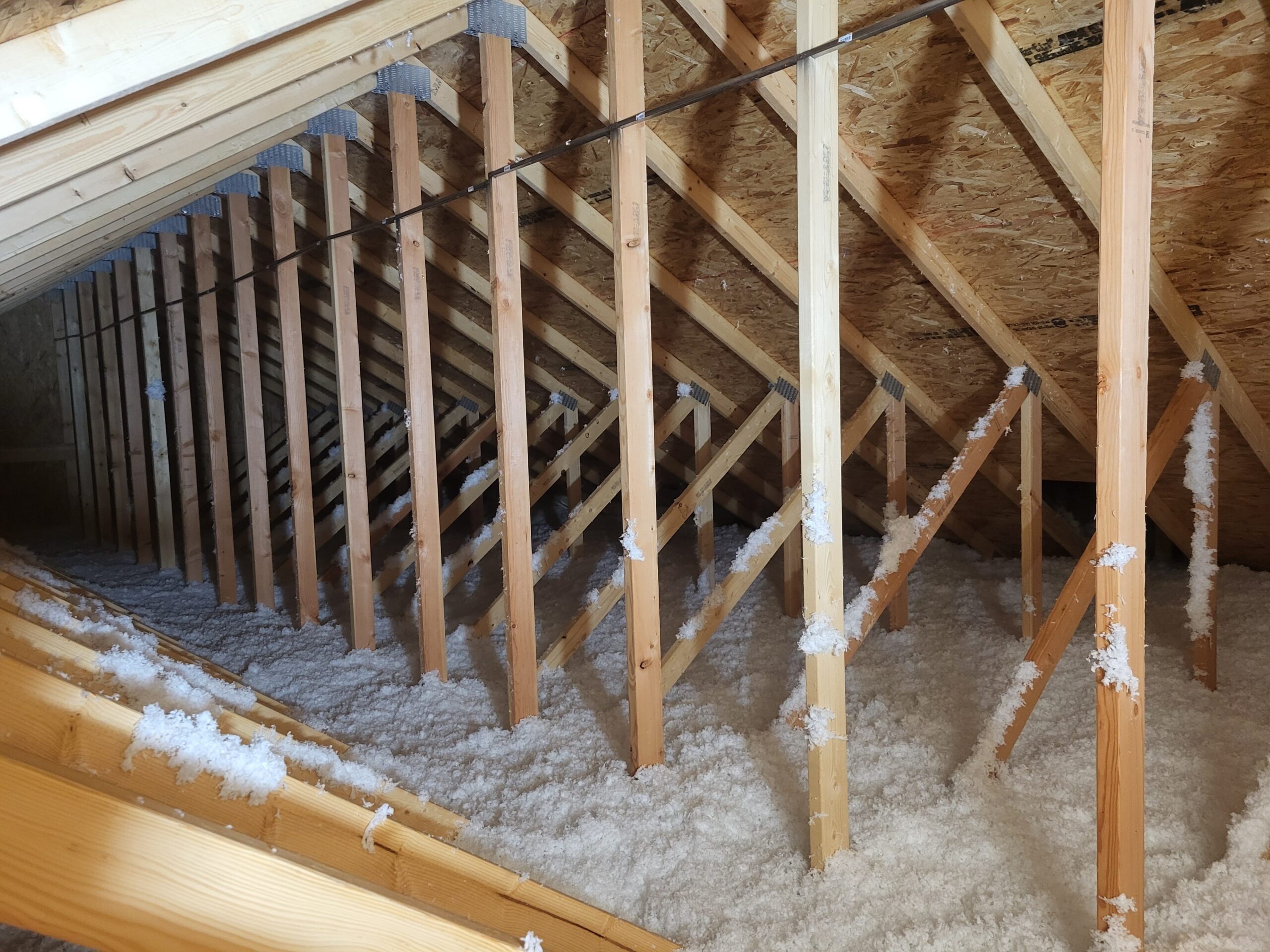
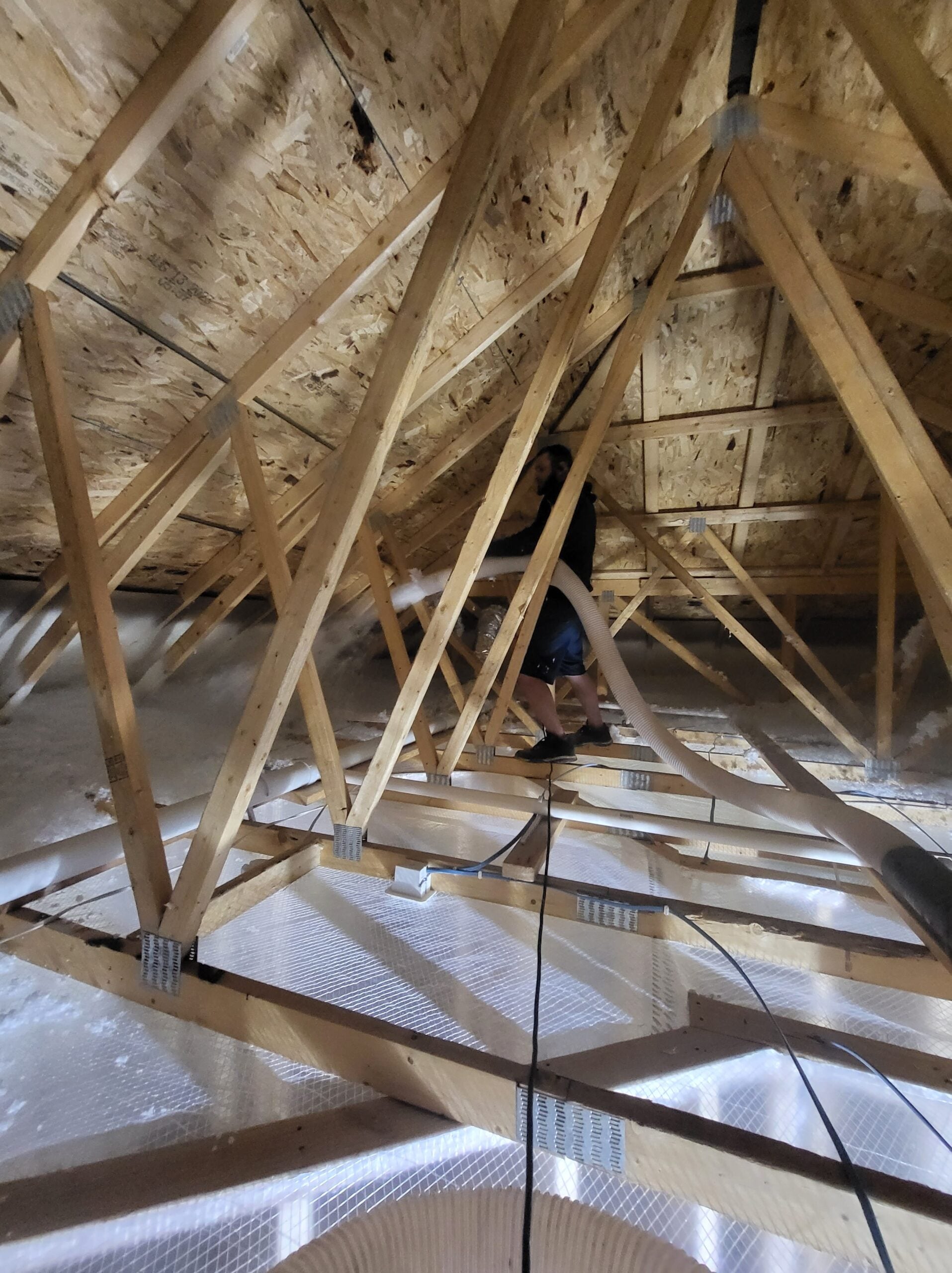
The attic is the highest-impact heat loss zone in most Upper Midwest homes. Blown-in is the most efficient system for bringing attic performance up to standard, whether it is a new installation or an upgrade over settled insulation that has dropped below its original R-value.
Cellulose blown-in settles into irregular spaces more uniformly than fiberglass, provides better density for resisting air movement, and installs directly over existing batts without requiring removal. A crew that depth-checks at framing members, eave areas, and top plate zones produces coverage that holds its rating through the full northern winter, not just on installation day.
 Retrofit Solutions
Existing Wall Cavity Blown-In
For older homes built before insulated wall assemblies were standard, blown-in into existing wall cavities is the most cost-effective path to improved wall thermal performance without major construction disruption.
Small access holes are drilled, each stud bay is filled to the correct density, and access points are patched cleanly. The critical factor is fill density. A cavity blown at the correct density stays locked in place and performs at its rated R-value for the life of the wall assembly. For older properties, this is often the renovation that produces the most measurable return on the thermal envelope.
 Precision Fit
Residential Batt for New Construction
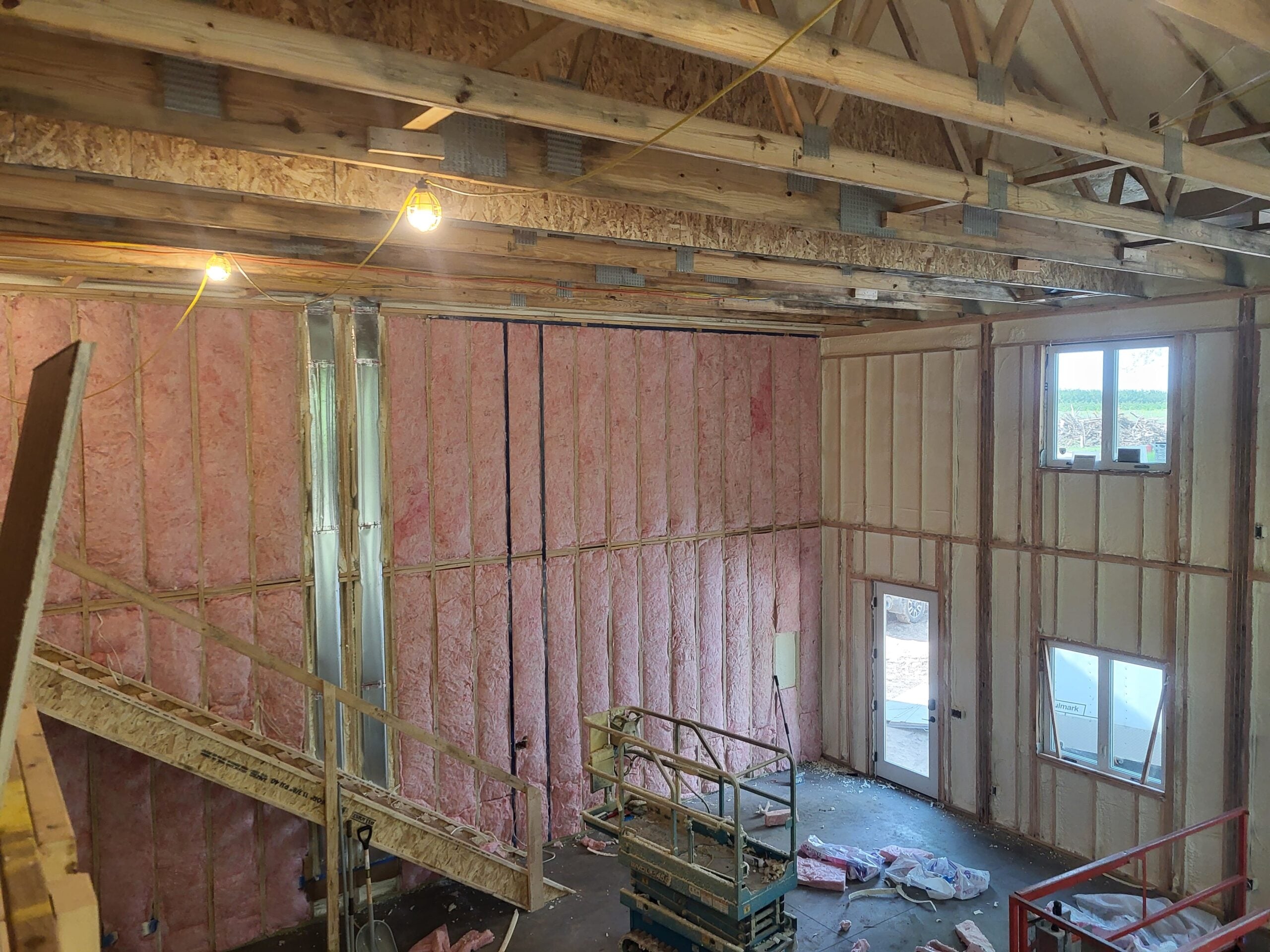
In an open wall cavity during new construction, properly installed fiberglass or mineral wool batts deliver reliable, cost-effective thermal performance. The right application is straightforward framing access, regular stud spacing, and a crew with the discipline to cut batts to fit every single penetration point.
What separates a quality batt installation from one that underperforms is preparation. Batts cut to fit, penetrations filled, correct facing orientation throughout. A thermal envelope installed to spec performs at spec. One installed fast and loose shows up in the first energy bill.
 Commercial Scale
Commercial and Multi-Unit Batt Applications
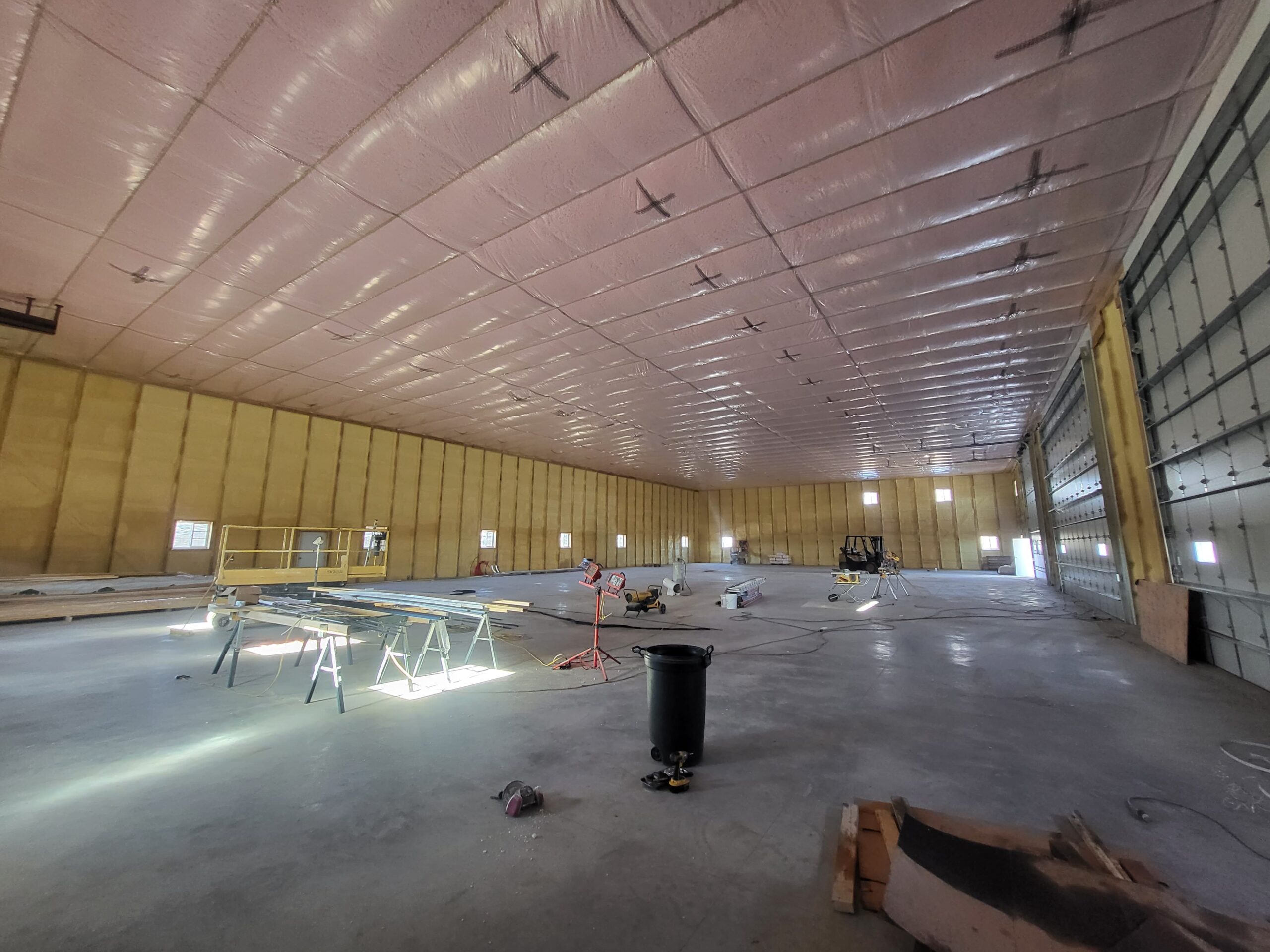
For commercial developers and multi-unit builders where cost-per-square-foot drives insulation decisions, batt insulation in open commercial wall and floor assemblies delivers predictable performance at a predictable cost when execution is consistent.
The challenge on large commercial batt projects is maintaining installation quality across thousands of cavities. A crew that degrades in precision as volume increases produces inconsistent thermal performance across the building envelope. TCS applies the same standard to cavity one thousand as to cavity one.
Our Full Range of Insulation Services
💧 Spray Foam Insulation
Closed-cell and open-cell foam for rim joists, crawl spaces, commercial facilities, and agricultural buildings where maximum air sealing and moisture control are required.
🏘️ Pole Barn Insulation
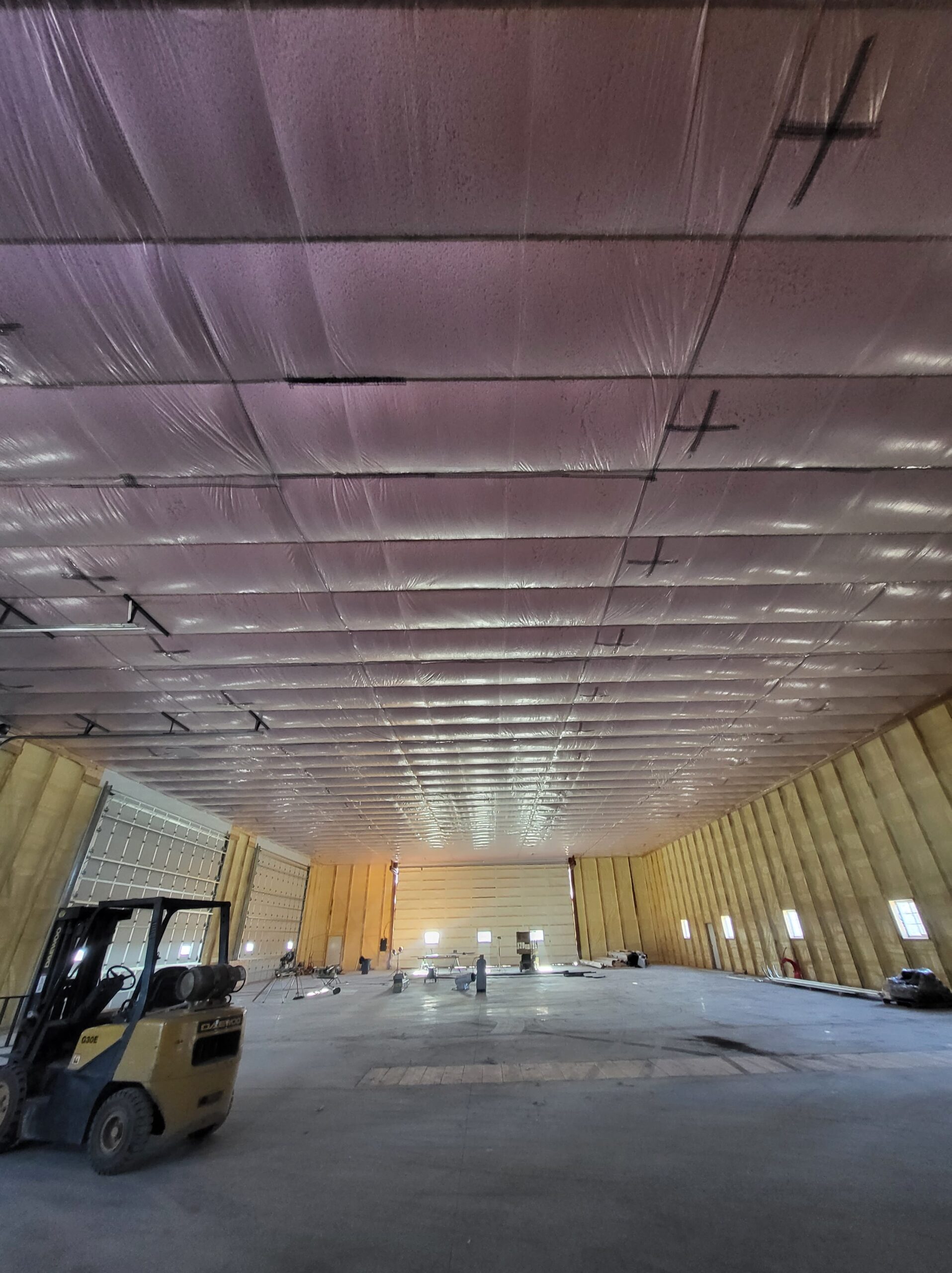
Heavy-duty closed-cell foam bonded directly to metal framing, controlling condensation and providing thermal performance in agricultural and rural commercial structures.
🌳 Crawl Space Insulation
Dedicated moisture control and thermal barrier systems that improve ground-floor comfort and prevent rot, mold, and structural degradation in residential and commercial buildings.
⸻ Under-Slab Insulation
Continuous thermal break installed prior to concrete pours for new construction, preventing radiant heat loss into frozen ground during Upper Midwest winters.
Blown-In vs. Batt:
When Each System Wins
Contractors who carry only one system will always recommend that system. TCS carries both, plus spray foam, which means the recommendation is always based on what your specific application actually needs, not on what happens to be on the truck.
| 💨 Blown-In | 🏠 Batt | |
|---|---|---|
| Best Application | Attics, existing wall cavities | Open framing, new construction |
| Fills Irregular Spaces | Excellent, flows into corners | Poor, gaps at obstructions |
| Retrofit Friendly | Yes, no wall opening required | Limited, needs open access |
| Installs Over Existing | Yes, layers directly on top | No, requires open cavity |
| Cost vs. Performance | Moderate cost, high coverage | Lower cost in open framing |
| Settling Over Time | Some, must install over-depth | Minimal if properly fitted |
| Ideal for New Construction | Attic floors and cathedral ceilings | Wall cavities with open access |
| Air Infiltration Resistance | Good at correct density | Moderate, gaps common |
Not sure which system applies to your project? The free assessment answers that question directly, with no obligation.
Find Out Which System You Need, FreeWhy Upper Midwest Property Owners and Contractors Trust TCS
Multiple Systems, One Right Answer
Blown-in, batt, and spray foam are all in the TCS fleet. This means the recommendation for each zone of your building is based entirely on what that application actually needs, not on what the crew specializes in. That distinction produces buildings that perform uniformly across every section.
Coverage Depth Discipline
Every blown-in project includes depth verification at framing members, eave areas, and top plate zones before the crew leaves the site. Settled insulation below the access hatch is invisible. Inadequate coverage at the eaves is not, once the first heating bill arrives.
Built for Northern Climates
Every insulation system TCS installs is specified for the Upper Midwest climate zone: the correct R-value per application, the correct vapor control strategy, and coverage standards that account for winter settling and freeze-thaw stress in wall assemblies.
15+ Years of Field Experience
Founded and led by someone who spent over a decade and a half working directly in construction, not behind a desk. Insulation recommendations come from a full building systems understanding that includes framing, moisture management, vapor control, and HVAC interaction.
Family-Built, Field-Proven
TCS grew into a multi-system regional operation through verified field results and contractor referrals, not marketing spend. That kind of growth reflects a performance record that earns repeat business and long-term relationships with builders who cannot afford to gamble on their insulation contractor.
Fair Pricing, No Shortcuts
Every estimate reflects what the project actually requires: correct depth on blown-in applications, proper facing orientation on batts, and full penetration coverage at every difficult infiltration point. What gets quoted is what gets properly done, not what looks good on the invoice.
Our Primary Service Hubs
🏔️ Minnesota Operations
🌾 North Dakota Operations
🌿 Wisconsin, South Dakota & Iowa
Frequently Asked Questions
What is the difference between blown-in and batt insulation?
Blown-in insulation is loose fill material, cellulose or fiberglass, applied with a blower machine. It flows into irregular spaces, fills corners and framing gaps, and works well in attics and existing wall cavities where access is limited. Batt insulation is pre-cut panels of fiberglass or mineral wool that are hand-fitted into open wall and floor cavities. Batts perform well in new construction with straightforward framing access, and cost less per square foot in large open-cavity applications. TCS carries both and recommends based on the specific application, not on which system is easier to install.
What R-value do I need for my attic in Minnesota or North Dakota?
The Department of Energy recommends R-49 to R-60 for attics in Climate Zones 6 and 7, which cover most of Minnesota and all of North Dakota. Most older homes in this region are significantly under that threshold, often with blown-in that has settled to R-20 or less. The free assessment measures actual installed depth and identifies the correct target for your specific home and climate zone, not a generic national standard that was not designed for sub-zero winters.
Can blown-in insulation be installed over my existing attic insulation?
Yes, in most cases. Blown-in cellulose or fiberglass can be layered directly over existing batts or settled blown-in without requiring removal. This makes attic upgrades significantly more affordable than a full replacement. The critical factors are that the existing insulation is dry, free of mold, and not compressed to the point of being structurally problematic. TCS assesses existing conditions during the free estimate before recommending whether an overlay upgrade or removal and replacement is the right approach for your attic.
Can you insulate existing wall cavities without removing the drywall?
Yes. Dense-pack blown-in into existing wall cavities is specifically designed for retrofit applications without full wall demolition. Small access holes are drilled from the interior or exterior into each stud bay, insulation is blown to the correct fill density, and holes are patched cleanly. The result is a fully insulated wall cavity in a home that was previously uninsulated or under-insulated, without requiring interior finish work beyond small patches. Cavity fill density is critical: underdensity produces voids and settling. TCS verifies density during installation, not just depth.
Is cellulose or fiberglass blown-in better for the Upper Midwest?
Both work, and the right choice depends on the specific application. Cellulose has slightly higher density, settles less, and provides marginally better air resistance once installed, making it a strong choice for attic upgrades in Minnesota and North Dakota where wind-driven air infiltration through the insulation layer adds to heat loss. Fiberglass blown-in is lighter and dries faster if it ever gets wet, which is relevant in applications where moisture risk is higher. TCS will recommend the appropriate material for your specific attic or wall application during the assessment.
How long does a blown-in attic insulation installation take?
Most residential attic blown-in projects are completed in one day or less, including assessment, setup, installation, and cleanup. Wall cavity retrofit projects depend on the number of wall cavities and overall house size but typically run one to two days. Larger multi-unit or commercial projects will vary based on total surface area. TCS provides a project-specific timeline during the free estimate so scheduling is clear from the start.
Should I use spray foam instead of blown-in for my rim joists?
Yes, for rim joists, spray foam is almost always the right choice, even if the rest of the attic gets blown-in. Rim joists are exposed to the exterior, subject to significant air infiltration, and require both air sealing and insulation in a single application. Blown-in cannot seal a rim joist because it requires a backing to stay in place and does not provide an air barrier. Closed-cell spray foam applied directly to the rim joist surface provides the thermal resistance and the air seal in one step. TCS will identify rim joist conditions during the free assessment and recommend the right system for each zone of your building.
How much does blown-in attic insulation cost?
Cost depends on attic square footage, current installed depth, target R-value, and site-specific access conditions. Blown-in attic upgrades are among the most cost-effective insulation improvements available, with energy savings that frequently produce a full payback within 4 to 7 years in Upper Midwest climate zones. The only way to give you an accurate number is a site assessment, which is why the estimate is completely free with no obligation. We would rather give you an honest on-site price than quote low on the phone and adjust later.
Have a question that is not listed here? Call us directly. We answer questions without pressure.
Your Attic Is Losing Heat.
Let Us Find Out How Much.
One free site assessment identifies every thin spot, every under-depth zone, and every application where the wrong system is costing you on your heating bill. We tell you exactly what needs to change and what it will cost, with no pressure and no obligation.
✓ No obligation · ✓ No pressure · ✓ Same-day response · ✓ Serving MN · ND · SD · WI · IA