
Iowa's Concrete Lifting and Slab Leveling Specialists
Most contractors patch what they can see. A foam lifting crew with highway construction roots and clay soil expertise finds the void driving the movement, fills it, stabilizes the base, and lifts the slab back to grade so it stays there through Iowa's full cycle of wet springs, hot summers, and freezing winters.
Heavy rainfall and snowmelt saturate Iowa's expansive clay subbase. Water flows through unsealed joints and erodes the soil directly beneath the slab edge.
Result: void formation startsIowa's hot, dry summers pull moisture from clay soils. As clay volume shrinks, the gap between soil and slab bottom expands. What was a small void becomes a structural cavity.
Result: void doubles in sizeWith the cavity below it fully formed, the concrete slab loses support and settles into the void. Surface patches applied at this point address the symptom only. The void remains.
Result: the patch fails next springWhy Choose Technical Construction Solutions for Concrete Lifting and Slab Leveling in Iowa?
Iowa property owners often find that concrete repairs are temporary, with slabs settling again shortly after a fix. This is a predictable result of Iowa's expansive clay soils, which swell with moisture and shrink during dry summers. This constant volume cycling creates hidden voids that surface-level patches simply cannot fix.
A property owner near Ames in Story County had a storage facility apron settle twice in twelve years. Previous contractors only applied surface patches, ignoring the four-inch drop and the massive void beneath the slab. Rainwater had been flowing through an unsealed expansion joint for years, washing away the clay subbase. By the time we arrived, the repair was nothing more than a band-aid over a structural void.
We solved the problem by injecting polyurethane foam to fill the entire subsurface cavity, lifting the apron back to grade, and sealing the expansion joint to stop the erosion cycle. The repair has finally held because we addressed the soil behavior and drainage, not just the visible crack.
Lasting concrete repair requires infrastructure-level expertise in soil stabilization and void filling, not surface patching applied to a structural problem that is still growing below.
Founded by Freddy Lewis and backed by 15 years of heavy highway construction experience, Technical Construction Solutions brings a diagnostic depth to Iowa projects that residential-only contractors often lack. Alongside concrete lifting, TCS provides a full range of construction services across Iowa, including insulation, floor coatings, and waterproofing. If your concrete keeps settling after previous repairs, or if you have slabs that are worsening with every season, a free estimate is where that starts.
Expert Concrete Lifting Services in Iowa
 Same-Day Use
Residential Concrete Lifting
For homeowners across Iowa, from the older residential neighborhoods in Cedar Falls and Iowa City to rural homesteads in Winneshiek and Clayton Counties, settled concrete is rarely just a cosmetic problem. A driveway apron that now drains toward the foundation, a garage floor that has dropped away from the door threshold, a sidewalk panel that has heaved along the front walk, these are safety hazards, drainage problems, and early indicators of soil movement that compound with each season it goes unaddressed.
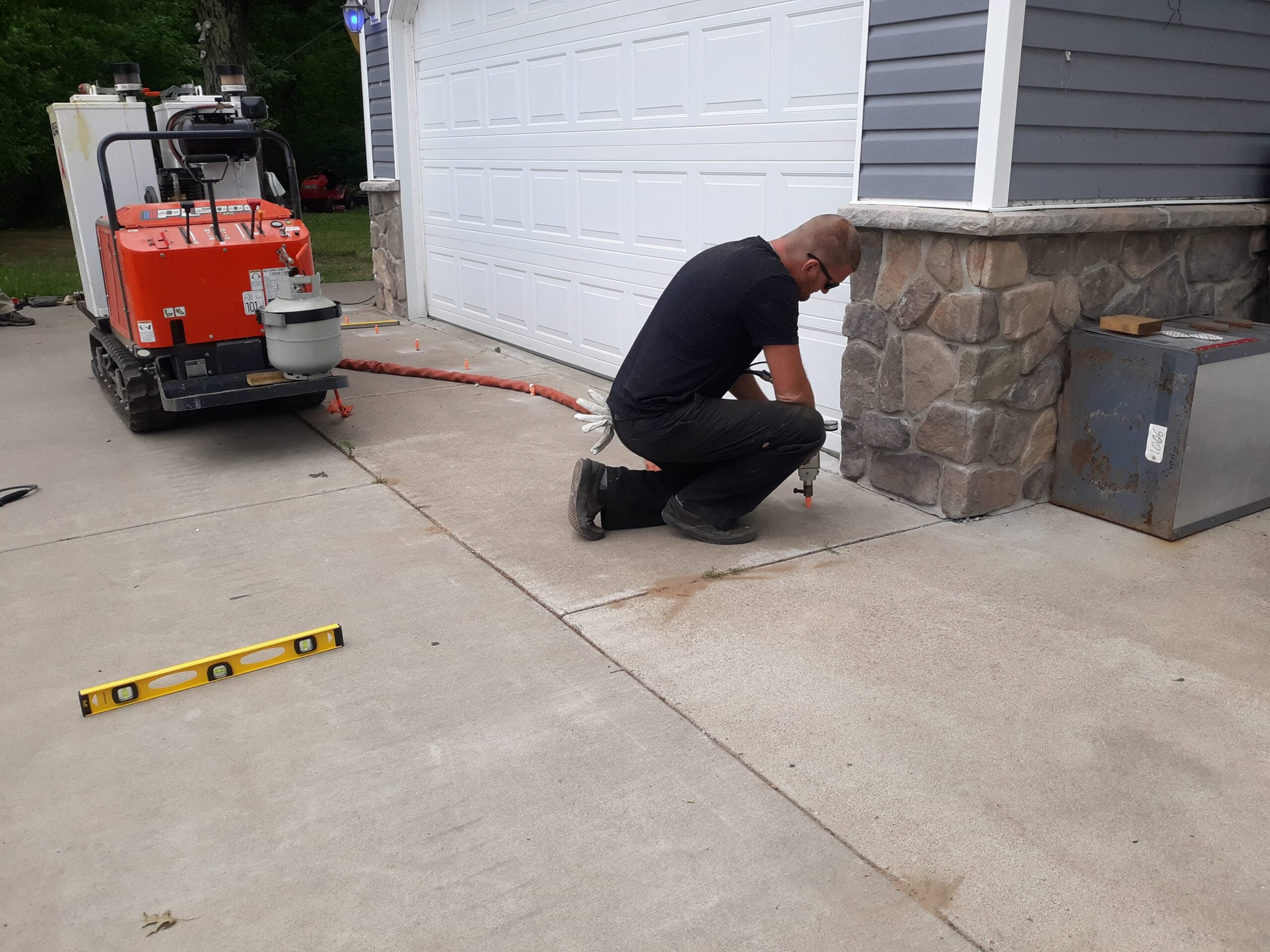
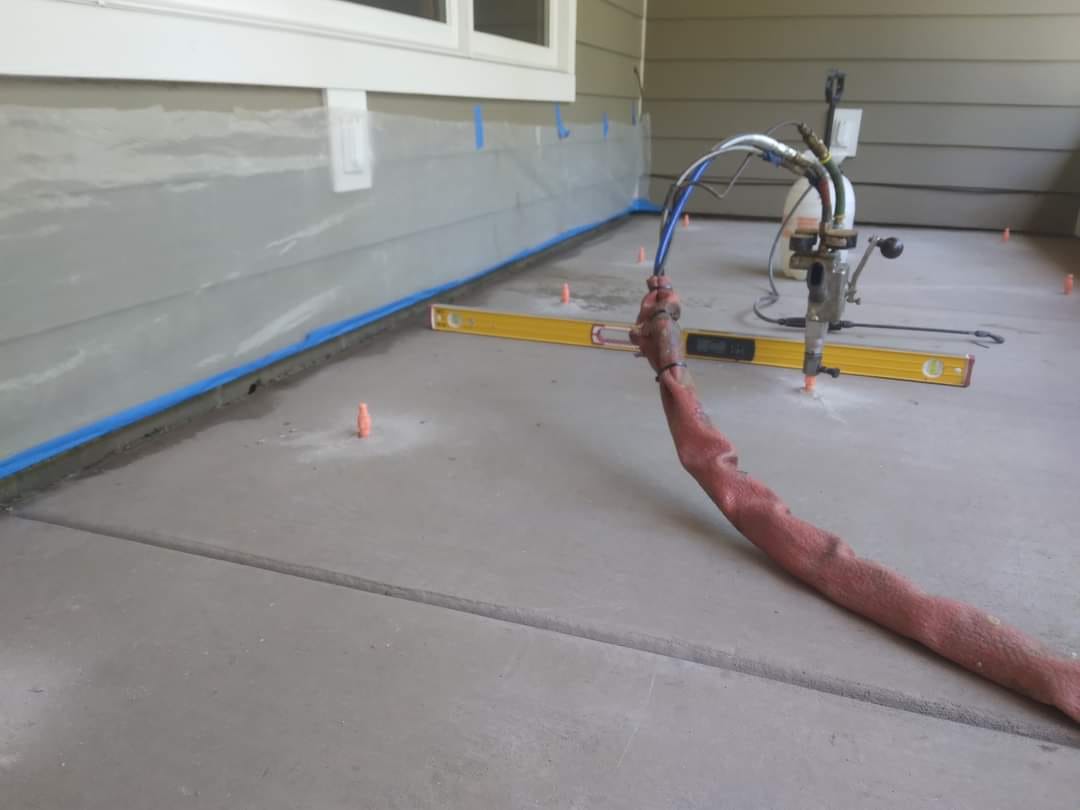
The polyurethane foam lifting process uses small, minimally invasive injection ports drilled through the affected slab. High-density foam is injected beneath the concrete, expands to fill the void, and lifts the slab back to its original position with precision that mudjacking cannot match in Iowa's clay soil environment. The foam cures in minutes, the injection ports are patched flush, and the surface is ready to use the same day. No demolition, no concrete trucks, no days of downtime.
For Iowa homeowners who have considered mudjacking, polyurethane foam carries a critical advantage in clay soil conditions: it adds negligible weight to the already-settling subbase. Traditional mudjacking slurry adds significant load to soil that is already compromised, which in Iowa's soft clay conditions can accelerate the settlement it was intended to correct.
 Commercial Capacity
Commercial Concrete Lifting
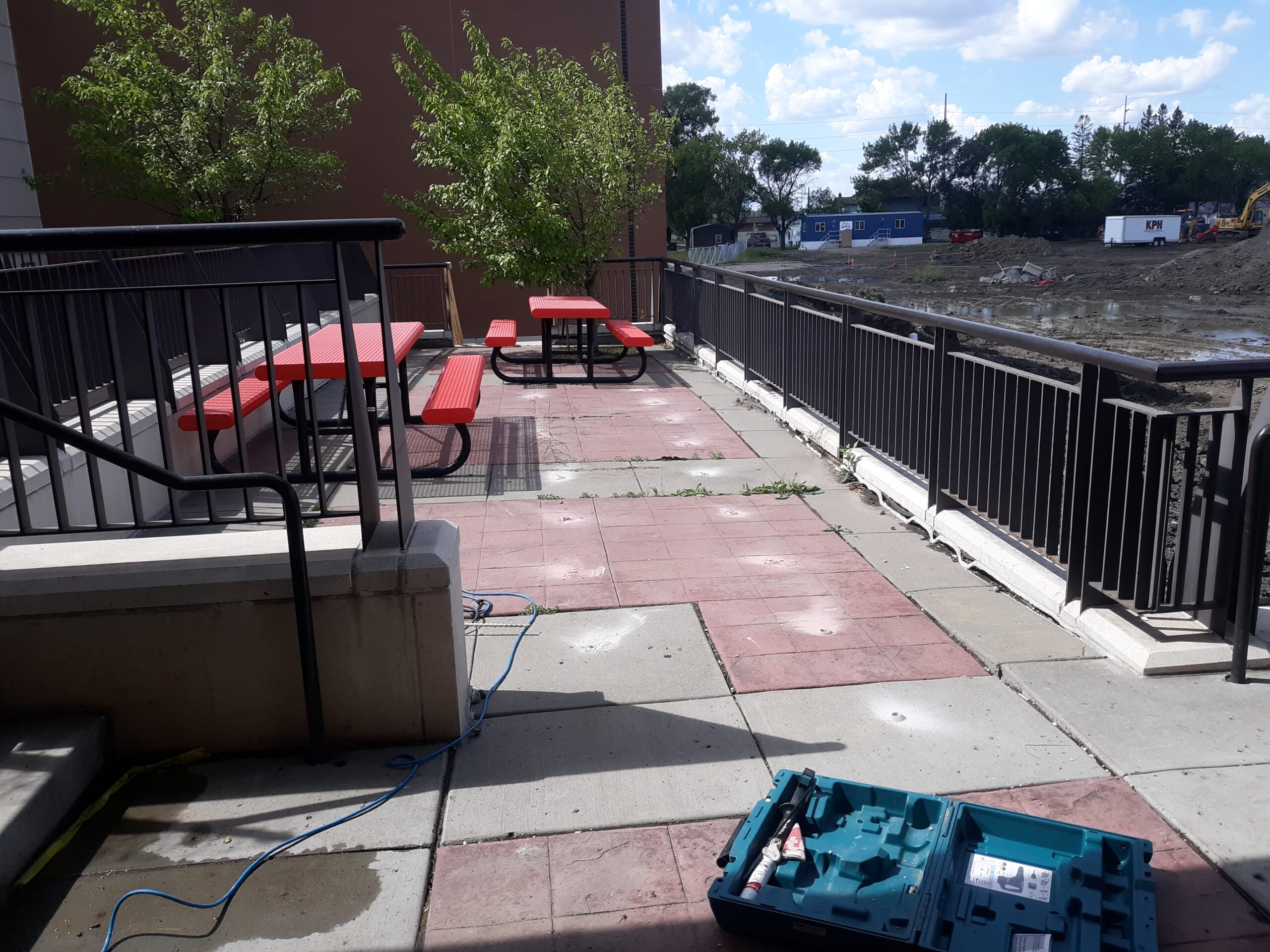
Commercial lifting projects across Iowa, from warehouse loading dock approaches in the Des Moines metro to grain operation aprons in rural Jasper and Polk Counties, demand operational reliability that residential-scale equipment setups are not built for. Uneven warehouse floors, settled commercial entry slabs, sunken parking lot sections, and out-of-level dock approaches all carry real business cost when they are left unaddressed.
TCS operates multiple dedicated lifting rigs, including a purpose-built Track Buddy lifting rig designed for the precision and volume requirements of commercial concrete work. The equipment arrives ready for the full project scope. No mid-job supply runs, no scheduling adjustments, no surprises on day two of a project that was quoted as a one-day job. For facility managers and commercial property owners across Iowa managing active operations, that operational discipline is what keeps a concrete repair from becoming a business disruption.
Why It Matters More on Iowa's Agricultural and Commercial Scale
Most lifting contractors operating in Iowa arrive with a basic residential rig and standard foam. For small residential projects on level, accessible sites, that is often enough. But when the project involves a large agricultural apron, a commercial warehouse floor with significant void volume, or a concrete surface spanning a complex footprint across a working Iowa farm operation, equipment capacity determines whether the job gets done correctly in a single mobilization or requires a return trip.
TCS operates multiple dedicated foam lifting rigs, including the purpose-built Track Buddy rig designed specifically for precision concrete lifting on demanding project surfaces.
"TCS was the first lifting crew he had worked with who arrived with every piece of equipment prepared, completed the full scope on the committed schedule, and left the surface ready to use the same afternoon. No supply runs, no equipment issues, no schedule extension."
Iowa's expansive clay soils create a lifting challenge fundamentally different from glacial sand conditions in Minnesota or stable subbase conditions in southern markets. This crew understands Iowa's soil behavior at a structural level before making any lifting recommendation.
TCS was founded by someone who spent 15 years performing highway lifting, undersealing, and void filling at the commercial and infrastructure level. Concrete lifting decisions in Iowa get made with the diagnostic depth of infrastructure construction, applied to every project regardless of size.
Polyurethane foam adds negligible weight to an already-settling subbase. Every Iowa lifting project here uses lightweight foam specified for the soil conditions at that specific site, eliminating the added-load risk that mudjacking creates in Iowa's soft clay environment.
TCS's equipment capacity allows it to service concrete lifting projects across Iowa's rural counties and small communities where local contractors may lack either the right equipment or the technical experience to produce a foam lift that holds in Iowa's clay soil environment.
Get a Free Concrete Lifting Estimate Anywhere in Iowa
Spring is the most active season for slab movement across Iowa. Heavy rainfall and snowmelt saturate the clay subbase, the clay swells unevenly, and the concrete above it shifts. The voids that form during a wet Iowa spring grow larger through the following dry summer as the clay shrinks away from the slab bottom. If your Iowa concrete shifted over the winter or settled through the last dry season, addressing it before the next spring moisture cycle prevents those voids from growing through another year of clay movement.
Start with a free estimate. One conversation is enough to assess your concrete, identify the void and soil conditions driving the movement, and give you a clear picture of what it will cost, no pressure, no obligation.