
Bismarck's Waterproofing and Air Barrier Specialists
Not a contractor applying damp-proofing to Bismarck foundation walls and calling the moisture problem addressed. A foam-based waterproofing and air barrier operation built on construction field experience, integrated building envelope knowledge, and the moisture pathway assessment discipline that Bismarck's river valley clay conditions and plains wind infiltration actually demand.
Why Choose Technical Construction Solutions for Waterproofing and Air Barriers in Bismarck, ND?
A Bismarck homeowner spent three winters battling a persistently damp basement. A previous contractor had tried to fix it with an interior brush-applied sealer, but the moisture quickly returned because the sealer only treated the symptom, not the source.
The real issue was on the outside: the original damp-proofing had cracked at the exterior wall-to-footing transition. Heavy Missouri River valley clay soils and freeze-thaw cycles were forcing moisture through the foundation under hydrostatic pressure.
We excavated the exterior wall, applied a continuous spray-applied membrane from footing to grade, and installed a drainage board. For the first time in four years, the basement stayed completely dry through the spring thaw.
Lasting waterproofing requires stopping moisture at its true entry point. Technical Construction Solutions (TCS), founded by Freddy Lewis, brings over 15 years of large-scale infrastructure and below-grade experience directly into our Bismarck envelope insulation and moisture control applications, ensuring the root cause is correctly identified and permanently resolved.
If you are dealing with recurring basement moisture, a failed previous repair, or need a new foundation protected the right way, contact us for a free estimate.
Waterproofing Services in Bismarck, ND
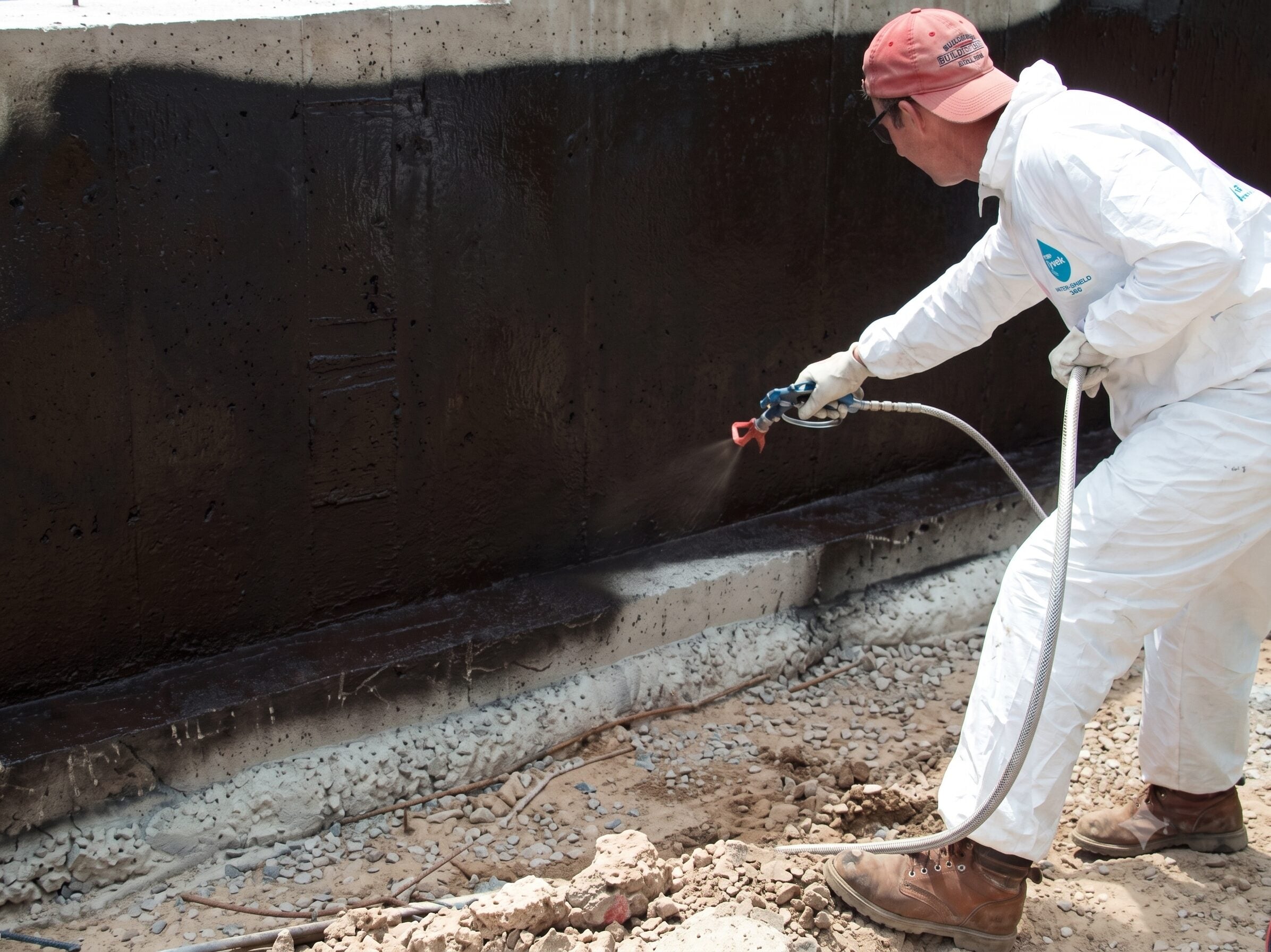
Below-Grade Foundation Waterproofing
For residential, commercial, and institutional structures across Bismarck, Mandan, Lincoln, and the surrounding Burleigh County area, below-grade foundation waterproofing stops moisture at the point where Missouri River valley clay hydrostatic pressure, soil drainage behavior, and freeze-thaw cycling create the most consistent and damaging stress on a foundation assembly.
Bismarck's clay soil profile creates foundation moisture conditions that differ meaningfully from sandier North Dakota soils. Clay holds water against foundation walls rather than draining away from them, which means the hydrostatic load on a Bismarck foundation wall during spring snowmelt is sustained over weeks rather than dissipating within days. Standard damp-proofing, a thin asphalt coating applied during construction, is designed for soil moisture contact, not sustained hydrostatic pressure from clay that is holding spring melt water against the wall face across multiple weeks of temperature cycling. The performance gap between damp-proofing and a properly specified waterproofing membrane shows up clearly in Bismarck's seasonal moisture pattern.
Below-grade waterproofing on new construction in Bismarck starts with a spray-applied or sheet-applied membrane bonded to the foundation wall before backfill, combined with a drainage plane and protection board that keeps the membrane intact as Missouri River valley clay settles and shifts through the freeze-thaw cycles Bismarck properties experience every season. Addressing those details correctly at the construction phase costs a fraction of what remediation costs after backfill is in place and moisture damage has started appearing on finished interior surfaces.
On existing structures where the foundation face requires remediation, the first step is identifying the actual entry points before the excavation scope is determined. A wet interior surface in a Bismarck basement is the endpoint of a moisture pathway that originates at a specific location on the exterior wall assembly. Treating the full perimeter when targeted sections address the active entry points produces an unnecessarily wide scope. Treating only the visible interior damage without tracing the pathway back to the exterior entry point produces a repair that fails before the next frost season loads the same pathway again.
Spray-Applied Foundation Waterproofing Membranes
For foundation walls that require continuous, fully adhered coverage across irregular surfaces, penetrations, wall-to-footing transitions, and corner details, spray-applied waterproofing membranes deliver results that brush-applied sealers and sheet systems cannot match on complex geometry.
A spray-applied membrane bonds directly to the substrate and cures into a seamless film across the full treated area, including the transitions and penetration points where sheet systems leave laps and brush-applied products leave thin spots. In Bismarck's climate, where freeze-thaw cycling stresses every material transition on a foundation wall repeatedly across a heating season that runs from October through April, that continuity is what separates a system that holds its bond through multiple spring thaw events from one that begins delaminating at the details within the first two winters.
Membrane system selection for each Bismarck project is based on substrate condition, hydrostatic exposure level, and the specific freeze-thaw performance requirements of the Bismarck climate zone, not on what product is fastest to apply. A membrane correctly applied to a properly prepared foundation surface in Bismarck's soil environment lasts significantly longer than one applied quickly to a surface that was not prepared to receive it.
Foundation Drainage and Moisture Management
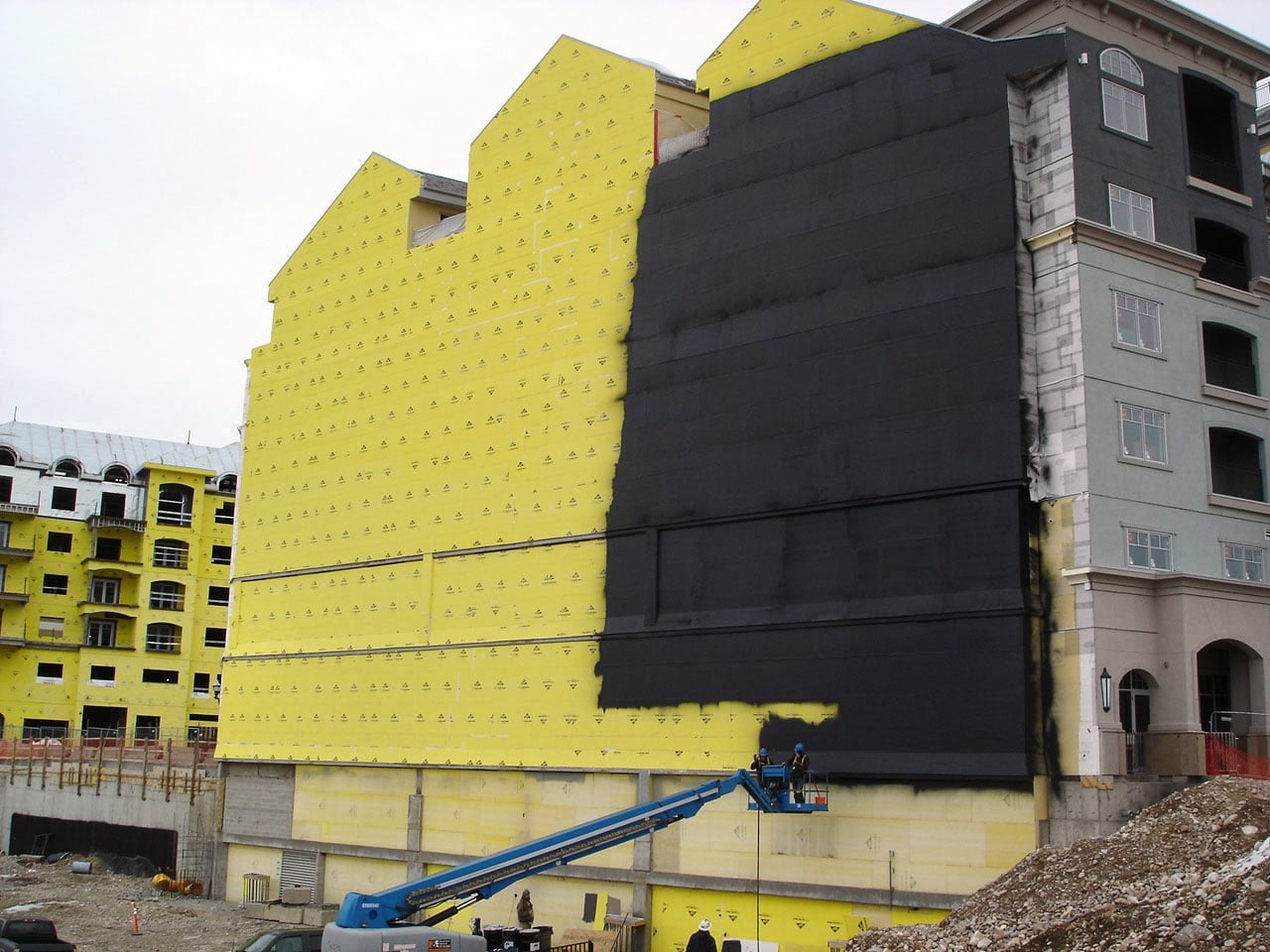
Waterproofing membranes perform best when drainage is managed correctly at the foundation perimeter. A membrane holding Missouri River valley clay moisture against it under sustained spring hydrostatic pressure faces a fundamentally different performance challenge than one backed by a properly graded drainage plane that is moving water away from the wall face before it has extended contact with the membrane surface.
For residential and commercial projects across Bismarck, foundation drainage systems, perforated drain tile, drainage board, and properly graded backfill work in combination with the waterproofing membrane to reduce the hydrostatic load on the wall. Addressing drainage and membrane together at the same time is significantly less expensive than correcting drainage after the membrane has already been stressed through multiple Bismarck spring thaw cycles, and the scope of remediation has grown beyond what the original combined installation would have cost.
Air Barriers and Foundation Moisture Control in Bismarck, ND
A properly waterproofed foundation can still develop recurring moisture problems if air infiltration is carrying cold outside air and soil moisture into the building assembly through gaps in the above-grade envelope. In Bismarck, foundation moisture and air infiltration are connected problems that share entry pathways, and addressing the foundation membrane without closing the air infiltration routes above it frequently produces results that fail before the second winter.
How Bismarck's Wind Environment Turns Air Infiltration Into a Moisture Problem
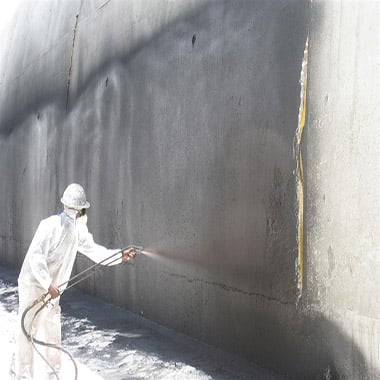
Bismarck sits on exposed plains terrain where prevailing winter winds arrive at building envelopes with sustained pressure and no significant topographic break. In winter, the stack effect inside a Bismarck building creates negative pressure at the lower levels simultaneously with wind-driven positive pressure at the windward wall surfaces, drawing outside air and soil moisture inward through every gap at the foundation-to-wall transition, rim joist, and below-grade wall penetration. That air carries moisture with it, and that moisture condenses on cold surfaces within the wall assembly and lower-level framing.
A foundation wall that has been correctly waterproofed at the exterior face can still develop interior moisture damage if the air infiltration pathway through the rim joist and wall-to-foundation transition directly above it has not been addressed. This is one of the most common and expensive misdiagnoses in Bismarck foundation moisture remediation: treating the foundation wall while leaving the air entry points open in the framing directly above it. The waterproofing work is correct. The moisture source is still open. The repair appears to fail when the right problem was never addressed.
Spray Foam Air Sealing at the Foundation Level
Spray foam applied to the rim joist, the wall-to-foundation transition, and below-grade wall penetrations stops air movement at the building envelope plane, where Bismarck's plains wind pressure and stack effect create the most sustained infiltration pressure through every heating season.
The foam bonds directly to framing and foundation material, fills irregular gaps that no other air sealing method addresses reliably, and adds insulation value at the rim joist, one of the highest heat-loss locations in any Bismarck building envelope. For new construction in Bismarck, spray foam air sealing at the foundation level is the detail that produces a measurable difference between a building whose lower-level spaces stay dry and comfortable through a North Dakota winter and one that consistently runs moisture problems despite a correctly installed foundation membrane. For retrofit projects on existing Bismarck homes and commercial buildings, it is frequently the single correction that resolves recurring lower-level moisture issues that multiple previous membrane treatments failed to address because they were applied to the foundation wall while the air entry pathway above it remained open.
Spray-Applied Air Barriers for Bismarck's Commercial and Institutional Buildings
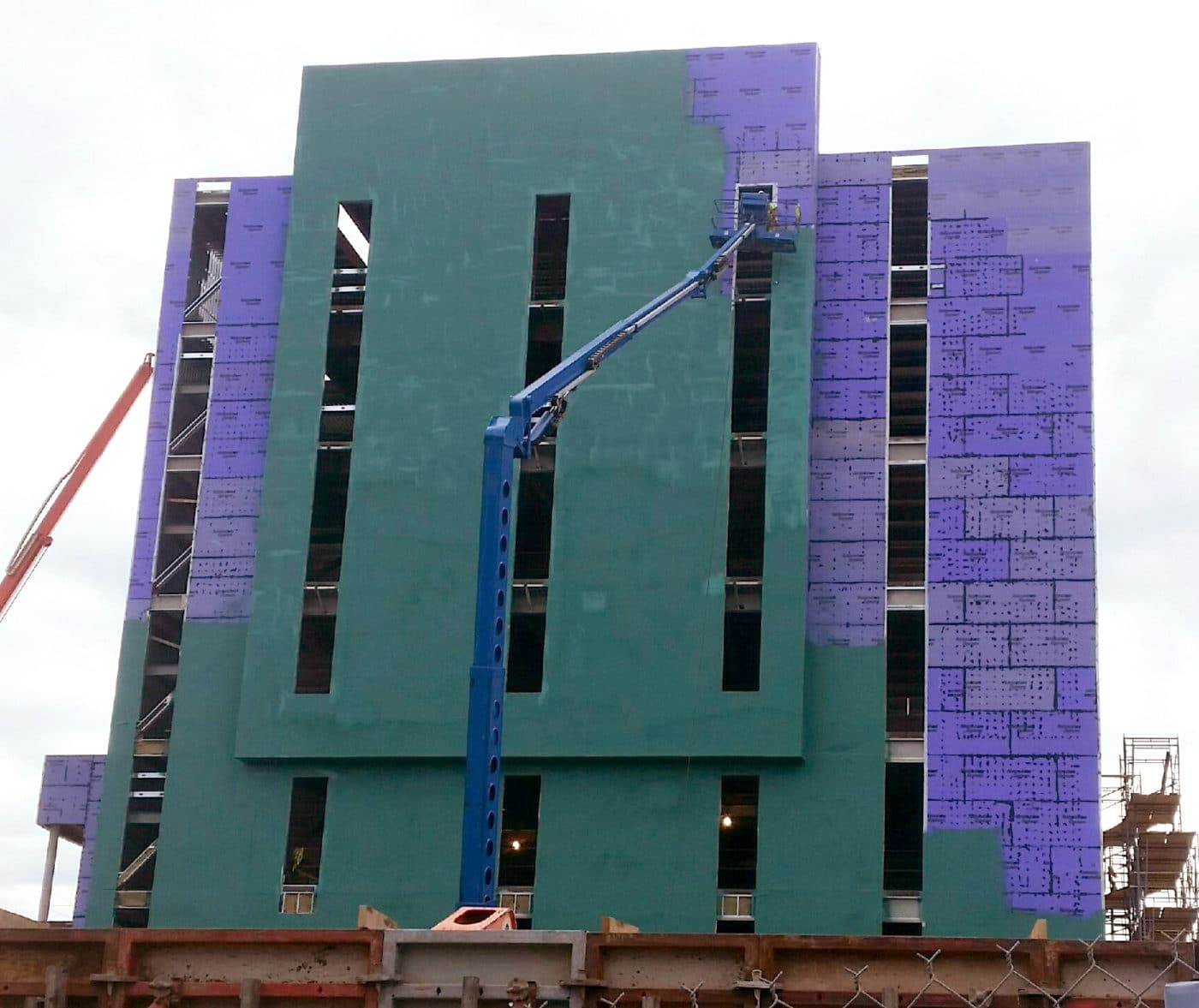
For commercial construction, institutional facilities, and large renovation projects in the Bismarck area, spray-applied air barrier systems deliver continuous, fully adhered coverage across the full wall assembly, including every penetration, structural transition, and framing connection where tape-detailed or sheet-applied systems leave gaps that Bismarck's persistent plains wind will find and infiltrate through every heating season.
A spray-applied air barrier bonds directly to the sheathing substrate and cures into a continuous membrane that moves with the building through Bismarck's freeze-thaw cycles without the delamination and gap formation that sheet systems develop at transitions over multiple seasons. For general contractors managing Bismarck construction schedules where the air barrier installation sits between framing and cladding, spray application produces a complete, verified air control layer without the sequencing delays that tape-detailed systems require at complex geometry. In Bismarck's compressed building season, where the window for exterior envelope work closes hard in late fall, that schedule efficiency has direct project budget implications.
See Air Barrier and Waterproofing Systems in Action
A look at how continuous air barrier membranes and deck waterproofing systems are installed to deliver the unbroken coverage Bismarck's plains wind and freeze-thaw cycling demand.
Air Barrier Installation
How a fluid applied air and vapor barrier membrane is installed at rough openings and across the wall assembly for continuous coverage.
Deck Waterproofing System
A look at a fluid applied membrane waterproofing system in action, the kind of seamless, fully bonded performance specified for foundations and below grade assemblies.
Why Equipment Capacity Matters
On Bismarck Waterproofing Projects
Spray-applied foundation membranes and air barrier systems require consistent output pressure, correct material temperature, and even film thickness across large, continuous surfaces to perform as specified in Bismarck's climate conditions. Equipment that cannot maintain those variables during application in cold-weather conditions produces thin spots and coverage gaps that fail at the points of highest moisture and wind pressure stress, frequently within the first full freeze-thaw season.
TCS runs multiple dedicated spray rigs and operates a 44-foot Featherlite commercial trailer, the Big Rig, that carries membrane materials, foam, lifts, and application equipment for large-scale Bismarck commercial, institutional, and government waterproofing projects in a single mobilization. For general contractors managing Bismarck construction schedules where waterproofing and air barrier phases sit on the critical path before subsequent trades can proceed, single-mobilization readiness reduces both the moisture-exposure window during open-envelope construction and the schedule risk that underequipped specialty contractors introduce.
"A general contractor TCS worked with on a large Bismarck commercial project near the State Capitol corridor noted afterward that TCS was the first specialty envelope contractor on that project who arrived with material temperatures already managed for ambient conditions and moved directly into continuous application from the first hour of the day. The waterproofing and air barrier phases finished within the production window the project schedule required."
Why Bismarck Property Owners and Contractors Trust Technical Construction Solutions
Foam Technology Built Into Every Decision
The application discipline that produces consistent spray foam insulation results carries directly into spray-applied foundation membranes and air barrier systems, because the equipment requirements, material temperature management, and coverage standards are fundamentally the same.
Missouri River Valley Moisture Awareness
Bismarck's clay soil profile creates foundation moisture conditions that standard damp-proofing specifications were not developed to handle. Every TCS assessment accounts for clay soil drainage behavior and the sustained hydrostatic pressure duration this valley produces.
Full Moisture Pathway Assessment
Every waterproofing project starts with identifying where moisture is entering and how it is moving through the building assembly. That sequence prevents the wrong treatment from being applied, stopping the cycle of failed remediations that leave the actual entry point unaddressed.
Highway Construction Background
Freddy Lewis's background in highway undersealing gives TCS technical credibility for foundation waterproofing. Infrastructure-grade moisture pathway precision applied to foundation systems produces a different durability outcome than residential-grade methods applied to the same substrates.
Big Rig Capacity for Institutional Projects
The 44-foot Featherlite commercial trailer gives TCS the material volume and operational readiness to complete large Bismarck commercial, institutional, and government waterproofing projects in a single mobilization, without supply delays that underequipped operations deal with.
Built for Bismarck's Specific Climate
Every foundation waterproofing system and air barrier installation specified accounts for Missouri River valley clay hydrostatic behavior, sustained freeze-thaw cycling, plains wind infiltration pressure, and the compressed building season that determines when exterior envelope work must be complete.
Get a Free Waterproofing and Air Barrier Estimate in Bismarck, ND
A Bismarck building with an untreated moisture entry point is not partially waterproofed. It is accumulating damage behind the wall assembly, and in the lower-level framing every spring thaw season, with the repair scope growing each year, the entry point goes unaddressed. By the time moisture damage becomes visible on finished interior surfaces, the wall assembly and structural framing behind it have typically been wet for longer than the visible damage suggests.
Start with a free estimate. One conversation is enough to assess the building envelope, identify where moisture is entering and how air infiltration is contributing to the problem, and give you a clear picture of what the right waterproofing and air barrier system will cost, no pressure, no obligation.