
South Dakota's Blown-In & Batt Insulation Specialists
Not a foam crew that carries fiberglass as a secondary option. A construction-backed insulation operation with purpose-built fiberglass equipment, the product knowledge to match each system to the right application.
Why Choose Technical Construction Solutions for Blown-In and Batt Insulation in South Dakota?
South Dakota property owners who have already paid for insulation work often discover the same problem during the first full heating season after installation: the heating bill didn't move the way the contractor's estimate suggested it would. The insulation is technically in the building. The performance isn't.
A homeowner in Aberdeen came to us after two winters of elevated heating costs following a wall cavity blown-in project on his 1950s ranch home. The previous contractor had drilled access holes, injected loose-fill, and patched the openings. When we assessed the walls, the fill had settled significantly in most cavities, dropping to the bottom third of the stud bay and leaving the upper sections effectively empty. In older wall assemblies where the original lumber has dried and shrunk slightly over decades, loose-fill that is installed below the correct density settles fast and far. The homeowner could not see the problem from inside the house. The utility bill showed it every month.
We redrilled each stud bay, verified the existing fill depth, and injected to the correct density across the full cavity height. The access points were patched, and the following winter, his gas consumption came down to the lowest level the property had seen in years. The insulation was in the walls. It just wasn't doing the job it was paid to do.
That outcome comes from one variable: fill density. It is the installation decision that determines whether the wall cavity blown-in performs for the life of the wall or settles in the first heating season.
Freddy Lewis founded Technical Construction Solutions LLC after 15 years of structural field work in highway construction. That construction background shapes how every insulation assessment gets run in South Dakota: starting with what the building is doing, not with what system is already staged on the truck. TCS operates both spray foam and dedicated fiberglass equipment, which means the recommendation you receive is based on what each application in your building actually requires, not on what happens to be the most available option.
If your South Dakota property is paying for insulation performance it is not receiving, or if you are planning a new build and want each assembly specified correctly from the start, a free estimate is the right first step. Reach our South Dakota insulation contractors to get started.
Blown-In Insulation Services Across South Dakota
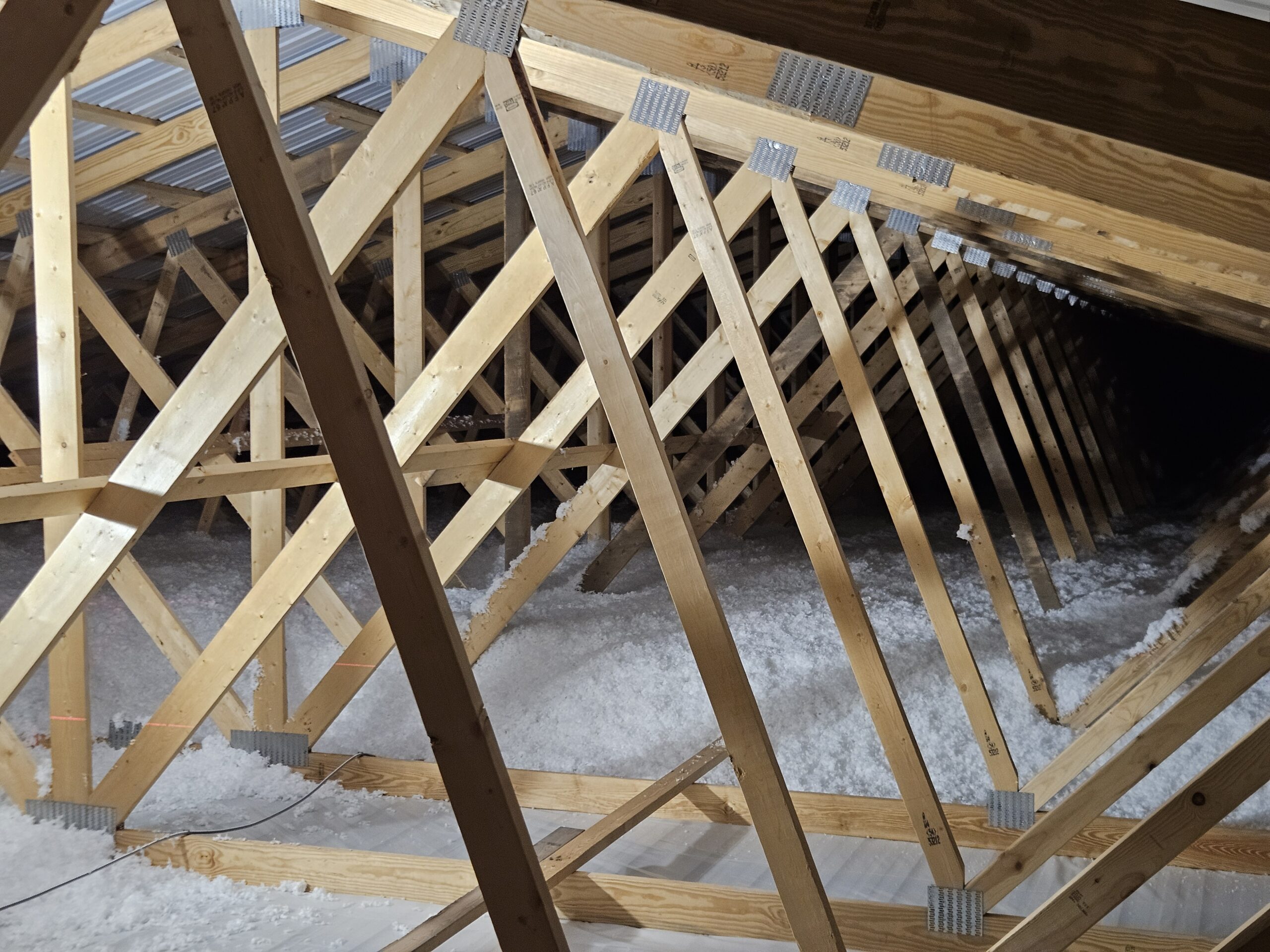
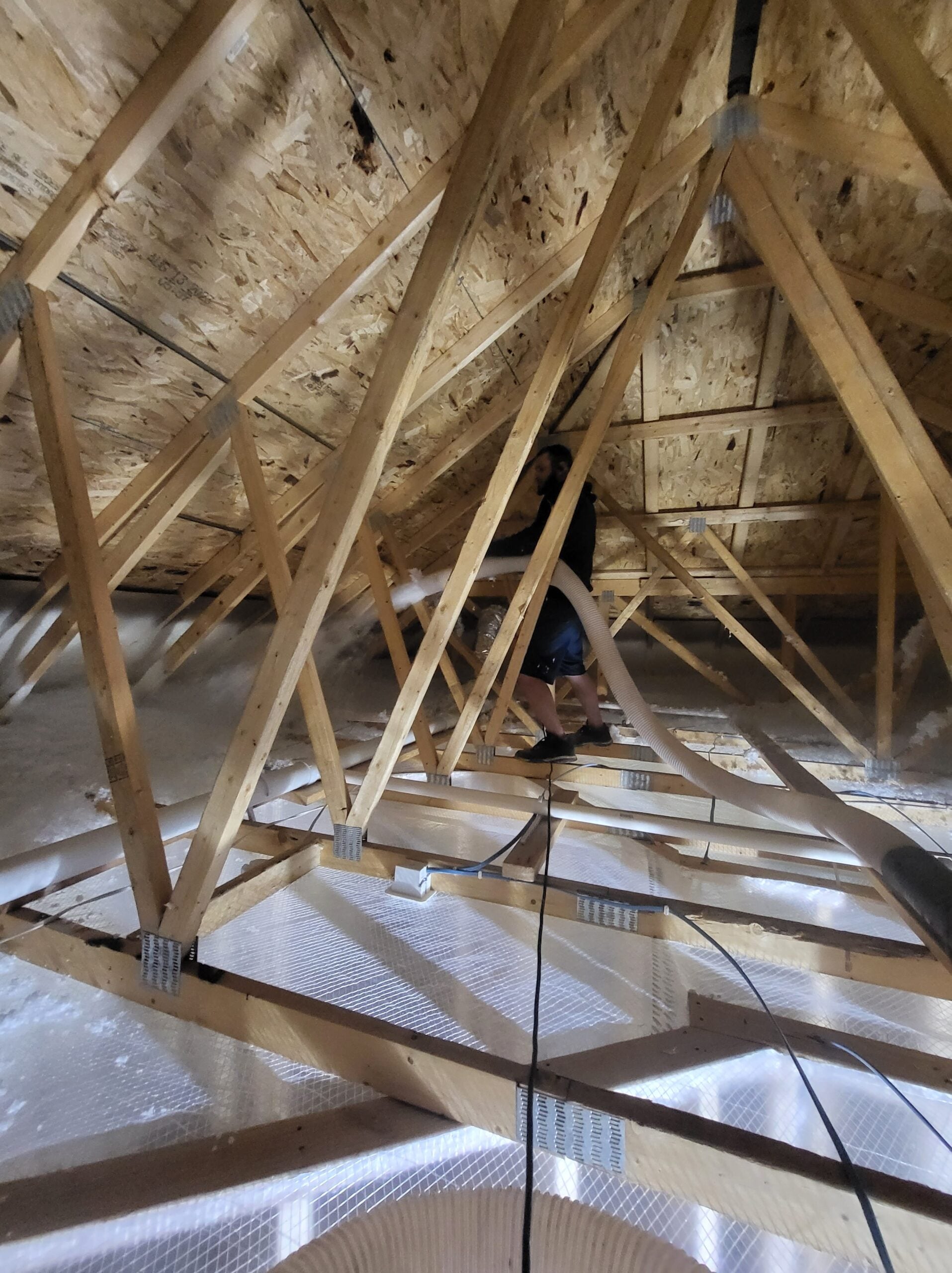
Attic Blown-In Insulation
South Dakota's climate zone demands attic insulation performance that many existing residential and commercial buildings across the state are not currently delivering. Sioux Falls, Rapid City, Aberdeen, Watertown, Pierre, and every community across the state's agricultural interior face sustained heating seasons where an attic insulated to a twenty-year-old code specification, or to a depth that has settled below its original installed level, fails to deliver the thermal resistance the building was designed around.
The attic floor is the highest-priority thermal loss zone in most South Dakota buildings, and blown-in insulation is the most practical system for correcting attic performance without opening finished ceilings or disrupting occupied spaces below. For the Craftsman and mid-century bungalows throughout Sioux Falls's established north-end neighborhoods, the ranch homes and split-levels across Aberdeen's residential grid, and the older commercial attic spaces throughout Pierre's downtown blocks, blown-in over existing material brings the full attic assembly up to the depth that South Dakota's climate zone actually demands.
The variables that determine whether a blown-in attic delivers its rated R-value through a full South Dakota heating season are consistent across every project: correct depth from eave line to eave line, not just at the accessible center field. Fill density that resists air movement during sustained cold or wind pressure events. Bypass sealing at top plates, attic penetrations, and the access hatch opening before insulation covers those locations. Each of those variables gets addressed on every project this crew closes, because the heat loss showing up in the utility bill in January traces back to the edge zones and bypass points, not to the center of the attic floor, where depth is easiest to achieve and easiest to verify.
For South Dakota's older farmhouse inventory, across the James River Valley, the Coteau des Prairies, and the scattered agricultural communities that developed through the early and mid-1900s, attic blown-in is frequently the most accessible path to a meaningful reduction in heating cost without a major renovation. The work goes in from above, the finished interior stays intact, and the thermal performance improvement shows up in the first full heating season after installation.
Existing Wall Cavity Blown-In
South Dakota carries a significant inventory of homes built before insulated wall assemblies were a standard construction requirement. The older residential stock in Watertown and Yankton, the farmsteads throughout the Missouri Coteau and the Big Sioux River Valley, and the mid-century housing developed across Rapid City's West Side and Sioux Falls's Cathedral neighborhood during the 1940s and 1950s all share the same characteristic: exterior wall framing with minimal or no cavity insulation that has been losing heat through the full stud bay depth for every winter the building has been occupied.
Blown-in into existing wall cavities through drilled access holes is the only system that corrects that heat loss without removing exterior siding or interior wall finish. The process requires drilling one access hole per stud bay, filling each cavity to the correct density for the full cavity depth, and patching the access points with material that matches the existing surface. The installation detail that determines long-term performance is fill density. A cavity that appears full at the drill hole but is filled below the correct density specification will settle within the first heating cycle, leaving a void at the top of the stud bay that produces exactly the thermal gap the installation was supposed to close.
This crew verifies density at each cavity before patching, because a wall that looks complete from outside or inside the building can still be underperforming if the fill density is not at the specification for that cavity depth. For South Dakota homeowners managing older properties where heating costs have increased steadily as the building ages and the original insulation has degraded or settled, wall cavity blown-in is the thermal envelope improvement with the most direct return per dollar applied to the assembly.
Batt Insulation Services Across South Dakota
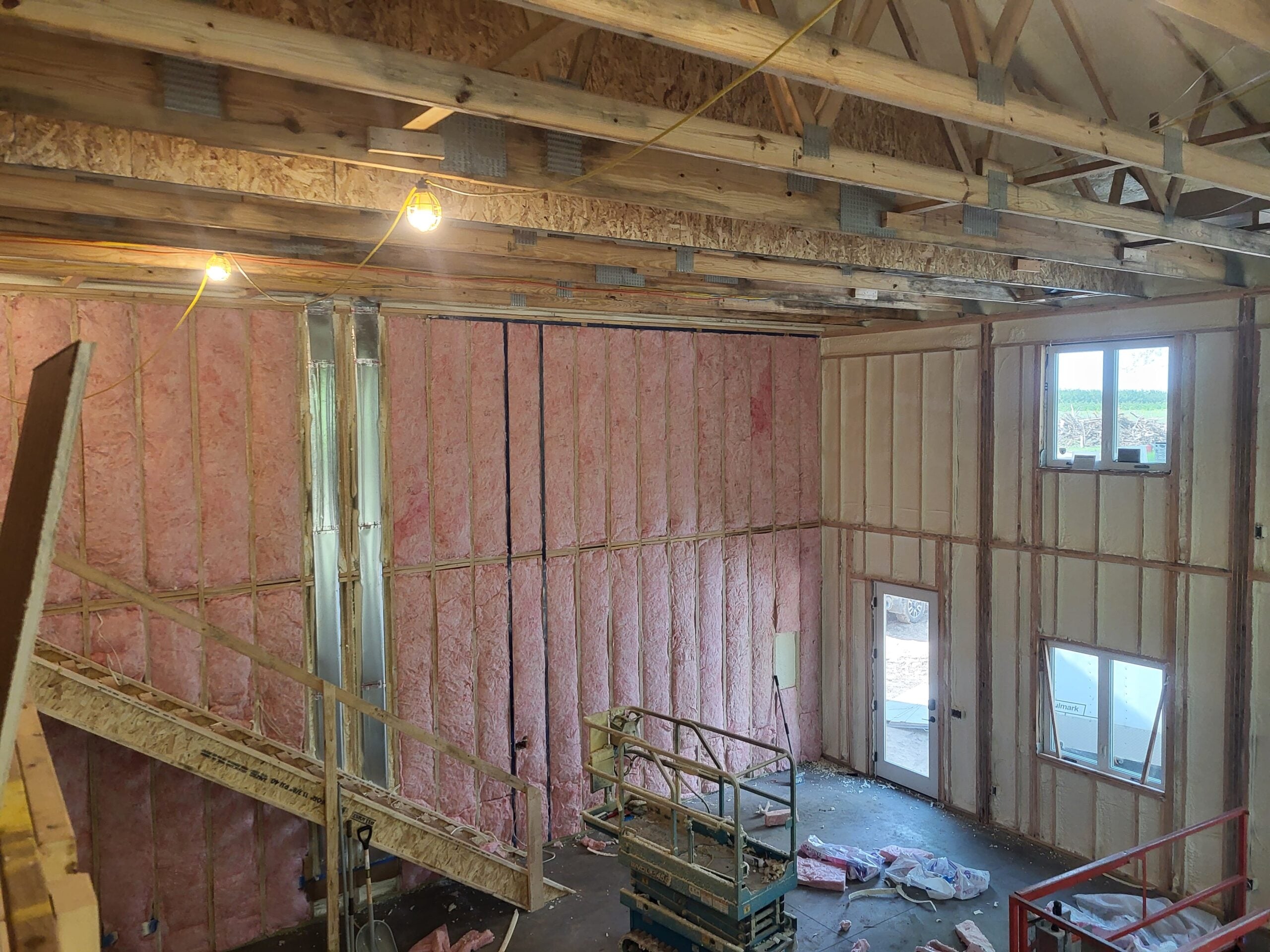
Why Batt Insulation Still Delivers in the Right Application
Batt insulation is not the highest-performance system across every application. Spray foam leads in air sealing and vapor control. Blown-in outperforms batts in attic applications where settling resistance and irregular cavity fill matter more than precise R-value-per-inch calculation. In the applications where batts genuinely belong, however, fiberglass or mineral wool installed correctly delivers reliable, cost-effective thermal performance that fits the budget realities of new construction and renovation projects across South Dakota without sacrificing the performance standard that South Dakota's climate requires from every wall and floor assembly in the building.
The right application for batts is an open wall or floor cavity during new construction or gut renovation where framing is fully exposed, cavity geometry is regular, and the project budget makes blown-in or spray foam the less practical choice for that specific assembly. In those conditions, batts installed with full cavity coverage, no compression, correct facing orientation, and proper handling at penetrations perform at their rated R-value for the life of the assembly.
The wrong application is a cavity with irregular framing geometry, penetrations that standard batt widths do not cover cleanly, or air movement pathways that batts were not designed to stop. In those conditions, batts underperform regardless of how carefully they are installed, because the product is not matched to the problem the application presents. Identifying that distinction before product selection is what prevents a South Dakota building from being insulated with the most convenient system rather than the most appropriate one.
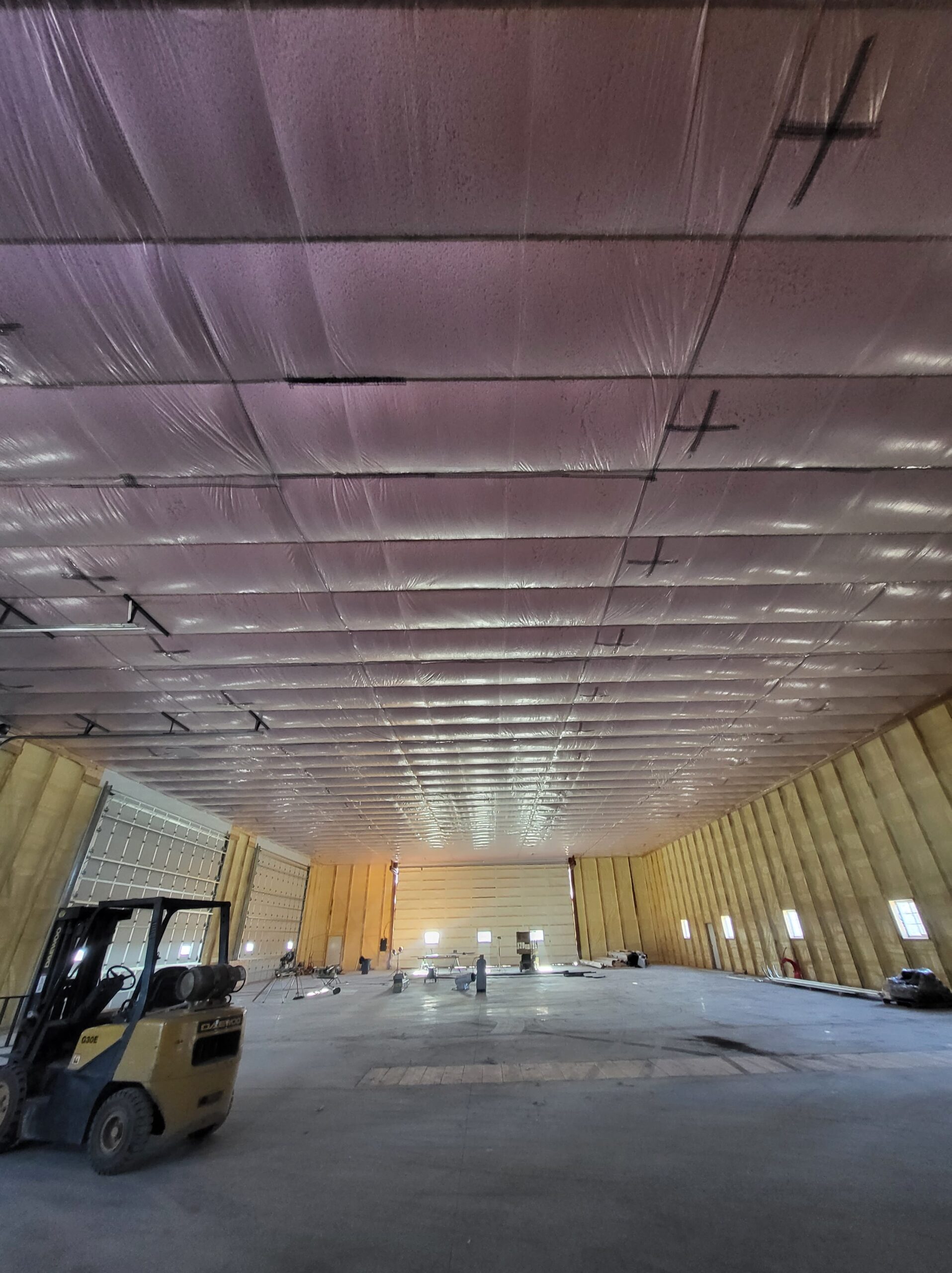
Residential Batt Insulation for New Construction Across South Dakota
For builders and homeowners managing new residential construction across South Dakota, the rapid growth in Harrisburg, Tea, and Brandon south of Sioux Falls, new development near the Brookings corridor, and single-family construction in Rapid City's expanding northern and western neighborhoods, batt insulation in open wall and floor cavities during the framing phase keeps the thermal envelope on schedule and on budget without compromising performance in the applications where batts are genuinely the right call.
South Dakota's climate zone requirements for wall and floor assembly R-values are among the most demanding in the country for new residential construction, and meeting those requirements with batts depends on installation discipline applied consistently across every cavity in the building. The accessible straight runs in the center of each wall are not where installation quality is made or lost. The penetration points, electrical boxes, plumbing runs, top and bottom plate intersections, and rough framing around windows and doors are where gaps appear in finished assemblies, and where thermal performance falls short of the designed specification.
This crew cuts batts to fit each penetration location, addresses every gap in the cavity, and maintains correct facing orientation from the first stud bay to the last one in the building. That execution standard is what produces a South Dakota home that performs at its designed thermal specification through a full heating season rather than one that shows cold zones and elevated energy costs by the second winter of occupancy.
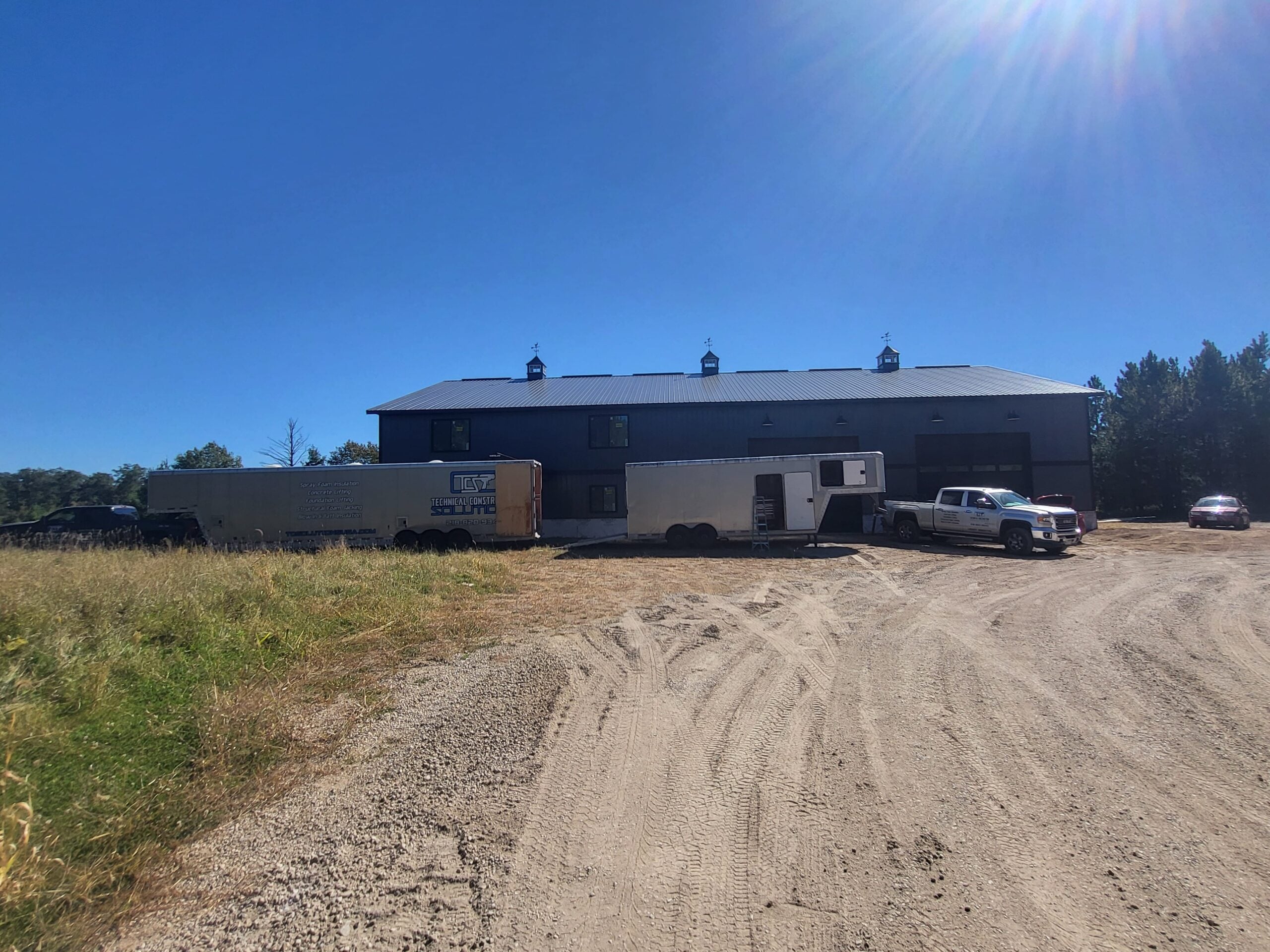
Commercial and Multi-Unit Batt Applications Across South Dakota
For commercial developers and multi-unit residential builders managing large framing projects across South Dakota, where cost-per-square-foot drives insulation product selection and construction timelines are organized around weather windows and occupancy commitments, batt insulation in open commercial wall and floor assemblies delivers predictable thermal performance at predictable cost when installation quality holds consistently across the full building volume.
The risk on large commercial batt projects in South Dakota is not the first day of installation. It is maintaining the same penetration coverage standard and cavity discipline at stud bay five hundred as at stud bay five, when crew pace has shifted and the straightforward runs are long finished. Inconsistent coverage on a large commercial envelope produces thermal deficiencies that appear in operating costs and tenant comfort after the building is occupied, at which point identifying and correcting them requires opening finished wall surfaces that were closed months earlier.
This crew applies the same penetration coverage and gap discipline across the full building volume on every South Dakota commercial project. A consistent thermal envelope is not a visible outcome during construction. It shows up in operating costs, tenant satisfaction, and the absence of callbacks after occupancy.
Our Full Range of Insulation Services in South Dakota
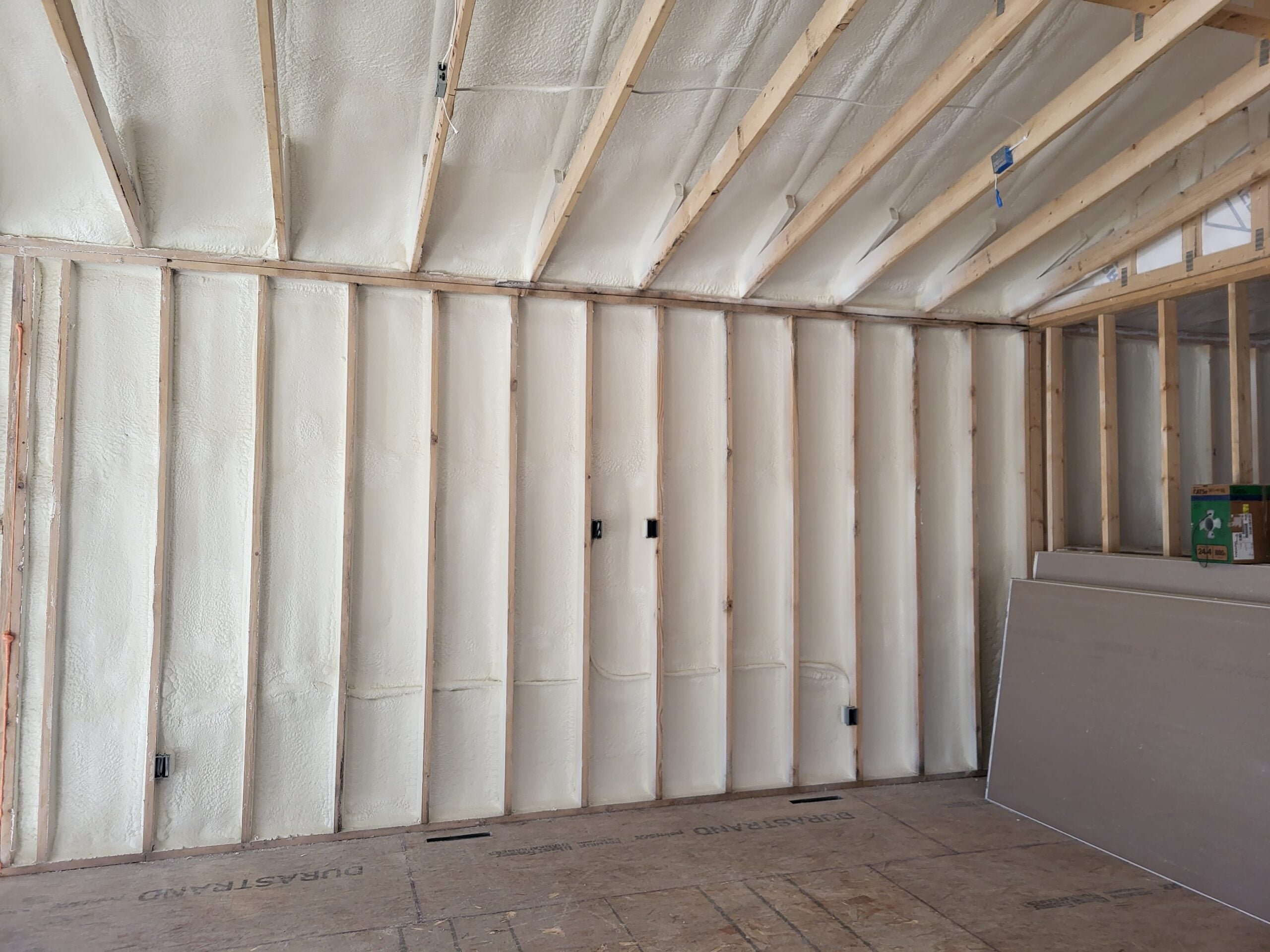
Spray Foam Insulation
Closed-cell and open-cell systems for residential, commercial, agricultural, and pole barn applications across South Dakota.
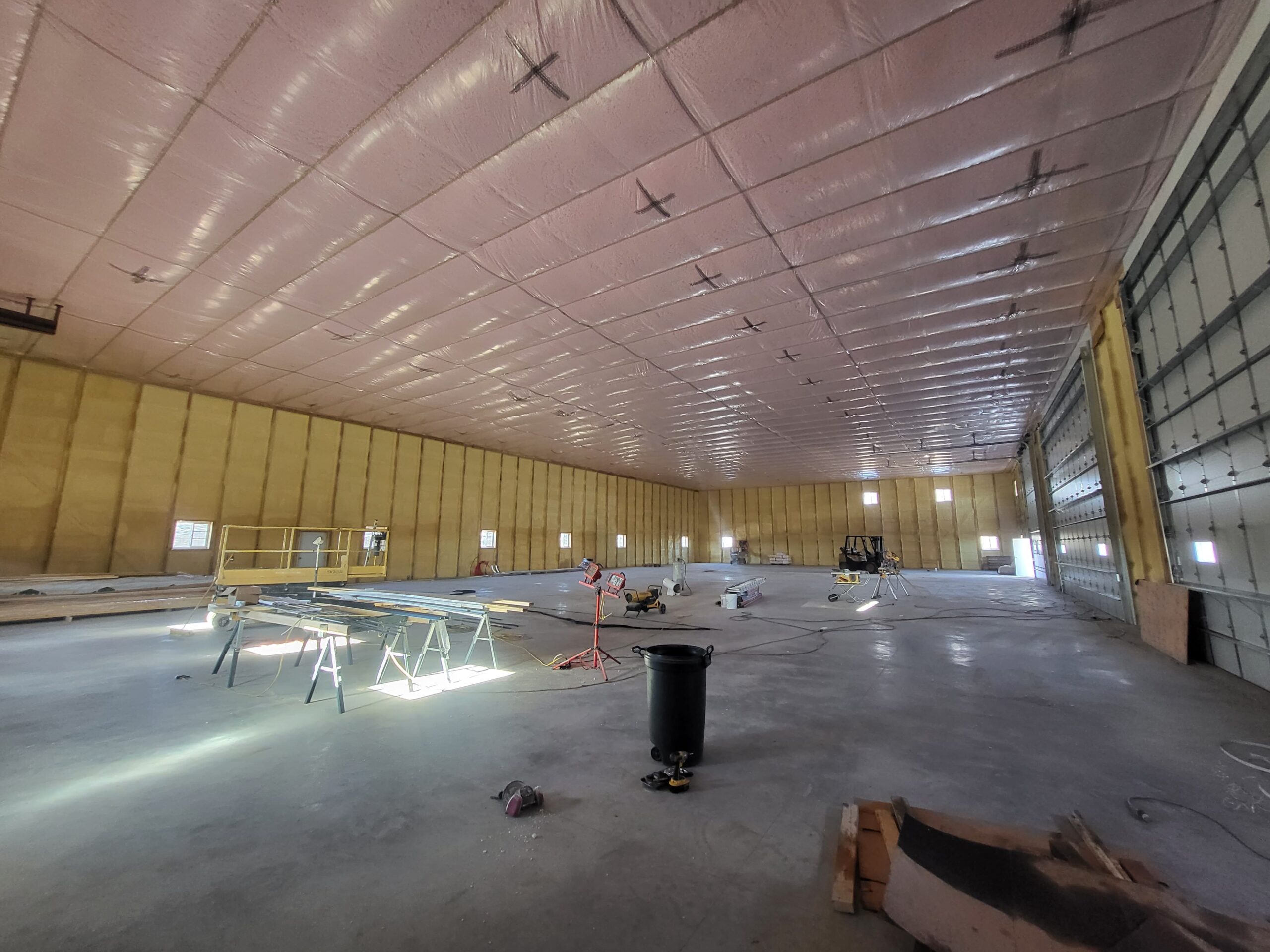
Pole Barn Insulation
Spray foam for shops, equipment buildings, and agricultural structures across eastern and western South Dakota.
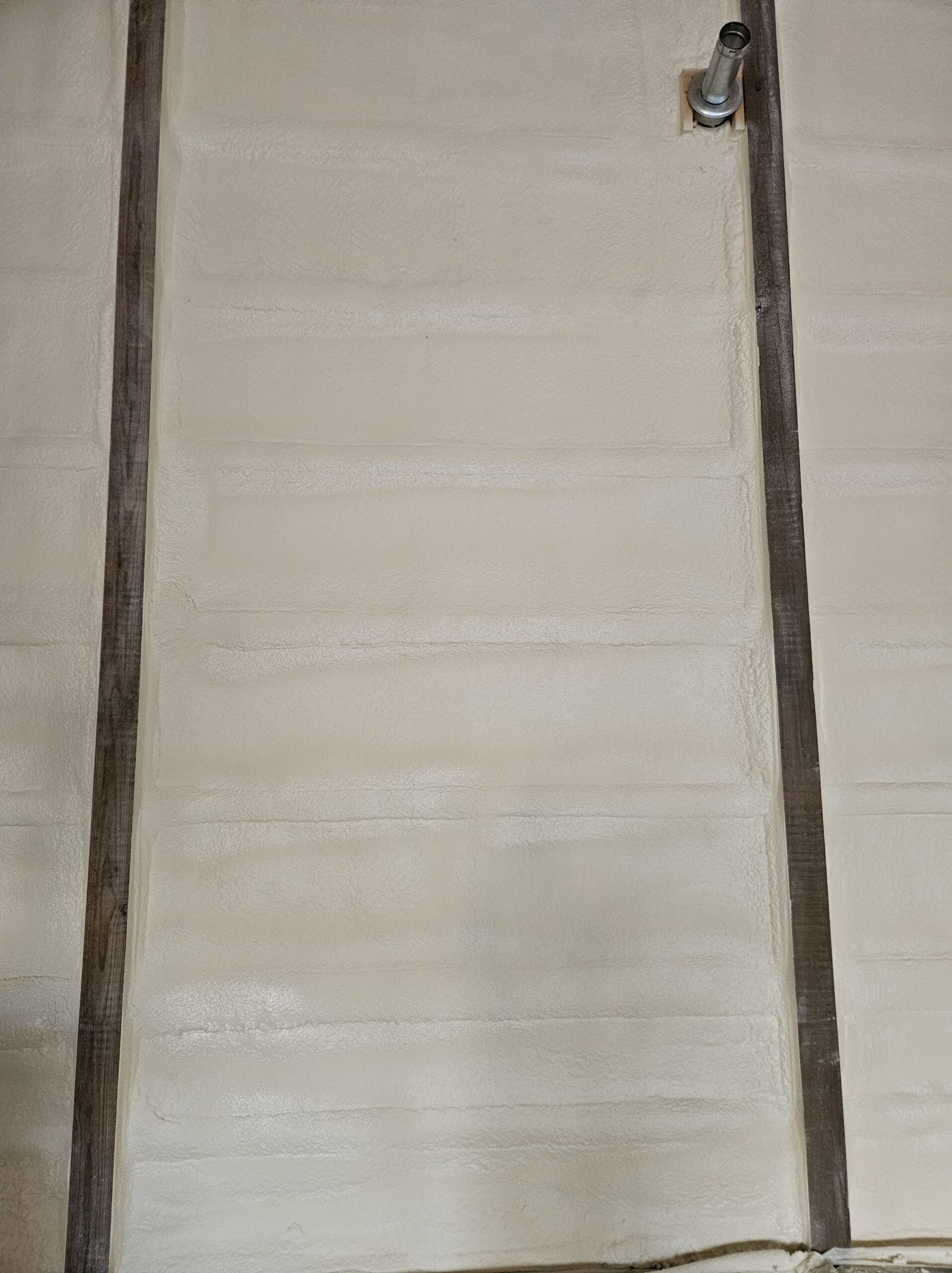
Crawl Space Insulation
Moisture control and floor comfort for South Dakota homes where ground moisture and temperature differentials affect the living space above.
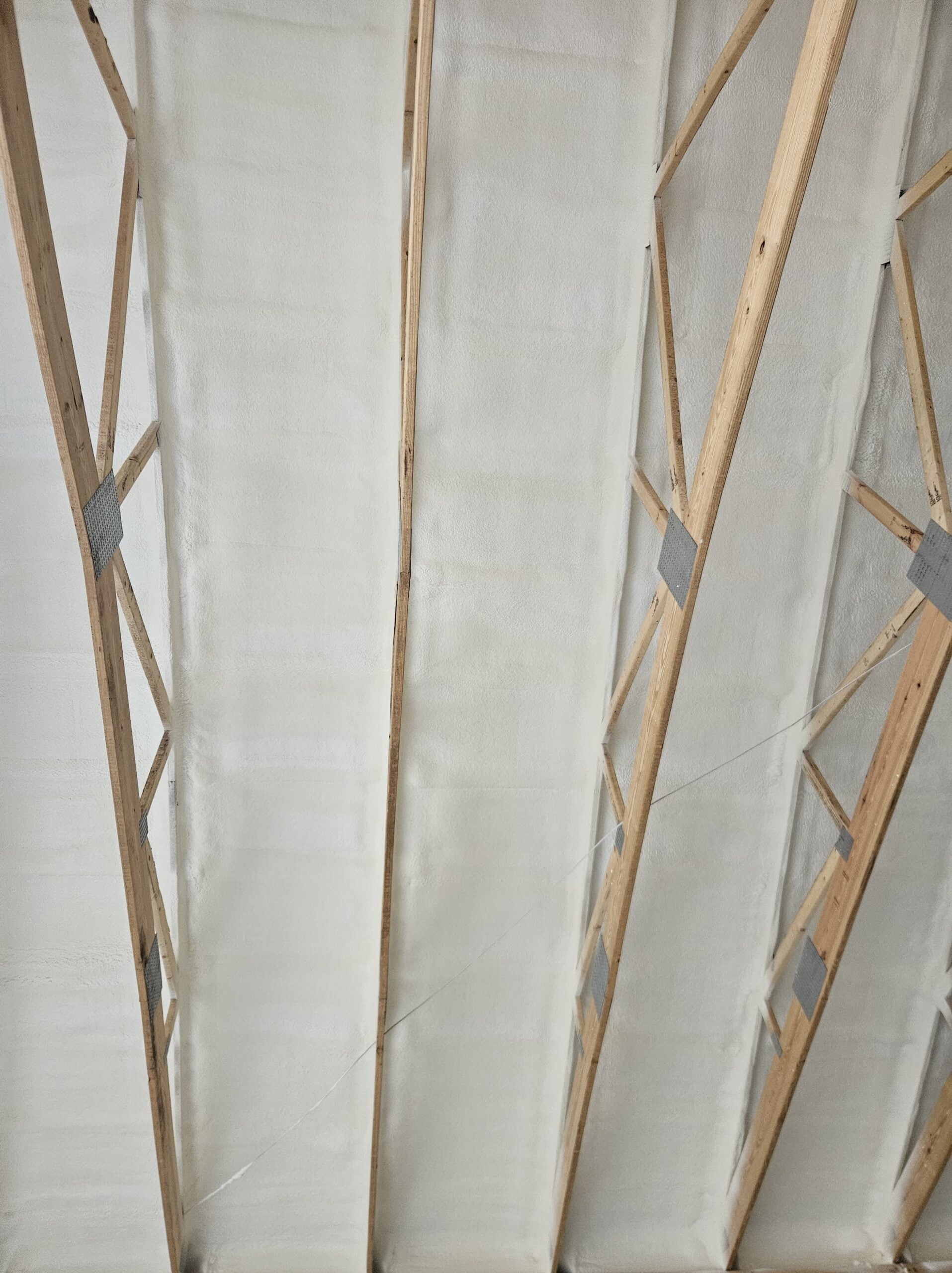
Under-Slab Insulation
Thermal break solutions for new construction foundations before the concrete pour, with application in heated agricultural floors and commercial foundations.
The System Selection Advantage: Why Carrying Both Changes What Your Building Gets
A contractor whose entire operation runs on blown-in equipment recommends blown-in for every attic and wall cavity, because that is what the truck is set up to run. A contractor whose operation is set up for batts recommends batts for every open framing situation. In both cases, the building gets the system that the contractor can deliver that day, not the system that each specific application in the building actually performs best with.
Blown-in and batt insulation serve different applications well. Blown-in performs best in attic spaces, existing wall cavities with access limitations, and locations where settling resistance and irregular cavity fill matter more than a tight R-value-per-inch calculation. Batts perform best in open wall and floor cavities during new construction, where framing is fully accessible, cavity geometry is regular, and cost-per-square-foot is a genuine project constraint.
A new residential build in Brookings might call for blown-in insulation over the attic floor and batts in the open exterior wall cavities during the framing phase, each system in the application where it produces the best thermal outcome for that section of the building. That combination produces a building envelope that outperforms defaulting to one system across every zone in the project, and it is only available from a contractor who carries both and specifies each based on what the application requires, not on what happens to be staged and ready.
TCS operates two dedicated fiberglass rigs alongside its spray foam fleet because matching the system to the application is what produces South Dakota buildings that perform at their designed thermal standard across the heating seasons they are occupied.
Why South Dakota Contractors and Property Owners Trust Technical Construction Solutions
Two Dedicated Fiberglass Rigs. Purpose-Built for South Dakota's Blown-In and Batt Work.
TCS does not run blown-in and batt as a secondary service off the back of the foam operation. Two dedicated fiberglass rigs, purpose-built for that work, mean South Dakota property owners receive insulation installed with the right equipment for the application. A single-rig operation that picks up blown-in work between foam jobs arrives with compromised scheduling availability and limited output capacity on larger jobs. These rigs are staged for this work specifically.
Foam-First Background That Makes Fiberglass Recommendations Credible.
TCS built its reputation on spray foam before adding dedicated fiberglass capacity. That background means the crew understands both product families at a technical level and gives South Dakota property owners a straight answer about which system produces better results for their specific application, including the cases where blown-in or batts are genuinely the right call and foam is not. A recommendation for blown-in from a crew that also installs foam carries more weight than the same recommendation from a fiberglass-only operation.
Attic Air Sealing Knowledge Applied to Every Blown-In Project.
Because this crew works extensively with spray foam air sealing, the bypass pathways that undermine blown-in performance, top plates, attic penetrations, partition intersections, and the attic access point are addressed as part of the standard scope on every South Dakota blown-in project. A fiberglass-only operation that has never worked with foam air sealing typically does not address those bypass locations, because they are not part of the product application. They are part of understanding how heat moves through a building assembly.
15+ Years of Construction Field Experience Behind Every Recommendation.
This company was founded and is led by someone who spent over 15 years working in construction before TCS existed. Insulation decisions come from a builder's understanding of how wall assemblies, vapor management, framing systems, and mechanical interaction affect the insulation layer, not from a product data sheet applied without adjustment to the actual conditions of each South Dakota building.
Serving South Dakota's Rural Housing Stock.
South Dakota's older rural housing inventory, across the farmsteads in Beadle County, the small-town residential blocks in communities like Mitchell and Mobridge, and the agricultural settlements spread across the state's interior, represents a significant blown-in and batt upgrade opportunity that larger metro-based contractors rarely reach. TCS's two-rig fiberglass operation and long-range logistics capacity make professional insulation work accessible for South Dakota property owners outside the Sioux Falls and Rapid City markets who need quality work and have limited local options.
Fair Pricing in a Market With Limited Competition.
South Dakota's insulation contractor density, particularly in the state's central and western regions, can produce elevated pricing when property owners have limited alternatives and know it. Every TCS estimate reflects what the project actually requires at pricing that reflects the scope and not the scarcity of alternatives. What gets quoted is what the job needs, and what gets installed is what was quoted.
On Time. On Budget. During South Dakota's Construction Window.
South Dakota's construction weather window is compressed by the climate, and an insulation crew that cannot finish on the agreed schedule holds up every trade sequenced behind it. TCS's two-rig fiberglass operation and professional crew management deliver blown-in and batt work completed on the timeline that the rest of the build schedule was organized around, whether the project is a residential attic in Harrisburg or a commercial envelope in Rapid City.
Get a Free Blown-In and Batt Insulation Estimate Across South Dakota
Insulation that does not deliver its rated R-value costs more than the installation price, in heating bills, in comfort loss, and in the energy that leaves the building through every South Dakota winter, the assembly is occupied below its designed thermal standard. The right starting point is a crew that assesses what each application in the building actually requires before recommending a system, rather than arriving with one option and applying it across every zone regardless of fit.
Start with a free estimate. One conversation is enough to assess the building, identify where heat loss is the active problem, and give you a clear picture of what the right system costs across each application. No pressure. No obligation.