
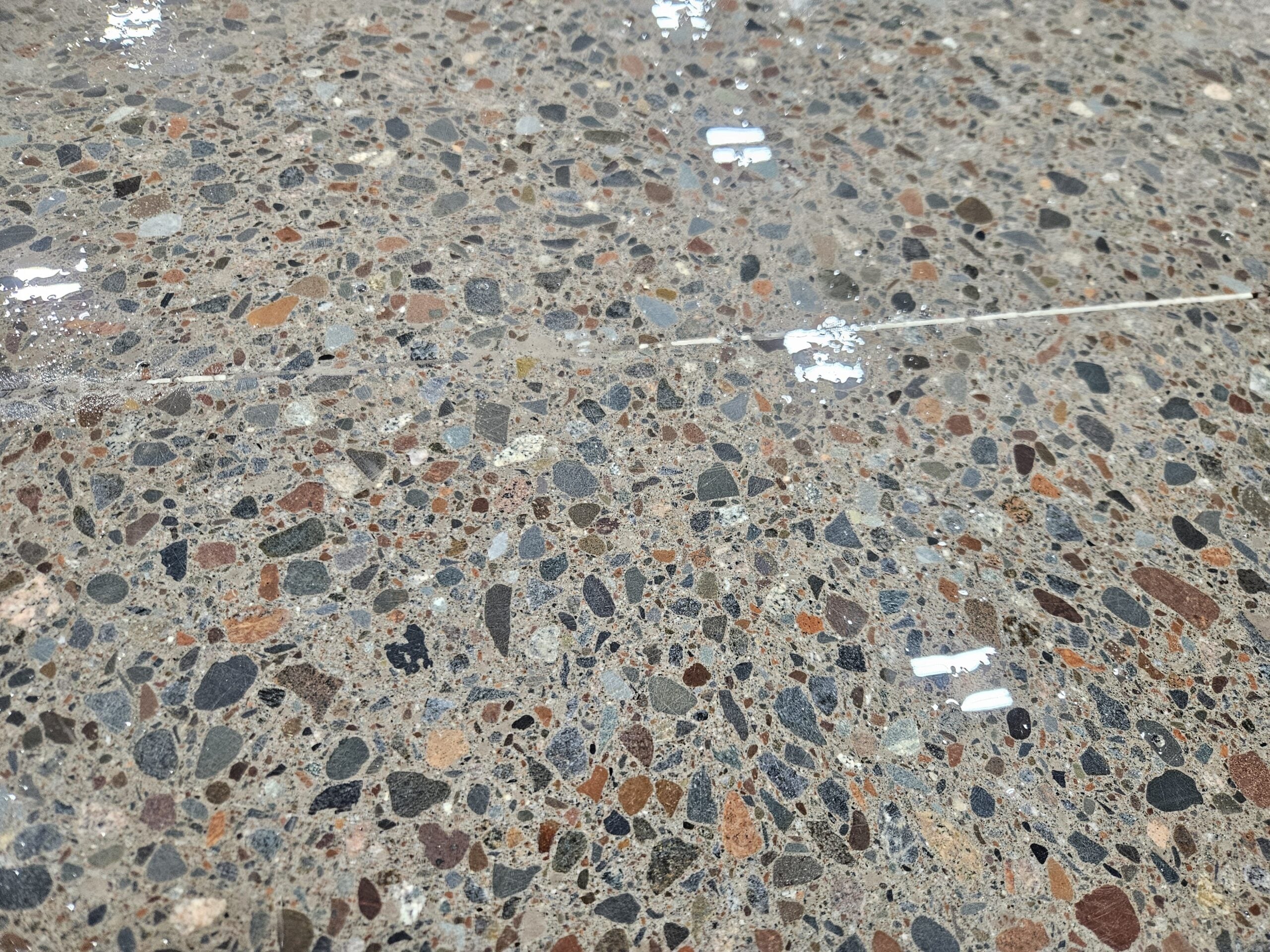
South Dakota's Concrete Floor Polishing Specialists
15+ Years of Structural Field Experience. Industrial-Grade Systems. Floors That Perform.
Not a flooring crew that added concrete to their service list. A construction-built operation with the polishing systems, slab-level diagnostics, and field experience to produce floors that hold their finish through South Dakota's full range of operating conditions.
Why Choose Technical Construction Solutions for Concrete Floor Polishing?
The pattern we hear from property managers, shop operators, and facility owners across South Dakota isn't really about the finish. It's about what happened after. The floor looked good when the contractor left. Six months later, it was scuffed through in the high-traffic lanes. A year in, the surface was absorbing every fluid that hit it, and the sheen was gone entirely. The work wasn't wrong on the surface. It was wrong underneath, where no one looked before the polishing started.
A maintenance shop operator near Rapid City, off Hwy 16, called us out after going through two floor-polishing contractors over three years. Both had produced a finish that looked acceptable at handoff; neither had profiled the slab before polishing. The concrete was still porous, still moving moisture seasonally, and the finish had never bonded at depth. What those contractors called a polished floor was a dressed surface sitting on an unresolved slab. We ground it back to bare concrete, addressed the moisture profile, densified the matrix, and polished it in proper sequence. That floor is now in year two without a single maintenance call.
A polished floor and a properly polished floor are not the same thing. The difference shows up 18 months later.
The glacial till and expansive clay soils that cover much of eastern South Dakota, from the Coteau des Prairies down through the James River lowlands, create slab conditions where moisture migration from below is an ongoing factor. A floor polished without accounting for that movement will fail at the surface, regardless of how good the polish looks at the time. Getting the slab right before the first grind pass is what separates a floor that lasts from one that needs to be redone.
If your concrete floors are underperforming, unfinished, or coming apart at the surface, a free estimate is the right first step. One site visit is enough to read the slab, identify what's actually driving the problem, and give you a clear path forward. If you are also evaluating building envelope improvements alongside your flooring project, the full scope of our insulation and air barrier systems is available on our Insulation Contractor hub.
Polished Concrete Services Across South Dakota
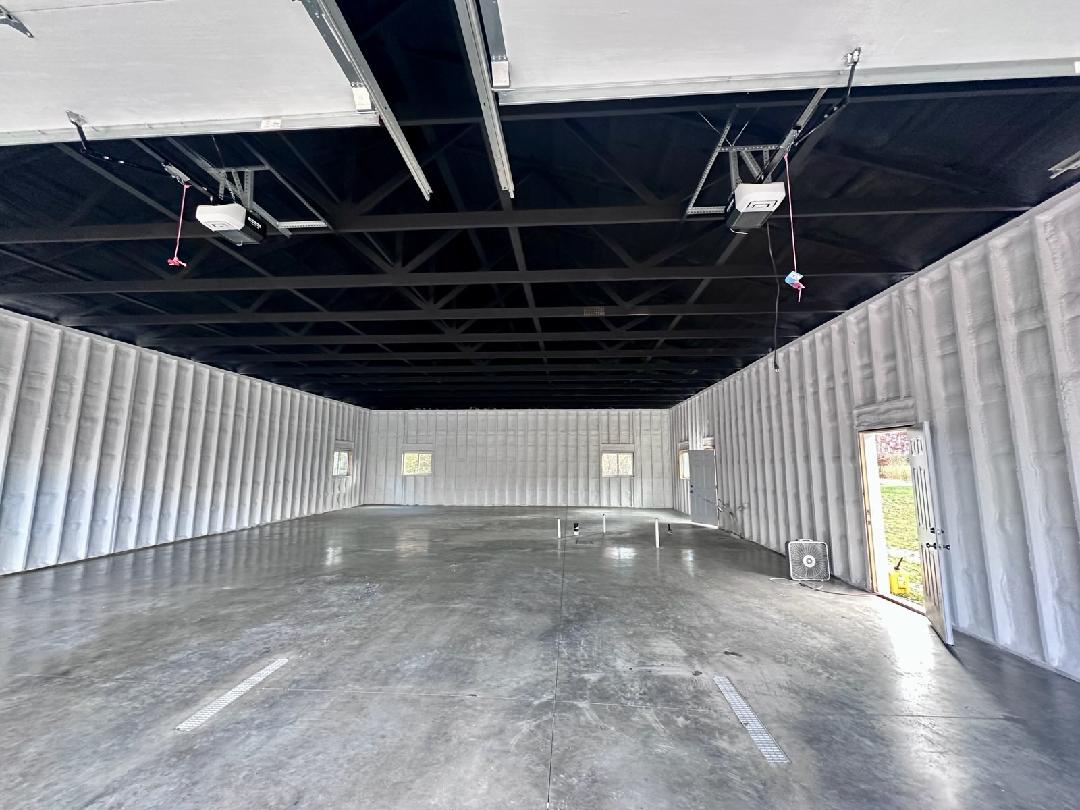
Polished Concrete for Commercial and Industrial Spaces in South Dakota
Across South Dakota's commercial and industrial sectors, from the distribution facilities along I-29 north of Sioux Falls to the implement dealerships and cold storage operations scattered through the agricultural corridor between Huron and Aberdeen, polished concrete is the flooring decision that stops the replacement cycle. The slab already on site becomes the finished floor. No coatings to reapply every two years, no tiles failing at the grout lines, no adhesive breaking down under forklift load.
Diamond grinding and polishing systems work through calibrated progressive stages. Each pass cuts the concrete surface to a precise depth, opens the matrix for densifier penetration, and builds toward a finished surface density that resists abrasion, fluid absorption, and the daily load of commercial operations without ongoing intervention. For facility managers who have been budgeting for floor maintenance every season, the removal of the maintenance cycle is the actual return on the investment.
In environments like grain processing facilities in Mitchell, manufacturing operations in Watertown, or vehicle service bays throughout the Black Hills region, a floor that holds up without being touched again is not a luxury. It's the only version that makes operational sense.
For facilities considering a protective barrier on top of a polished base, Epoxy Coatings can be specified as part of the same project where chemical resistance or heavy impact protection is required. The full range of surface systems TCS installs across the region is covered in the Concrete Floor Coatings hub.
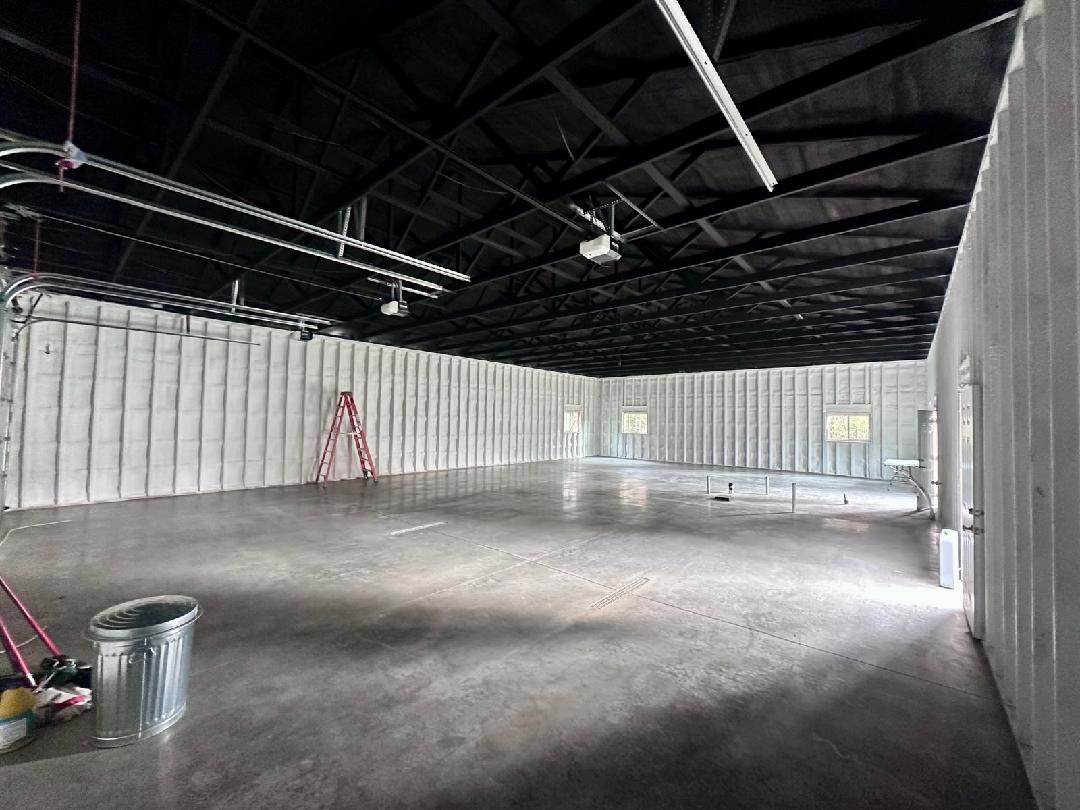
Polished Concrete for Shops, Garages, and Working Buildings
The shop floors, detached garages, and steel-framed outbuildings spread across South Dakota's rural acreages and small towns take punishment that most commercial floors never see. Harvest equipment tracked in with field mud and crop residue. Hydraulic fluid from machinery that runs twelve-hour days during planting and fall harvest. Road salt in the wheel wells of every vehicle coming in off a January county road. Temperature swings that run from below zero overnight to 20 degrees above in the afternoon during the shoulder seasons.
A polished concrete floor handles all of that without absorbing stains, holding moisture, or breaking down at the surface. For a hobby machinist south of Pierre, a custom fabricator in the Hills, or a rancher near Mobridge who wants a functional working floor that doesn't look like an afterthought, polished concrete produces a result that holds up year after year at a cost that competes with any comparable surface option.
What Surface Grinding Actually Does, and Why It Drives Every Outcome
Concrete polishing does not begin with polishing. It begins with surface grinding, and what happens during that grinding phase determines every result that follows. Grinding strips the weak, contaminated, or previously coated surface layer off the concrete, opens the slab profile so densifiers and coatings can penetrate rather than sit on top, and establishes the flat, consistent base that polishing and coating systems require to perform correctly.
Every floor coating failure that gets blamed on the product traces back to surface prep. Paint that bubbles near a bay door. Epoxy that starts delaminating at the edges within a year. A polished finish that wears through in the traffic lanes ahead of schedule. None of those are product failures. They are prep failures. The coating had nowhere to bond because the surface was never properly opened before it was applied.
Surface Grinding for Coating Preparation
For South Dakota facilities planning to apply epoxy or other protective systems, surface grinding is not a preliminary step that can be abbreviated to save time on the bid. It is the step that determines whether the coating bonds permanently or starts failing at the edges before the first winter is out.
The concrete surface has to be clean, flat, and ground to the correct profile for the specific coating system being specified. That matching of surface profile to coating type requires understanding both the concrete and the coating chemistry, which is a different knowledge set than simply knowing how to apply the product.
Because TCS works across concrete lifting, void filling, and structural applications alongside floor coating work, the team reads slab conditions, moisture levels, and sub-base movement as part of every assessment. That background informs how the surface gets prepared, not just what gets applied to it afterward. It is a level of concrete understanding that flooring-only contractors typically do not carry into the job.
Surface Grinding for Leveling and Restoration
Older commercial buildings throughout South Dakota, grain elevator complexes that have been operational for decades, implement dealership service bays that have absorbed years of fluid and equipment load, warehouse slabs that were poured without consistent depth control, and all of them accumulate surface problems over time. High spots, settlement cracks, trip hazards, and surface layers that have deteriorated beyond what any coating can bond to.
Surface grinding resolves those conditions before they become structural liability. A flat, restored slab surface that has been properly ground can be finished, coated, densified, or sealed, depending on what the facility actually needs. The grinding is what makes any of those options viable on a slab that has been through years of real use.
The Equipment Difference: Why It Matters on South Dakota Job Sites
Large-footprint concrete grinding and polishing jobs across South Dakota, the kind of floor areas found in commercial ag facilities, regional distribution centers, and manufacturing plants, do not produce consistent results with residential-grade or undersized equipment. A small grinder working a 15,000-square-foot floor produces inconsistency across the field, extends the job timeline significantly, and creates operational disruption that facility managers can't budget around.
TCS operates commercial-grade grinding and polishing equipment built for industrial floor areas.
"A project manager overseeing a large cold storage expansion near Brookings commented after the job that TCS was the first floor contractor on that build who arrived with equipment that matched the floor's actual scale. No timeline extensions, no sections that needed to be redone, no budget overrun on the back end. The job came in on the schedule and within the cost outlined in the estimate."
For South Dakota operations where floor downtime has a direct cost, execution reliability is not a secondary consideration.
Why South Dakota Contractors and Property Owners Trust Technical Construction Solutions
15+ Years of Hands-On Construction Experience
Every concrete polishing and surface grinding project is led by a construction professional who has spent over 15 years in the field on infrastructure work, not in a showroom. That background changes how floors get read: slab performance connects to moisture, sub-base conditions, and how the structure has moved over time. That context informs every prep decision before a grinder touches the floor.
Construction Roots, Not a Flooring Franchise
TCS was built by a hands-on construction professional with a family background in the trade. Projects get the diagnostic approach of a structural specialist, not a crew running a franchise system designed for speed over accuracy.
Deeper Concrete Knowledge Than Flooring-Only Contractors
Working across concrete lifting, void filling, and structural applications means the team reads slab behavior as standard practice on every job. That knowledge shows in how surface prep gets calibrated to the actual slab conditions on site, and in how long the finished floor holds up under real operating loads.
Industrial-Grade Equipment for Any Project Scale
Whether the project is a shop floor outside of Spearfish or a 25,000-square-foot processing facility in the eastern part of the state, the grinding and polishing equipment TCS brings is sized and specified for the work, not the closest available option.
Accurate Estimates. No Skipped Prep
Every estimate reflects what the job actually requires, done correctly from the first grind pass through the final polish stage. TCS does not low-ball a bid by eliminating prep steps, because a floor priced that way fails, and a floor that fails is not a job done right.
On Time. On Budget. Every Time
South Dakota facilities that cannot afford extended floor downtime get a project that finishes on the agreed schedule and within the cost stated at the estimate. Equipment capacity is what makes that possible, not optimism.
Get a Free Concrete Polishing Estimate in South Dakota
Concrete floors that are dull, deteriorating, or failing under the conditions your operation puts them through do not recover without intervention. Professional surface grinding and polishing restore the slab to full performance and hold it there, without the recurring cost of recoating, patching, or pulling up sections that should have been done right the first time.
Start with a free estimate. One site visit is all it takes to assess the slab, identify the right process, and give you an accurate cost with no pressure and no obligation.