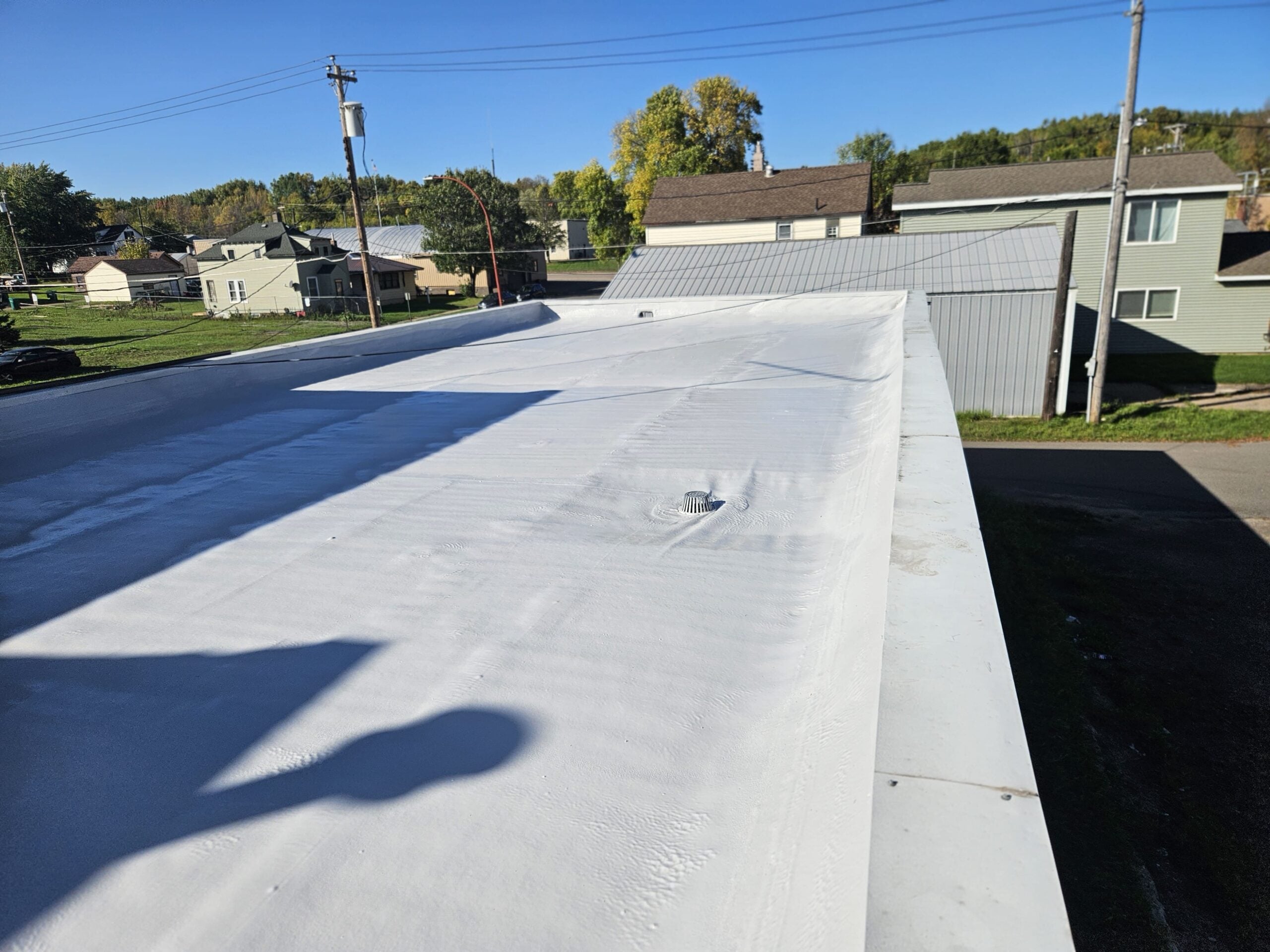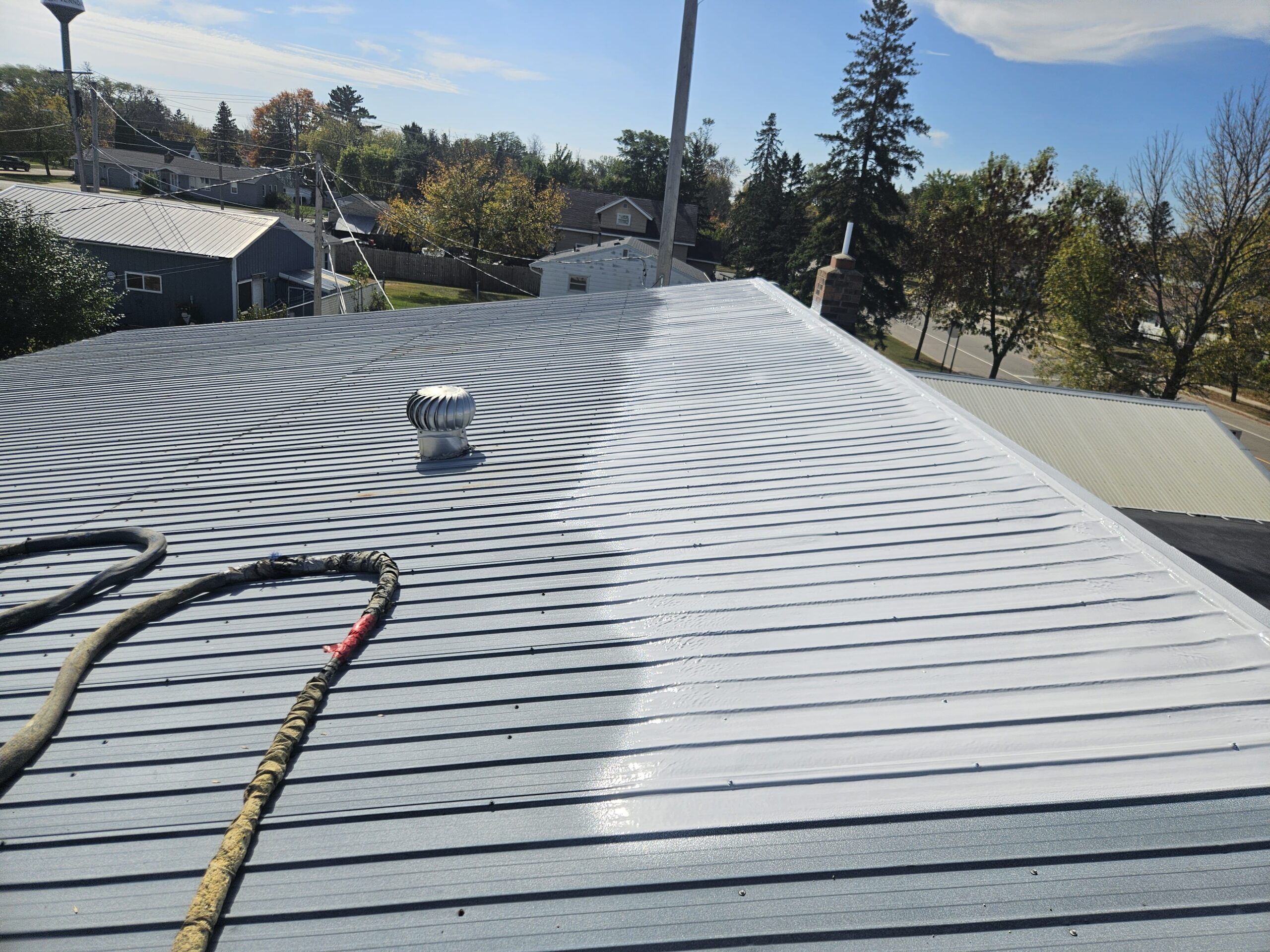
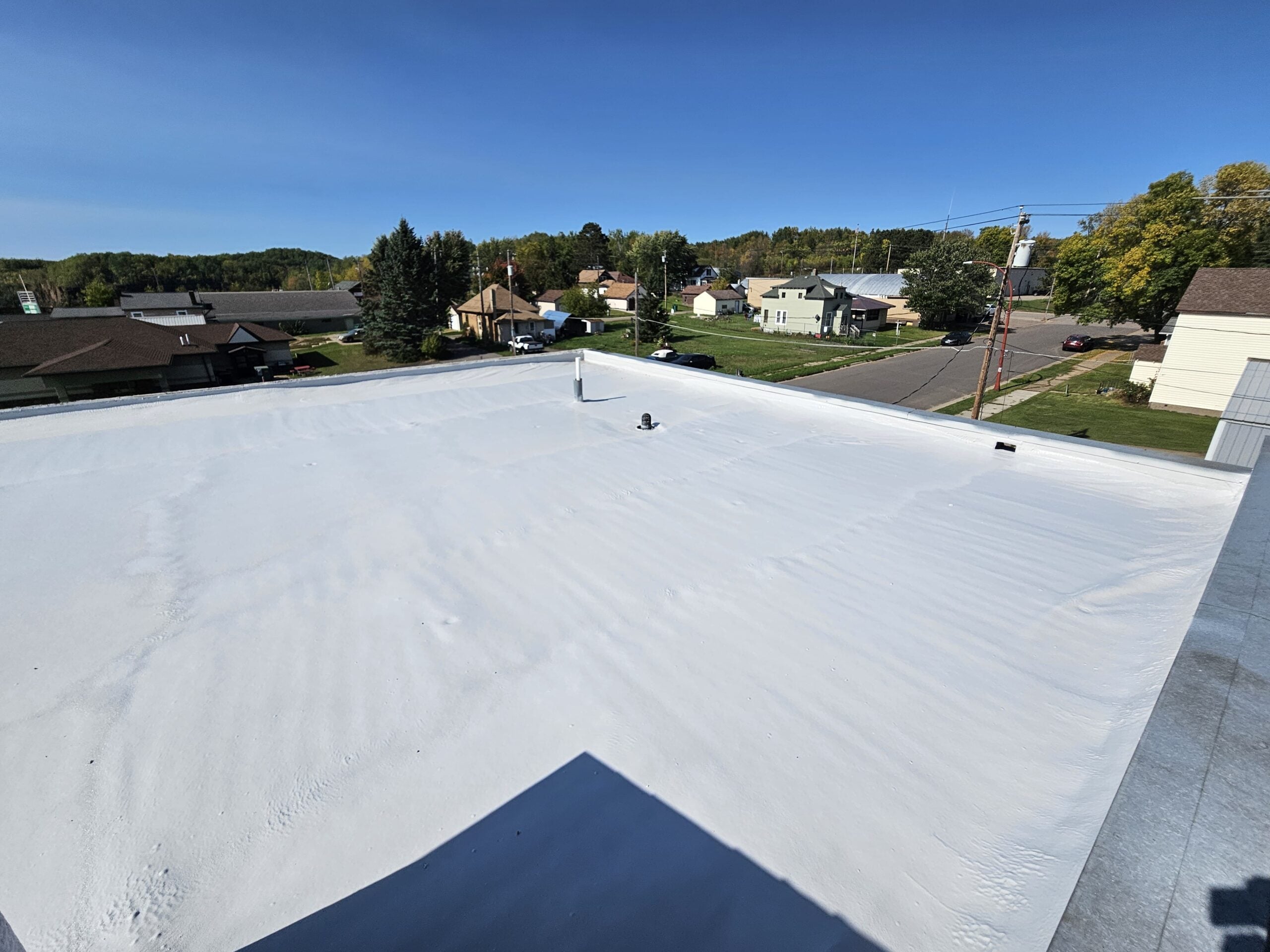
I remember walking a commercial flat roof just outside Crosslake for a property manager who had paid two separate roofing companies to seal the same section over eighteen months. Each repair had held for a few weeks before new wet spots appeared nearby.
When we assessed the full roof surface, the problem was clear: a low drainage area was holding standing water for days after each rain event, the existing coating had lost adhesion across a wide section of the field, and moisture was migrating laterally beneath the coating layer before finding a path through. Neither previous crew had assessed the drainage pattern or tested the coating adhesion across the roof.
Sealed the exit point and left the moisture pathway intact
No drainage pattern assessment on either visit
No coating adhesion testing across the field
Problem returned each time at a nearby location
Addressed drainage slope with a tapered overlay at the problem area
Stripped the delaminated coating section entirely
Prepared substrate to the correct profile for bonding
Applied fluid-applied membrane across the affected field. Dry through a full Minnesota winter and spring cycle since.
Flat roof waterproofing that works starts with understanding what the roof is doing with water, not just where the water is showing up inside the building.
Drainage First
Substrate Assessment
System Selection
Application Last
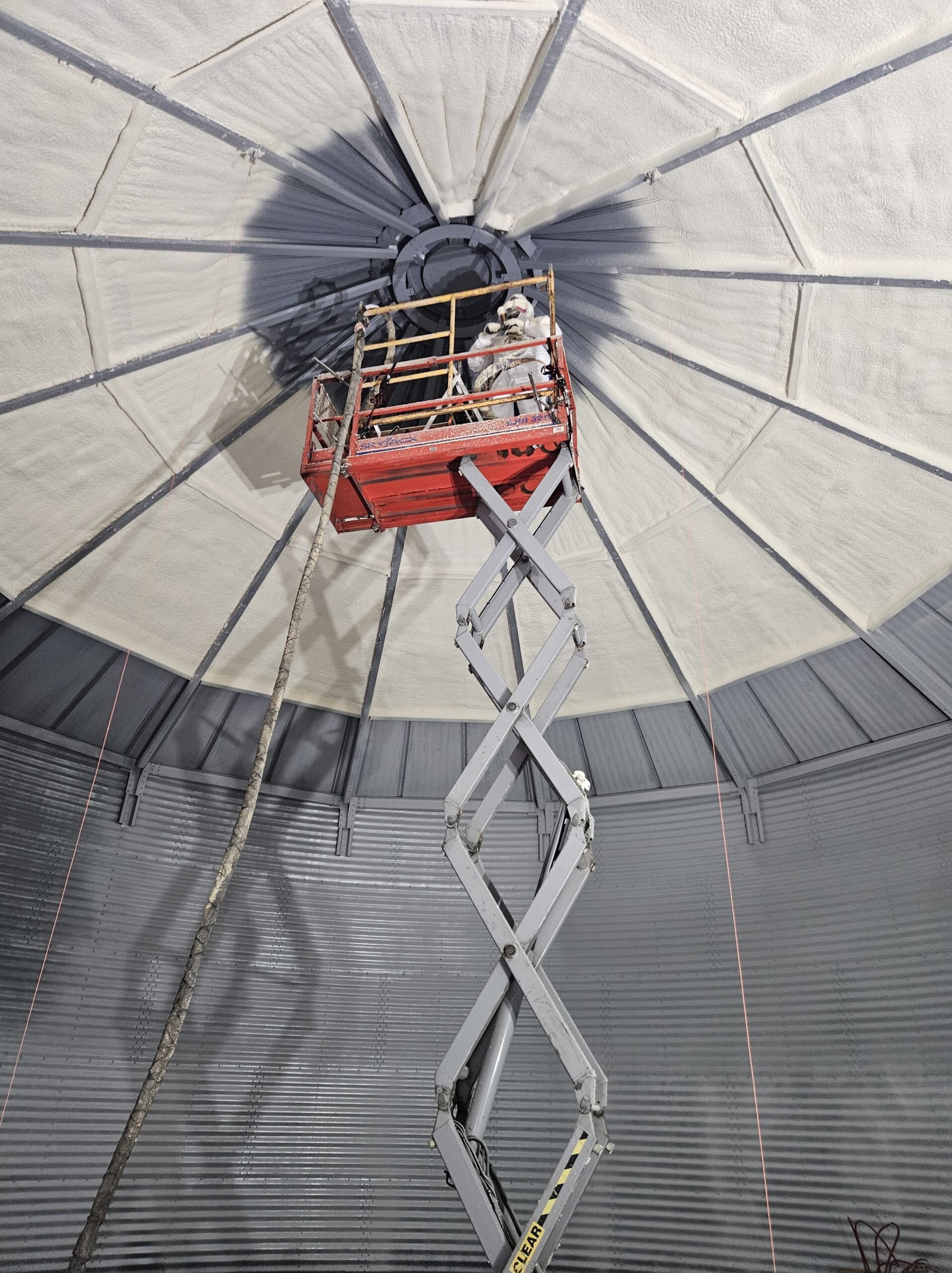
Technical Construction Solutions was founded by Freddy Lewis, who grew up in a highway construction family and spent 15 years working in the field before building TCS around foam and spray technology. That construction background shapes how this crew approaches every waterproofing project: drainage first, substrate assessment second, system selection third, application last.
If your flat roof is leaking, losing coating adhesion, or holding standing water after every rain, a free estimate is the right starting point.