
Dickinson's Blown-In Insulation Specialists
Not a crew that owns one blower and treats every Dickinson attic and wall cavity the same way because it is the only method they know how to run. A two-rig fiberglass operation grounded in spray foam building science, executing blown-in and batt work with the coverage discipline that western North Dakota's long, punishing heating season actually demands.
Why Choose Technical Construction Solutions for Blown-In and Batt Insulation in Dickinson, ND?
A homeowner I talked with on the north side of Dickinson, in the older neighborhood off 8th Street West near the railroad tracks, had paid for blown-in insulation two winters before I met him. The contractor came out, spent a few hours in the attic, and left. The house was still cold every morning from November through February, and the gas bill had not moved in any meaningful direction. He had assumed that was just the cost of heating an older home in western North Dakota.
When we walked through the attic, the center field looked reasonable. But from the eave line inward, for roughly two feet along every exterior wall, the coverage was almost nonexistent. The crew had loaded the open middle, and either could not reach or did not bother with the perimeter, where the roofline dropped, and access got difficult. In Dickinson, where winter temperatures drop well below zero, and wind comes off the open terrain with consistent force from the west and northwest, that perimeter gap is not a minor deficiency. It is where the heating season's heat loss is actually concentrated, and it was completely uncovered.
We brought coverage to the correct depth from eave to eave, mapping every framing bay and addressing each irregular truss section at the perimeter. The following winter, he called to say his heating system was no longer running through the night to maintain temperature on the coldest days.
That result is not extraordinary insulation work. It is what properly executed blown-in does when the crew understands how attic thermal bypasses behave in extreme cold, which is the same knowledge that drives spray foam air sealing decisions, and it shows in how every blown-in installation in Dickinson gets done.
Technical Construction Solutions was founded by Freddy Lewis, who spent more than fifteen years in the structural field of construction before building this company around insulation systems. TCS runs spray foam, blown-in, and batt across residential, commercial, and agricultural applications in Dickinson and across western North Dakota. That multi-system depth is what produces honest product guidance on every project, rather than a default recommendation driven by whatever the contractor happens to prefer installing.
If your Dickinson building is losing heat through an attic that was never covered correctly, or you are managing a new construction project and need a fiberglass crew that shows up staged and on schedule before the weather window closes, a free estimate is the right place to start. Browse our full Dickinson insulation services to see how blown-in, batt, and spray foam work together across a building.
Blown-In Insulation Services in Dickinson, ND
Attic Blown-In Insulation
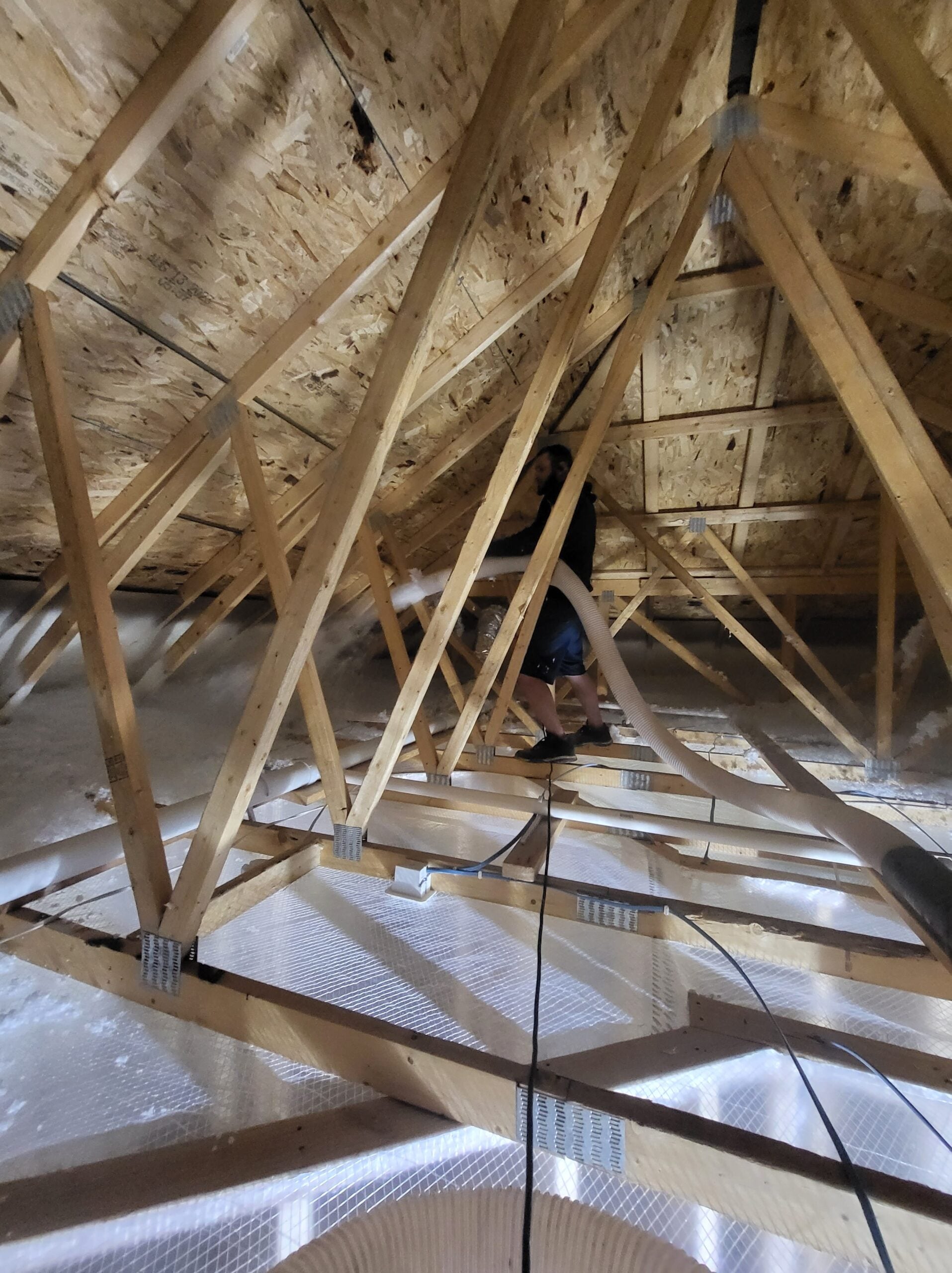
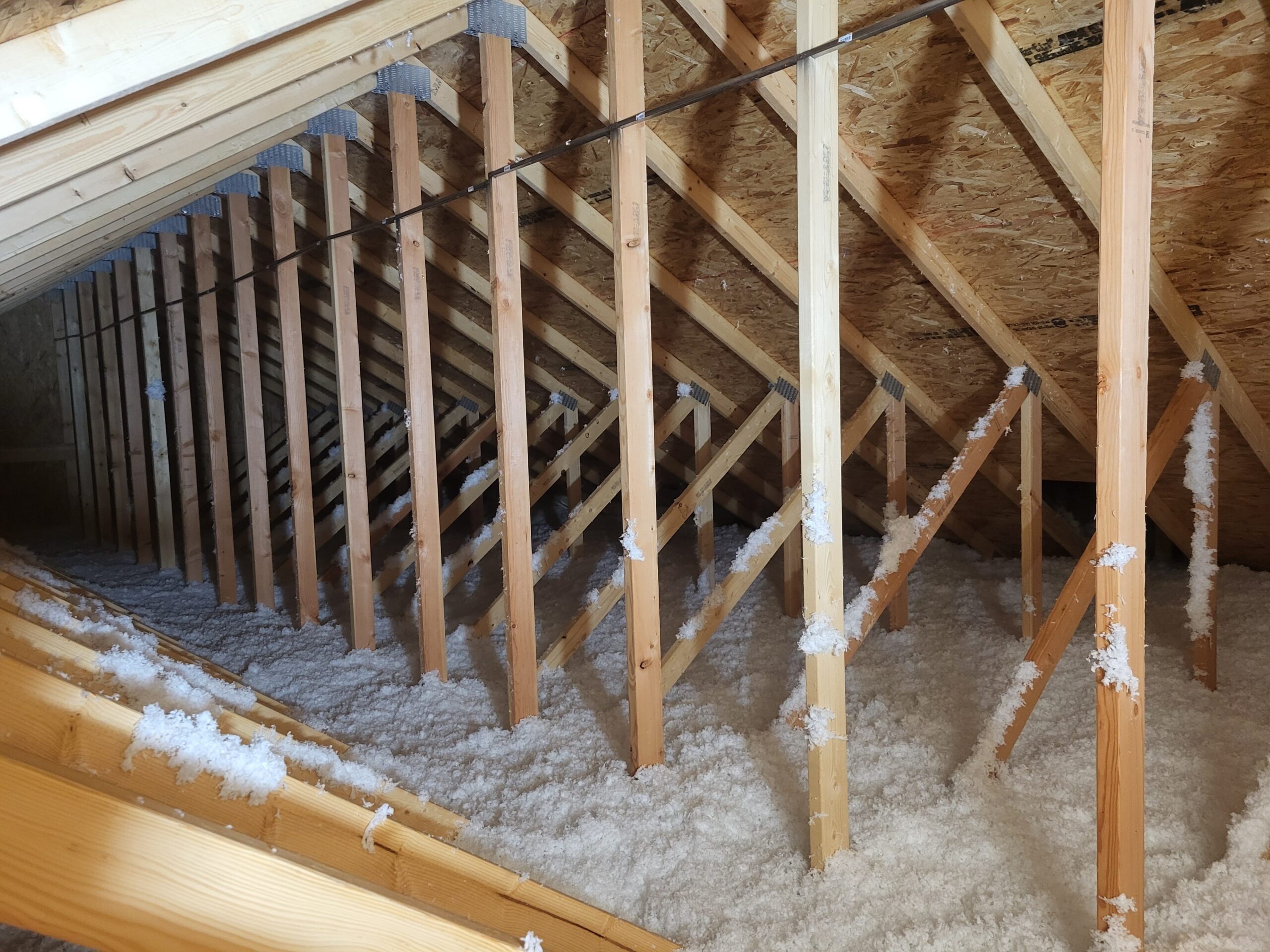
For homeowners across Dickinson, South Heart, Belfield, and the surrounding Stark County area, the attic is where most residential heat loss happens and where the gap between what exists and what western North Dakota's climate zone actually requires is most commonly found.
Dickinson's residential housing stock includes a significant number of homes built through the 1970s, 1980s, and 1990s in the older established neighborhoods north of Villard Street, along the blocks east of downtown near the rail corridor, and in the residential developments that spread west and south of the commercial district before the construction boom associated with Bakken oil activity pushed new development further out. Attic insulation installed during those decades was specified to meet the energy code standards of the time, which were calibrated for a different fuel cost environment and a broader climate range than the one Dickinson specifically sits in. Most of those attics are meaningfully below the depth that Dickinson's heating season demands.
Blown-in insulation added over existing settled material, brought to the correct depth at every point from eave to eave, delivers measurable performance improvement without opening walls, disrupting finished ceilings, or committing to the cost of a full spray foam installation in an application where blown-in is genuinely the right system. The improvement is not theoretical. It shows up on utility bills within the first full heating season and compounds from there as the building stops losing heat at the rate it previously was.
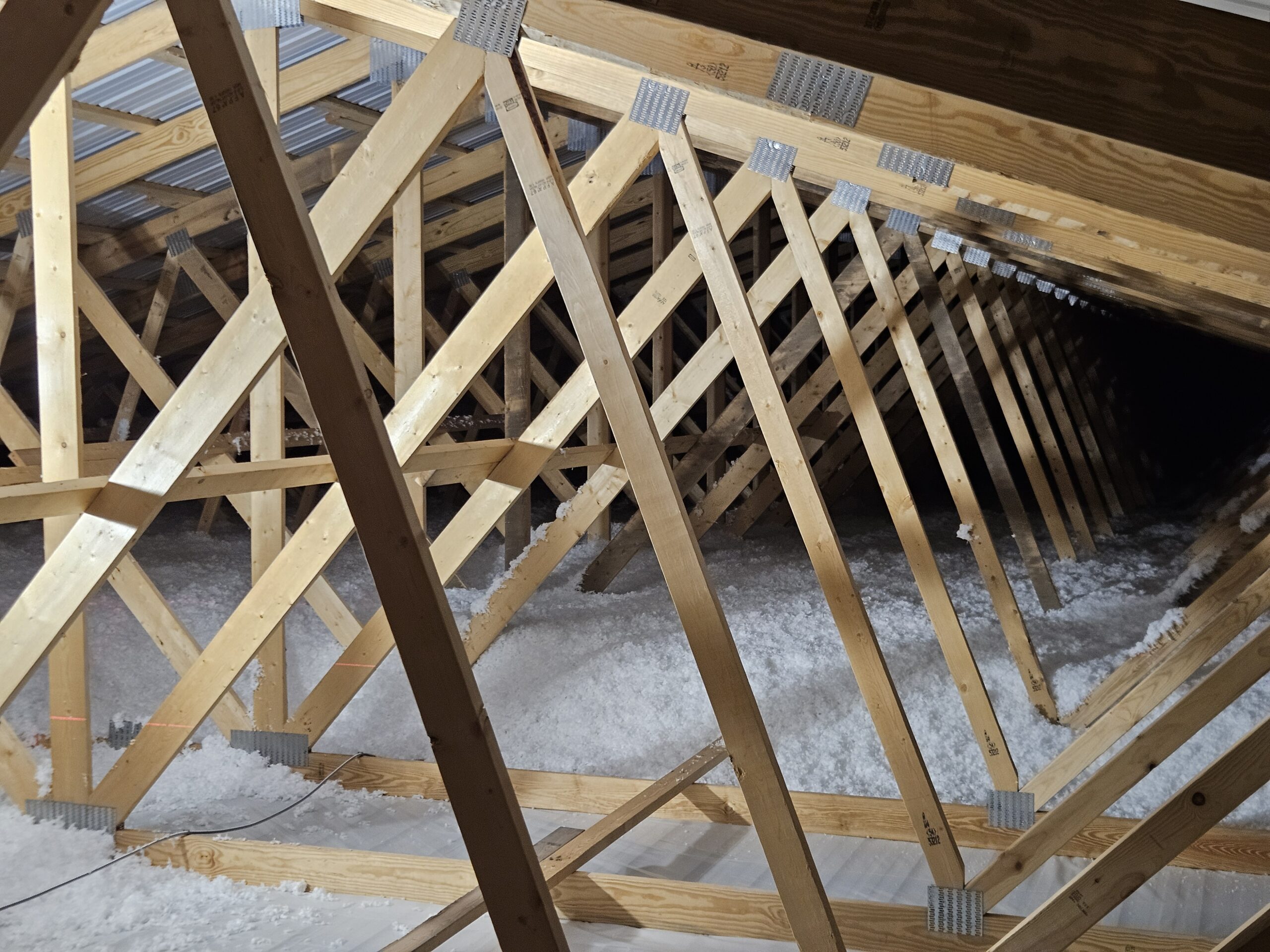
The execution detail that determines whether the improvement actually materializes is coverage at the perimeter. The center of most Dickinson attics is accessible and easy to fill to an adequate depth. The eave sections, top plate perimeter, and the framing bays that narrow where the roofline drops are the zones that require attention and that most rushed installations miss. TCS maps coverage at every framing member and checks the eave and perimeter sections before considering a Dickinson attic installation complete, because that is where the heating season's losses are actually located.
TCS operates two purpose-built fiberglass rigs, which means Dickinson clients are not waiting on equipment tied up on another project across the region. The installation happens on the scheduled date, with the right tools staged and a crew that treats the perimeter of your attic with the same attention as the open center field.
Existing Wall Cavity Blown-In
Many of Dickinson's older residential homes, particularly those in the neighborhoods developed before the 1990s in the central and northern parts of the city, were built with exterior wall framing that contains little to no insulation in the stud cavities. In some cases, a nominal layer of insulation was added during a renovation at some point, but the coverage is inconsistent or settled to a fraction of the original depth. These wall assemblies lose heat through conduction and air movement simultaneously, and in Dickinson's winter wind environment, the air movement contribution is significant.
Blown-in insulation into existing closed wall cavities is the most cost-effective path to improved wall performance without opening the exterior cladding or interior finish surfaces. The process involves drilling small access holes at the top of each stud bay, blowing insulation at the density required to fill the cavity without settling, and patching the access points. When done correctly, the cavity moves from a partially or empty air space to a fully insulated stud bay that reduces both heat transfer and wind-driven air infiltration through the wall assembly.
The installation variable that determines whether the improvement holds through the life of the wall assembly is fill density. A bay blown at too low a density settles within the first heating season, creating a void at the top of the stud bay that defeats the purpose of the installation. A bay blown at the correct density stays in place and performs at its rated R-value for the life of the wall. TCS verifies fill density before patching access points, because a cavity that looks full from the drill location can still be underperforming if the density was not achieved across the full bay height.
For Dickinson homeowners watching heating costs climb year over year in older properties, wall cavity blown-in is frequently the renovation with the most straightforward, measurable return on the thermal envelope investment.
Batt Insulation Services in Dickinson, ND
Where Batt Insulation Belongs in a Dickinson Building
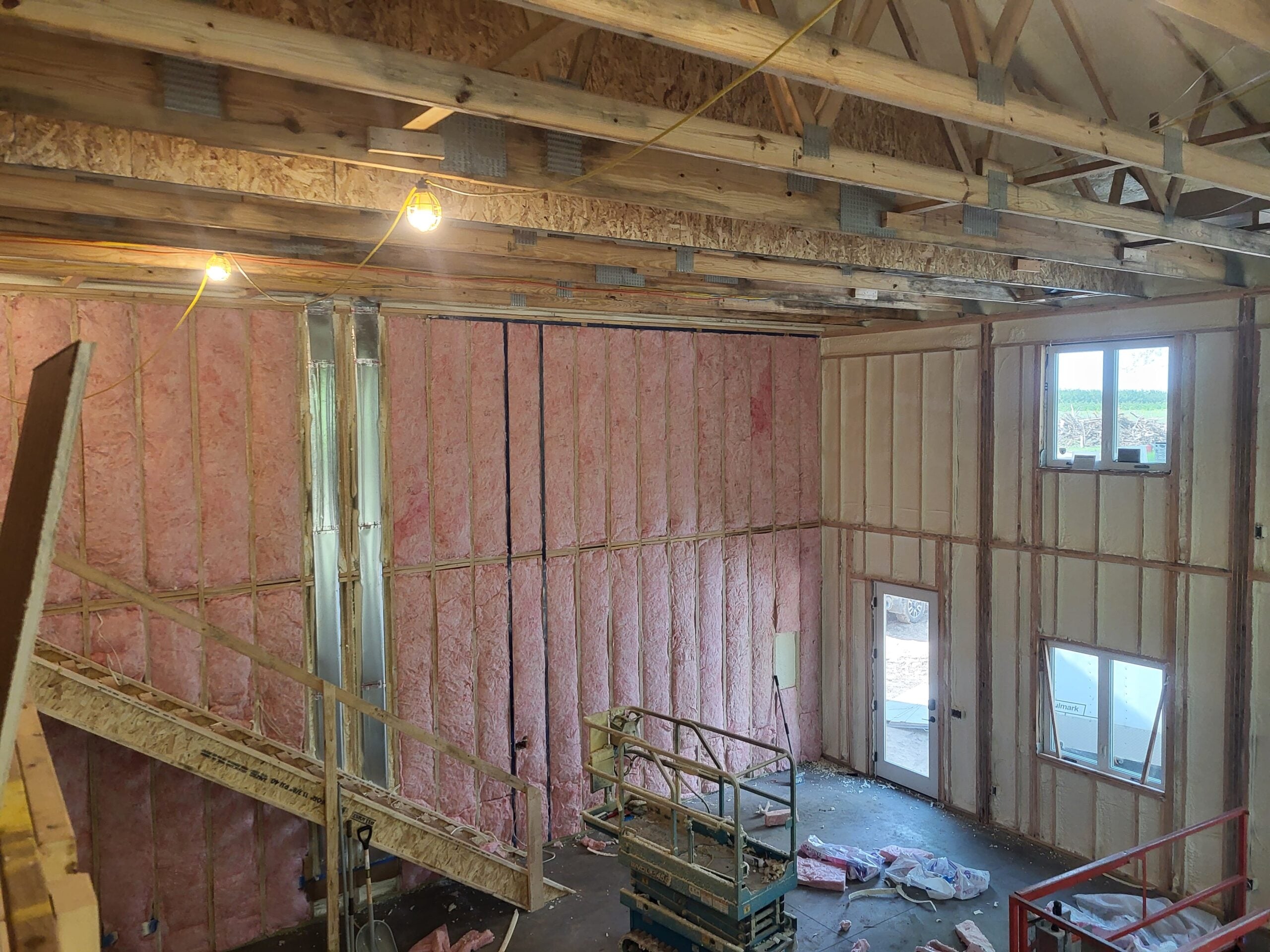
Batt insulation is not the right system for every Dickinson application. Spray foam leads in air sealing and vapor control. Blown-in typically outperforms batts in attic applications where depth consistency and eave access are variables. But in the specific applications where batts genuinely belong, correctly installed fiberglass batts perform reliably and cost-effectively within the budget reality that many Dickinson residential and commercial projects require.
The right application is an open wall or floor cavity during new construction or an open renovation where framing is exposed, access is clean, and the project economics favor batts over spray foam or blown-in for that specific assembly. In those conditions, full cavity coverage, correct vapor facing orientation for North Dakota's cold-climate assembly requirements, no compression at corners or penetration points, and no gaps at electrical boxes or plumbing runs deliver the rated R-value across the wall assembly for the life of the building.
The wrong application is a cavity with irregular framing, active air movement pathways, or moisture concerns that batts cannot address independently. A contractor who installs batts because they are what is on the truck, rather than because they are what the application requires, produces a building that underperforms, regardless of how carefully the individual batts were placed.
TCS runs blown-in equipment and batt insulation alongside its spray foam rigs because the right system for each section of a Dickinson building is determined by the conditions at that section, not by what is most convenient to stage when the crew arrives.
Residential Batt Insulation for New Construction in Dickinson
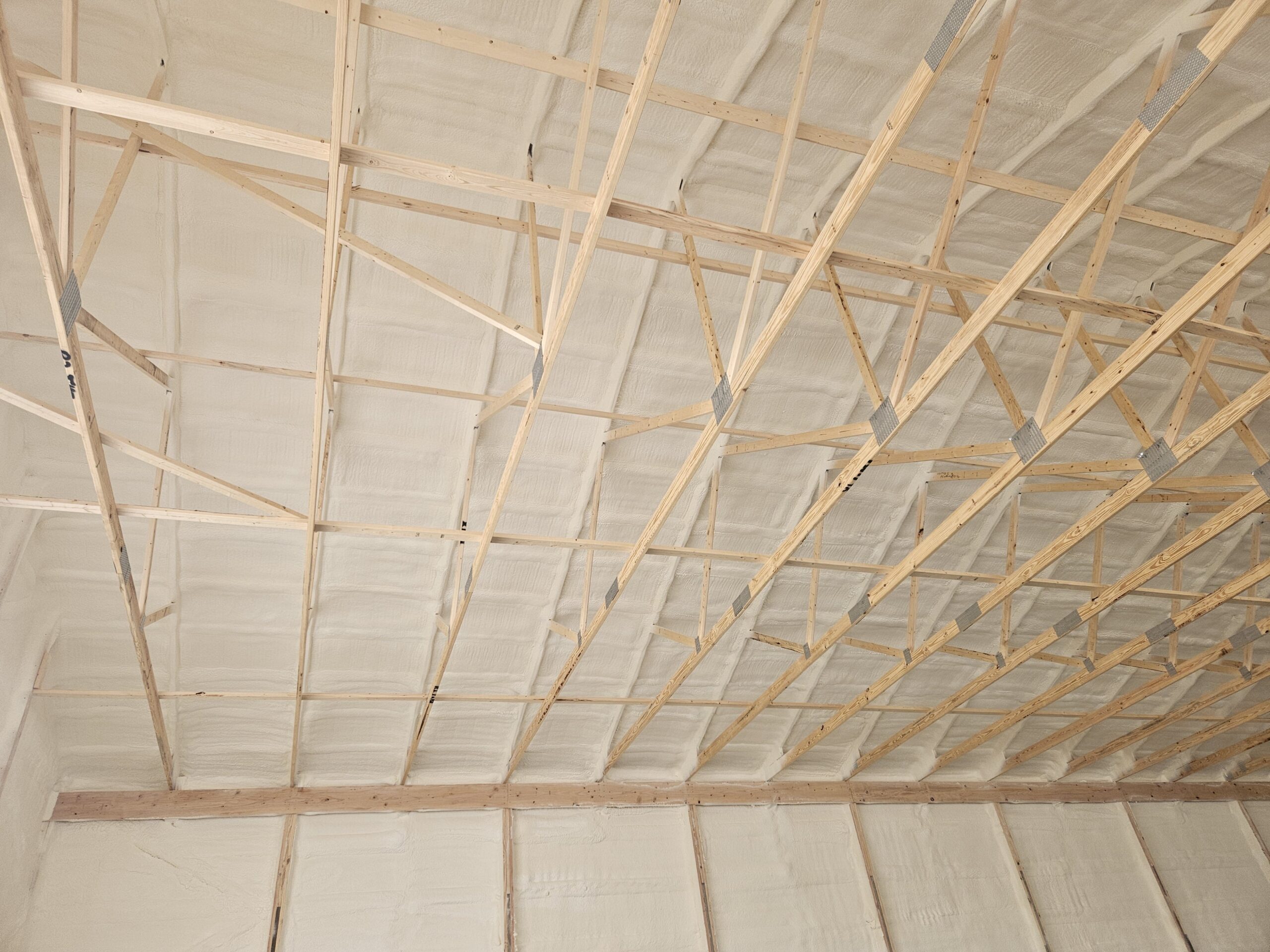
For builders and homeowners managing new residential construction across Dickinson and Stark County, batt insulation in open wall and floor cavities during the framing phase keeps the thermal envelope on schedule and within the project budget in the applications where batts deliver the right outcome.
The installation discipline is what separates a batt job that performs from one that does not. Irregular stud bays at corners, electrical box cutouts that leave voids behind the box face, plumbing rough-in that compresses or displaces the batt, and top and bottom plate sections where the batt does not make full contact with the framing: these are the locations that determine whether the wall assembly delivers its rated R-value or falls short of it across every linear foot of exterior framing. A crew that cuts batts to fit at every penetration point, maintains correct facing orientation throughout, and fills irregular bays without compression or gaps produces a wall assembly that performs through a Dickinson winter. A crew that moves too quickly through high cavity counts to maintain that precision produces one that does not.
TCS applies the same installation standard to batt work as to spray foam and blown-in, because the R-value on the product package is what the building actually gets only when the installation achieves it at every cavity in the assembly, including the ones that require extra attention to get right.
Commercial and Agricultural Batt Applications in Dickinson
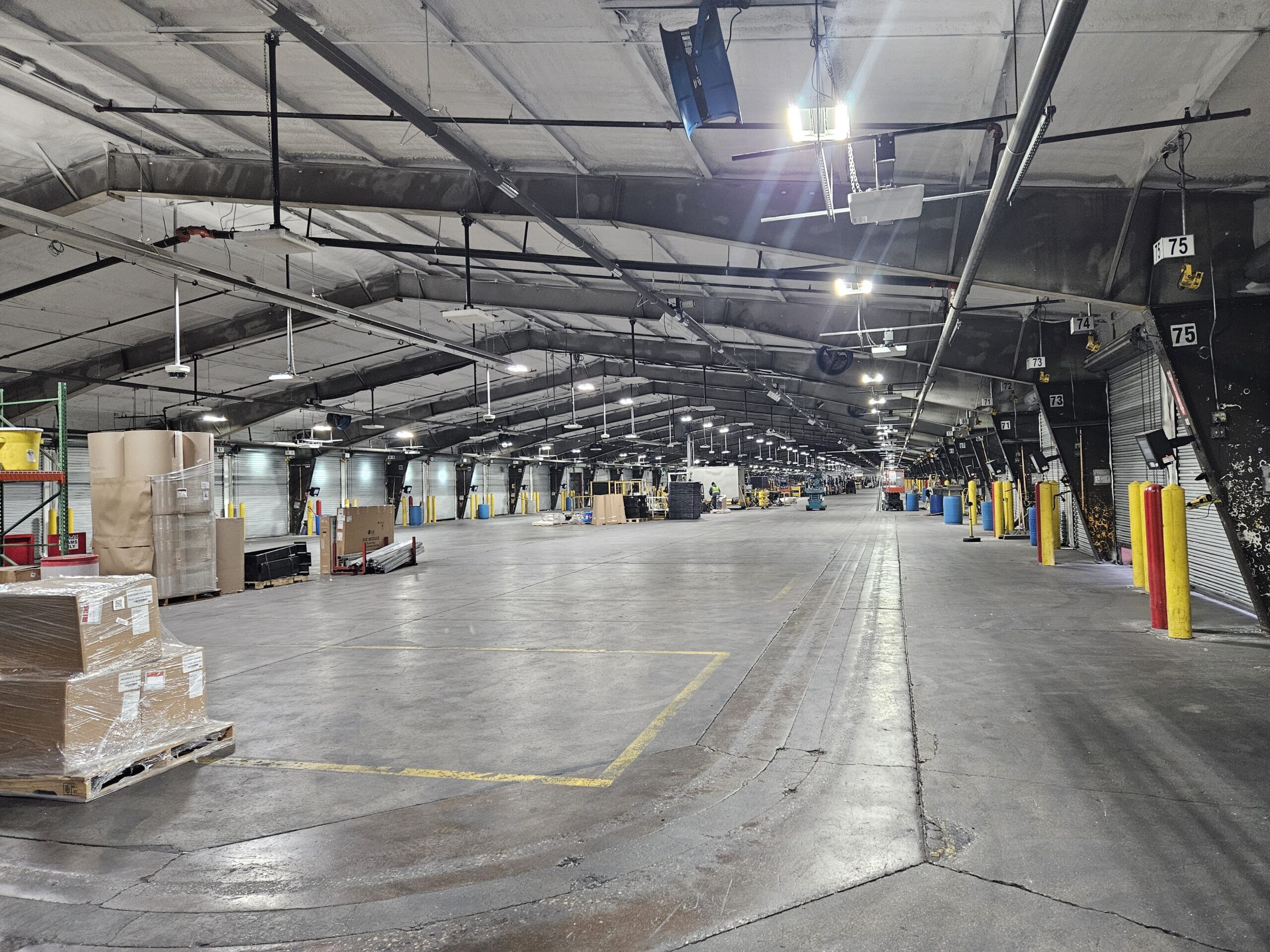
Dickinson's commercial construction market, driven by the energy sector activity in the Bakken region and the service industry that has grown alongside it, includes a range of building types in which open commercial wall and floor assemblies require an insulation crew that maintains installation consistency across high cavity counts without losing precision as the building volume increases.
For commercial developers managing per-square-foot construction budgets on larger projects in Dickinson's commercial corridors along Highway 22 or in the industrial and service facility zones east of downtown, batt insulation in open commercial framing delivers predictable thermal performance at predictable cost, when the installation holds to the coverage standard across the full building rather than just across the first few hundred cavities.
TCS brings the same attention to the last stud bay on a large commercial project as to the first. The heating cost performance of a commercial building in Dickinson is not determined by the insulation in the easy cavities. It is determined by the cavities that require extra effort, and those are the ones where installation discipline makes the difference.
Other Insulation Services Available in Dickinson, ND
Spray Foam Insulation
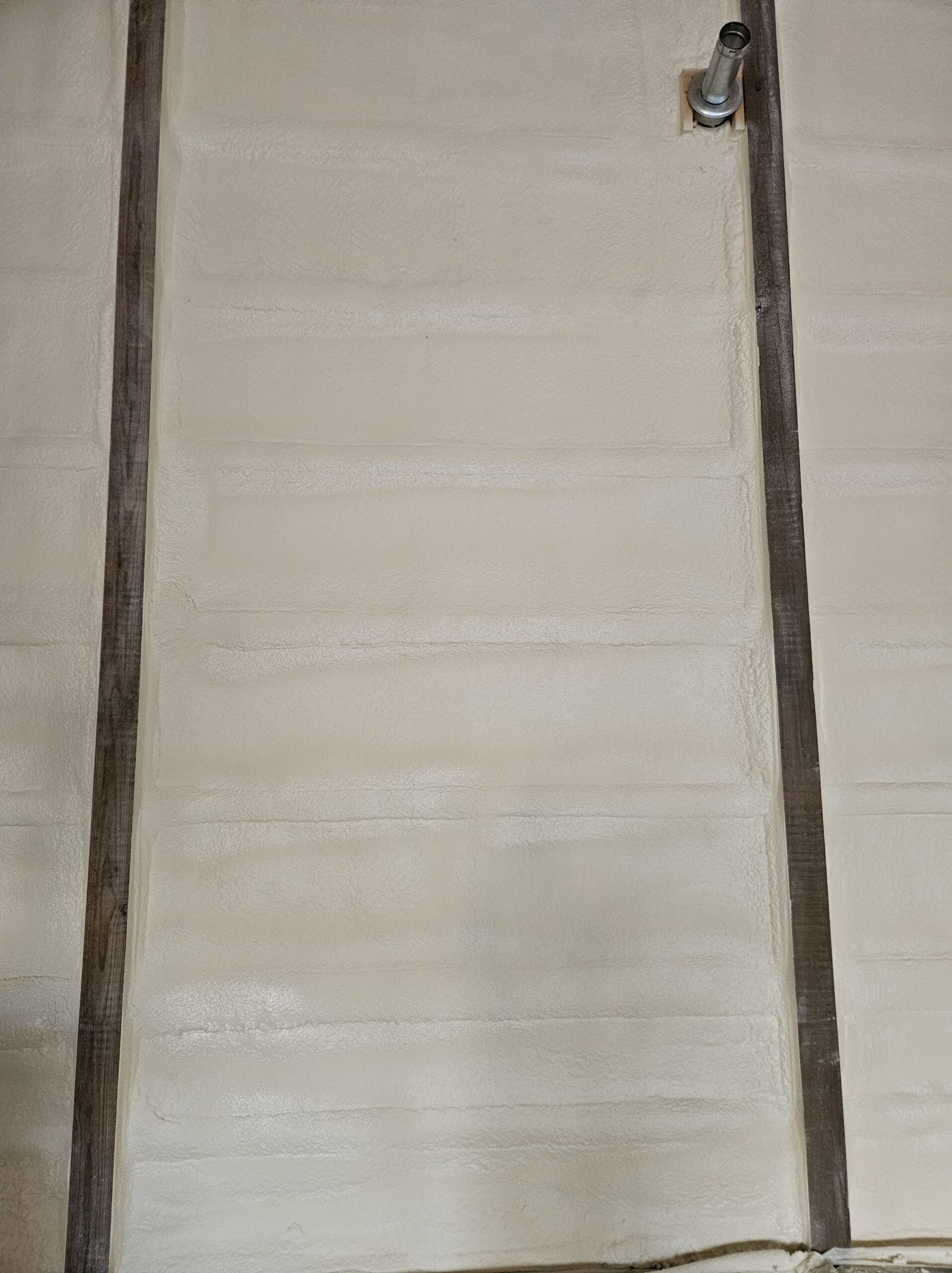
Closed-cell and open-cell systems for Dickinson residential, commercial, agricultural, and pole barn applications where air sealing and vapor control are the primary performance requirements alongside thermal resistance.
Pole Barn Insulation
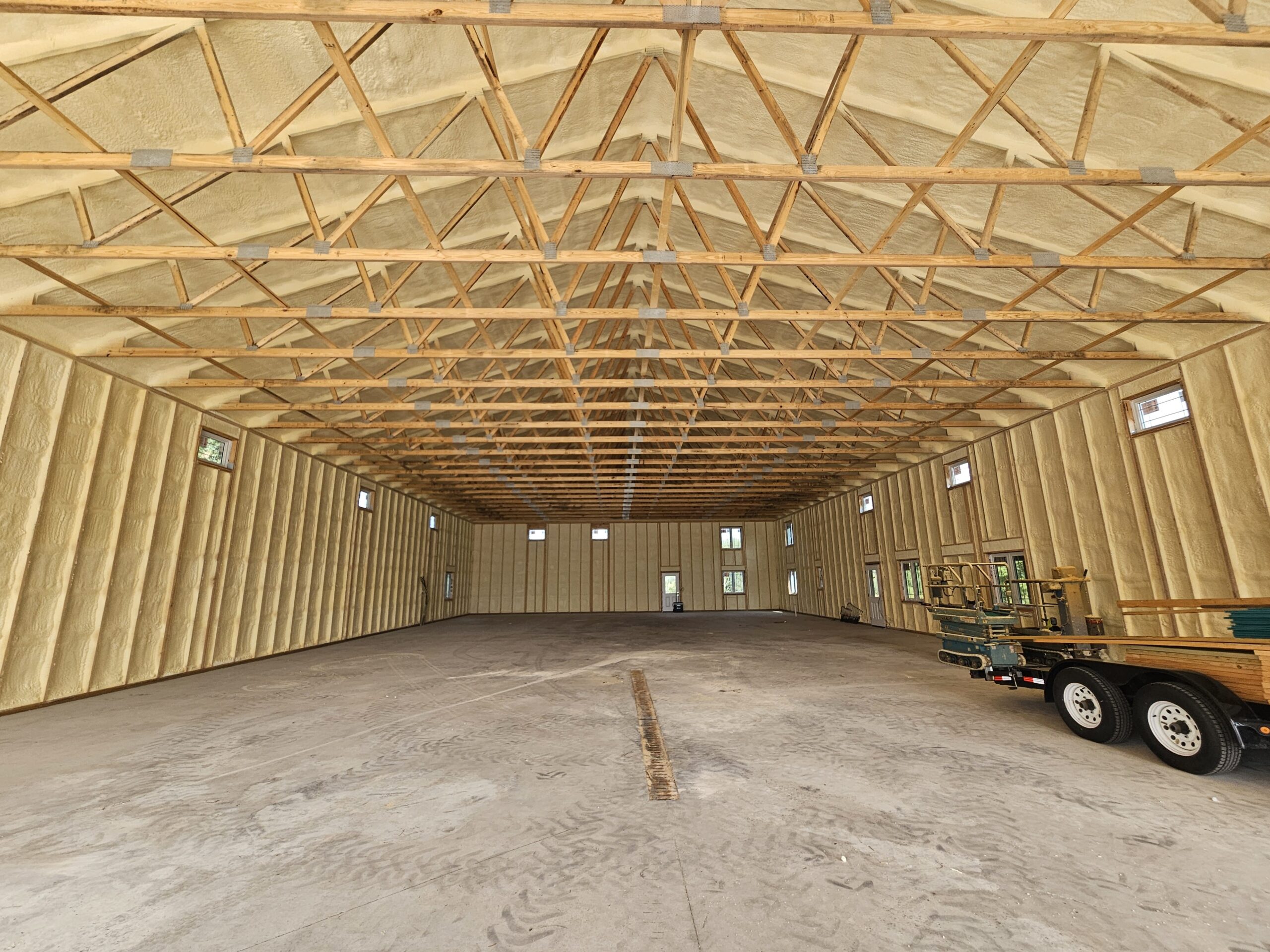
Spray foam applied directly to metal framing and roofing panels for agricultural buildings, working shops, and equipment storage facilities across Stark County and the broader western North Dakota region.
Crawl Space Insulation
System-matched insulation for conditioned and unconditioned crawl spaces beneath Dickinson homes and commercial buildings, selected based on the specific moisture conditions, floor framing, and vapor management requirements at each location.
Under-Slab Insulation
Thermal break installation beneath new Dickinson concrete pours before the slab goes down, the one insulation decision that cannot be revisited once the concrete is in place.
The Multi-System Advantage -
Why Carrying Both Changes What Dickinson Clients Get
A contractor who only blows in insulation recommends blown-in for every Dickinson attic and wall cavity. A contractor who only installs batts recommends batts for every open framing situation. In both cases, the building gets insulated with the product on the truck, not with the product that the application actually calls for.
A new residential build in Dickinson might call for blown-in across the attic floor, batts in the open exterior wall cavities during the framing phase, and closed-cell spray foam at the rim joist and crawl space penetrations where air movement is the primary problem. That combination, each system in the application where it delivers the best outcome for that specific assembly, produces a building envelope that performs correctly. A patchwork of single-product operators who each see only their piece of the assembly does not reliably produce the same result.
TCS carries blown-in equipment and batt insulation alongside three spray foam rigs because a Dickinson building insulated with whatever happens to be on the truck is a building that will underperform through every western North Dakota winter it stands. Matching the system to the application at each location in the building is what produces buildings that actually deliver on the investment made in the thermal envelope.
Why Dickinson Contractors and Property Owners Work With Technical Construction Solutions
Two Dedicated Fiberglass Rigs for Dickinson Project Availability
TCS runs two purpose-built fiberglass rigs, not a single blower borrowed between a full project schedule. That equipment-level commitment means Dickinson blown-in and batt projects happen on the scheduled date with the right tools on-site, rather than getting pushed when the rig is committed to another job across the region.
Multi-System Expertise That Produces Honest Recommendations
TCS works across spray foam, blown-in, and batt, which means the recommendation for each section of a Dickinson building is based on what that application actually needs. In many Dickinson buildings, different zones call for different solutions. This crew makes those distinctions rather than routing every application to the same product because it is simpler to stock and stage.
Spray Foam Knowledge That Improves Fiberglass Execution
TCS's foam background directly informs how blown-in and batt work gets done in Dickinson. Understanding how attic air bypasses drives heat loss in extreme cold climates is building science knowledge that applies directly to how eave and perimeter coverage gets handled on every fiberglass installation. The crew knows where performance failures originate because they have addressed the same failure patterns from the foam side.
Specified for Western North Dakota, Not Just for Code Compliance
Insulation depth and coverage standards that satisfy code were written for a broader climate range than the one Dickinson sits in. Every blown-in depth decision and batt installation call TCS makes in Dickinson is calibrated to what Stark County's most demanding winters actually require, not to the minimum threshold that satisfies the inspection.
Accurate Estimates Built Around the Job Done Correctly
What gets quoted on a Dickinson project is what the work actually costs when every coverage detail is addressed correctly. There are no prep steps removed to win the bid and no shortcuts taken during installation to protect a margin that was not there to begin with. The estimate reflects the job done right, and Dickinson property owners and builders can construct an accurate budget from it.
On Time for Dickinson's Compressed Construction Window
Dickinson's construction season does not extend forgiveness to contractors who fall behind. Two fiberglass rigs mean the scheduled project date is met and the installation is complete within the timeframe quoted, which is what Dickinson builders managing multi-trade construction sequences actually need from the fiberglass crew.
Fully Licensed and Insured on Every Dickinson Project
Every project is backed by full licensing and insurance. In a trade where operators without proper coverage take on work regularly, that standard protects Dickinson property owners and general contractors on every job regardless of scale.
Get a Free Blown-In and Batt Insulation Estimate in Dickinson, ND
An attic that is thin at the eave line while the center field looks adequate, a wall assembly with stud bays that settled over the first two winters after installation, or a commercial build where batt precision dropped off as the cavity count climbed: none of these failures announce themselves clearly. They show up as heating costs that are higher than they should be for the insulation that supposedly exists in the building, rooms that lose temperature faster than the system can recover on the coldest nights, and an insulation investment that is doing part of its job while heat loss does the rest.
One conversation with a TCS specialist is enough to assess your building, identify where the coverage gaps are and what system belongs in each application, and give you a clear, honest cost picture for getting it right. No pressure. No obligation. No estimate built around shortcuts you will not discover until January.