
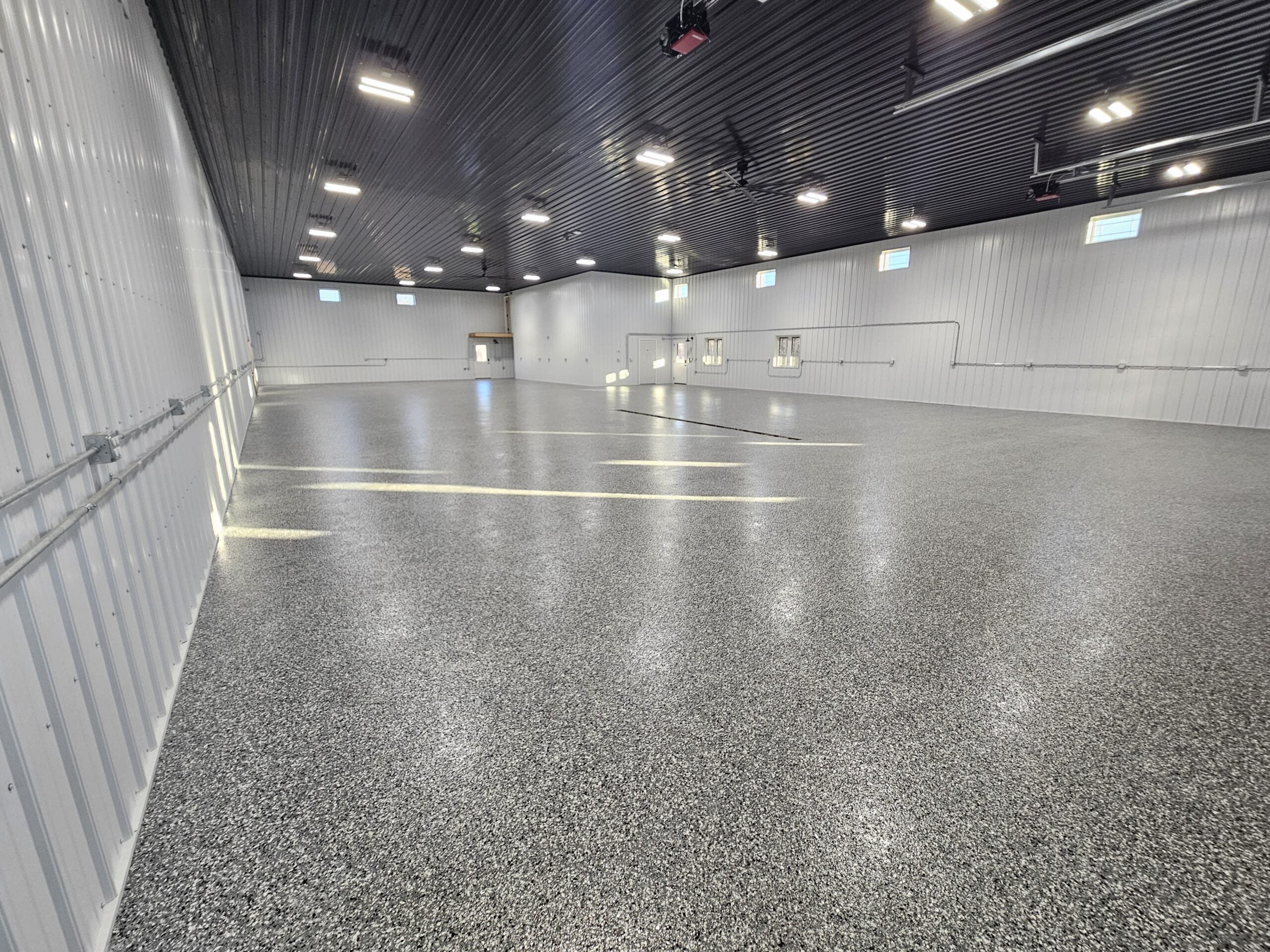
Dickinson's Concrete Floor Coating Specialists
Not a coating crew that shows up with a product brochure and a sprayer and selects a system based on what is already loaded on the truck. A concrete specialist with structural slab experience, moisture vapor awareness built on Dickinson's clay soil and frost conditions, and the substrate discipline to install floor coatings that hold through road salt seasons, vehicle loads, and the freeze-thaw cycling that western North Dakota delivers to every garage and commercial floor in the region.
Why Choose Technical Construction Solutions for Concrete Floor Coatings in Dickinson, ND?
A shop owner on the east side of Dickinson, running a service operation in a building off the industrial access road near the rail yard, called after a floor coating that had been installed the previous spring was peeling in large sections by November. The crew who applied it had done clean-looking work. The surface had appeared professional when they finished. What they had not done was grind the slab to the surface profile the coating required, and they had not tested the slab for moisture vapor emission before product selection. Dickinson's clay subsoil retains moisture through the spring and into early summer at depths that continue pushing vapor upward through concrete slabs well after the surface looks and feels dry. The coating had bonded to a surface that was still transmitting moisture vapor from below, and once the first significant freeze-thaw cycle worked on that slab, the bond failed progressively across the sections where vapor pressure was most active.
We ground the slab down to clean concrete at the correct surface profile, ran a moisture vapor emission assessment before any product was opened, selected a coating system rated for the vapor transmission level that the slab was producing, and applied it in sequence with the preparation that system required. The shop owner reported back after a full winter operating season. The floor was holding exactly as it looked on installation day.
That is not an exceptional outcome. It is what happens when the crew preparing the slab understands what Dickinson's road salt exposure, sub-zero vehicle parking, and clay soil moisture conditions do to a coating bond over time, and prepares the substrate accordingly before the product ever comes out.
Technical Construction Solutions was founded by Freddy Lewis, whose fifteen years of field construction experience, including concrete lifting, structural slab work, and below-grade void filling, gives TCS a fundamentally different starting point for floor coating assessment than a company whose experience begins at the surface. Concrete behavior, moisture vapor movement through a slab, and how Dickinson's specific clay soil profile affects vapor transmission through older building slabs are construction systems questions. Answering them correctly before the coating goes down is what separates a floor that holds for years from one that starts lifting at the edges before the first winter ends. Learn more about our full range of Coating and Insulation services in Dickinson, ND.
If your coating has failed, is showing early delamination or edge lifting, or you want a new installation done correctly from the prep phase forward, a free estimate from a structural specialist is where it starts.
Expert Concrete Floor Coating Services in Dickinson, ND
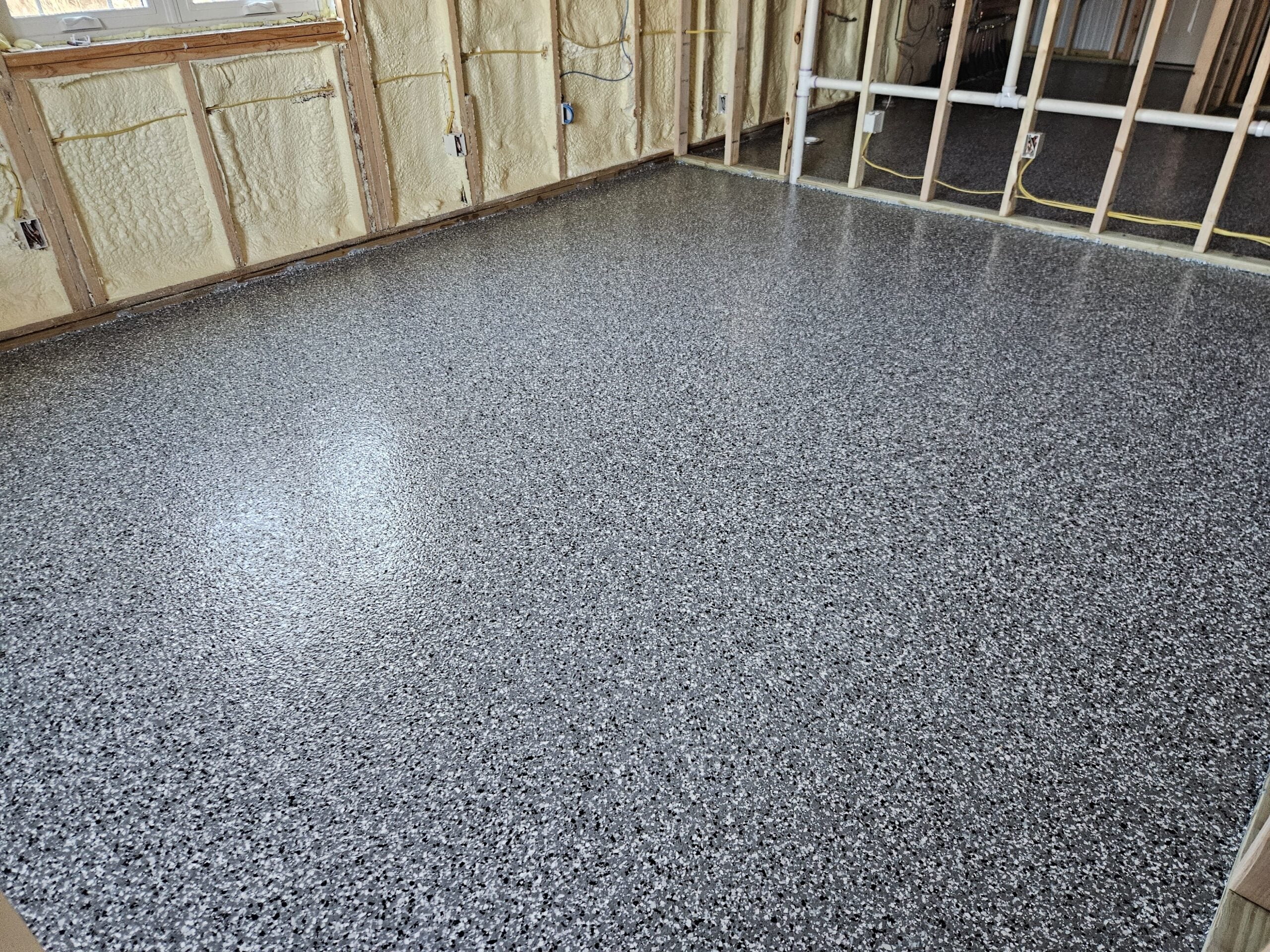
Epoxy Floor Coatings
For residential garages, commercial service facilities, energy sector buildings, equipment shops, and light industrial properties across Dickinson and Stark County, epoxy is the most widely used floor coating system for concrete, and when the substrate preparation is done correctly, the performance justifies that position. Applied over a properly profiled, contamination-free, vapor-assessed slab, epoxy delivers a chemically resistant, hard surface that handles vehicle loads, equipment traffic, oil and fuel exposure, and the daily operational wear that breaks down bare concrete under Dickinson's working conditions.
Dickinson's floor coating environment is harder on applied coatings than most markets in the region. Road salt and chemical deicers come in on vehicles' undercarriages and boots from October through April, which is the majority of the operating year in western North Dakota. Sub-zero overnight temperatures create thermal shock conditions when warm vehicles are parked on frozen or near-frozen slabs, stressing adhesion bonds repeatedly through the long heating season. Clay soil below many Dickinson building foundations retains moisture through the spring thaw window and transmits vapor upward through the slab at rates that vary significantly by soil saturation level and slab age. A coating applied over a slab that was not ground to the correct profile, not assessed for vapor transmission, and not cleaned of contamination at the surface does not survive those combined conditions for long. The bond fails at the weakest point in the substrate, and delamination follows.
Preparation is where the longevity of a Dickinson epoxy floor is actually determined. Grinding the slab to the correct surface profile for the selected system, removing residual oils, contamination, and any prior sealer that would compete with the adhesion bond, and verifying that moisture vapor emission is within the product specification before application are the steps that produce a coating that holds through multiple years of road salt seasons and freeze-thaw cycling. Skipping or shortening any of those steps produces a coating that looks correct on installation day and starts failing at the edges before the first full winter ends.
For commercial clients in Dickinson managing high-traffic floors in energy sector service facilities, equipment storage buildings, or commercial operations along Highway 22 and the south commercial corridor, that preparation discipline directly controls how long the coating investment holds before the next maintenance cycle is required.
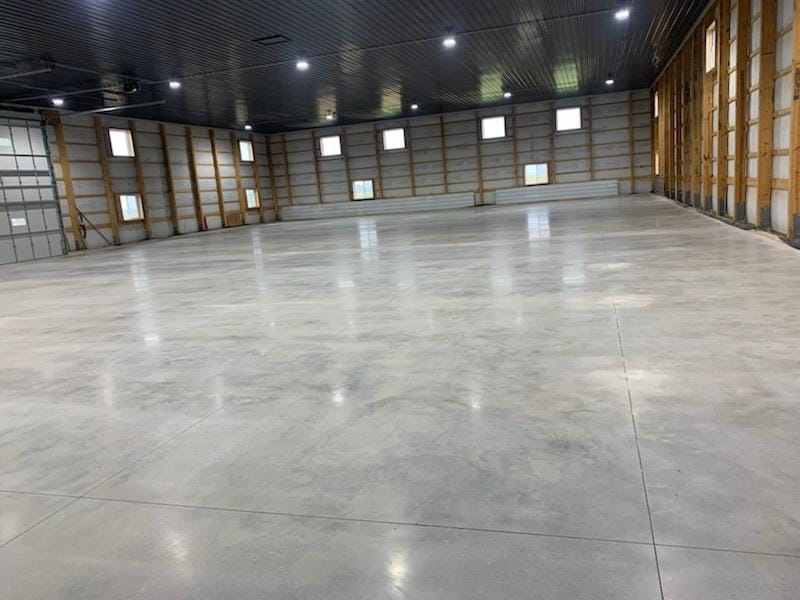
Polished Concrete
Polished concrete approaches the floor surface differently by refining the slab itself into a dense, hardened surface rather than applying a product layer over it. For commercial lobbies, retail spaces, showrooms, reception areas, and residential interiors across Dickinson, polished concrete resists staining, holds up under continuous traffic, and does not delaminate, chip, or peel because there is no applied coating layer present to fail.
The process uses progressively finer diamond tooling to grind and refine the concrete surface, with a penetrating densifier applied at the correct stage to harden the slab from within rather than sealing it from above. The finished surface is sealed to reduce surface porosity and improve long-term stain resistance through Dickinson's seasonal humidity and moisture variations. For Dickinson buildings where clay soil moisture vapor transmission is an active concern in the slab, polished concrete's elimination of the adhesion-dependent coating layer removes the primary failure mechanism that makes conventional coatings vulnerable in vapor-active slab environments. A slab that cannot hold an epoxy bond through Dickinson's moisture conditions may be an excellent candidate for polished concrete, which does not depend on that bond for its performance.
A crew that understands concrete structurally, how the slab responds to grinding at different hardness levels, how densifiers penetrate specific concrete compositions, and how moisture in the slab affects the tooling sequence and densifier performance, produces a more consistent and durable polished result than a crew approaching the process as a surface-only finishing operation. That structural concrete background shapes how every polished concrete assessment gets done and how every Dickinson polished floor gets executed from the first grind pass forward.
For Dickinson property owners and commercial operators who want a floor that holds its surface quality through years of use with minimal maintenance requirements, polished concrete in the right application delivers long-term performance that coated floors in moisture-active slab environments cannot reliably match.
Why What Is Under the Coating Matters
More Than the Coating Itself
Most coating contractors lead with the product catalog, the finish options, the brand warranties, and the color system. The crews that produce coatings that actually hold through multiple years of real-world use in demanding environments lead with the slab, because that is where the performance of the finished system is determined.
TCS's broader work in concrete lifting, below-grade void filling, and structural slab stabilization means this crew reads a concrete floor differently than a coating-only operation. Moisture vapor emission rates, surface profile adequacy for the selected product, existing crack and joint patterns that indicate sub-base settlement, evidence of prior sealer or surface contamination, and the moisture history of the building's sub-base in Dickinson's clay soil environment all affect how a coating performs over time. All of them get evaluated before any product recommendation is made and before any coating product is opened.
For Dickinson property owners managing older buildings or slabs in areas of Stark County with clay soil profiles that retain seasonal moisture, that slab assessment step is the evaluation that determines whether the coating system under consideration is appropriate for that specific substrate's vapor transmission characteristics, or whether additional vapor mitigation measures or a different system altogether needs to be part of the project scope before application begins.
A general contractor TCS worked with on a commercial project in the Dickinson area noted afterward that TCS was the first coating crew he had brought in who asked to see the building's site history, the slab's approximate age, and whether any moisture issues had been reported in the space before discussing what product to apply. That sequence is not exceptional here. It is standard practice when the goal is a coating that holds rather than one that looks right on installation day and starts failing by the following spring.
Why Dickinson Property Owners and Contractors Work With Technical Construction Solutions
Structural Concrete Assessment Before Any Product Selection
TCS's concrete lifting, slab repair, and below-grade structural work background means substrate evaluation starts with construction-level awareness of Dickinson's clay soil moisture conditions, slab age and history, and vapor transmission potential, not with a visual scan of the surface and a color discussion. A slab with hidden moisture vapor activity or sub-base settlement history gets identified before the coating is specified, not after the coating starts lifting at the seams.
Built for Dickinson's Road Salt and Sub-Zero Exposure
Western North Dakota's road salt season and sub-zero overnight temperatures create chemical and thermal attack conditions on garage and commercial floor surfaces that coating specifications written for moderate climates do not account for. Every coating system and preparation standard applied on a Dickinson project is selected with those specific exposure conditions as the primary performance criteria, not as secondary considerations addressed after the standard system is already on the substrate.
Moisture Vapor Management for Dickinson's Clay Soil Slab Conditions
Dickinson's clay-dominant soil profile retains moisture at depths that transmit vapor through concrete slabs long after surface conditions look dry. Moisture vapor emission is the most common cause of floor coating delamination in slab environments with active ground moisture, and it gets assessed before product selection on every Dickinson project, regardless of whether the floor shows visible moisture at the time of the estimate visit.
One Contractor for Concrete Repair and Coating Work
TCS can assess, stabilize, level, and coat concrete in sequence, which gives Dickinson property owners a direct path from a damaged, uneven, or problematic floor to a professionally protected surface without coordinating between separate contractors for each phase of the project. A slab that needs crack repair, leveling, and a new coating surface gets handled under one assessment and one scope rather than three separate contractor relationships that each see only their portion of the condition.
15 Years of Field Construction Experience Behind Every Prep Phase
Preparation determines how long a coating holds. Freddy Lewis's highway construction background and fifteen-plus years of field work in concrete systems mean preparation is treated as the most consequential phase of every floor coating project, not as the step that gets abbreviated when the schedule is running short, or the margin on the job is tighter than expected.
Accurate Estimates That Reflect the Job Done Correctly
Every estimate reflects what the project actually requires: the correct surface profile preparation for the selected system, moisture vapor assessment and any mitigation that the slab condition warrants, and application standards that match the product specification. No padding. No pushing a standard system onto a substrate that requires a different approach. No cutting prep steps to protect margins on a competitive bid. What gets quoted is the job done right.
On Time for Dickinson's Construction Calendar
Floor coatings frequently close out construction sequences, and in a market where winter shuts down the building calendar as reliably as it does in western North Dakota, a coating crew that misses the schedule is not just late. They potentially push the completion past the point where the building can be closed and occupied before the season ends. Projects here finish within the timeline agreed to, so the broader construction schedule stays intact.
Fully Licensed and Insured on Every Project
Every Dickinson project is backed by full licensing and insurance. In a trade where operators without proper coverage take on commercial floor coating work regularly, that standard protects property owners and general contractors on every job, regardless of the floor area or building type involved.
Get a Free Concrete Floor Coating Estimate in Dickinson, ND
A floor coating that fails costs more than the original installation. It costs in the removal of the failed coating, the re-preparation of a surface that now carries contamination from the failed bond, the second application, and the operational disruption of a floor that is out of service twice for a job that should have held the first time. The difference between a coating that holds through years of Dickinson's road salt, freeze-thaw cycling, and clay soil vapor pressure and one that starts delaminating before the first winter ends is almost always found in the preparation phase, not in the product applied over it.
One conversation with a TCS structural specialist is enough to assess the slab, identify what the substrate actually requires before any coating is selected, and give you a clear, honest cost picture for the right system installed correctly. No pressure. No obligation. No estimate was built around a standard coating application that skips the substrate evaluation that determines whether it will hold.