
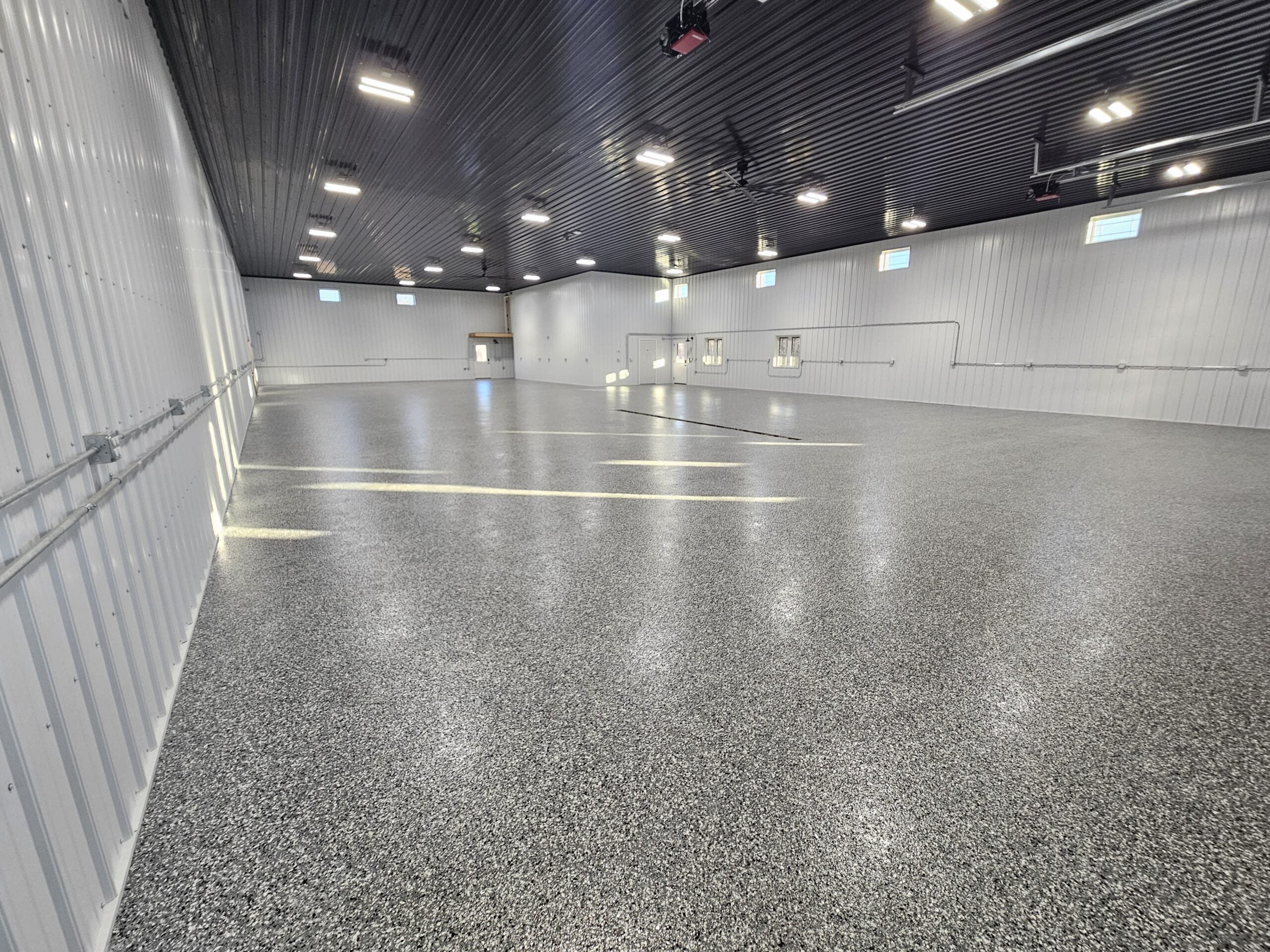
South Dakota's Concrete Floor Coating Specialists
Not a coating crew with a sprayer and a price sheet. A concrete specialist with highway construction roots, industrial-grade equipment, and the substrate knowledge to make floor coatings actually last.
Why Choose Technical Construction Solutions for Concrete Floor Coatings in South Dakota?
South Dakota floor coating failures almost always trace back to the same root cause: the slab was not assessed before the product was selected, and the product was not applied to a substrate that was prepared to receive it. The coating looks correct on installation day. The failure begins the moment the slab's actual conditions start working against the adhesion bond that preparation alone could have secured.
A food processing facility on the northwest side of Sioux Falls called us after an epoxy coating had blistered and delaminated in the wet processing areas within fourteen months of installation. The previous contractor had diamond-ground the floor, applied the epoxy, and delivered a surface that looked exactly as specified. Within two seasons, sections in the wet zones were lifting, and the facility was managing a delaminated floor in an area where food safety compliance and surface integrity are directly connected.
When we assessed the floor, moisture vapor emission rates in the wet processing zones were significantly above the tolerance threshold of the epoxy system that had been applied. Pierre clay beneath the slab held residual moisture at levels that the coating was never designed to handle. No vapor testing had been done before product selection. The epoxy was the wrong system for the actual slab conditions in those zones.
We removed the failed sections, tested vapor emission rates across the full floor area, and applied a urethane cement coating in the wet processing zones, a system specifically rated for high-vapor environments and the chemical cleaning protocols that food processing facilities run daily. The epoxy system was retained in the dry traffic zones where vapor levels fell within specification. The floor has held through two full years of production use, including the spring thaw months when Pierre clay moisture vapor pressure is at its peak.
Freddy Lewis founded Technical Construction Solutions LLC after 15 years of structural field work in highway construction. That deep familiarity with advanced polymer compounds shapes how every South Dakota floor coating project gets assessed: substrate first, vapor conditions second, system selection third, application last. This specialized mastery of thermal and environmental barriers is also why property owners look to TCS as a premier statewide insulation contractor to secure their building envelopes from the ground up.
If your South Dakota floor is peeling, failing, or needs to be coated correctly from the start, a free estimate is where the conversation begins.
Expert Concrete Floor Coating Services Across South Dakota
Epoxy Floor Coatings
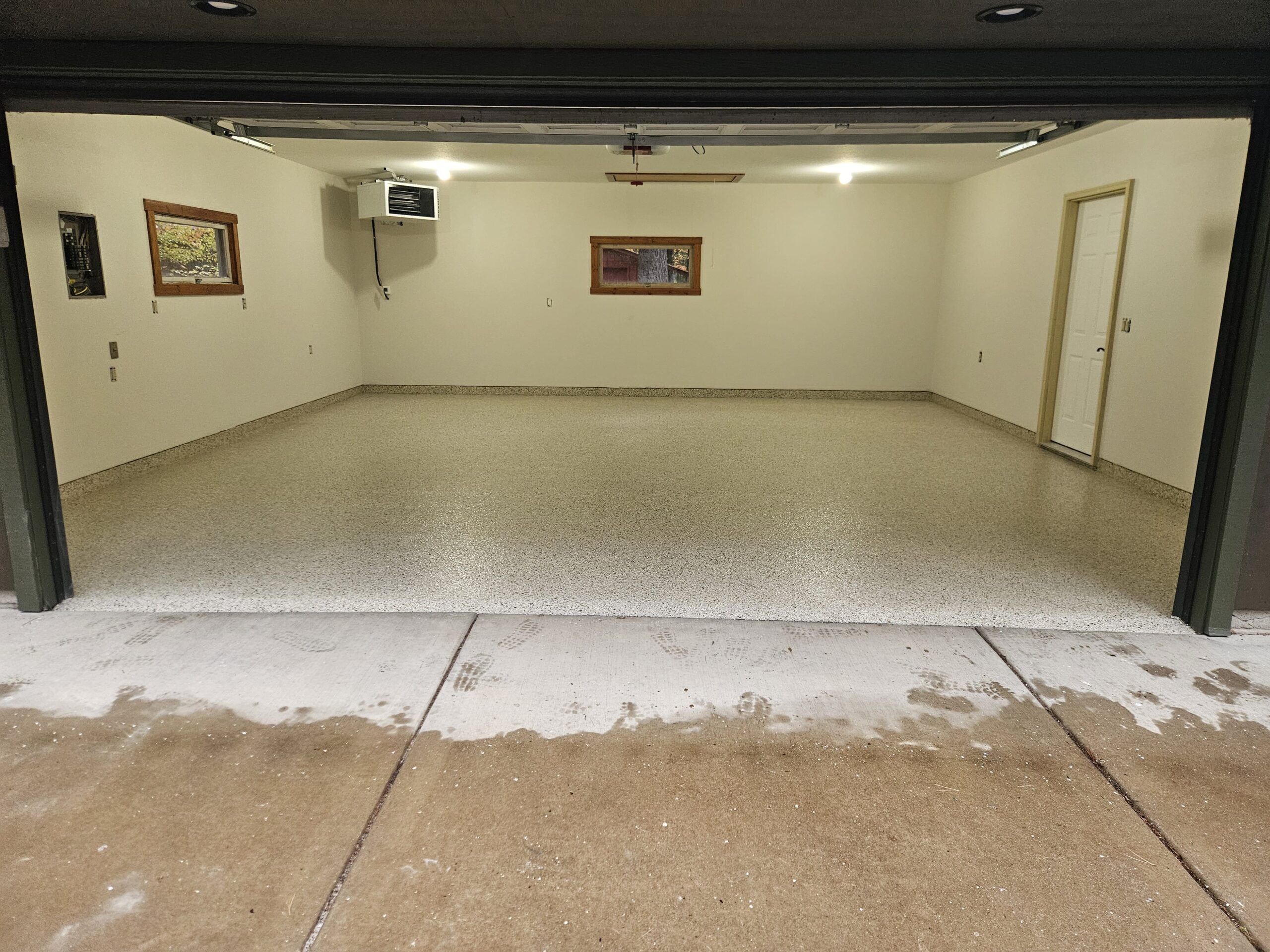
For garages, auto service facilities, farm shops, commercial warehouses, and industrial spaces across South Dakota, epoxy is the most widely specified floor coating system when chemical resistance, impact durability, and the ability to hold up under vehicle and equipment loads are the primary performance requirements. Applied over a correctly prepared slab with vapor conditions within the product's specified tolerance, epoxy delivers a hard, chemically resistant surface that handles the road salt, fuel, oil, agricultural chemicals, and thermal cycling that South Dakota floors absorb through a full working year.
South Dakota's floor coating environment presents specific challenges that moderate-climate product specifications are not calibrated for. The road salt tracked in from treated highways and parking lots from October through April is more corrosive than general vehicle traffic residue. The temperature differential between a South Dakota January night and a heated shop or warehouse interior stresses adhesion bonds that were applied to slabs with inadequate surface profile or moisture vapor levels outside the product's rated tolerance. In eastern South Dakota's corn and soybean country, herbicide and fertilizer residue tracked in from equipment storage combines with road salt to create a corrosive floor environment that demands chemical resistance as a primary specification requirement, not a secondary one.
What produces epoxy failures on South Dakota floors is not the product chemistry. It is the surface the product was applied to. Dust, residual moisture vapor, chloride contamination from road salt infiltration, and existing sealers all compromise the adhesion bond before the coating has fully cured across the floor area. This crew grinds and profiles the slab to the correct surface profile, tests moisture vapor emission rates before product selection is finalized, assesses chloride levels in high-risk applications, and clears contamination before any coating is opened. What goes down after that preparation is bonded to concrete rather than to the conditions that were sitting on the surface when the previous crew skipped the prep.
Polished Concrete
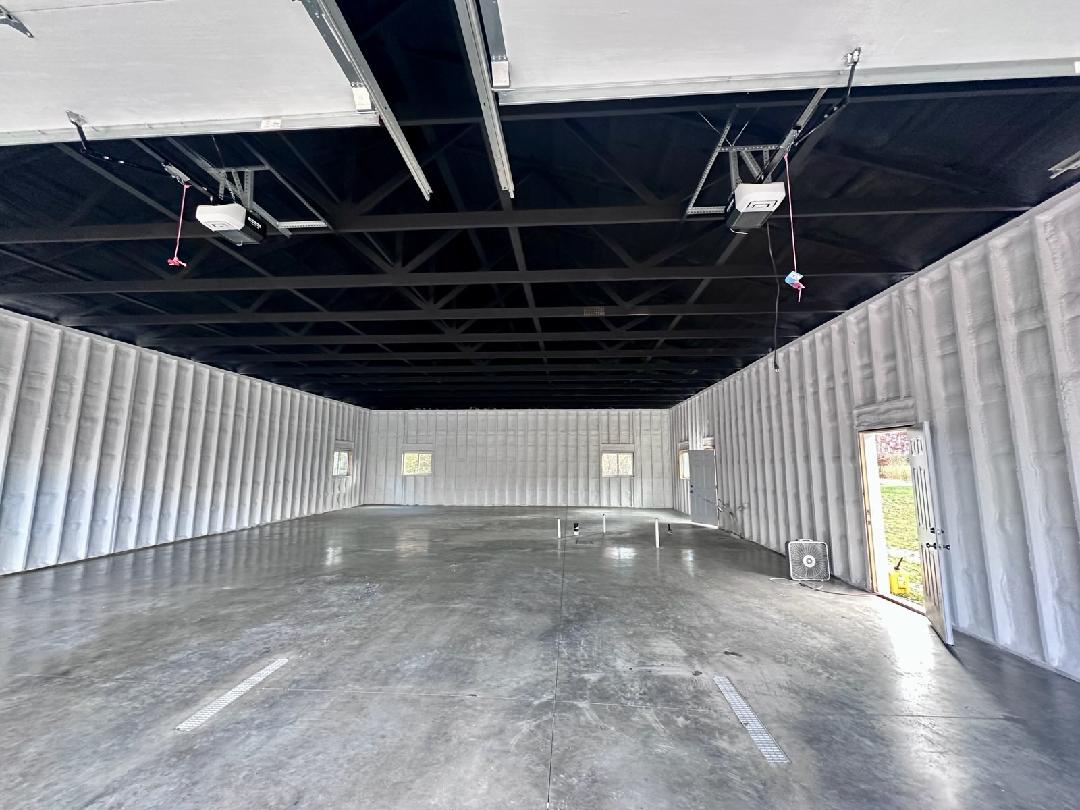
Polished concrete takes a different approach than coating systems by refining the slab itself into a dense, durable, low-maintenance surface rather than applying a bonded layer that sits above it. For commercial lobbies and retail spaces along Sioux Falls's 41st Street and Minnesota Avenue corridors, agricultural processing facilities in the James River Valley, showrooms in Rapid City, and residential interiors across the state, polished concrete resists staining, holds up under continuous traffic, and has nothing to peel, chip, or delaminate because there is no applied layer in the assembly to fail.
The process uses progressively finer diamond tooling across the slab surface, with densifier applied at the correct stage in the grinding progression to harden the concrete from within rather than covering it with a surface layer. The finished surface is sealed to reduce porosity and improve long-term stain resistance across the use conditions that South Dakota commercial and agricultural facilities generate. A crew that understands concrete structurally, how the slab responds to progressive diamond refinement at different hardness levels, and how densifiers penetrate at varying porosity depths, produces a consistently better polished result than a crew treating it as a surface-cosmetic process.
For South Dakota commercial property owners and agricultural facility operators who want a floor surface that holds its performance and appearance over years of heavy use with minimal maintenance overhead, polished concrete is the right system where the slab condition and use pattern align with it.
Why What Is Beneath the Coating Determines What Happens to the Coating
Most floor coating contractors in South Dakota lead with the product, the brand name, the available color options, and the installation schedule. The crews that produce coatings that hold across multiple South Dakota seasons lead with the slab, because the slab is what the coating is bonded to, and the slab is what determines whether that bond holds.
TCS's work in concrete lifting, slab leveling, and structural stabilization across South Dakota means this crew reads a concrete floor differently than a coating-only contractor who has never worked at the sub-surface level. Moisture vapor emission rates, surface profile depth, existing settlement crack patterns, Pierre clay sub-base conditions, and chloride contamination levels from road salt infiltration all affect how a coating performs under South Dakota's freeze-thaw cycling and the chemical loads that agricultural and commercial use environments generate, and all of them get assessed before any product goes down.
"A general contractor TCS worked alongside on a commercial project in the Sioux Falls market said afterward that TCS was the first flooring crew he had brought in who asked about the slab's construction date, the site drainage conditions at the perimeter, and the building's intended use pattern before discussing any product option. That sequence is not unusual for this crew. It is how coating work gets prepared correctly when the goal is a floor that holds through multiple South Dakota winters rather than one that passes a visual inspection on installation day and begins releasing adhesion within the first full heating and thaw cycle."
For South Dakota property owners and commercial clients, that concrete-first approach means the coating recommendation reflects what the slab actually needs and what the use environment actually demands, not what product is most readily available or easiest to apply to that floor geometry.
Why South Dakota Property Owners and Contractors Trust Technical Construction Solutions
Concrete Knowledge That Starts Beneath the Surface.
TCS's experience in concrete lifting and slab leveling means this crew understands what is happening below a South Dakota floor before applying anything above it. Pierre clay sub-base behavior, moisture vapor migration through South Dakota slabs in the post-thaw season, and the chloride infiltration patterns that road salt creates in high-traffic entry zones all affect coating performance, and all of them get assessed before a product is recommended.
Built for South Dakota's Pierre Clay Moisture, Road Salt, and Agricultural Conditions.
Pierre clay beneath South Dakota slabs releases moisture vapor at rates that vary significantly between the dry summer months and the post-snowmelt spring period. Road salt infiltration in high-traffic entry and vehicle storage zones creates chloride contamination that breaks epoxy adhesion bonds before the coating has the opportunity to fail from any other cause. Agricultural chemical exposure in farm shops and grain handling facilities adds another layer of chemical resistance requirement that moderate-climate product specifications are not built around. Coating systems installed on South Dakota floors are selected and prepared with those specific conditions as the primary specification criteria.
Single Contractor for Concrete Repair and Coating.
TCS can lift and level settled concrete, then apply protective coatings in sequence, giving South Dakota property owners a direct path from structural repair to surface protection without coordinating between multiple contractors or managing a handoff between a concrete repair crew and a coating crew with different preparation standards and separate mobilization schedules.
15+ Years of Construction Field Experience Behind Every Substrate Assessment.
Floor coating failures in South Dakota trace back to inadequate preparation and wrong product selection more consistently than to any other cause. The construction-first approach TCS applies to every project means surface preparation is treated with the same standard as the coating application itself, because the preparation determines whether the coating holds or releases under South Dakota's demanding seasonal and agricultural conditions.
Residential, Commercial, Agricultural, and Industrial Capability Statewide.
From farm shop floors in Beadle County and the James River Valley to commercial warehouse surfaces in Sioux Falls and Rapid City to residential garage floors in Harrisburg and Brookings to food processing and agricultural facility floors across the state's eastern production corridor, TCS's coating capability covers the full range of South Dakota's varied property market without the application limitations that constrain single-system coating contractors.
Fair Pricing in a Market With Limited Competition.
South Dakota's specialty contractor density, particularly outside of Sioux Falls and Rapid City, means that professional-grade floor coating work is sometimes priced to reflect the scarcity of qualified options rather than the actual scope of the project. Every TCS estimate reflects what the project requires at a fair price, regardless of where in South Dakota the building sits or how limited the local alternatives are.
On Time. On Budget. Every Time.
Floor coatings frequently close construction sequences, and a coating crew that cannot finish on the agreed schedule holds up occupancy, final inspection, or production startup for the entire project behind it. Projects finish on the timeline agreed to and within the budget outlined at the start, so South Dakota property owners and contractors are not waiting on a floor coating phase while the rest of the project is ready to move forward.
Get a Free Floor Coating Estimate Across South Dakota
A floor coating that fails costs twice, once to install and once to strip the failed system and reinstall correctly after the adhesion releases. The right way to protect that investment in South Dakota's conditions is to start with a crew that understands what is happening at the slab level, including moisture vapor, surface profile, and sub-base conditions, before any product is selected or applied.
Start with a free estimate. One conversation is enough to assess the floor, identify the right coating system for that slab and that use environment, and give you a clear picture of what it will cost. No pressure. No obligation.