
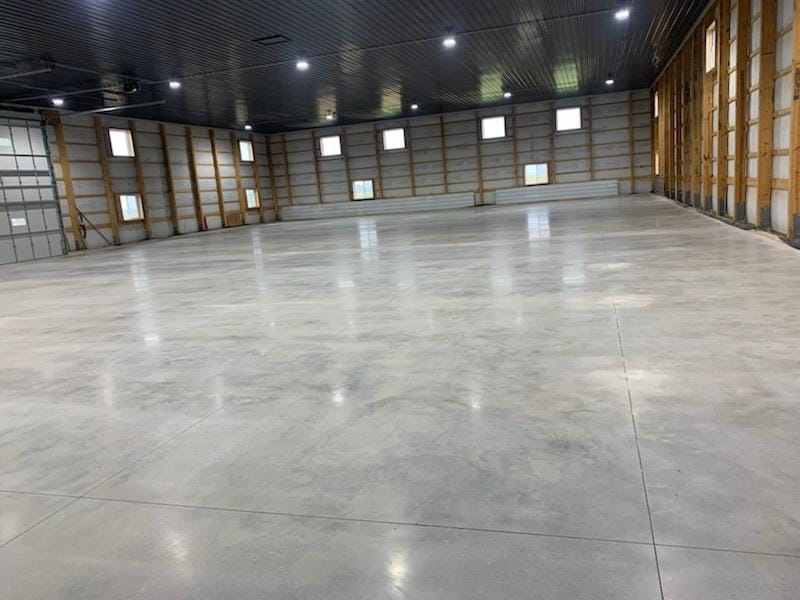
Minnesota's Concrete Floor Polishing
15+ Years in the Field. Commercial-Grade Grinding Systems. Floors Built for Minnesota's Real Conditions.
Not a flooring retailer with concrete listed as a service. A construction-built operation with the polishing systems, slab diagnostics, and project capacity to produce floors that hold their finish through freeze-thaw cycles, heavy equipment load, and the full demands of Minnesota commercial and industrial use.
Why Choose Technical Construction Solutions for Concrete Floor Polishing?
The story we hear most often from Minnesota facility managers, shop operators, and commercial property owners is not about the price they paid. It is about what happened to the floor six months after the contractor left. The surface looked right at handoff. Then the spring thaw cycle hit the slab from below, the forklifts started running the traffic lanes, or the first hard winter pushed road calcium through the overhead door threshold, and the finish started breaking down in the areas that took the most load.
A production facility manager in the St. Cloud area off Hwy 15 called us after two previous contractors had polished the same floor in four years. Both crews had skipped the full diamond grind sequence and applied densifier to a surface that had not been properly opened. The densifier cured on top of the slab instead of penetrating the concrete matrix. The polish that followed had no hardened substrate to bond to. Under the daily load of a manufacturing operation, the finish wore through in the traffic corridors within a single season. We ground the slab back to sound concrete, ran the correct grind sequence in stages, densified properly, and polished to the spec the facility needed. That floor has been running clean under full production load for over two years without a maintenance call.
There is a reason some polished floors last twenty years, and some need to be redone before the second winter. The difference is never the product. It is always the prep.
Minnesota's glacial lake plain geology, from the Red River Valley lowlands in the northwest to the morainic terrain through the central lakes region and the river bluff country in the southeast, creates a wide range of slab behaviors. Sandy loam soils drain differently from the heavy clay that underlies much of the southwest agricultural corridor. A slab sitting on one does not behave the same as a slab sitting on the other, and surface prep that does not account for what is happening below the concrete will produce a floor that fails ahead of schedule, regardless of how good the polish looks on the day it is done.
If your concrete floors are wearing through, absorbing fluid, or coming apart at the finish, a free estimate is the right place to start. One site visit is enough to read the slab and tell you what it actually needs. If you are also evaluating building envelope improvements alongside your flooring project, the full scope of our insulation and air barrier systems is available on our Insulation Contractor hub.
Polished Concrete Services Across Minnesota
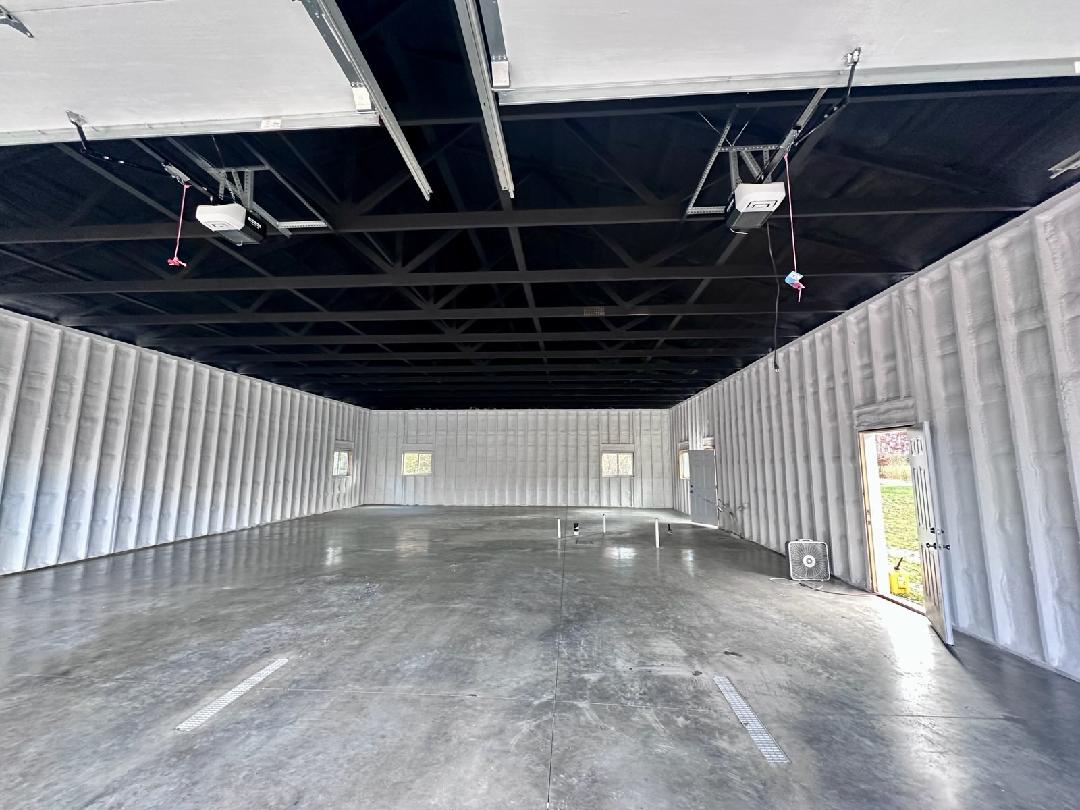
Polished Concrete for Commercial and Industrial Spaces in Minnesota
Minnesota's commercial and industrial floor inventory is extensive and varied. Cold storage and food processing facilities across the Red River Valley, manufacturing and fabrication plants in the I-94 corridor between St. Cloud and the Twin Cities metro, agricultural supply operations throughout the southern and western regions, distribution centers serving the greater Minneapolis-St. Paul area, and the trades and light industrial buildings that anchor small cities from Bemidji down to Rochester all share one consistent flooring problem: slabs that were poured for function and never properly finished.
Polished concrete converts that existing slab into a sealed, low-maintenance surface that performs under daily commercial load without an ongoing maintenance budget attached to it. Diamond grinding opens the concrete profile across the full floor area. Densifier hardens the matrix from within rather than coating the surface. Each successive polish pass builds toward a finished surface that resists abrasion, fluid penetration, and the mechanical wear of commercial operations without peeling, lifting, or requiring recoating on a seasonal schedule.
For a warehouse operation off I-35 in the southern metro, a vehicle service facility in Duluth's Lincoln Park industrial district, or a large-format retail space in the St. Cloud trade area, a floor that does not need to be touched again after it is done is the actual return on the investment.
For facilities where a polished base needs a chemical-resistant or impact-protective layer on top, Epoxy Coatings can be specified alongside the polishing scope in a single project mobilization. The full range of concrete surface systems TCS installs across Minnesota and the Upper Midwest is covered in the Concrete Floor Coatings hub.
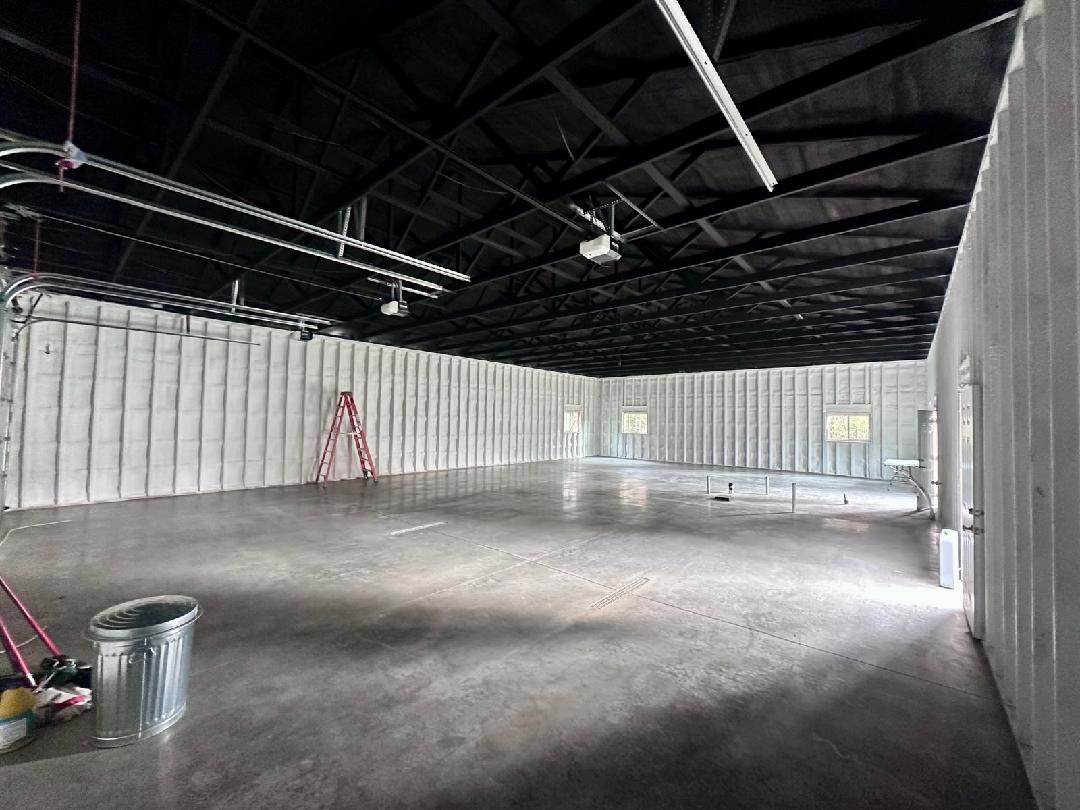
Polished Concrete for Shops, Garages, and Working Buildings Across Minnesota
The shop floors, heated detached garages, and steel-framed outbuildings spread across Minnesota's rural townships, small cities, and lake country acreages take a different kind of punishment than commercial facilities, but the performance requirement is the same. Road salt and sand tracked in off township roads from November to April. Engine oil, hydraulic fluid, and agricultural chemical residue from equipment that runs through planting and harvest. The thermal stress of a floor that swings from subzero to 70 degrees between seasons as the heating system cycles.
A polished and densified concrete floor handles all of that without holding fluid at the surface, without absorbing stain, and without breaking down under the combined mechanical and thermal load that comes with real working conditions in Minnesota. For a machinist in the Iron Range running a private shop, a hobby fabricator with a heated building on a lake acreage in Crow Wing County, or a contractor who wants a functional finished floor in a commercial pole building outside of Mankato, polished concrete produces a result that holds up year after year without the replacement cycle that every other flooring option eventually demands.
What Surface Grinding Does, and Why Every Floor Outcome Traces Back to It
Concrete polishing is a multi-stage process, and surface grinding is the stage that every other stage depends on. Grinding removes the weak laitance layer that develops at the top of every concrete pour, cuts through surface contamination from years of fluid absorption and traffic wear, opens the concrete profile so densifiers and coatings can penetrate the matrix rather than film over the top, and establishes the flat, consistent base that polishing and coating systems require to adhere correctly and perform long-term.
Every concrete coating failure that gets attributed to the product, the climate, or the building eventually traces back to a surface that was not properly ground before the work started. Paint that blisters near the overhead door. Epoxy that begins peeling at the seams within eighteen months. Polished finishes that lose their sheen in the high-traffic corridors before the second year is out. Those outcomes are not product failures, and they are not weather failures. They are prep failures, and they happen because a grinding step was skipped, rushed, or executed with equipment that was not matched to the scale of the job.
Surface Grinding for Coating Preparation in Minnesota
For Minnesota facilities planning to apply epoxy, polyaspartic, or other protective coating systems, surface grinding is not a preliminary step that can be abbreviated to bring a bid in lower. It is the step that determines whether the coating produces a lasting result or begins failing at the perimeter before the first freeze-thaw season is complete.
The concrete surface needs to be profiled to the correct texture for the specific coating chemistry being applied. That requires understanding both what the slab is doing and what the coating needs from the surface beneath it. Those are two knowledge sets that flooring-only contractors rarely hold at the same time.
Because TCS works across concrete lifting, void filling, and structural repair alongside floor coating projects, the team assesses slab conditions, moisture behavior, and sub-base movement as standard practice on every job. That background shapes how the grind gets executed, not just what gets applied afterward. It is the difference between a bond that holds through Minnesota's full seasonal range and one that starts separating when the ground shifts in spring.
Surface Grinding for Leveling and Restoration Across Minnesota
Minnesota's older commercial building stock carries decades of accumulated slab problems. Manufacturing facilities in the Iron Range, where floors absorbed cutting fluid and heavy machinery load for thirty years. Warehouse slabs in the Twin Cities metro were poured without consistent depth control during rapid postwar industrial expansion. Agricultural processing buildings in the southwest, where floors have been through years of grain dust, chemical exposure, and equipment load without a single restoration pass.
Surface grinding resolves those conditions before they limit what can be done with the floor going forward. High spots get ground flat. Deteriorated surface layers get cut back to sound concrete. Contaminated or previously coated areas get stripped to a clean, bondable profile. What remains after a proper grinding pass is a slab that can be polished, coated, densified, or sealed based on what the facility actually needs, regardless of how much history has accumulated on the surface.
The Equipment Difference: Why It Matters on Minnesota's Large Commercial Floors
The floor areas inside Minnesota's commercial and industrial buildings are not sized for residential grinding equipment. A food processing facility in the Red River Valley, a distribution center near the Twin Cities outer ring, or a large-format vehicle service complex in the Rochester trade area involves floor areas where undersized grinding equipment produces visible inconsistency across the field, extends the job timeline by days, and creates sections that have to be reworked before any finish system can be applied.
TCS operates commercial-grade concrete grinding and polishing equipment built for industrial-scale floor areas.
"A general contractor overseeing a large mixed-use commercial project in the St. Cloud metro told us after the floor work wrapped that TCS was the first concrete crew on that build who arrived with equipment that actually matched the job's floor area without requiring additional mobilizations or extended scheduling windows. The floor came in on the agreed timeline and within the estimate stated at the start."
For Minnesota facility managers and commercial property owners where floor downtime has a direct cost to operations, execution reliability is not a secondary consideration. It is the specification.
Why Minnesota Contractors and Property Owners Trust Technical Construction Solutions
15+ Years of Hands-On Construction Experience
Every concrete polishing and surface grinding project is led by a professional who has spent over 15 years in the structural field, working on infrastructure projects across the Upper Midwest, not in a showroom. That background means floors get read the way a construction specialist reads them: slab performance connects to moisture movement, sub-base stability, and how the structure has settled over time. That context changes every prep decision made before a grinder touches the floor.
Construction Roots, Not a Flooring Franchise
TCS was built by a hands-on construction professional with a family background in the trade. Every project gets the diagnostic approach of a structural specialist, not a franchise system designed to process jobs quickly and move to the next market.
Deeper Concrete Knowledge Than Flooring-Only Contractors
Working across concrete lifting, void filling, and structural applications means the team reads slab behavior as standard practice on every assessment. That knowledge shows in how surface prep gets calibrated to the actual site conditions, and in how long the finished floor holds up under the loads Minnesota facilities put on it through a full seasonal cycle.
Industrial-Grade Equipment for Any Project Scale
Whether the job is a heated garage floor on a lake acreage in Crow Wing County or a 30,000-square-foot manufacturing floor in the I-94 corridor, the grinding and polishing equipment TCS brings is sized and specified for the work at hand, not scaled down to protect the bid margin.
Accurate Estimates. No Skipped Prep
Every estimate reflects what the job actually requires, executed correctly from the first grind pass through the final polish stage. TCS does not compress the prep scope to win a bid because a floor that was under-prepped will fail, and a floor that fails is not a job done right by any standard.
On Time. On Budget. Every Time
Minnesota operations that cannot absorb extended floor downtime get a project that finishes on the agreed schedule and within the cost stated at the estimate. That reliability comes from equipment capacity and preparation, not from cutting the scope to meet a deadline.
Get a Free Concrete Polishing Estimate in Minnesota
Concrete floors that are dusting, staining, wearing through at the traffic lanes, or failing under the conditions your operation runs them through do not recover without professional intervention. Surface grinding and polishing restore the slab to full performance and hold it there without the recurring cost of recoating, patching, or replacing sections that should have been done correctly the first time.
Start with a free estimate. One site visit is all it takes to assess the slab, identify the right process, and give you an accurate cost with no pressure and no obligation.