
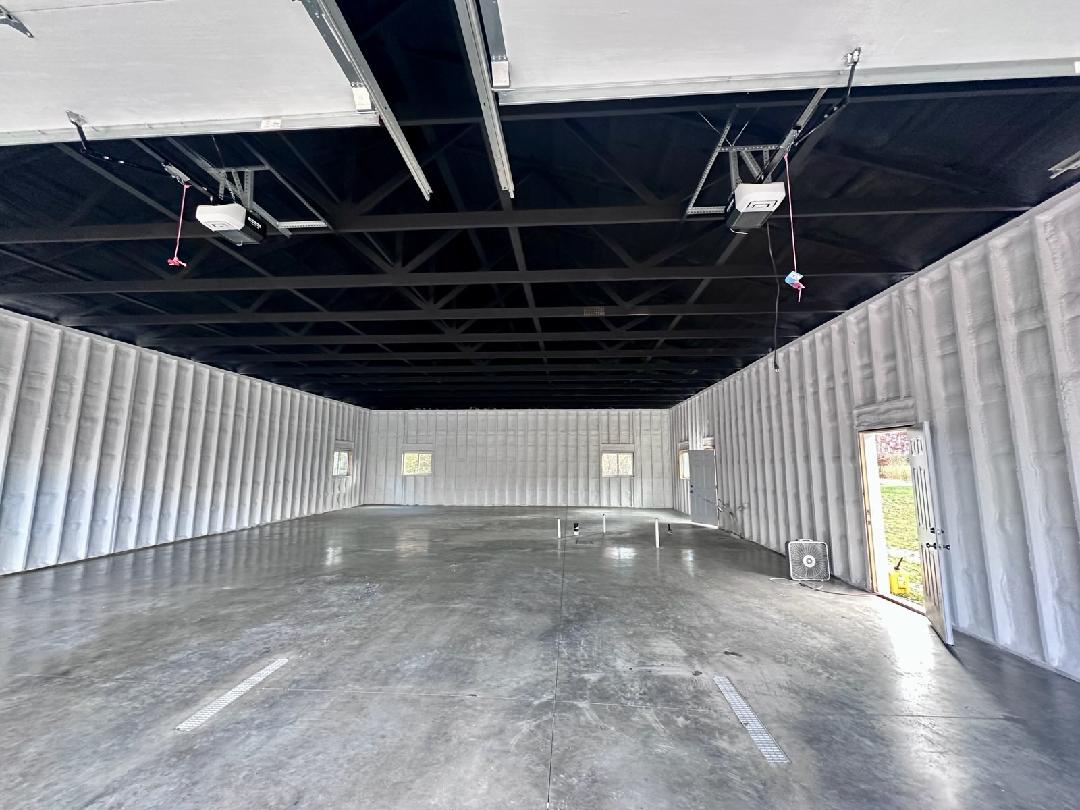
Wisconsin's Concrete Floor Polishing Specialists
15+ Years of Structural Field Experience. Commercial-Grade Equipment. Floors Built for Wisconsin's Dairy Country, Manufacturing Corridors, and Lake District Winters.
Not a paint-and-seal operation that picked up polishing equipment between other jobs. A construction-built crew with the field knowledge, grinding systems, and concrete background to produce floors that hold through Wisconsin's freeze-thaw seasons, heavy dairy and ag use, and the industrial demands of a state that builds and manufactures at a serious scale.
Why Wisconsin Floors Wear Out Before Their Time
The situation we hear described most consistently from Wisconsin facility managers, dairy operators, and commercial property owners isn't a floor that failed all at once. It's a floor that was finished, looked acceptable, and then spent the next eighteen months quietly losing ground in exactly the spots that mattered most.
We were called out to a dairy processing facility in the Chippewa Valley, in the stretch of farm and light industrial operations that runs along the river corridor west of Eau Claire. The facility had a concrete floor in its processing area that had been coated during a renovation two seasons prior. The coating had started separating near the floor drains and along the wall perimeters, the zones that take the most concentrated cleaning chemical exposure and daily washdown traffic in a dairy operation. The facility manager had already had a flooring contractor come back twice to patch the failing sections. Both patches were lifting too.
When we assessed the slab, the answer was straightforward. The concrete had been cleaned and degreased before coating, but it had never been mechanically ground. The surface was sealed and smooth, with no profile to bond to. Cleaning is not preparation. The coating had been sitting on a surface that gave it nothing to grip, and the daily combination of chemical exposure, moisture, and temperature change in a working dairy environment had found every weak point in that bond within a year.
We ground the slab to the correct mechanical profile, polished it to a finish suited to a food-processing environment with high washdown frequency, and the surface has performed without issue through every production cycle since.
Getting the preparation right the first time is not optional. It is the only thing that determines whether a floor holds or has to be done again.
If your Wisconsin concrete floors are wearing down, delaminating, or absorbing what they should be resisting, a free estimate is the place to start. If you are also evaluating insulation or building envelope improvements alongside your flooring project, the full scope of our services across the state is available on our Insulation Contractor Wisconsin Hub.
Polished Concrete Services Across Wisconsin
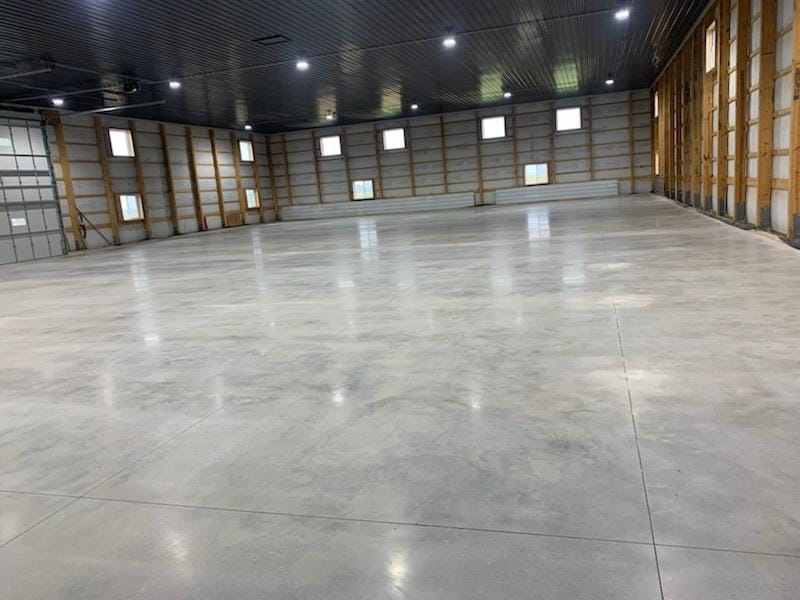
Polished Concrete for Commercial and Industrial Facilities Across Wisconsin
Wisconsin's industrial and commercial base is genuinely varied. The Fox Valley manufacturing corridor running through Appleton, Oshkosh, and Green Bay puts different demands on concrete floors than the dairy operations across the Central Sands and Chippewa Valley. Distribution facilities near the I-90 and I-94 corridors in the south handle different traffic patterns than the cold-storage and processing buildings across the northern lake district. Polished concrete works across all of those environments because the surface it produces is not a coating waiting to fail. It is the floor itself, treated to perform permanently under whatever the specific facility puts on it.
Professional diamond grinding and polishing moves through calibrated progressive stages, cutting the concrete to the correct depth and building toward the finish specification that matches the facility's actual use. A manufacturing floor in the Fox Valley doesn't need the same sheen level as a retail showroom in Madison or a healthcare facility in Milwaukee, and the process is adjusted to reflect that. What every location shares at the end is a dense, sealed surface that resists wear, chemical absorption, and mechanical stress without a maintenance cycle tied to it.
For Wisconsin facility managers and property owners who have been treating floor upkeep as a recurring budget line, polished concrete removes that cost. The surface works as the floor itself, season after season, with nothing on top of it waiting to degrade.
When a protective coating system is also part of the project scope, our epoxy coatings are applied over a slab that has been correctly ground and profiled. That preparation is what separates an epoxy installation that bonds permanently from one that lifts off a Wisconsin slab after the first hard winter freeze-thaw cycle.
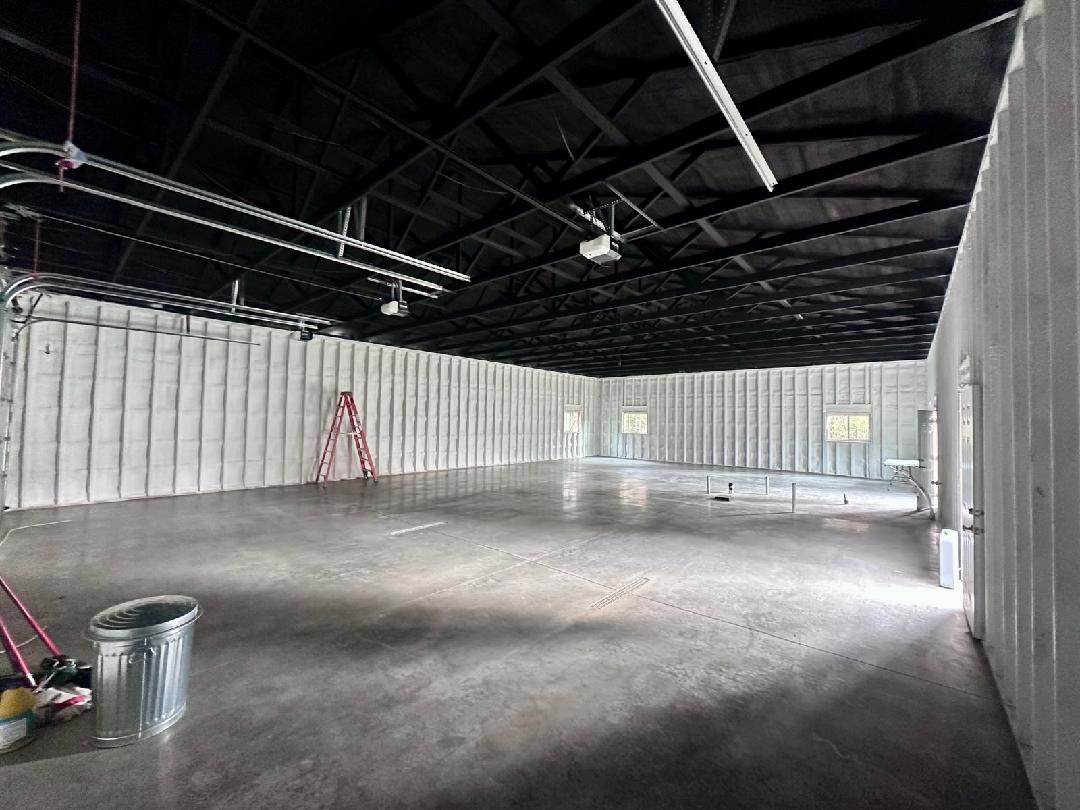
Polished Concrete for Dairy Facilities, Agricultural Buildings, and Working Shops Across Wisconsin
Wisconsin's agricultural sector puts flooring conditions on concrete that no standard commercial specification is designed to handle. Milking parlors and calf barns in Marathon and Clark counties deal with daily washdowns, concentrated manure acid exposure, and heavy rubber boot and equipment traffic that degrades unprepared concrete surfaces faster than almost any other use case. Shop buildings and equipment storage facilities across the dairy belt and the Central Sands run through the same seasonal rotation as any northern ag operation, but with the added chemical and biological exposure that comes from working livestock.
Paint doesn't last in those environments, and most property owners across Wisconsin's agricultural communities already know that from experience. The repaint cycle becomes a given, something budgeted for every two or three years and accepted as the cost of operating a working farm building.
Polished concrete breaks that cycle. The surface doesn't absorb acid washdown or cleaning chemicals. It doesn't peel at the base of walls where moisture concentration is highest. It holds under the daily traffic of a working dairy building in a way that no painted alternative has demonstrated the ability to sustain. For dairy operators in Dunn and Barron counties, for cash crop farmers running large equipment shops across the glacial lake district of central Wisconsin, and for trades businesses and light industrial operators up through the Northwoods corridor, polished concrete delivers the floor that every other option describes but doesn't actually provide.
What Surface Grinding Establishes Before Any Finish Is Committed
Every polished concrete floor starts with surface grinding, and the quality of that stage determines the outcome of everything that follows. Grinding removes deteriorated, contaminated, or previously coated surface layers, opens the concrete to the correct mechanical profile for adhesion, and levels any uneven sections before polishing or coating work proceeds.
The floor failures that bring Wisconsin facility managers and property owners to TCS almost always trace back to this stage. Paint lifts near the entry doors after the first freeze-thaw sequence rolls through a Wisconsin winter. Epoxy sections separate along the high-use traffic paths, where slab movement from seasonal temperature cycling found the weakest bond points. Polished finishes come out inconsistent across wide floor areas because the grinding wasn't thorough enough, wasn't carried to the right depth, or was done with equipment too small for the job's actual scale.
Wisconsin's glacially shaped landscape creates significant soil variability across short distances, particularly in the moraines and drumlin fields that characterize the central and northern parts of the state. Slab behavior in a building on heavy clay till near Wausau differs from that on the sandy outwash soils of the Central Sands, and that difference affects how moisture moves under the slab and how the concrete responds to seasonal ground movement. Surface preparation that accounts for those site-specific conditions produces floors that hold. Preparation that treats every Wisconsin slab identically does not.
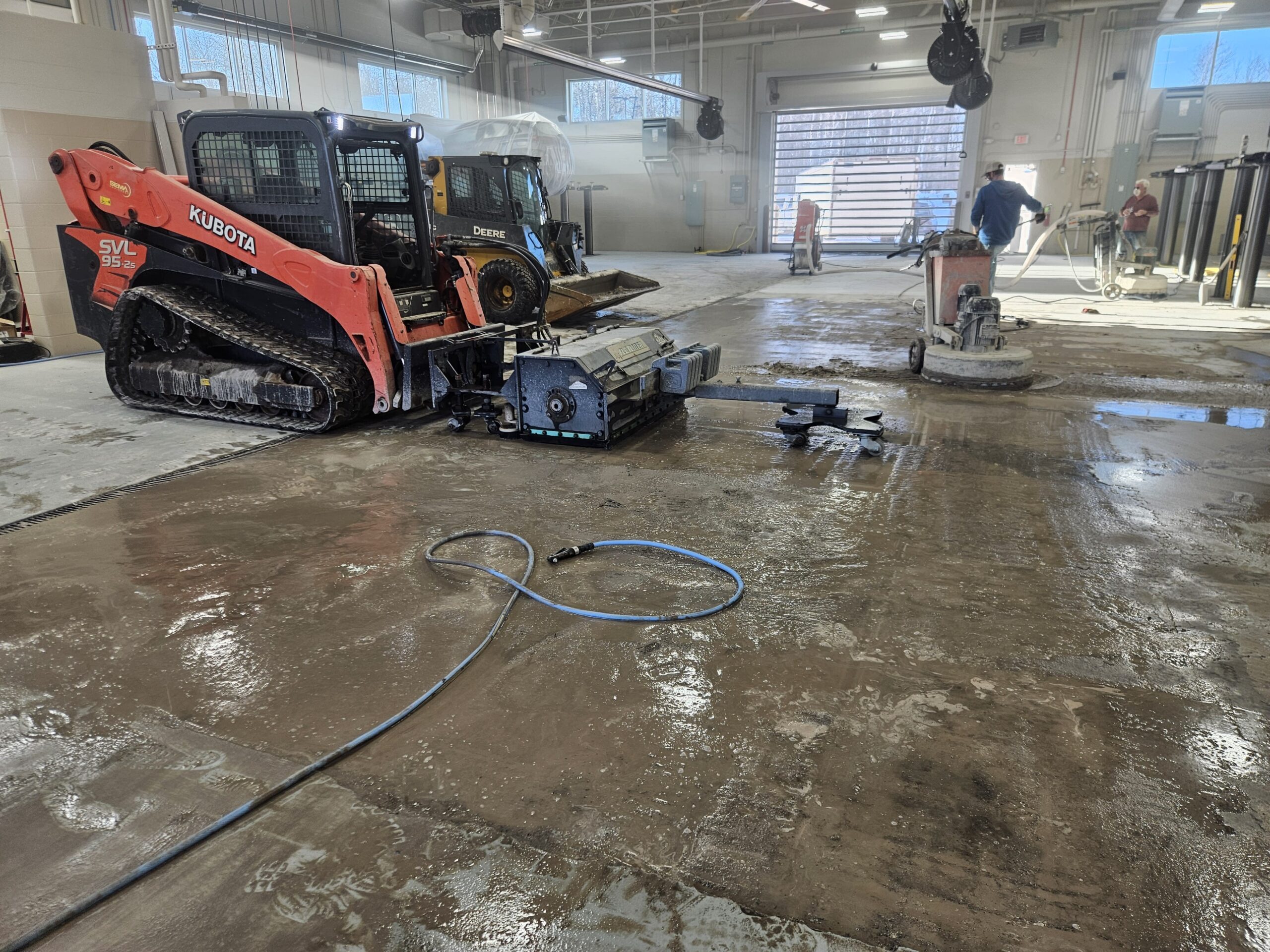
Surface Grinding as the Foundation for Coating Systems
For Wisconsin facilities planning to apply epoxy or protective floor coatings, professional surface grinding is the step that makes the coating investment last. The concrete needs to be clean, flat, and open to the correct mechanical texture for the specific coating system being used. That requires equipment matched to the project scale and a crew that understands how concrete behaves under Wisconsin's specific climate conditions, not just how to follow a product installation guide.
TCS carries structural concrete knowledge into every surface grinding project. The same team works across concrete lifting, void repair, and slab stabilization, which means the surface assessment goes beyond what's visible at the top. Moisture infiltration patterns, sub-base behavior, and how the slab has responded to Wisconsin's freeze-thaw cycles across its service life all factor into how the surface is prepared before any coating goes down. What gets identified in that assessment determines what gets corrected during prep, and what doesn't come back as a failure call six months after project close.
Surface Grinding for Leveling, Restoration, and Hazard Removal
Wisconsin has a large and varied inventory of older commercial, agricultural, and industrial buildings. Dairy facilities built in the 1970s and 1980s across the Clark and Taylor county dairy belt have concrete slabs that have absorbed decades of acid washdown and mechanical stress. Manufacturing buildings along the Fox Valley corridor contain original pours that have settled unevenly under decades of heavy equipment loading. Older retail and commercial properties across the Wisconsin River valley and the lake district communities of the north have slabs that have moved through enough freeze-thaw cycles to develop trip hazards, high spots, and surface deterioration that stops holding any finish cleanly.
Surface grinding addresses all of those conditions before they progress into structural problems. For dairy facility renovations in the Chippewa Valley, for manufacturing floor restorations in the Fox Valley and Lake Michigan corridor, and for commercial and retail properties across northern Wisconsin's resort and lake district communities, grinding returns a flat, workable surface that can be polished, sealed, or coated based on what the facility needs going forward.
The Equipment Advantage and Why It Determines Wisconsin Project Outcomes
Large-scale surface grinding and polishing require equipment built for the work. Undersized grinders extend timelines, produce visible inconsistency across wide floor areas, and create scheduling overruns that cost Wisconsin facilities operational time they planned against losing.
TCS operates concrete grinding and polishing equipment sized for commercial and industrial projects at full scale.
A construction project manager overseeing a large cold-storage and processing facility renovation near Wausau told us after the job closed that TCS was the only floor crew he had brought in whose equipment matched the floor area from the first day without any scope or timeline revision after mobilization. No mid-project adjustments. No revised invoices were introduced after work started. The project finished on the schedule agreed before work began and within the budget outlined in the estimate.
For Wisconsin facility managers and property owners, where floor downtime carries direct production cost, execution consistency changes how a contractor gets evaluated.
Why Wisconsin Contractors and Property Owners Work With TCS
15+ Years of Hands-On Construction Experience
Every concrete polishing and surface grinding project is led by a construction professional who has built his career on infrastructure-grade structural field work. That background informs every slab assessment before the first pass of the grinder, because floor performance ties directly to moisture behavior, sub-base conditions, and how a building has responded to Wisconsin's specific freeze-thaw climate across its full service life.
Construction Background, Not a Flooring Side Business
TCS was built as a construction and building envelope operation. Concrete polishing, surface grinding, and floor coatings are core services, not calendar fillers between other jobs. Every Wisconsin project gets the diagnostic standard of a structural specialist, not a crew working from a product application checklist.
Concrete Knowledge That Runs Below What's Visible
Because TCS works across concrete lifting, void repair, and slab stabilization alongside polishing and grinding, the team understands what is happening below the surface before grinding begins. That depth shows in prep quality, in what gets identified early, and in how finished floors hold up under Wisconsin's conditions over time.
Equipment Scaled to the Project
Whether the job is a two-stall dairy barn floor in Clark County or a 70,000-square-foot manufacturing facility in the Fox Valley, the grinding and polishing equipment is matched to the actual work required, not adapted from whatever fits on the trailer.
Accurate Pricing. No Prep Steps Cut.
Every estimate reflects what the project genuinely requires, done correctly from the first assessment through the final stage. TCS does not build a lower number by eliminating preparation. The estimate is the job delivered as it should be.
On Time. On Budget. No Mid-Project Revision.
Wisconsin facilities and farm operations cannot absorb extended, unplanned floor downtime. Every project finishes on the timeline agreed before work begins and within the budget outlined at the estimate, with no changes introduced after mobilization.
Get a Free Concrete Polishing and Surface Grinding Estimate in Wisconsin
Concrete floors that are worn, unpolished, or breaking down under the daily demands of Wisconsin's dairy, manufacturing, and commercial operations don't stabilize without intervention. Professional surface grinding and polishing restore full working performance and hold it there, without the recoating cycles, patching budgets, and repeat contractor visits that follow every shortcut in preparation.
Start with a free estimate. One conversation is enough to assess your slab, identify the correct process, and give you a clear, honest picture of the cost, with no pressure and no obligation attached.