
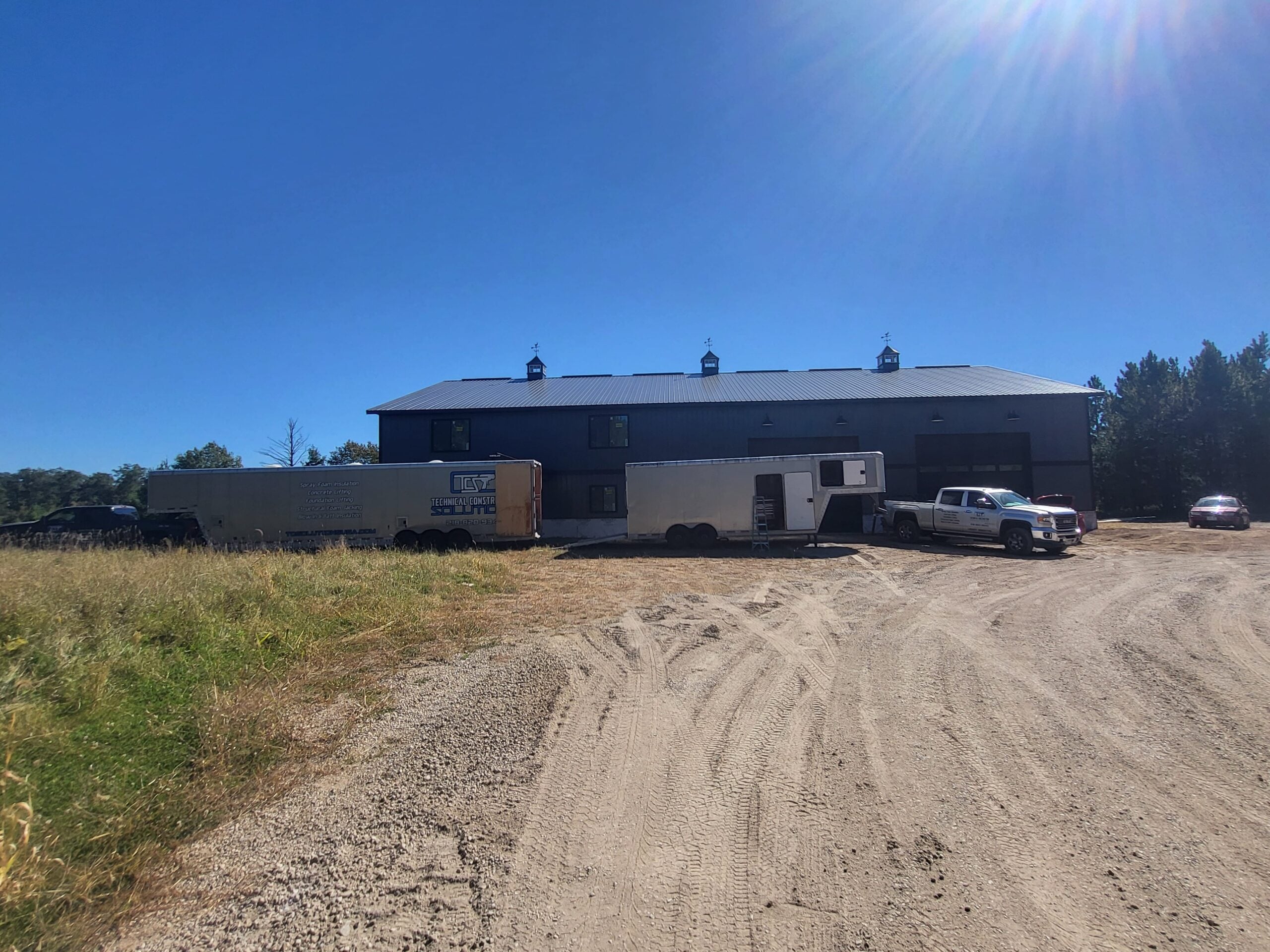
Dickinson's Spray Foam Insulation Specialists. Foam-First. Field-Proven.
Not a general contractor who added foam to a service list after a slow quarter. A building envelope operation built from the start around spray foam technology, dedicated rig capacity, and the structural field experience that western North Dakota's climate actually demands from anyone who installs insulation here.
Why Choose Technical Construction Solutions for Spray Foam Insulation in Dickinson, ND?
A property owner south of Dickinson, out near the agricultural spread along Highway 22 toward Belfield, called after two consecutive winters of propane bills that did not make sense for the size of the shop he was running. A regional contractor had come through the previous year and quoted him fiberglass batts for the wall cavities, which he accepted because the price was right and the timeline was quick. What he did not know at the time was that the crew had left every rim joist open, skipped the overhead door header entirely, and done nothing about the eave line where the metal roof meets the top plate. The batts filled the cavities. The cold air found every gap around them and kept moving.
When we walked through the building, the air movement was easy to read. On a day with western winds coming across the open ground, you could track the infiltration points by hand without any equipment. We came back with closed-cell spray foam at every identified air entry location, sealed the rim joists, addressed the eave transition, and covered the header assembly above the overhead door. He called the following January to report that the shop was holding temperature through overnight lows that previously would have required the propane to run almost continuously.
That outcome is not exceptional foam work. That is what spray foam does when the assessment identifies the actual problem before the product goes in.
Technical Construction Solutions was founded by Freddy Lewis, who came out of a highway construction background and spent more than fifteen years working in structural field environments before building this company specifically around foam technology. Spray foam is not a sideline here. It is the foundation the business was built on, and that depth shows at every stage of a Dickinson project, from the initial building walkthrough through the final pass with the rig.
If your Dickinson building runs higher energy costs than the insulation in it should allow, or you are planning a new construction project and want the thermal envelope sealed correctly before the walls close, start with a free estimate from a structural specialist, not a salesperson.
Spray Foam Insulation Services in Dickinson, ND
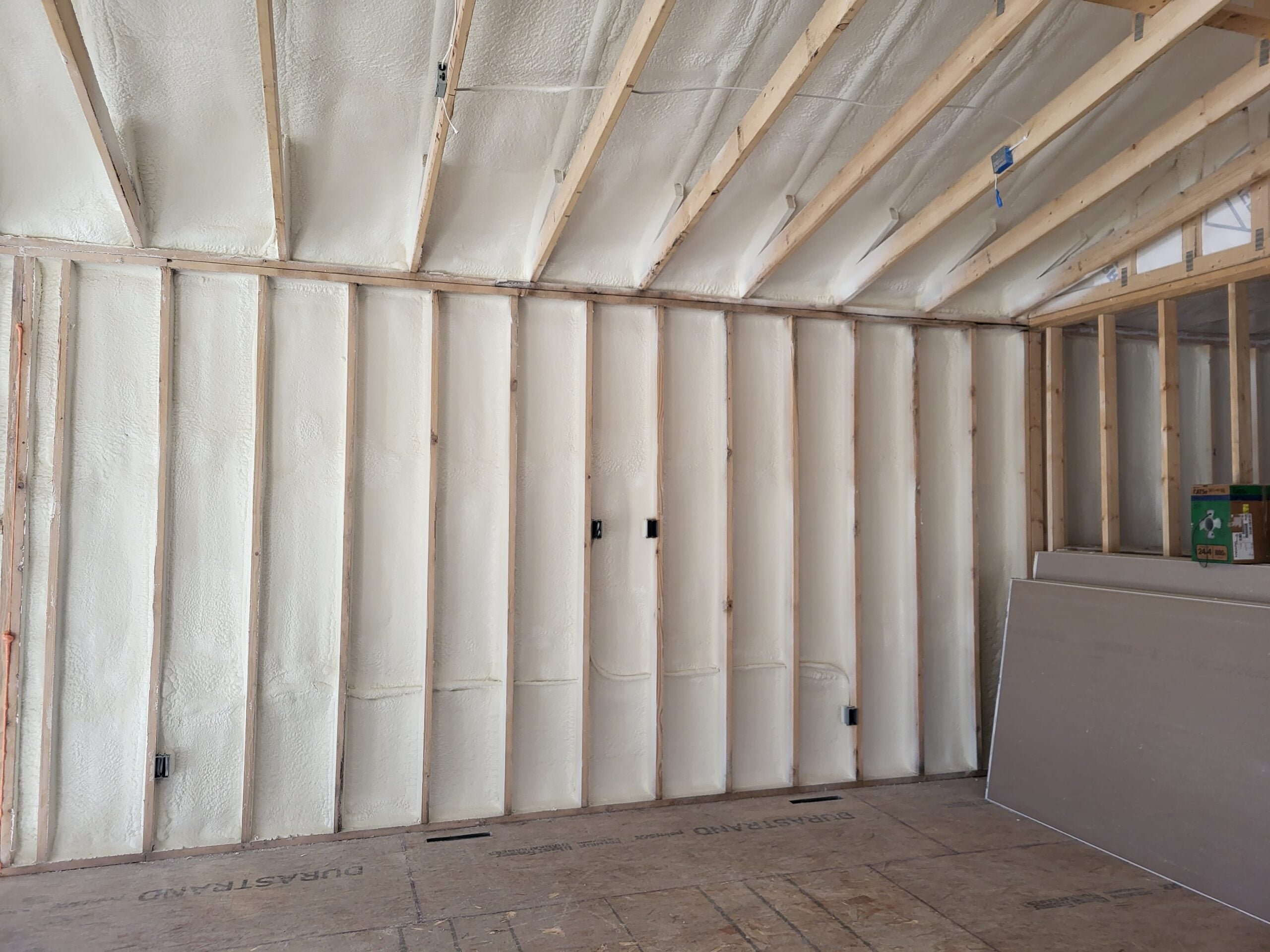
Residential Spray Foam Insulation
Dickinson's residential neighborhoods, from the older housing stock along West Villard Street and the established blocks north of the railroad corridor to the newer residential development pushing southwest toward Patterson Lake, share a common building envelope vulnerability: air infiltration at the rim joist, eave line, and framing penetration points that no amount of cavity insulation addresses on its own.
Fiberglass batts and blown-in products perform their thermal resistance function inside the cavity they occupy. They do not stop air movement. In Dickinson, where wind-driven cold air comes off open terrain from multiple directions and sustained sub-zero temperatures are a routine condition through January and February, the gap between a building that holds heat and one that does not is almost always found at the air infiltration points the cavity insulation never touched.
Closed-cell spray foam expands on contact with the substrate, bonds permanently, and creates a continuous air barrier that stops infiltration at the building envelope level, not just inside the stud bay. For Dickinson homeowners dealing with cold floors above uninsulated crawl spaces, rim joists that have been cold to the touch since the house was built, or attic assemblies where heat escapes through every rafter penetration, the right closed-cell foam application addresses the actual failure point rather than adding more insulation depth over a problem that depth alone cannot solve.
Open-cell foam serves a different set of residential applications in Dickinson buildings, interior wall assemblies where sound attenuation matters alongside thermal performance, and spaces where vapor permeability is the right call for the assembly. The distinction between the two product types is made at the assessment stage based on the specific conditions at each location in the building, not based on what is most convenient to apply when the rig arrives.
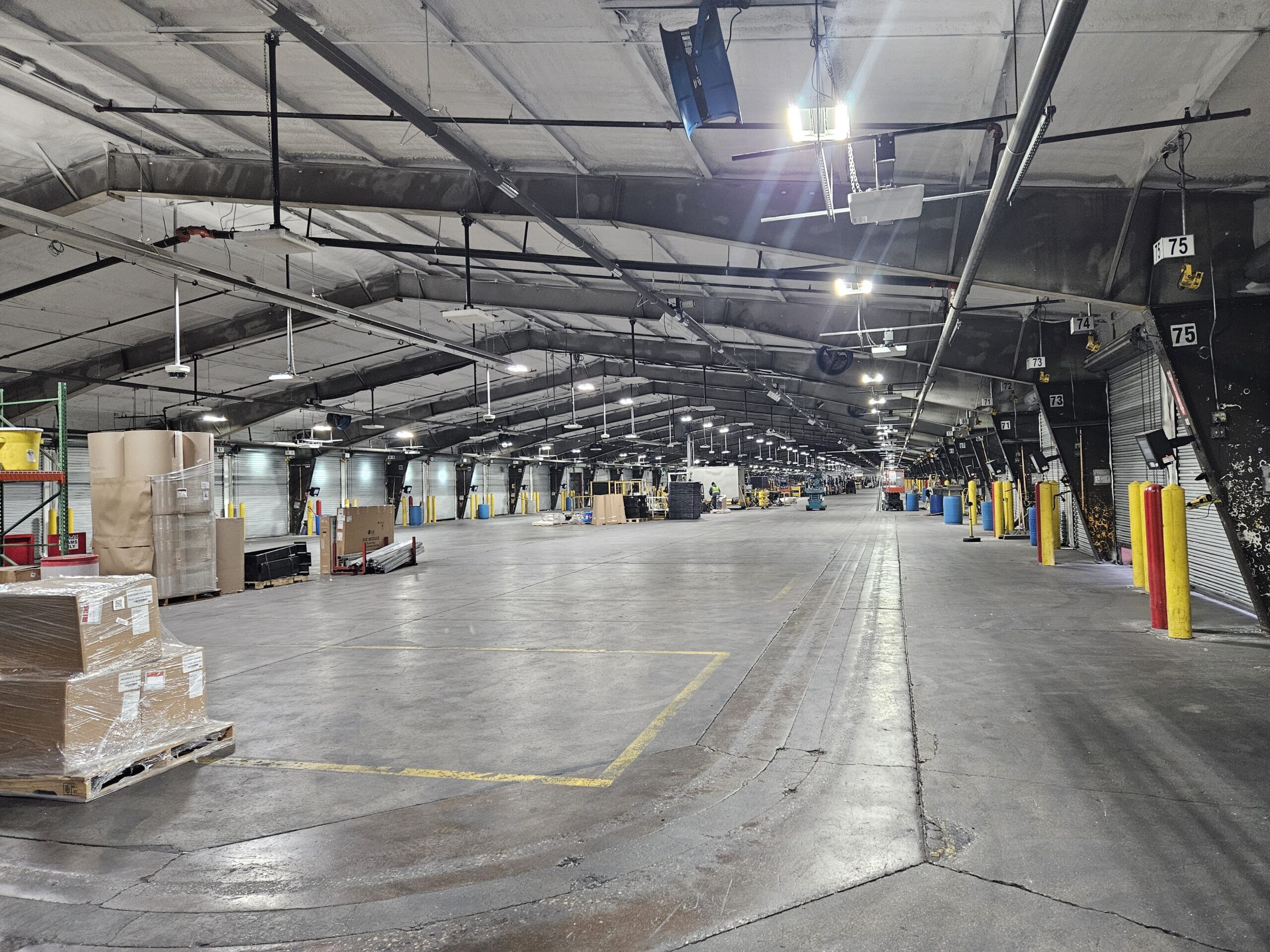
Commercial Spray Foam Insulation
Commercial construction in Dickinson has grown steadily through the energy sector activity in the Bakken region, with industrial facilities, office developments, and service infrastructure concentrated along Highway 22, the South Dickinson commercial corridor, and the industrial areas east of downtown near the rail access points. These buildings require an insulation contractor with the equipment capacity to maintain consistent foam output across large volumes without creating a scheduling delay that holds up the trades working behind them.
TCS runs three dedicated spray foam rigs and a 44-foot commercial trailer carrying ten full sets of foam, multiple lifts, and large-scale application equipment. A single mobilization covers what most single-rig contractors would need multiple trips to stage. For general contractors managing Dickinson commercial timelines where the insulation phase directly controls when drywall, mechanical, and electrical rough-in can begin, that capacity is a concrete scheduling advantage that shows up in the project completion date, not just in the contractor's marketing language.
The foam work itself on a commercial Dickinson building is specified for the building's actual use profile. An energy sector service facility that runs heating equipment around the clock has different air sealing and vapor management requirements than a light commercial retail build. Both get assessed for what they actually need, and the system goes in accordingly.
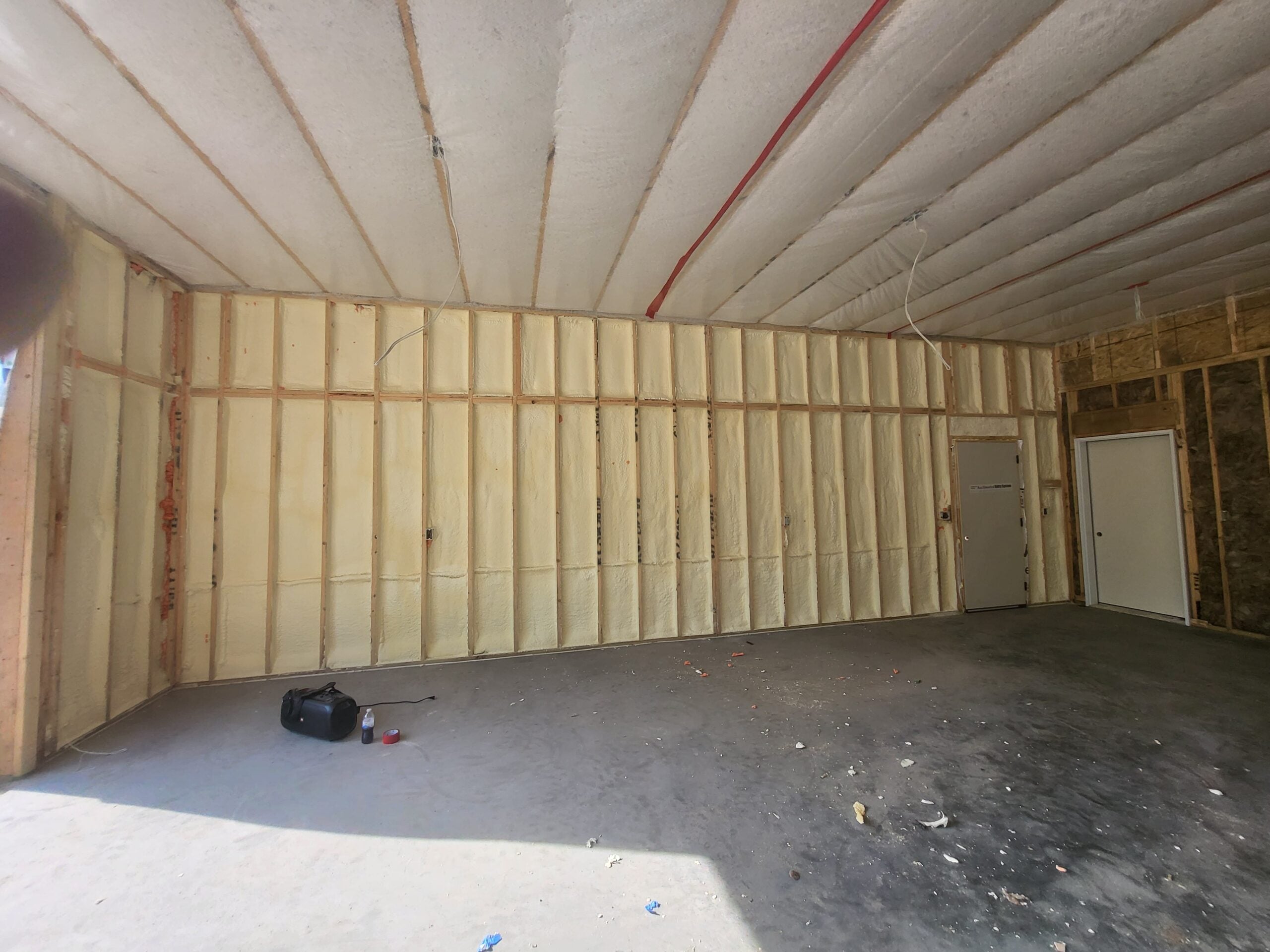
Spray Foam for Agricultural Buildings and Working Shops
Stark County's agricultural and ranching operations generate consistent demand for spray foam work in building types that standard residential contractors are not equipped to handle correctly. Pole barns, equipment storage facilities, grain handling structures, working cattle operations with attached handling buildings, and the large-scale detached shops common throughout the Dickinson area all share a set of insulation challenges that fiberglass products are not designed to solve.
Metal framing moves continuously as temperatures swing across the Dickinson heating season. That movement creates and widens gaps at fastener points, seams, and framing connections that batts laid into the cavity cannot seal. Uninsulated metal roofing and wall panels collect condensation every time interior air contacts a surface that is colder than the dew point, and in a heated shop or storage building through a western North Dakota winter, that surface is almost always colder than the dew point unless foam is controlling the metal temperature at the panel.
Closed-cell spray foam bonds directly to metal framing and panel surfaces, seals every fastener penetration and seam gap, controls condensation by keeping the metal surface above the dew point, and adds measurable structural rigidity to the wall and roof assembly. For Dickinson-area agricultural and commercial property owners who use their outbuildings under conditions that run well below zero for extended periods, the difference between a foam-insulated building and an uninsulated or batt-insulated building is not a comfort preference. It is a functional difference in whether the building actually protects what is stored in it.
Other Insulation Services Available in Dickinson, ND
Spray foam handles the applications where air infiltration and moisture control are the primary performance requirements. Other applications in a Dickinson building call for a different system, and having all of them in operation means the recommendation for each space reflects what that space actually needs.
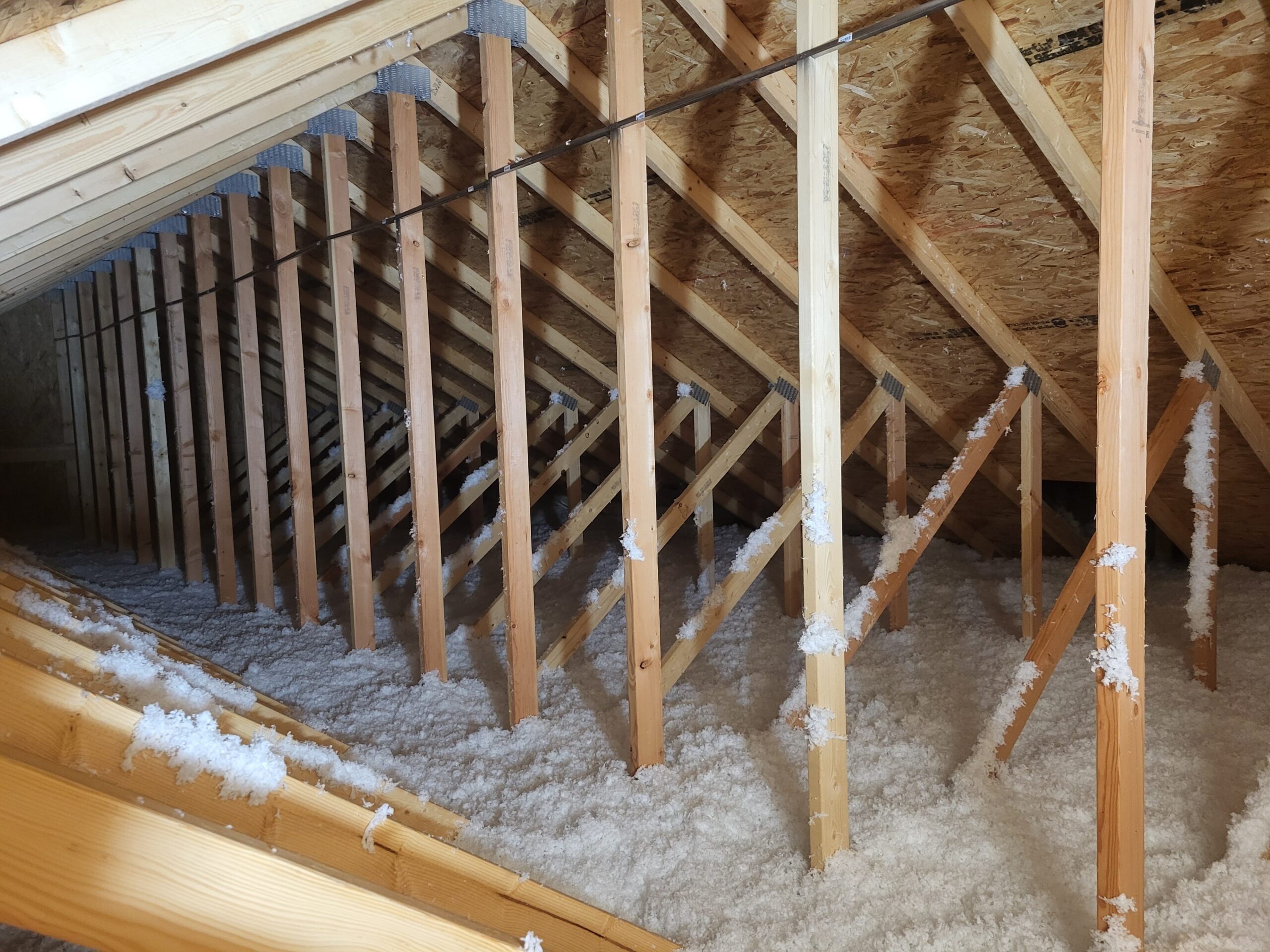
Blown-In Insulation
For existing Dickinson attics where the current depth is below what Western North Dakota's climate zone demands, blown-in insulation adds coverage quickly without opening finished ceilings or disrupting occupied spaces. It works particularly well in combination with closed-cell foam air sealing at the eave line and top plate perimeter, where air movement is the primary driver of heat loss rather than thermal resistance depth.
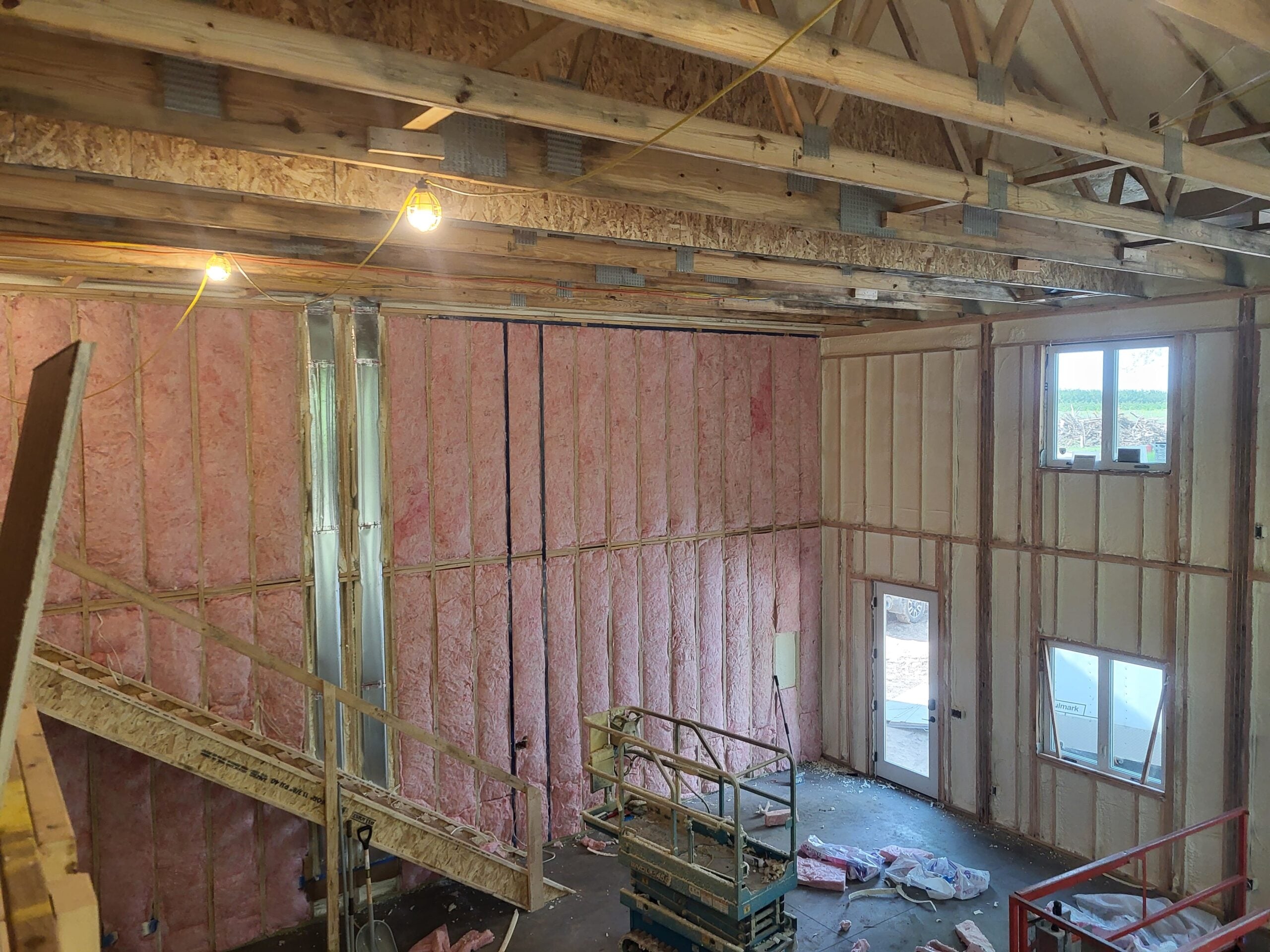
Batt Insulation
Open wall cavities in Dickinson new construction and renovation projects where framing is exposed, and budget control is a real project constraint. Get batt insulation installed to the coverage standard that actually delivers the rated R-value across every cavity, including the irregular ones at corners, electrical boxes, and plumbing rough-in points where most installations leave gaps.
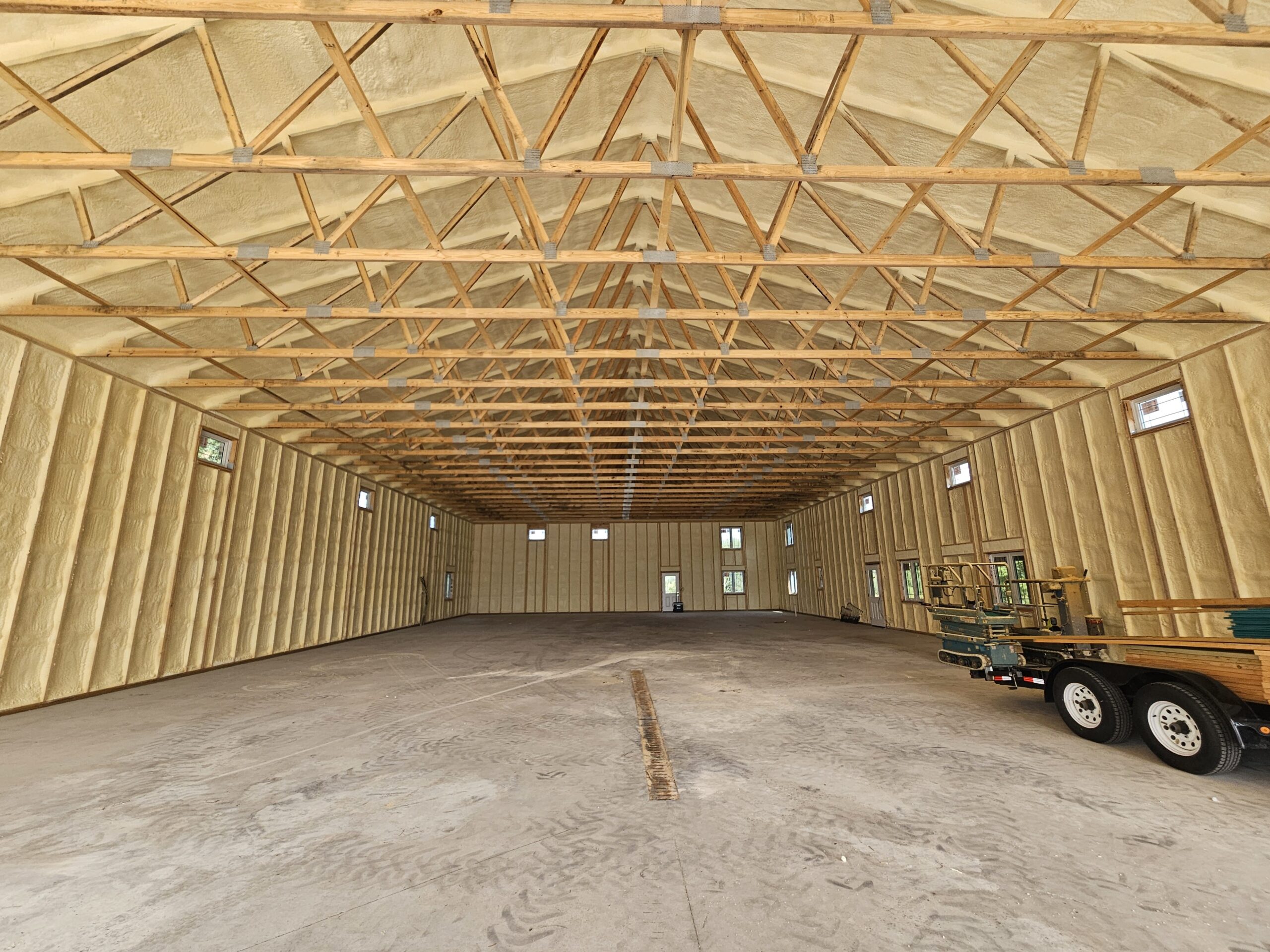
Pole Barn Insulation
Agricultural and commercial outbuildings across Stark County and the surrounding western North Dakota region are a primary application area for this operation. Spray foam applied directly to metal framing and roofing surfaces stops condensation, seals every gap the framing creates, and makes these buildings functional through Dickinson winters rather than technically insulated on paper while still losing heat at every metal contact point.
Crawl Space Insulation
Ground moisture beneath Dickinson homes affects floor surface temperature, indoor air quality, and long-term structural performance in ways that develop slowly and cost significantly to address once the damage accumulates. The right crawl space insulation system depends on whether the space is conditioned or unconditioned, how vapor is managed at the soil level, and what the floor framing looks like, and that assessment happens before a product is specified.
Under-Slab Insulation
The thermal break installed beneath a Dickinson concrete pour before the slab goes down determines how that floor assembly performs through every heating season for the life of the building. It is the only insulation improvement with a single installation window, and once the slab is poured, that window is permanently closed.
Three Rigs in Dickinson -
What That Actually Does for Your Project Timeline
Western North Dakota's construction season is not forgiving with schedule delays. Dickinson's fall weather window typically closes in October, and anything that does not get completed before a hard freeze either waits until spring or gets done in conditions that compromise the quality of temperature-sensitive applications like spray foam. A one-rig operation that runs behind schedule in September does not catch up before November. That delay carries real cost for builders managing multi-trade sequences and real frustration for property owners counting on a project finished before winter.
TCS runs three dedicated spray foam rigs specifically because the build environments in markets like Dickinson require that kind of operational depth. When a project date is set, the equipment, crew, and materials show up staged and ready to produce from the first hour. There is no setup delay, no supply run in the middle of the day, and no call the week before saying the rig is tied up on another job. The capacity to meet the schedule was built into how this operation is structured, not promised and then adjusted when the workload gets heavy.
For residential clients in Dickinson, that means a booking date that holds. For commercial clients and general contractors managing construction sequences where the insulation phase gates drywall and mechanical rough-in, it means the foam contractor is not the variable that pushes the rest of the project past the weather window.
Why Dickinson Property Owners and Contractors Work With Technical Construction Solutions
Foam Is the Business, Not a Line Item on a Service List
This company was built around spray foam from the beginning. The product knowledge, equipment investment, application standards, and diagnostic approach here reflect years of focused work in foam specifically, not a service added to fill slow periods in a general contracting calendar.
Field Experience That Changes How Assessments Get Done
Fifteen-plus years of structural field experience before TCS existed means the foam decisions made on a Dickinson project are informed by real working knowledge of how buildings behave under sustained cold, freeze-thaw stress, and wind load pressure. Vapor management, air movement pathways, and framing behavior under temperature cycling are not concepts this crew reads about in product literature. These are conditions this team has worked with across years of field work in construction environments that are harder than most.
Equipment Capacity Built for Western North Dakota Project Scale
Three spray foam rigs and a 44-foot commercial trailer give TCS the output capacity to handle residential, agricultural, and large commercial projects in the Dickinson area without the limitations that single-rig operations hit on anything more demanding than a standard single-family job. Large pole barns, industrial buildings, and multi-phase commercial projects all get the same production capacity regardless of scale.
Every System Specified for Dickinson's Actual Climate Conditions
The sustained sub-zero temperatures, wind exposure from open terrain, frost depth, and freeze-thaw cycling that Dickinson experiences every winter are the performance baseline every foam system here is specified to meet. Products and application depths are selected for what Dickinson's heating season actually demands, not for minimum code compliance thresholds that were written for a broader climate range than the one western North Dakota sits in.
Honest Estimates That Reflect the Job Done Right
Estimates reflect the exact material depth and preparation the project requires. TCS does not win jobs by stripping prep steps out of the bid and collecting the savings after the contract is signed. The number on the estimate is the number for the work done correctly, and Dickinson property owners and contractors can build their project budget around it.
On Time. On Budget. Built Into the Operation.
Project timelines and budgets are commitments that this operation is structured to meet. For Dickinson builders managing multi-trade construction sequences and for property owners counting on a project completed before the weather window closes, that reliability is structural, not a sales claim.
Fully Licensed and Insured on Every Project
Every Dickinson project is backed by full licensing and insurance. In a trade where operators without proper coverage take on work regularly, that standard protects property owners and general contractors on every job, regardless of size.
Get a Free Spray Foam Insulation Estimate in Dickinson, ND
Every heating season that a Dickinson building runs with unsealed rim joists, open framing gaps, and wind-driven air infiltration moving through the envelope is a season of energy cost that closed-cell spray foam would have stopped. That loss does not arrive as one large bill. It shows up as a heating cost that stays higher than it should be, a building that loses temperature faster than your system can recover it on the coldest nights, and an insulation investment that never delivers what the product spec sheet promised.
One conversation with a TCS structural specialist is enough to walk through your building, identify where heat loss is actually happening, and give you a clear, honest cost picture for the right solution. No pressure. No obligation. No low-ball bid built around skipped prep steps.