
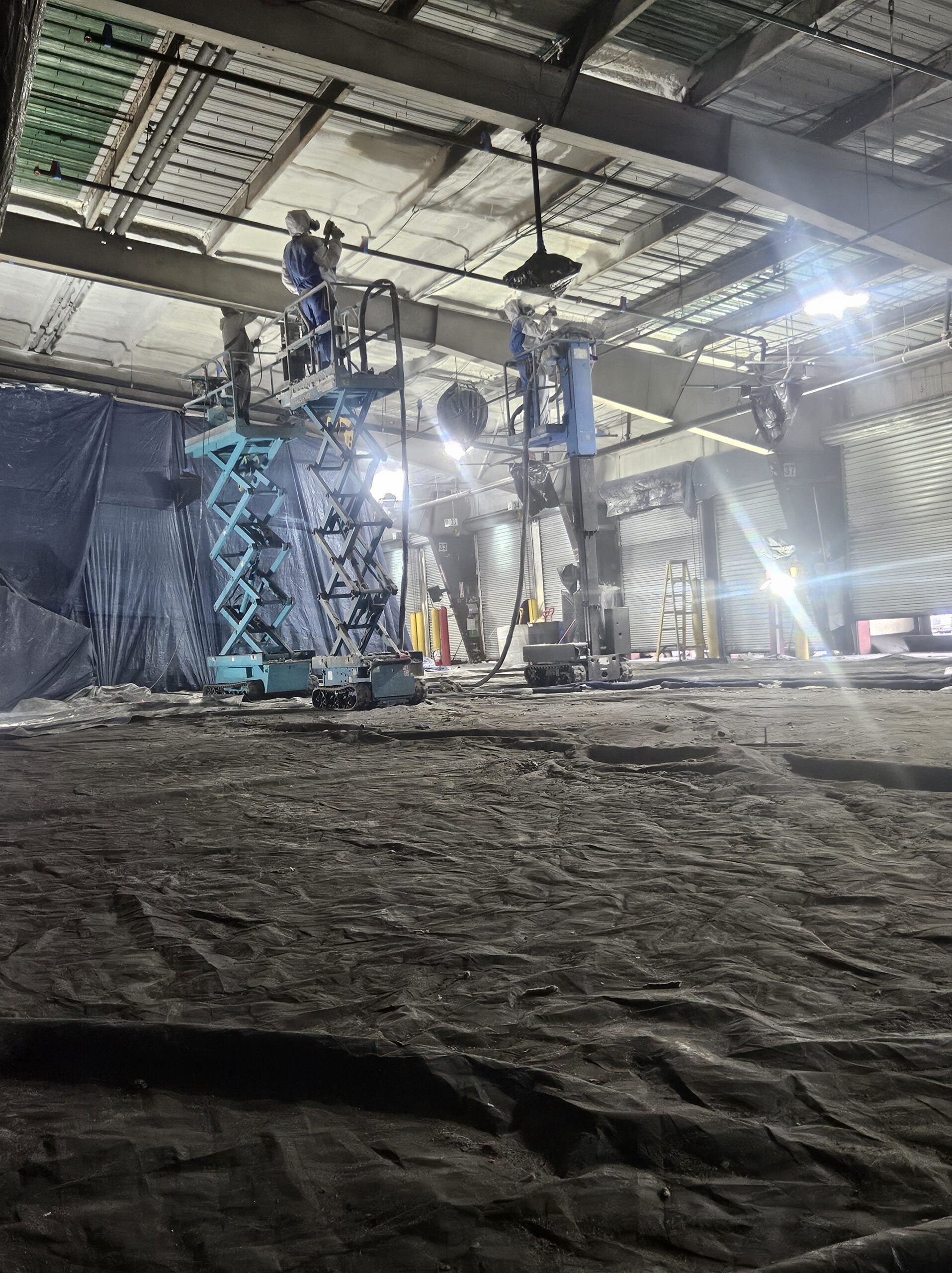
Spray Foam Insulation Specialists in South Dakota
Not a foam crew that carries fiberglass as a secondary option. A construction-backed insulation operation with purpose-built fiberglass equipment, the product knowledge to match each system to the right application. This crew was built to install systems that hold through all of it, not just the coldest day on the thermometer.
Why Choose Technical Construction Solutions for Spray Foam Insulation in South Dakota?
A hog confinement operation south of Huron in the James River Valley had been fighting the same problem through three consecutive winters. The ceiling assembly had been insulated with fiberglass batts at original construction, but the combination of moisture generated by the animals below and the cold metal roof deck above had saturated the batt material over time. Saturated batts lose their effective R-value fast. By the second winter, the ceiling was functionally uninsulated, the heating system ran almost continuously, and condensation was dripping from the underside of the roof panels onto the production floor below.
When we assessed the building, the batts had settled and compressed in sections, leaving full gaps across portions of the ceiling deck. The moisture migration from the animal environment had nowhere to go except into the insulation, and the metal roof surface above it was cold enough to condense that moisture back down through the ceiling assembly. The building was losing heat and collecting moisture at the same time, with the same system.
We applied closed-cell spray foam directly to the ceiling deck and the upper wall assembly, bonding to the metal substrate, stopping moisture migration at the surface, and providing a vapor barrier that the original installation never had. The following winter, the condensation dripping stopped completely, interior temperatures held consistently through hard cold stretches, and the owner reported running the heating system far less than in any previous season.
A livestock building that can't hold temperature and sheds condensation onto the production floor isn't an insulation problem you solve by adding more batts. It requires a system that bonds to the substrate, stops moisture at the surface, and maintains its performance when the environment below it is generating humidity continuously.
Freddy Lewis founded Technical Construction Solutions LLC around foam technology after 15 years of structural field work in highway construction. The diagnostic standard that comes from infrastructure-level construction, reading moisture movement, air infiltration, and thermal dynamics before selecting a system, is what this crew brings to every South Dakota project, from a livestock facility in Jerauld County to a commercial build on Sioux Falls's expanding southwest development corridor.
If your South Dakota building is losing heat, it shouldn't be losing. Contact our South Dakota insulation contractors for a free estimate.
Expert Spray Foam Insulation Services Across South Dakota
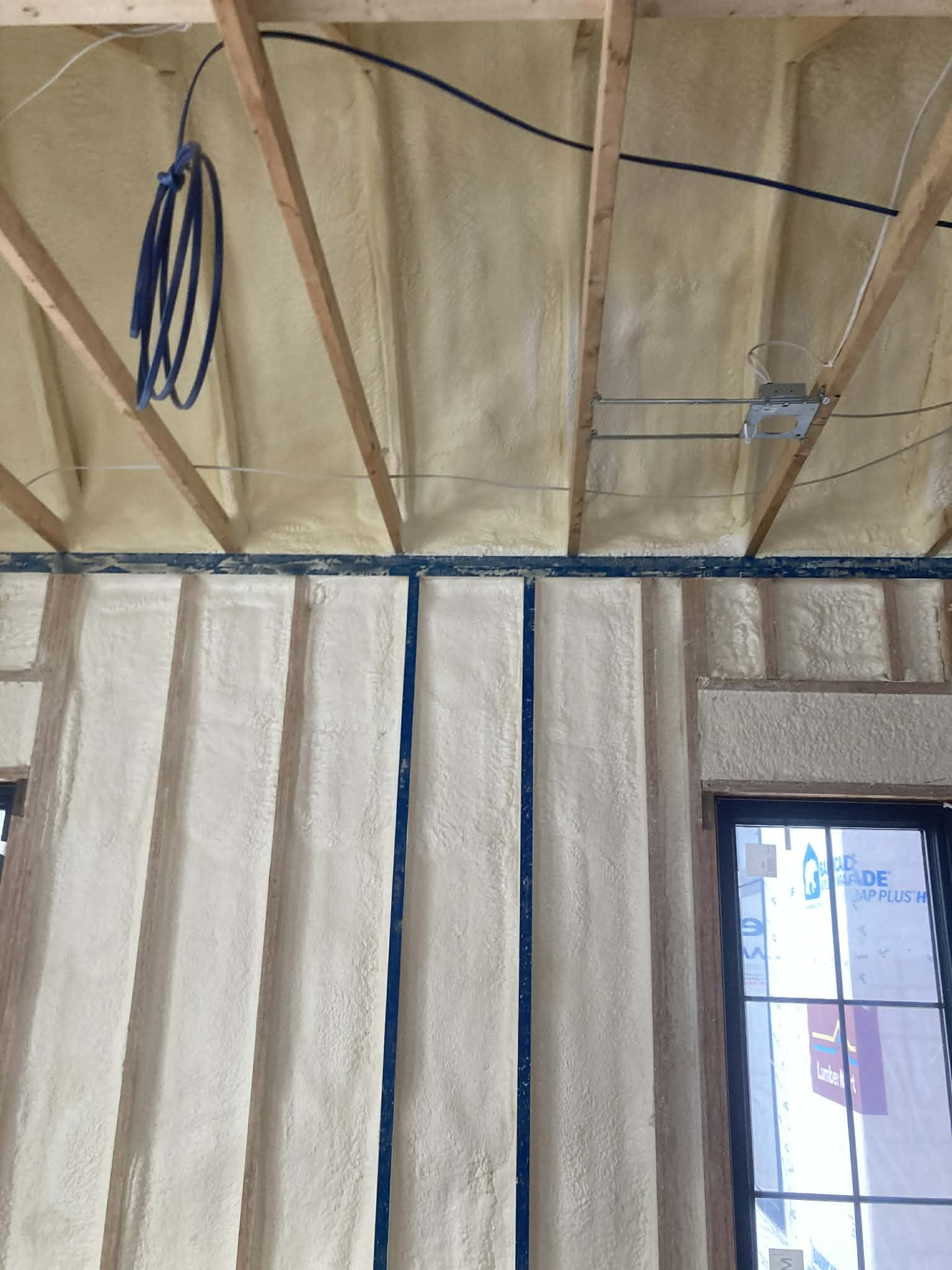
Residential Spray Foam Insulation
For South Dakota homeowners from the established neighborhoods in Sioux Falls and Rapid City to the smaller agricultural communities spread across the state's interior, the residential case for spray foam connects to two climate realities that the product label on a fiberglass batt doesn't account for.
The first is temperature swing. South Dakota's climate, particularly west of the Missouri River, generates some of the most dramatic short-term temperature changes in the continental United States. Chinook wind events can swing exterior temperatures 40 to 60 degrees within hours. Those swings create thermal stress on every material in a wall assembly and drive air movement through every gap a conventional insulation system leaves unsealed. A wall assembly that holds its R-value during a sustained cold event can still allow significant air infiltration during a pressure-driven wind event, and South Dakota produces both regularly.
The second is moisture. East River, South Dakota, the agricultural half of the state, generates significant humidity during crop drying season and delivers spring moisture events that stress below-grade and crawl space assemblies in ways that buildings in drier climates don't face. Older homes in Sioux Falls's established north-end neighborhoods, the mid-century residential stock near the SDSU campus in Brookings, and the farmhouses built across the James River Valley before air sealing was a standard construction practice all have rim joists, crawl spaces, and wall cavities that are losing energy through both thermal and air infiltration pathways simultaneously.
Closed-cell spray foam addresses both at once. It bonds to the substrate, fills every gap in the wall cavity and rim joist assembly, maintains its R-value regardless of what the wind is doing on the exterior face of the building, and provides a vapor barrier that prevents moisture from cycling through the building envelope as exterior humidity conditions change.
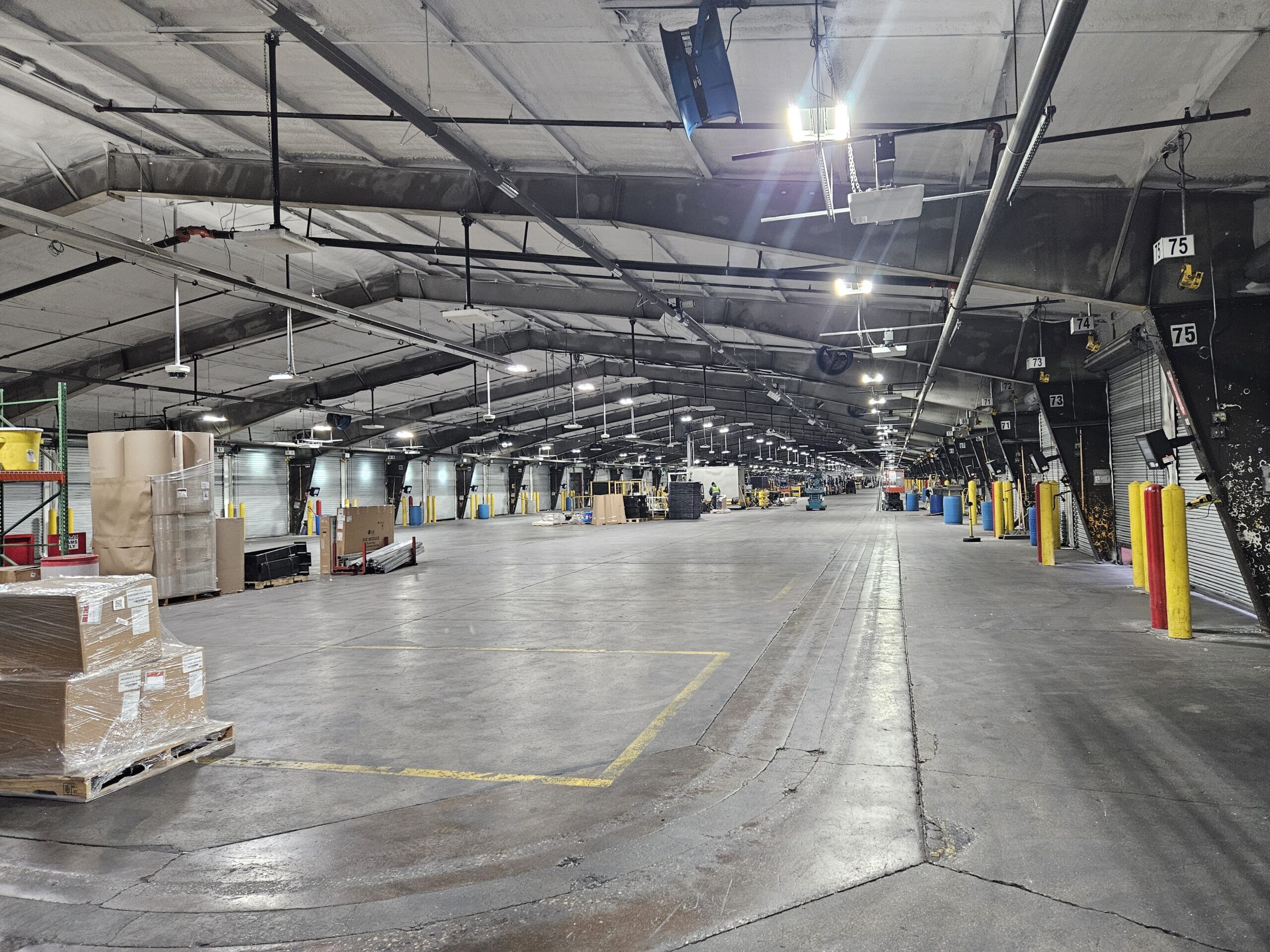
Commercial Spray Foam Insulation
Sioux Falls is one of the fastest-growing mid-size cities in the United States, and the commercial construction activity along the I-229 loop, the expanding development in Harrisburg and Tea, and the industrial build-out on the city's north and northwest sides generates consistent demand for a commercial foam contractor who can hold a schedule in a market where construction timelines are defined by occupancy agreements, tenant commitments, and lease start dates, not by the insulation crew's availability.
Rapid City's commercial corridor along Mount Rushmore Road, the medical and professional development around Rapid City Regional Hospital, and the tourism-adjacent commercial building activity across the Black Hills region present a different set of scheduling requirements. Buildings in that market often need to be weather-tight before the fall tourist season ends, and an insulation crew that runs a single rig into a 10,000 or 15,000 square foot commercial envelope on a two-week timeline that slips three times is the variable that determines whether a Black Hills commercial opening makes its target date.
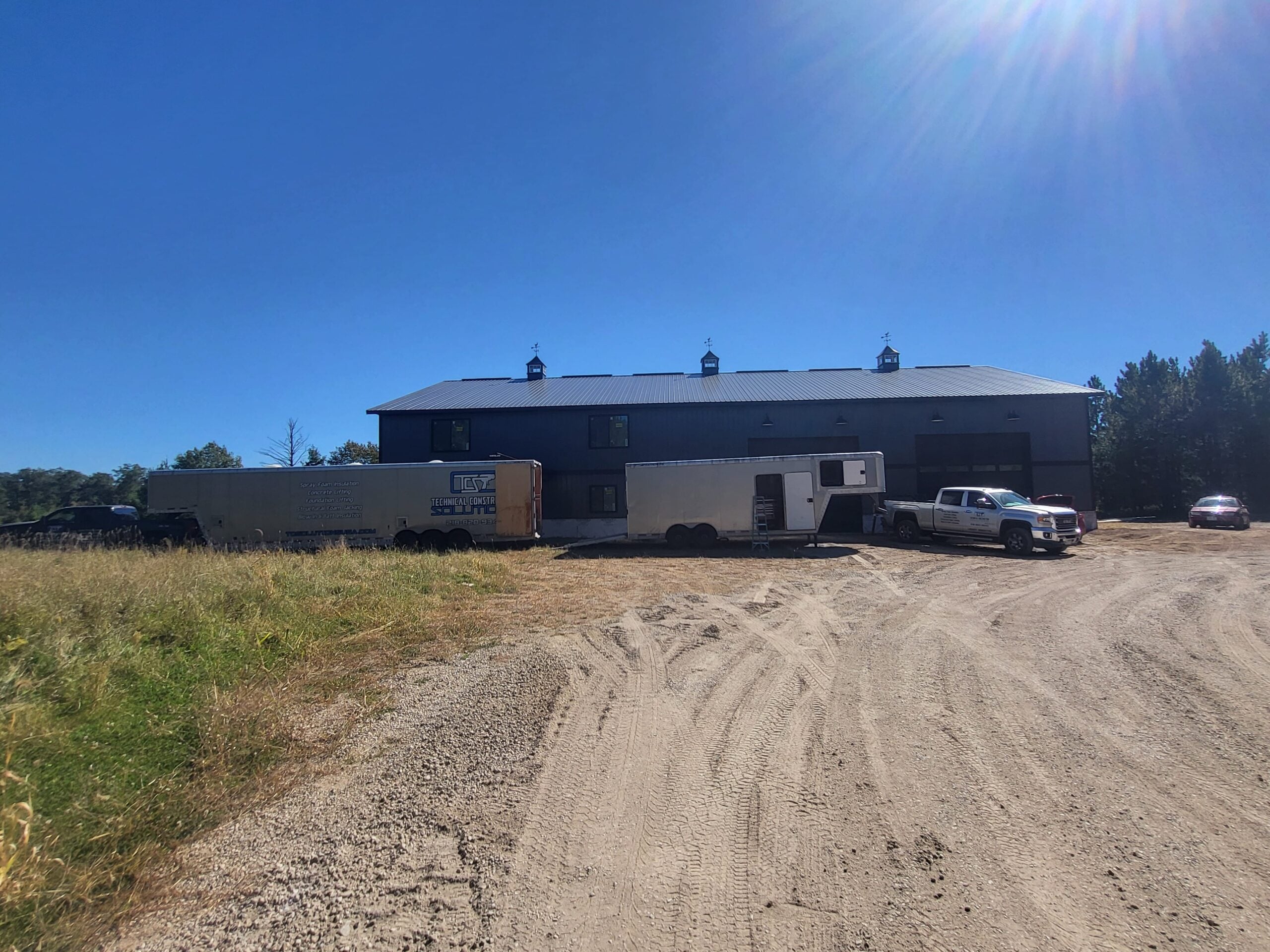
TCS operates three dedicated spray foam rigs alongside a 44-foot Big Rig trailer that transports ten sets of foam, multiple scissor lifts, and full application equipment in a single mobilization. For South Dakota commercial clients managing build timelines where the completion date is tied to an operational need rather than a preference, that multi-rig capacity means the foam phase closes on the date it was planned around.
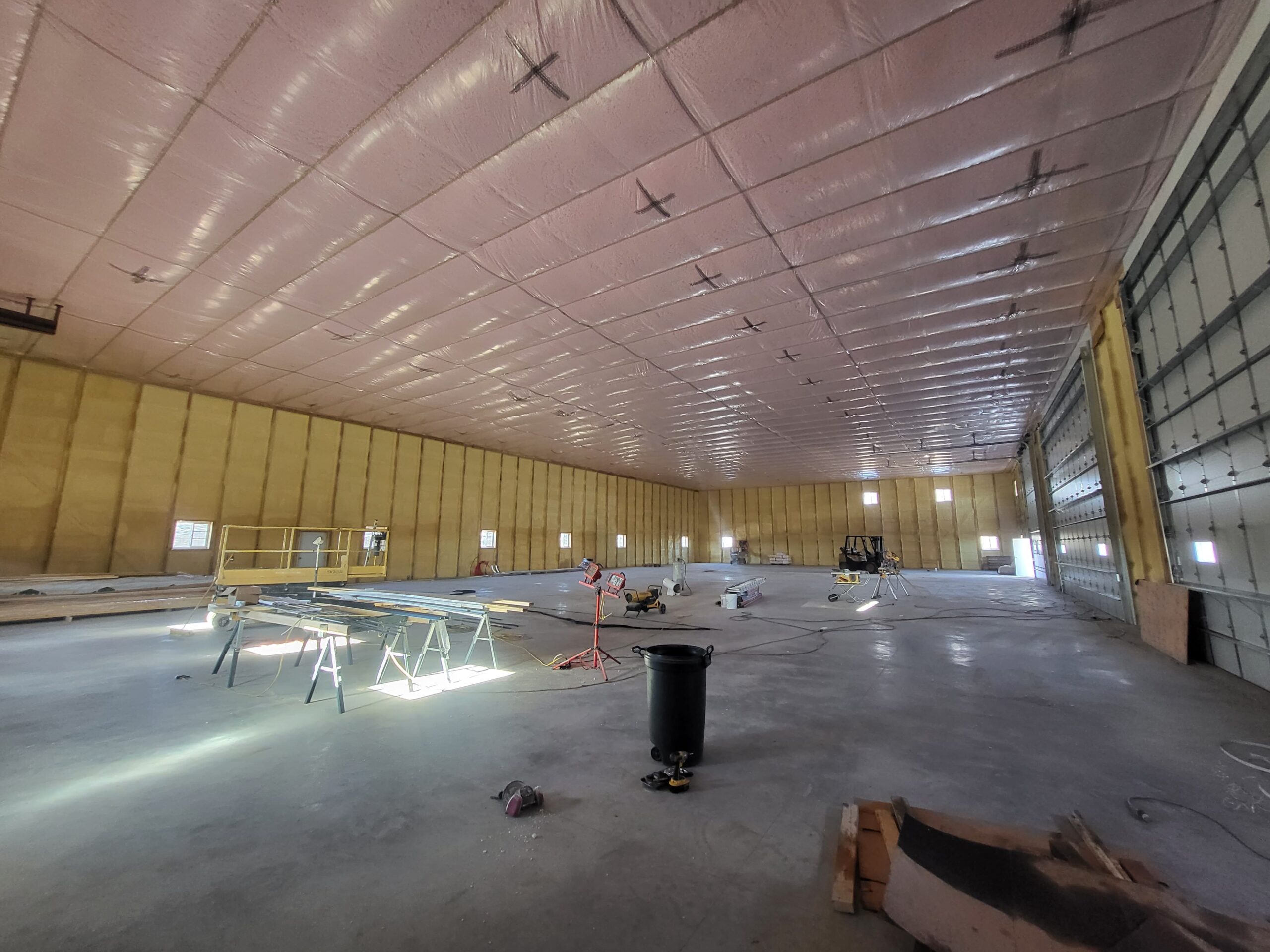
Agricultural and Livestock Facility Spray Foam
South Dakota's agricultural economy spans two distinct building environments that each present specific spray foam requirements.
East River South Dakota, the corn, soybean, and wheat production corridor stretching from the Minnesota border to the Missouri River, generates consistent demand for grain storage and livestock facility insulation where moisture management is as important as thermal performance. Grain bins that aren't properly sealed allow temperature differentials between stored grain and outside air to create condensation inside the storage environment. Hog and cattle confinement buildings that lose thermal performance through inadequate ceiling and wall insulation require their heating systems to compensate constantly, at operating costs that compound across every cold month of the year.
West River, South Dakota, the ranching country between the Missouri and the Black Hills, presents a different challenge. Metal equipment buildings and livestock shelters in that region face the highest wind exposure in the state, combined with the temperature variability that Chinook systems generate across the western slope. A metal equipment building near Mobridge, Faith, or Lemmon that was insulated with batts between the wall girts operates in conditions that make that system functionally ineffective during any sustained wind event, regardless of the R-value on the product specification.
Closed-cell spray foam applied to the interior face of metal wall and roof assemblies bonds to the metal surface, seals every fastener hole and panel seam, controls moisture at the point of potential condensation, and maintains thermal performance regardless of wind pressure on the exterior. For South Dakota agricultural operators managing equipment storage windows around harvest schedules and livestock operations where building temperature directly affects production, the system performance is the difference between a building that works and one that requires constant intervention.
Our Full Range of Insulation Services Across South Dakota
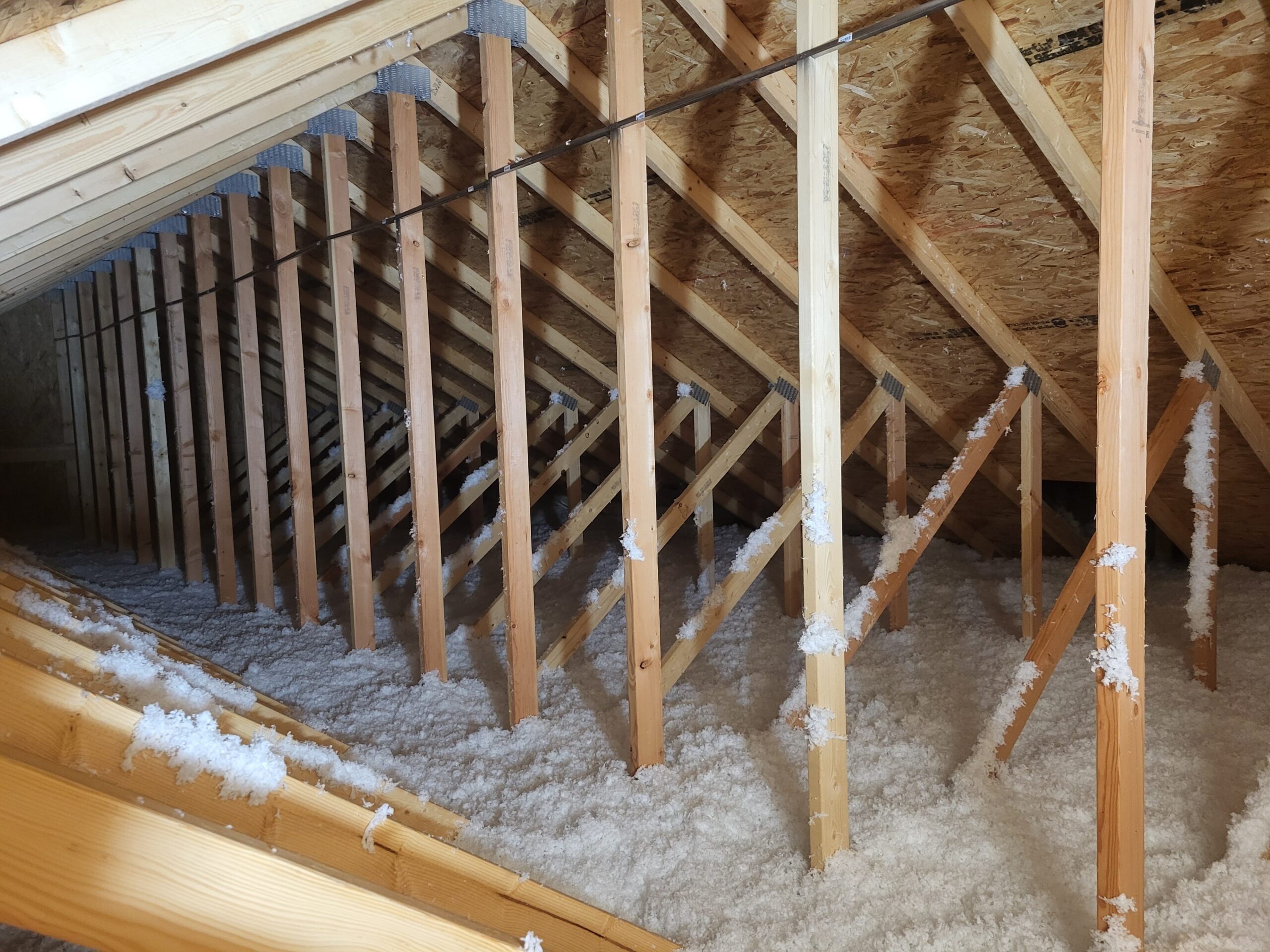
Blown-In Insulation
Attic depth correction and existing wall cavities in South Dakota's older residential and commercial buildings, where access is limited and depth matters.
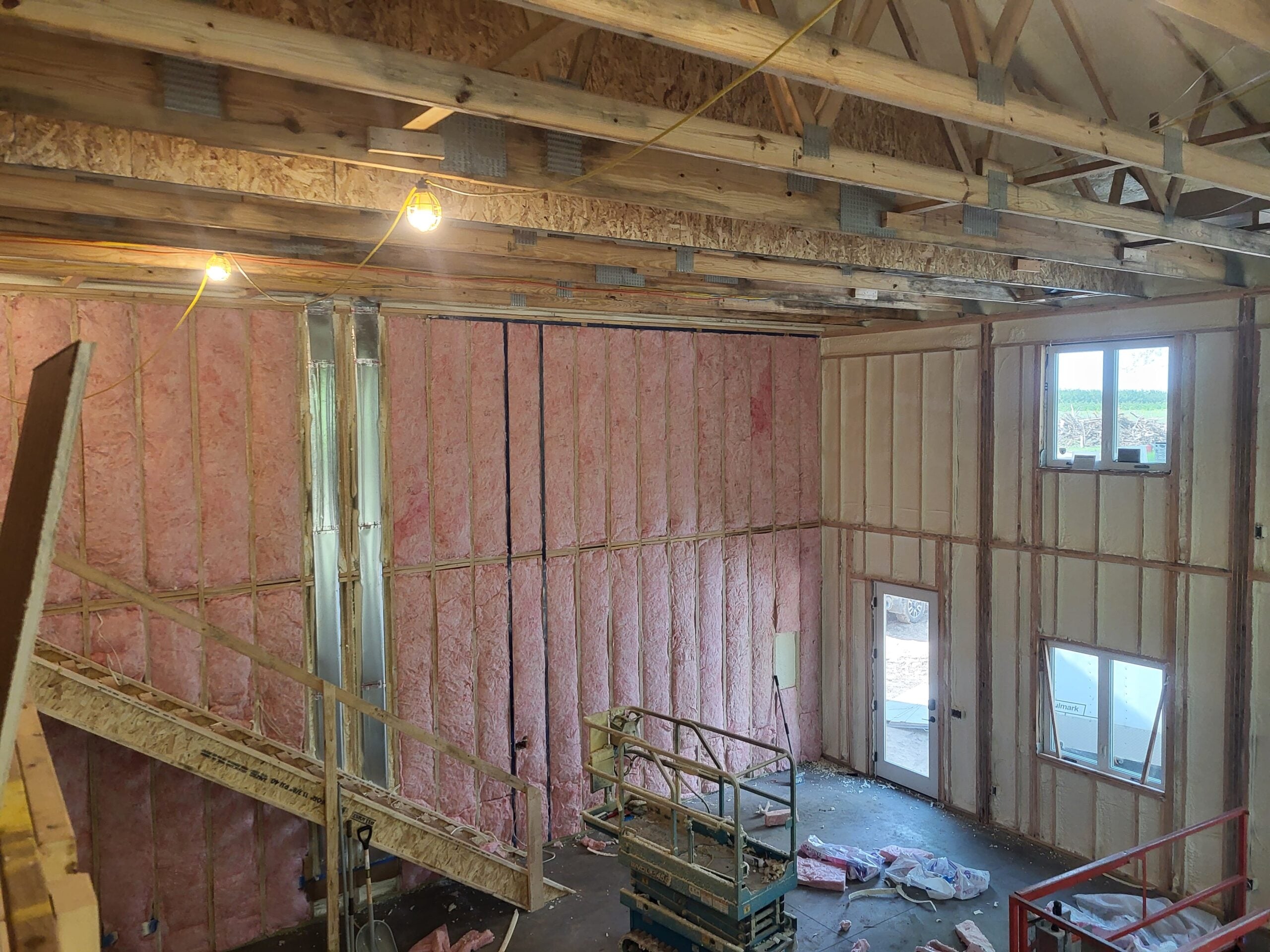
Batt Insulation
Open wall framing in new construction and renovation projects where access is complete, and the project budget is a factor.
Pole Barn Insulation
Closed-cell spray foam for agricultural and rural commercial structures across eastern and western South Dakota.
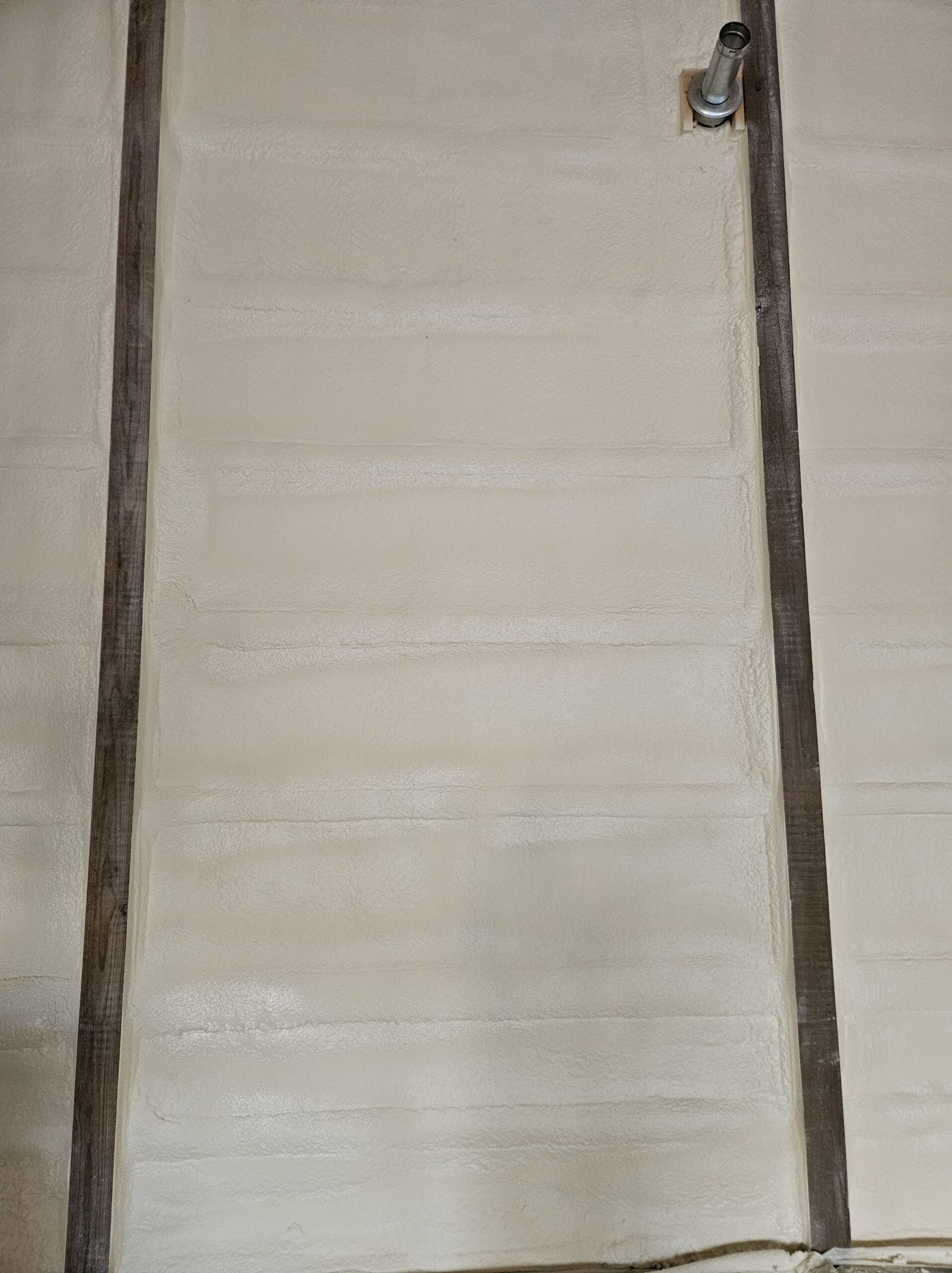
Crawl Space Insulation
Moisture control and floor comfort for South Dakota homes where ground moisture and temperature differentials affect the living space above.
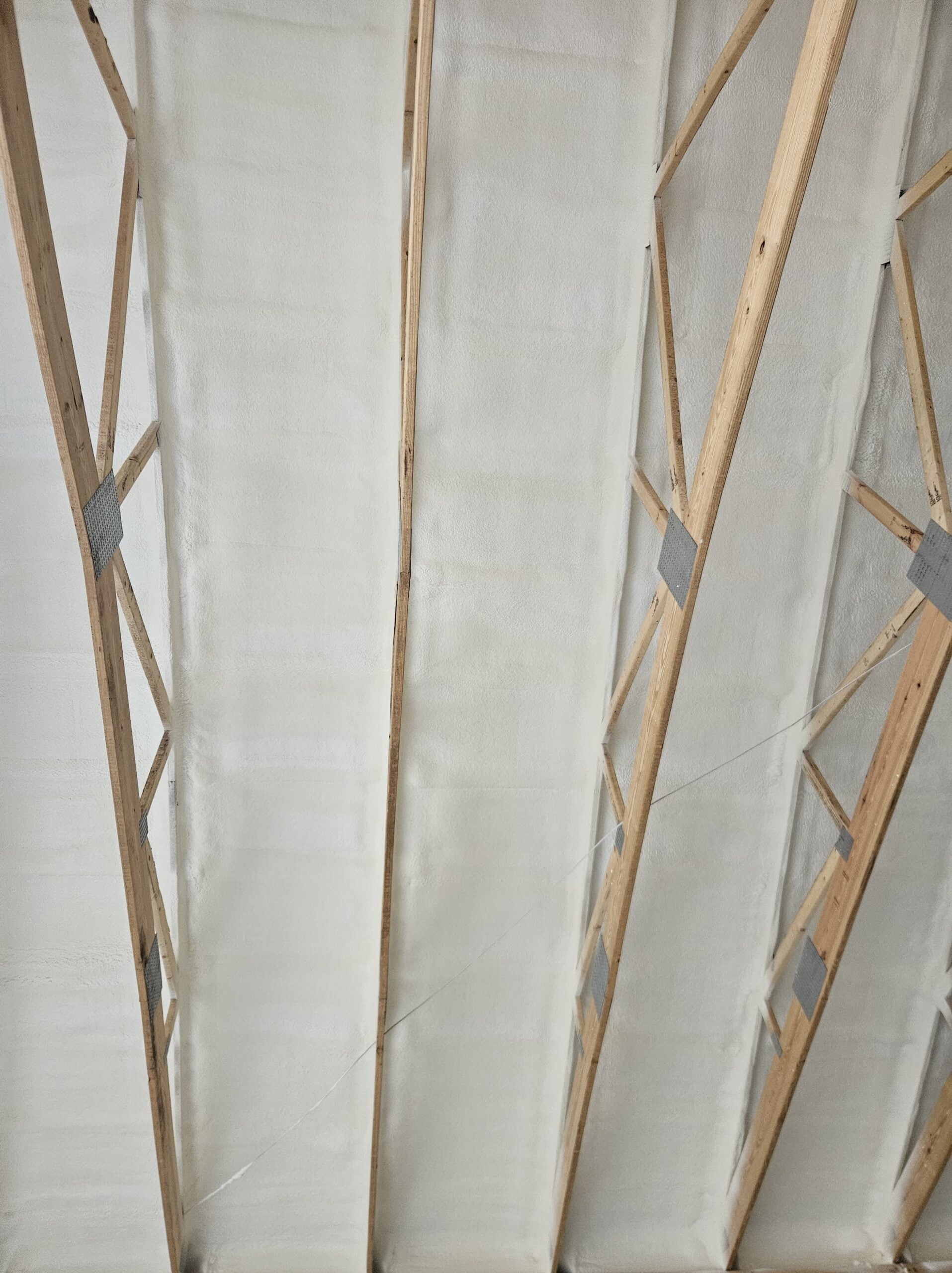
Under-Slab Insulation
Thermal break solutions for new residential and commercial construction before the concrete pour, with particular application in heated agricultural and industrial floors.
The Equipment Advantage: Why Three Rigs Matter on South Dakota's Build Timeline
South Dakota's construction season is compressed by climate and extended by demand. The practical window for large agricultural building construction, exterior envelope work on commercial projects, and foundation-adjacent insulation runs roughly from late April through October, and within that window, project scheduling is competitive.
Most foam contractors operating across South Dakota run a single rig. For a Harrisburg residential job with a flexible completion date, that works. For a 25,000-square-foot grain facility near Aberdeen that needs to be operational before fall harvest, a commercial envelope in Rapid City with a lease-start occupancy date, or a hog confinement building in Davison County that needs to be producing before the next intake cycle, a single rig is the scheduling constraint that determines whether the building is finished in the current season or deferred to next year.
TCS operates three dedicated spray foam rigs alongside the 44-foot Big Rig trailer that transports ten sets of foam, scissor lifts, and application equipment in a single mobilization.
"A general contractor on a commercial project in the Sioux Falls market noted afterward that TCS was the first specialty trade on that job where the crew arrived with calibrated equipment and material temperatures already at spec, and moved directly into continuous application. The insulation phase of the project closed on its planned date without a single day of schedule variance."
For South Dakota agricultural and commercial clients, where the build window is real, that multi-rig capacity means the foam phase of your project finishes when it was planned to finish.
Why South Dakota Contractors, Farm Operators, and Homeowners Trust Technical Construction Solutions
15+ Years of Hands-On Construction Experience.
This company is led by someone who spent over fifteen years working in the field on structural and infrastructure projects before building TCS around foam technology. That construction-first background means South Dakota projects get diagnosed at the system level, not just at the visible symptom. Moisture movement, air infiltration pathways, and thermal dynamics are assessed before a product is recommended, which is what separates a foam installation that performs for twenty years from one that needs remediation in the third season.
Foam Specialist in a Market Full of Generalists.
South Dakota's contractor density outside of Sioux Falls and Rapid City is limited, and many property owners in the state's interior and western communities are choosing between a foam specialist and a general contractor who carries a rig as a secondary service. TCS was built around foam technology from the first day it operated. That specialization determines how every South Dakota project is specified, applied, and verified, not as an addition to a general contractor's service menu, but as the entire operational focus.
Built for South Dakota's Climate Variables.
South Dakota's building envelope challenge isn't only cold. It's the combination of sustained sub-zero cold, high wind infiltration across flat eastern terrain, Chinook-driven temperature swings that stress every material transition in a wall assembly, and the moisture conditions that livestock and grain storage facilities generate inside a building year-round. Every spray foam system this crew installs in South Dakota is specified with that full set of variables in mind, not with the still-air R-value assumptions that product datasheets are built around.
Three Rigs for South Dakota's Build Season Reality.
Multiple dedicated spray foam rigs allow TCS to hold scheduling availability across South Dakota without the multi-week backlogs that single-rig operations create during the state's peak construction window. For South Dakota agricultural and commercial clients where missing the build window has operational consequences that extend far beyond the original project cost, scheduling reliability from a contractor with real capacity is the differentiator that matters most before the first rig is ever booked.
No Remote-Market Premium.
South Dakota's geography means that properties in the state's central and western communities have limited specialty contractor access. Some operators use that scarcity to charge rates that reflect their clients' limited alternatives rather than the actual project scope. Every TCS estimate reflects what the project requires at the same fair price, whether the building sits in a Sioux Falls industrial park or on a ranch outside Murdo. What gets quoted is what the job needs, done correctly.
On Time. On Budget. Every Time.
Projects finish on the schedule agreed to and within the budget outlined. For South Dakota agricultural operators managing livestock intake schedules and harvest timelines, for commercial clients with occupancy commitments, and for homeowners planning work around a contractor's arrival, that reliability is built into how every project is run before the first rig leaves the yard.
Get a Free Spray Foam Insulation Estimate Anywhere in South Dakota
A South Dakota building insulated with a system that cannot stop wind-driven air infiltration, handle moisture from an agricultural environment, or maintain thermal performance through a Chinook pressure event costs more to operate every winter than the spray foam installation would have cost at the time of construction. The grain facility that can't maintain storage temperature, the hog confinement building where the ceiling is shedding condensation, and the Sioux Falls home where the lower level is cold every January despite existing insulation all share the same root cause: a system that was not specified for the conditions South Dakota buildings actually face.
Start with a free estimate. One conversation is enough to assess the building, identify where heat loss and moisture infiltration are actually occurring, and give you a clear picture of what the right spray foam system will cost, no pressure, no obligation.