
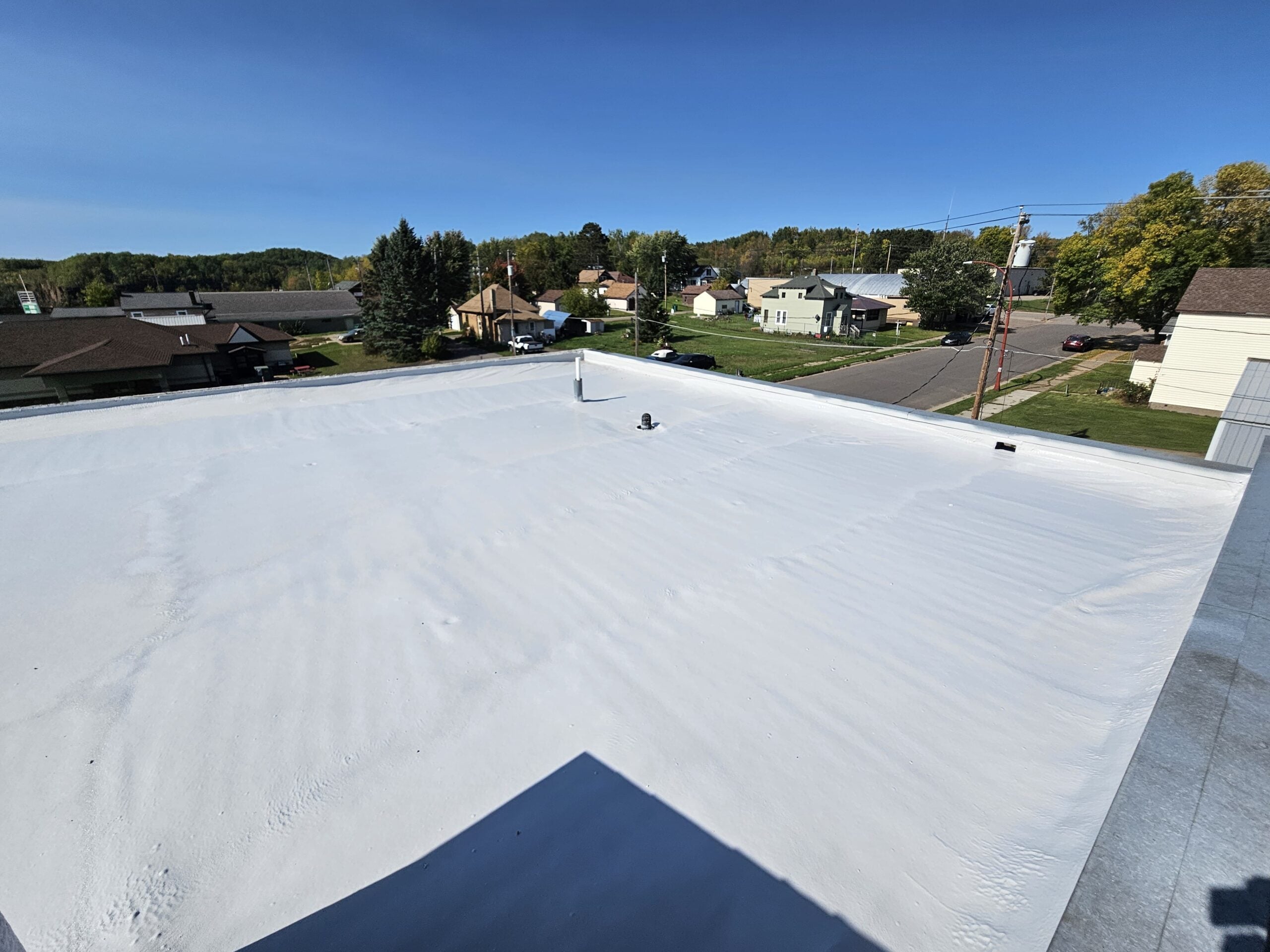
Williston's Spray Foam Roof Systems and Coatings Specialists
Built around spray foam technology from its founding, with the application knowledge, Big Rig equipment capacity, and construction field discipline that Williston's Arctic wind exposure, heavy snow loads, and energy sector production schedules actually demand from a commercial roof system.
Why Choose Technical Construction Solutions for Spray Foam Roof Systems in Williston, ND?
A maintenance supervisor I spoke with at an industrial services facility off the US-85 corridor had been managing a leaking section on a large flat-roof commercial building for three consecutive winters. A roofing crew came out each spring, patched the area showing moisture infiltration, and the building stayed dry through summer. By January of the following year, the leak was back, sometimes in the same general area, sometimes at a new point ten feet away.
When we walked on the roof, the pattern was immediately readable. The membrane had lost adhesion across a broad mid-field section, and water from snow accumulation and freeze-thaw cycling was traveling laterally under the surface before finding exit points wherever the bond between the membrane and the substrate was thinnest. The Arctic northwest winds that hit Williston's flat Bakken terrain with no topographic break were loading the roof surface with uplift pressure on every windy day, which on the Williston plains in January means nearly every day. Every patch that the spring crew applied addressed an exit point. The entry point, the adhesion failure across the mid-field, had been growing larger each season.
We stripped the affected membrane sections, prepared the substrate to receive the SPF system, and applied closed-cell spray foam that bonded directly to the roof deck as a single continuous surface. No seam lines. No laps. No fastener points for wind uplift to find. The maintenance supervisor reached out the following March to report the roof had come through its first full Williston winter without a single interior moisture event, including two January wind events that had lifted flashing on adjacent structures in the same facility complex.
That outcome is not exceptional. It is what happens when the failure mechanism on a Williston commercial roof is correctly identified as an adhesion and seam problem, and the system selected to address it eliminates seams and adhesion points rather than patching them season after season.
Technical Construction Solutions was built around foam technology from its founding. Freddy Lewis built TCS specifically around spray foam systems, and that foundation means the product knowledge behind every project is deep, field-tested across North Dakota's most demanding climate conditions, and perfectly mapped into high-durability Williston climate performance specs rather than something this company learned by adding foam to a conventional roofing service list.
If your Williston commercial or industrial roof is leaking at seams, losing adhesion under Arctic wind pressure, or approaching the end of a service life that conventional replacement would reset for another cycle of the same problems, a free estimate is where it starts.
Expert Spray Foam Roof System Services in Williston, ND
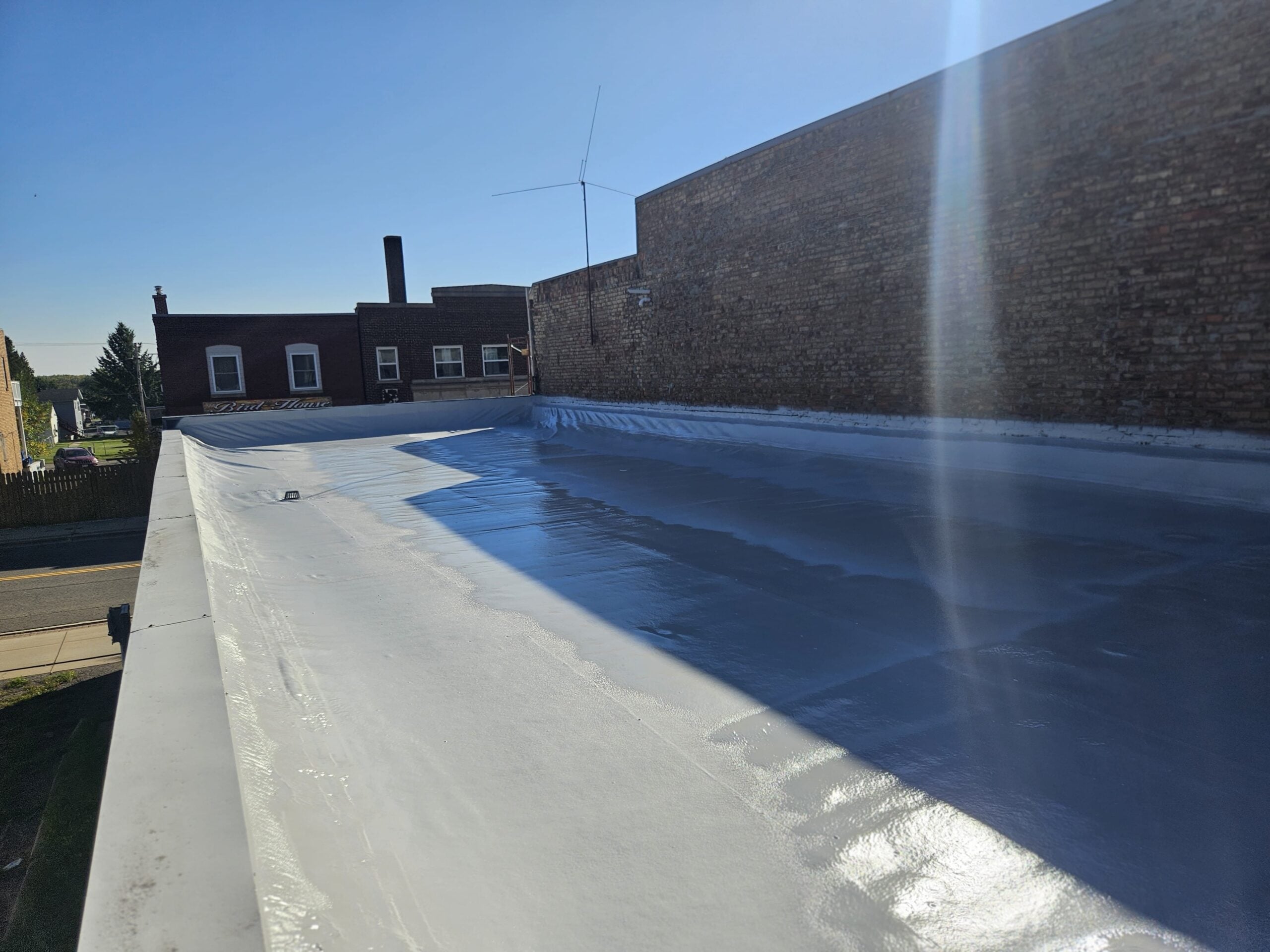
Commercial SPF Roofing
For commercial properties, industrial facilities, and energy sector buildings across Williston and the surrounding Bakken region, SPF roofing delivers what traditional flat roof membrane systems cannot produce in this specific environment: a seamless, monolithic surface bonded directly to the deck with no laps, no seam lines, and no mechanical fastener points for Williston's persistent Arctic wind uplift forces to stress.
Williston's flat Bakken terrain gives prevailing northwest winds an unobstructed approach path to every building surface in the region. That wind pressure loads commercial roofs with uplift forces that mechanically fastened and adhered membrane systems accumulate failure over repeated seasons. Every fastener in a mechanically attached membrane is a discrete uplift point. Every seam in an adhered system is a delamination line when sustained wind pressure cycles against it through a winter that runs from October through April. Closed-cell spray polyurethane foam expands on contact with the roof substrate and cures into a rigid surface bonded across its full area, which is why SPF systems produce a fundamentally different wind uplift resistance profile than any conventional membrane option in Williston's terrain exposure.
The foam layer provides both weatherproofing and thermal insulation in a single application pass. Williston's heating demands are among the highest in the continental US. For commercial property owners and energy sector facility managers in this market, managing buildings through conditions that regularly push below minus twenty, the R-value added directly to the roof plane through SPF installation generates energy cost reduction that compounds from the first season forward and does not degrade with age, the way loose-fill insulation beneath a membrane deck does over time.
The foam surface is finished with a protective elastomeric topcoat that shields the SPF from UV degradation. When the topcoat reaches the end of its service life, it can be recoated to restore the roof to full performance without tearing off the foam beneath it. For Williston commercial and industrial property owners managing buildings from the Bakken boom era whose conventional roofing systems are now approaching the end of service life, the recoatability of an SPF system changes the lifecycle cost calculation significantly. The choice is not SPF versus conventional membrane. It is one correctly installed SPF system over the next twenty to thirty years versus two or three conventional membrane replacements over the same period.
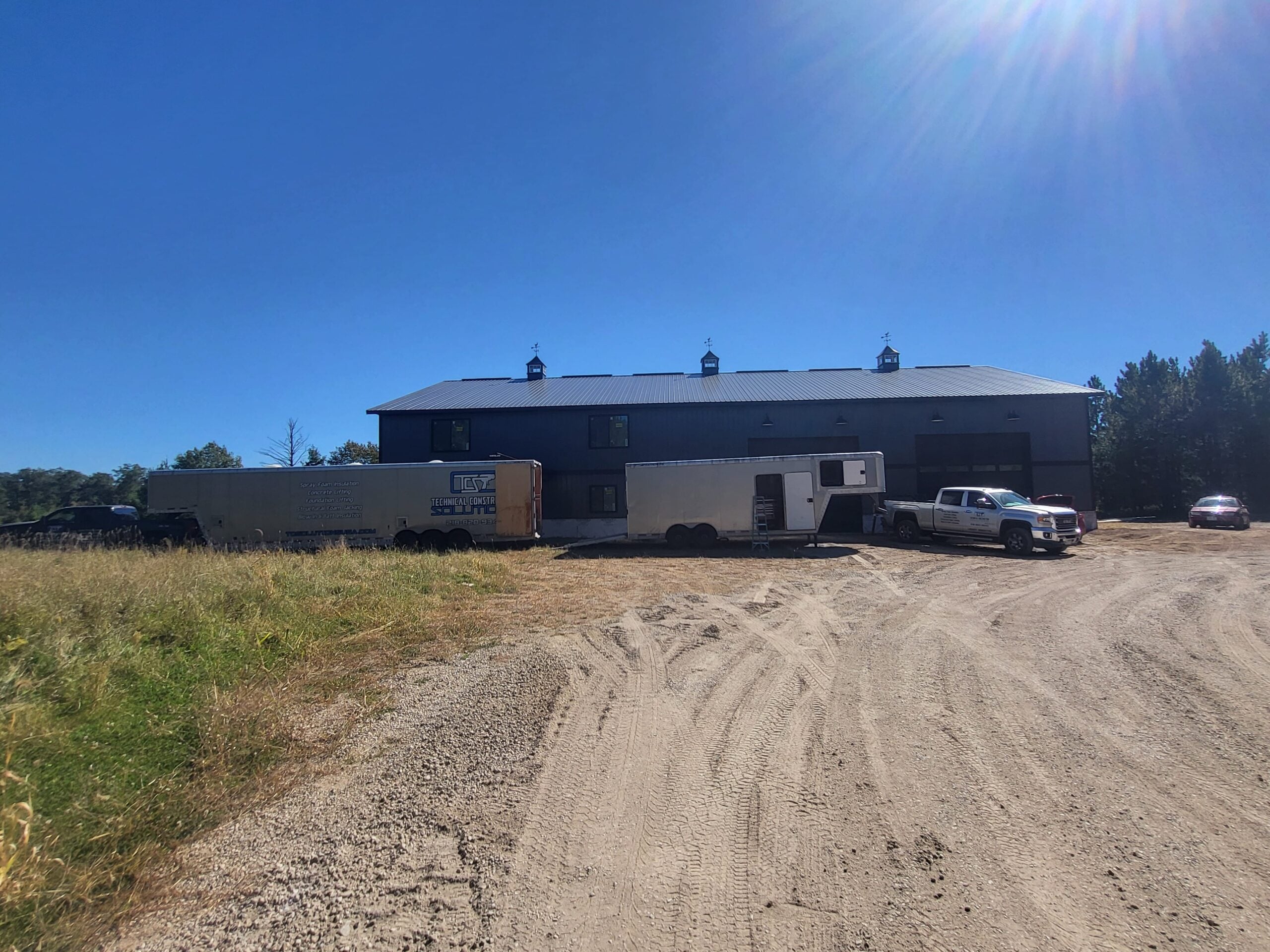
Large-Scale SPF Roofing Projects
Large flat roof areas demand spray equipment that can maintain consistent output, material temperature, and mix ratio across the full project without interruption. Inconsistent application produces inconsistent adhesion, inconsistent thickness, and inconsistent performance, which is why equipment capability directly affects SPF roofing quality on large projects.
TCS runs three dedicated spray foam rigs and operates a 44-foot commercial trailer that transports foam materials, lifts, and equipment for large-scale roofing projects in a single mobilization. A facility director on a large industrial project in the Williston Basin said afterward that TCS was the first roofing crew he'd brought in that arrived with every piece of equipment staged and ready. The project started on schedule, stayed on track, and finished without a single supply interruption.
For property owners managing active commercial operations across Williston and the surrounding area, where a roofing project means disruption to daily business, that operational reliability directly reduces the total cost of the project beyond the contract price.
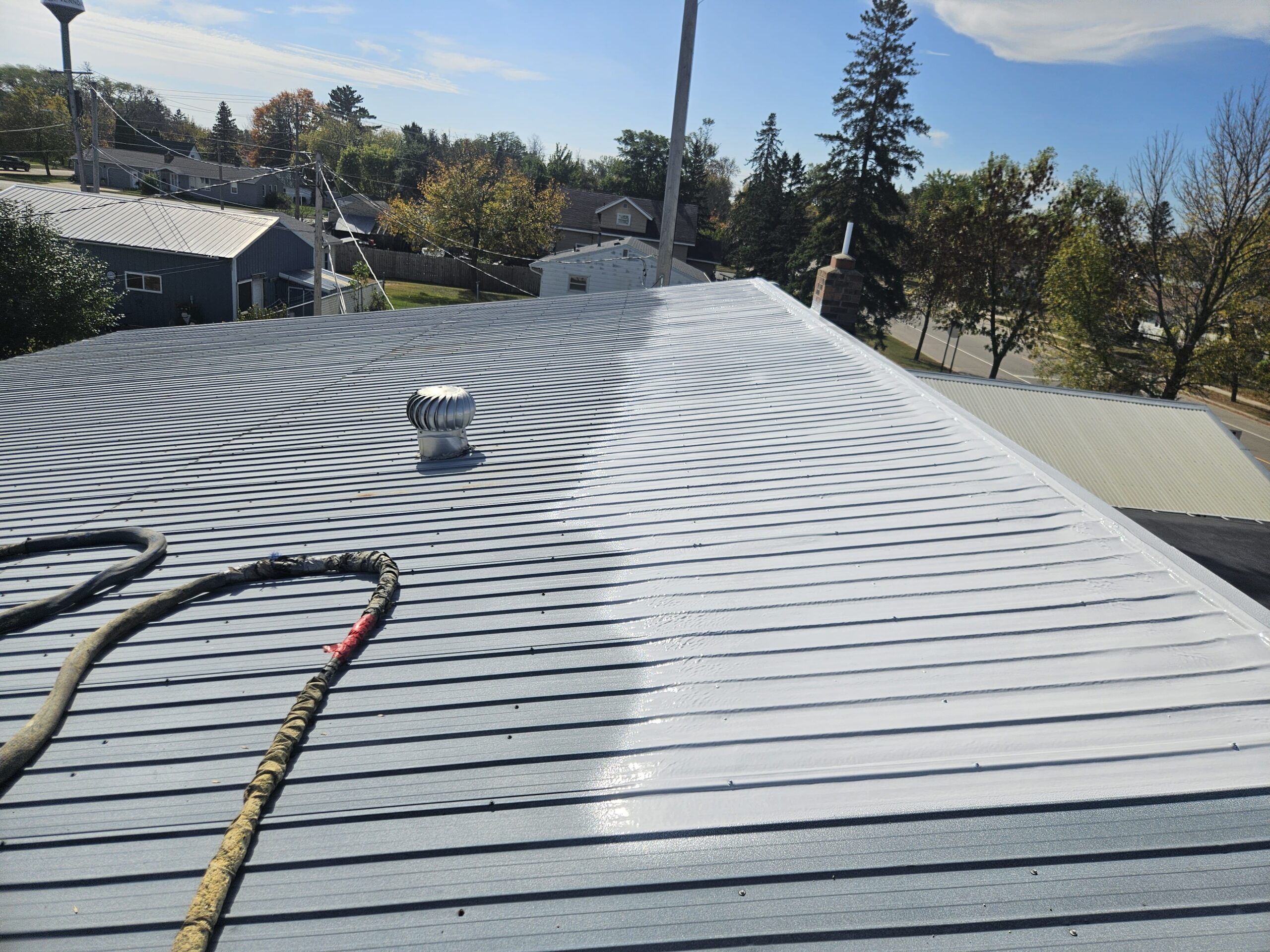
SPF Roofing for Agricultural and Pole Barn Structures
Metal roofing on agricultural buildings and pole barns across Williston, East Williston, and the surrounding Williams County area presents a different set of challenges than commercial flat roofs. Thermal cycling causes metal panels to expand and contract continuously, opening gaps at seams and fastener points that standard sealants can't hold through a full season. Condensation on the underside of uninsulated metal roofing damages stored equipment, hay, and grain over time.
SPF applied to a metal roof deck bonds directly to the metal surface, seals fastener points and seam gaps, and adds insulation value that cuts both condensation and heat loss through the roof. For agricultural operations across the Williston Basin where the building's contents carry real value, protecting them properly through a North Dakota winter is worth the investment.
Our Full Range of Roofing and Waterproofing Services in Williston, ND
Roof Sealing
Seam, flashing, and penetration sealing for commercial and industrial roofing systems across Williston and Williams County. Applied as a standalone maintenance service or as part of a complete SPF roofing system installation on Bakken region facilities.
Waterproofing Services
Moisture protection systems for commercial roofing assemblies and building envelope applications where roof performance connects to wall assembly and below-grade moisture management on Williston's industrial and energy sector buildings.
Exterior Building Waterproofing
Wall assembly moisture protection paired with roof system installations for Williston commercial and industrial buildings, where the full building envelope is the project scope.
Air Barriers
Building envelope air sealing for new construction and renovation projects across Williston and the surrounding area, applied in coordination with roofing and insulation work for complete building envelope performance in Williston's Arctic wind environment.
Why Foam Expertise Matters
on a Williston Roofing Project
SPF roofing is not a system that any crew with a spray rig can install correctly to the standard that Williston's climate demands. The product requires precise temperature control at the gun during application in cold ambient conditions, a correct mix ratio between the A and B components maintained across the full project, proper substrate preparation and moisture testing before the first pass, and consistent foam thickness across the complete roof surface. Variations in any of those factors produce a system with inconsistent adhesion, inconsistent density, and inconsistent performance, and in Williston's Arctic wind and freeze-thaw environment, those inconsistencies fail visibly within the first full heating season.
TCS was built around foam technology from its founding. The same application knowledge that produces consistent, high-performance spray foam insulation in walls, crawl spaces, and below-grade assemblies across the Williston area carries directly into SPF roofing, because the product, the equipment, and the application discipline are the same work applied to a roof substrate rather than a wall assembly. This crew does not learn foam behavior on roofing projects. The foam expertise was present before the first Williston roofing project was taken on, and it reflects years of real-condition application in North Dakota's most demanding climate environment.
That distinction matters when the system going on a Williston commercial or industrial roof is expected to perform without significant maintenance for fifteen to twenty years in conditions that test building materials harder than almost anywhere else in the continental US.
Why Williston Property Owners and Contractors Trust Technical Construction Solutions
Foam-Specialist Background Track Record
TCS was built around foam technology across insulation, structural lifting, and roofing applications. The application knowledge behind every project is deep and field-tested across North Dakota's most demanding conditions, not added to a conventional roofing service list when spray foam became a market trend.
Seamless Arctic Wind Uplift Performance
Williston's flat Bakken terrain creates unobstructed wind uplift forces and snow accumulation loads that attack every seam, fastener, and lap in conventional roofing through every heating season. SPF roofing eliminates those failure points completely via seamless bonding mechanisms.
Recoatable System Long-Term Management
Williston's boom-era building stock is entering the roofing replacement window. A correctly installed SPF system changes the replacement calculation from a recurring fifteen-year expense to a one-time installation with a recoatable maintenance cycle, saving structural costs over decades.
Big Rig Sizing Sized For Large Footprints
The 44-foot Featherlite commercial trailer gives TCS the material volume and operational readiness to complete large Williston industrial facility and commercial building projects in a single mobilization, maximizing compressed build season parameters safely before late fall fields close.
Full Building Envelope Structural Perspective
TCS also performs foundation waterproofing, spray foam insulation, air barriers, and concrete lifting. A Williston roofing problem gets assessed in the context of the full building assembly, ensuring structural interfaces align perfectly to eliminate pathway leaks completely.
On Time Schedule Settle Assurances
Williston roofing projects that run past their scheduled window create operational disruption for energy sector facility managers with direct financial consequences. Projects finish on the schedule agreed to and within the budget outlined, keeping production boundaries intact.
Smart Roofing Investment: Flexible Financing Available
Protecting your commercial asset shouldn't compromise your operational cash flow. Technical Construction Solutions has partnered with GreenSky® to offer accessible financing options, including 12 months interest-free on qualifying projects. Secure the long-term protection of an SPF roof today, while maintaining the financial flexibility your business needs.
Explore Financing Options →Get a Free Spray Foam Roofing Estimate in Williston, ND
A Williston commercial or industrial roof that fails at seams and fastener points every winter does not incur the repair bill. It costs the repair bill plus the interior damage that accumulated while water was traveling under the membrane between the spring patch and the next January wind event. The actual cost of a failing roof in Williston's climate compounds through every season, and the underlying adhesion problem goes unaddressed.
Start with a free estimate. One conversation is enough to assess the roof assembly, identify whether SPF is the right system for that structure, and give you a clear picture of what it will cost. No pressure. No obligation.