

Dickinson's Foundation Waterproofing and Air Barrier Specialists
Not a contractor who applies interior brush-on sealer to the wall face and files the job as complete. A foam-based moisture protection operation with the below-grade construction experience, spray application capability, and working knowledge of Dickinson's clay soil and frost conditions to identify where water is actually entering a building assembly and stop it at that point, not at the finished interior surface where the damage eventually becomes visible.
Why Choose Technical Construction Solutions for Foundation Waterproofing and Air Barriers in Dickinson, ND?
A commercial property owner off the Highway 22 south corridor in Dickinson called after a lower-level space in his building had developed recurring moisture damage across two consecutive post-thaw seasons. The previous contractor had applied an interior drainage mat system and a brush-on sealer to the interior foundation wall faces. The first spring after treatment, moisture returned at the same locations. The second spring, it appeared on sections of wall that had not shown moisture the year before.
When we walked through the building, the progression made immediate sense. The foundation walls on the north and west faces were carrying steady hydrostatic pressure from clay soil that had been retaining snowmelt and spring rainfall for weeks before the ground temperature dropped enough to stop lateral moisture movement. The thin bituminous damp-proofing the foundation received at original construction was never designed for sustained hydrostatic contact. It was designed for incidental soil moisture, which is a meaningfully different condition. Every interior treatment the previous contractor had applied was working behind the entry point, not at it. The actual moisture pathways, a degraded drainage plane on the north face, open penetrations at the foundation-to-wall transition, and a section of footing-to-wall joint that had never been properly detailed, were left completely unaddressed.
We excavated the active sections, prepared the foundation surface properly, applied a spray-based waterproofing membrane rated for hydrostatic pressure to both affected faces, installed a drainage board, and closed every penetration and transition detail that had been driving lateral moisture movement through the assembly. The following spring was the first in three years that the building did not generate a moisture call after the ground thawed.
That is what happens when the assessment starts with how water moves through the building assembly under Dickinson's specific soil and frost conditions, not with which interior product to apply to the wall face where the damage is already showing up.
Technical Construction Solutions was founded by Freddy Lewis, whose fifteen years of field construction experience include highway undersealing and below-grade void filling at the infrastructure scale. That background produces a fundamentally different diagnostic approach to foundation moisture than a waterproofing contractor whose experience begins and ends with residential brush-on sealers. Below-grade moisture pathways, hydrostatic pressure behavior in clay-dominant soil profiles, and the relationship between drainage management and membrane performance are construction systems questions, calling for professional solutions from trusted Dickinson insulation and coating installations. The judgment to answer them correctly in Dickinson's specific soil and climate environment comes from years of working at that scale in the field.
If your Dickinson building has recurring moisture infiltration that has already been treated without lasting results, a foundation facing pressure from clay soil saturation after a wet spring, or previous waterproofing that failed before it should have, a free estimate from a structural specialist is the right starting point.
Foundation Waterproofing Services in Dickinson, ND
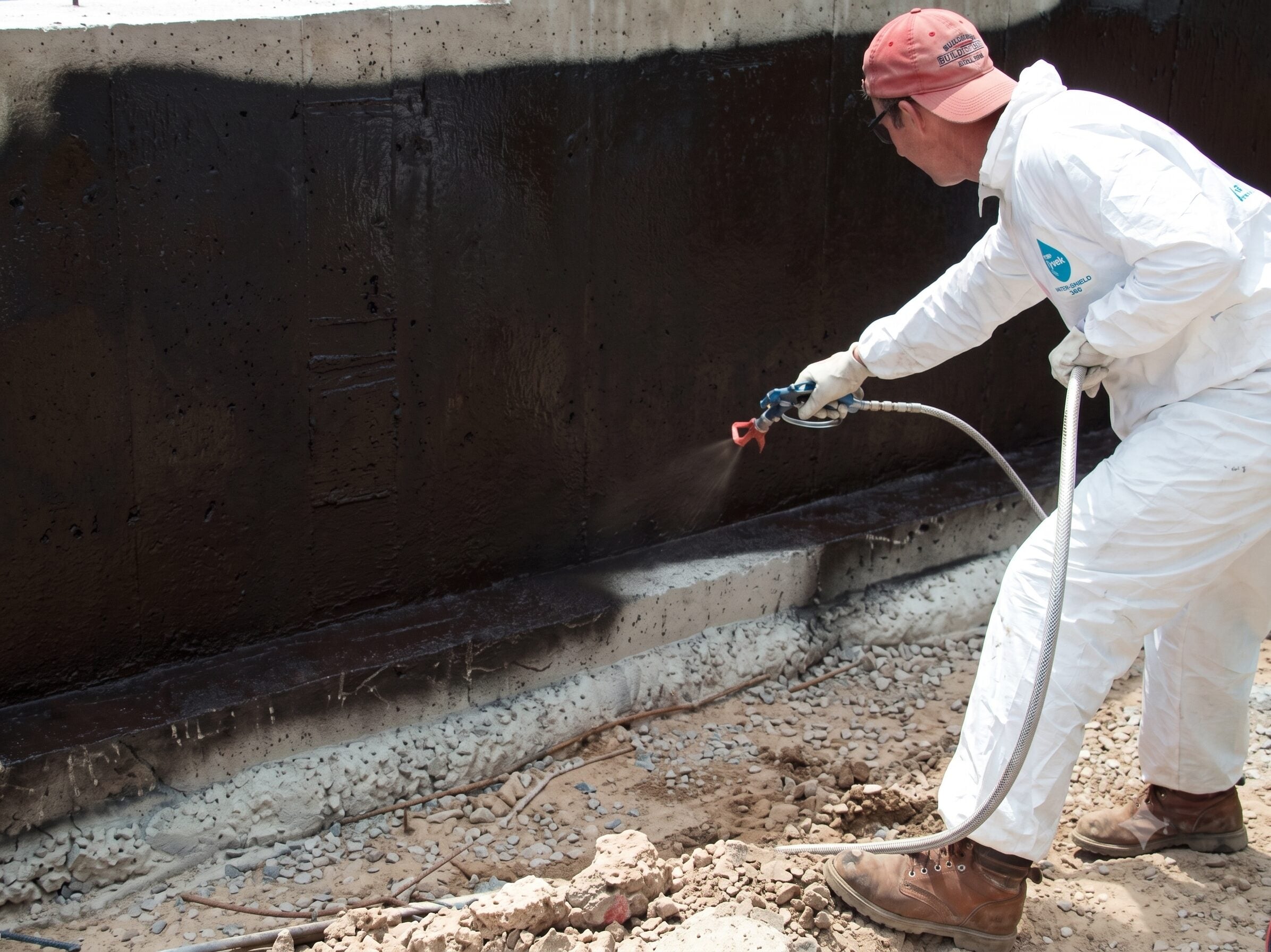
Below-Grade Foundation Waterproofing
For residential, commercial, agricultural, and energy sector facility buildings across Dickinson and the surrounding Stark County area, below-grade foundation waterproofing stops moisture at the point where Dickinson's clay soil profile, seasonal frost penetration, and spring melt hydrostatic pressure create the most consistent and damaging stress on a foundation assembly.
Dickinson sits in a region where the soil is predominantly clay, and clay soil behaves differently than sand or gravel in terms of moisture retention and drainage. Clay holds water against a foundation wall long after a rain or melt event has passed at the surface. That sustained contact creates hydrostatic pressure against the foundation face through a window that can extend for weeks after visible surface water has disappeared. Standard damp-proofing, the thin bituminous coating that most Dickinson foundations received at original construction, resists incidental soil moisture contact. It does not resist sustained hydrostatic pressure. When clay soil is holding water against the foundation face for three or four weeks every spring, the performance gap between damp-proofing and genuine waterproofing is not a technical distinction on a product data sheet. It is the explanation for why that lower level stays dry in August and generates moisture damage every April.
On new construction projects across Dickinson and Stark County, below-grade waterproofing applied before backfill produces a protected foundation assembly that costs a fraction of what remediation costs once backfill is in and moisture damage has started appearing on finished interior surfaces. The window for below-grade exterior work closes the moment the earthwork contractor moves on. Getting the membrane, drainage plane, and penetration details right at that stage is the only way to protect the foundation at the point of entry for the life of the building.
On existing structures with active moisture entry, the assessment process determines whether full perimeter excavation is required or whether targeted section work addresses the active pathways. The right scope for the actual condition, not the maximum scope that fits a proposal format.
Spray-Applied Waterproofing Membranes
Foundation walls with irregular concrete surfaces, block construction with mortar joint variations, multiple mechanical and electrical penetrations, and complex transitions at the wall-to-footing joint are the locations where brush-applied sealers and sheet membrane systems most consistently fail. Every penetration, every irregular surface contour, and every transition detail is a location where sheet systems require multiple lapped tape details, and brush products leave thin spots or miss surface irregularities entirely. Those locations are also exactly where Dickinson's clay-retained hydrostatic pressure finds the path of least resistance into the building assembly.
Spray-applied waterproofing membranes bond directly to the prepared substrate and cure into a seamless, fully adhered film across the complete treated surface, covering every penetration, every transition, and every surface geometry that other application methods cannot reach continuously. For Dickinson foundations where the moisture exposure is hydrostatic and sustained through the spring thaw window rather than incidental, seamless coverage is what a membrane needs to perform through repeated freeze-thaw cycles and extended moisture contact without failing at the detail locations that experience the highest stress.
Membrane system selection is based on the substrate condition, the hydrostatic exposure level at that specific foundation location, and the moisture history of the site, not on what product is fastest to apply or most available in the current material supply. A membrane applied correctly to a properly prepared Dickinson foundation surface outperforms one applied quickly to a surface that was not ready to receive it by a margin that compounds with every wet spring the building goes through.
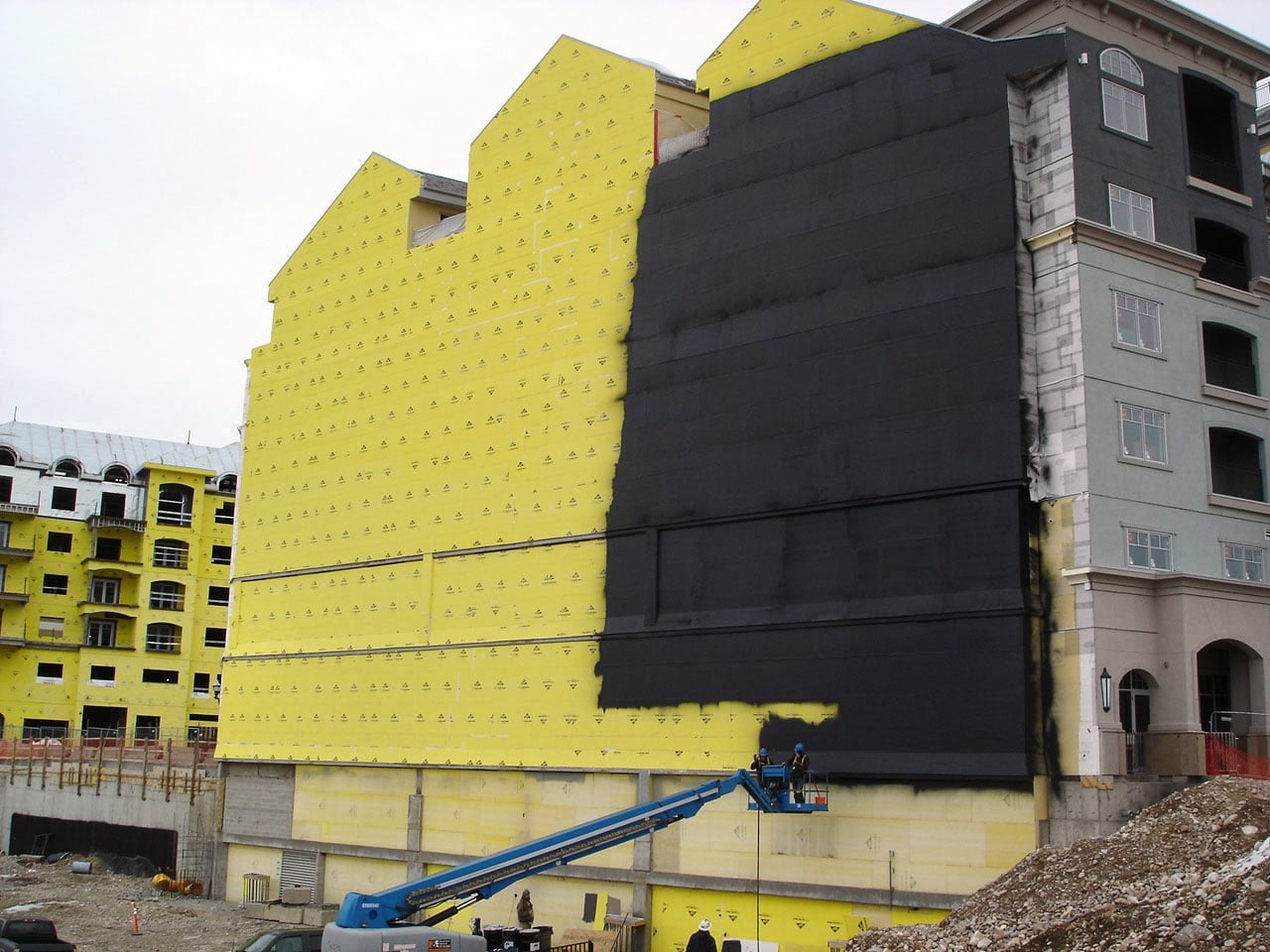
Foundation Drainage and Moisture Management
A waterproofing membrane performs at its rated specification when the drainage at the foundation perimeter is managed correctly. A membrane holding water against the wall face under sustained clay-retained hydrostatic load faces a fundamentally different performance challenge than one with a properly installed drainage plane moving water away from the wall face before it accumulates to the pressure levels that Dickinson's spring thaw cycle generates.
Foundation drainage systems, perforated drain tile at the footing level, drainage board protecting the membrane face through backfill settlement and frost movement, and properly graded backfill work alongside the waterproofing membrane to reduce the hydrostatic load on the wall face and direct water away from the foundation before it reaches the sustained contact pressure that damages damp-proofing and stresses even properly rated waterproofing systems over time. Addressing drainage and membrane together at the same project stage costs less than returning to correct an under-drained site after the membrane has already been carrying excessive hydrostatic load through multiple wet seasons.
Air Barriers and Foundation Moisture Control in Dickinson, ND
A foundation that has been properly waterproofed at the exterior face can still develop moisture and energy performance problems if wind-driven air infiltration is entering the building assembly through gaps in the above-grade envelope above the membrane line. In Dickinson's building environment, foundation moisture management and air barrier performance at the rim joist and wall transition are connected problems. Addressing the below-grade face without closing the air infiltration pathways above it produces results that do not hold through a full western North Dakota winter.
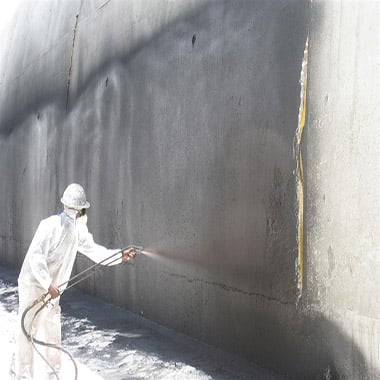
How Dickinson's Wind Exposure and Frost Depth Drive Air Infiltration
Dickinson's position in southwestern North Dakota puts it in a wind exposure environment that is shaped by open terrain extending for long distances in multiple directions. Winds from the west and northwest, the primary cold air delivery direction through winter, encounter minimal topographic obstruction before reaching Dickinson's building stock. The Badlands terrain west of the city and the coulees along the Heart River south of town create localized wind channeling effects that drive cold air against building envelopes with consistent pressure through January and February.
Air moves from high pressure to low pressure through a building envelope. In a Dickinson building under sustained west wind load during a January cold event, that pressure differential works against every gap in the above-grade assembly continuously, from the rim joist and wall-to-foundation transition at the lower level through every framing gap, window rough opening, and penetration point in the exterior wall above it. Cold air and moisture-laden soil air drawn inward through those pathways deposit against cold surfaces inside the framing cavity and lower-level assembly, creating exactly the moisture conditions that interior-treated foundations show every spring.
This is one of the most consistent failure modes in Dickinson foundation moisture remediation: excavating and waterproofing the below-grade wall face while leaving the rim joist and foundation-to-wall transition above it completely open to Dickinson's wind-driven infiltration. The moisture damage returns. The membrane gets questioned. The actual driver, air carrying moisture into the framing cavity from the unaddressed entry points above the membrane line, stays active through every heating season.
Spray Foam Air Sealing at the Foundation and Rim Joist Level
Spray foam applied to the rim joist, wall-to-foundation transition, and below-grade wall penetrations stops air movement at the building envelope plane, where Dickinson's west wind load and thermal stack-effect pressure create the most sustained infiltration stress on the lower building assembly.
Foam bonds directly to framing and foundation material and fills the irregular gaps and voids that tape, caulk, and other air sealing materials cannot cover reliably across Dickinson's varied residential and commercial framing conditions. A rim joist in an older Dickinson home off 8th Street West, with forty years of seasonal movement in the framing, does not have clean, regular gaps that tape detail reliably seals. It has irregular voids, settled framing gaps, and penetrations that foam addresses in a single application pass while simultaneously providing insulation value at one of the highest heat-loss locations in any building envelope in a climate that sustains sub-zero temperatures for extended periods.
For new construction across Dickinson and Stark County, spray foam air sealing at the foundation level is the detail that produces a measurable difference between a building that performs at its designed energy and moisture management standard through a western North Dakota winter and one that consistently falls short of that standard while generating lower-level moisture calls every spring. For retrofit applications on existing buildings, it is frequently the single correction that closes recurring lower-level moisture problems that previous remediation attempts failed to resolve because they never addressed the air entry pathways above the waterproofed wall face.
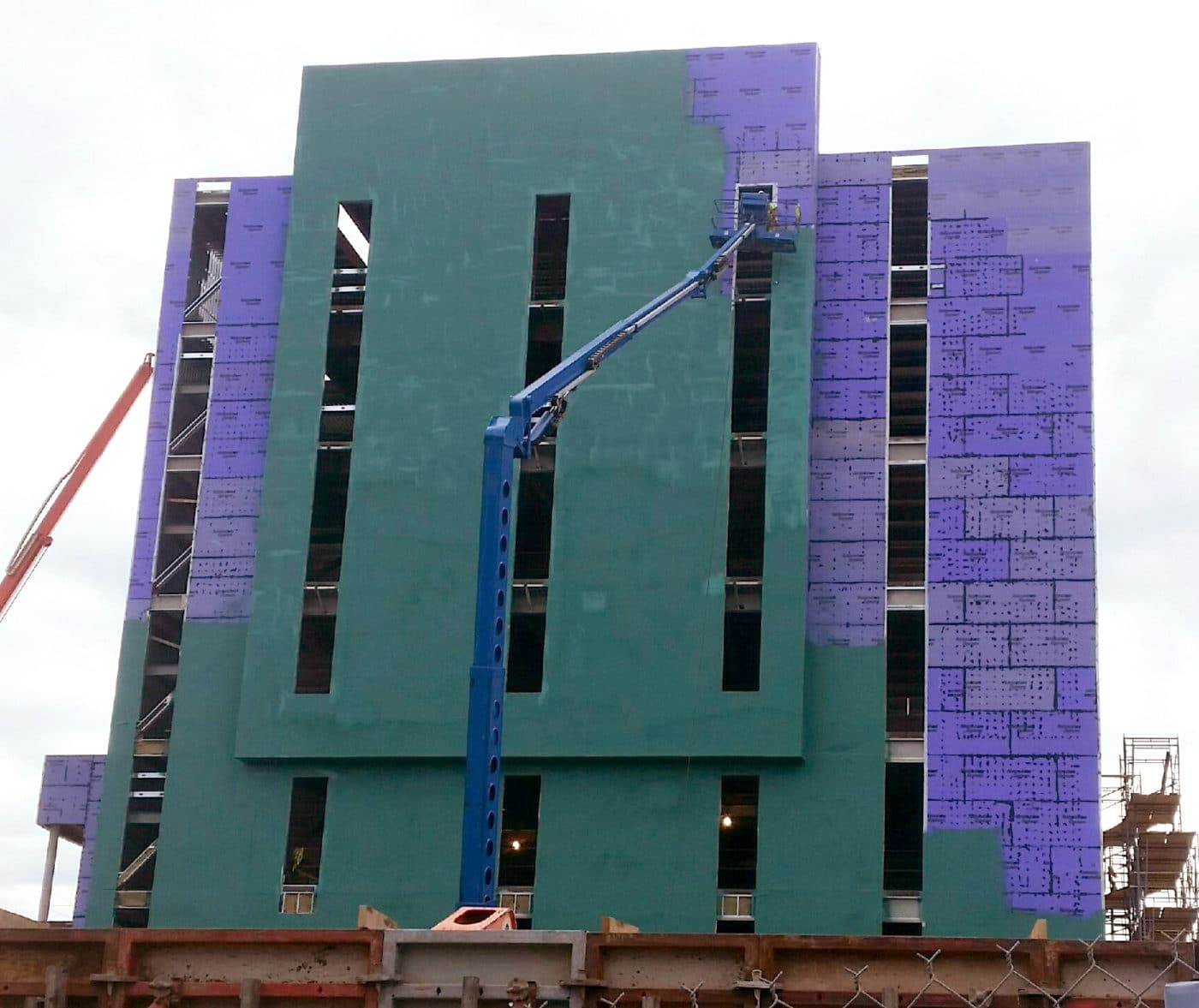
Spray-Applied Air Barriers for Commercial Buildings in Dickinson
For commercial construction and large renovation projects across Dickinson, including properties in the service and light industrial zones along Highway 22, energy sector facilities east of downtown, commercial developments off Villard Street, and institutional and healthcare buildings serving the broader Stark County population, spray-applied air barrier systems deliver continuous, fully adhered coverage across the complete above-grade wall assembly.
Every penetration point, structural transition, and framing gap in a commercial wall assembly is a location where tape-detailed or mechanically fastened sheet systems leave infiltration pathways. Dickinson's wind exposure pressure will find those pathways and work through them continuously through every winter heating season. A spray-applied air barrier bonds directly to the sheathing substrate and cures into a continuous membrane that covers every surface in the treated area, including the complex geometry around window rough openings, mechanical penetrations, and structural connections, where sheet systems require multiple tape details, and each represents a potential failure point under sustained wind pressure.
For general contractors managing commercial construction timelines in Dickinson's compressed build season, spray application produces a complete, verified air control layer without the sequencing delays that tape-detailed systems require at complex geometry. In a market where usable fall construction days are a finite resource and the insulation and cladding phases cannot begin until the air barrier is in place and verified, schedule efficiency has direct budget implications for projects where the weather window determines the completion date.
Why Equipment Capacity Changes
Waterproofing Outcomes in Dickinson
Spray-applied waterproofing membranes and air barrier systems require consistent output pressure, correct material temperature management through Dickinson's wide seasonal temperature range, and even film thickness across large continuous surfaces to perform at their rated specifications. Equipment that cannot maintain those variables through a full application session produces thin spots and adhesion failures at the locations of highest moisture and air pressure stress, which in Dickinson's clay soil and wind exposure environment are exactly the locations where the assembly cannot tolerate a coverage failure.
TCS runs multiple dedicated spray rigs and a 44-foot commercial trailer carrying membrane materials, foam, lifts, and full application equipment for large-scale projects in a single mobilization. Material temperatures are managed before arrival, and equipment is calibrated before the first pass, not during the warm-up period on-site, which costs the first hour of a compressed application window. For Dickinson property owners and general contractors coordinating waterproofing and air sealing work within active construction schedules or around occupied building operations, single-mobilization readiness reduces both project duration and total operational disruption from start to completion.
Why Dickinson Property Owners and Contractors Work With Technical Construction Solutions
Clay Soil and Frost Depth Knowledge Built Into Every System Specification
Dickinson's clay-dominant soil profile and the frost penetration depths that western North Dakota produces every winter create foundation moisture conditions that standard damp-proofing systems were never designed to handle through repeated annual cycles. Every waterproofing system specified for a Dickinson building accounts for the sustained hydrostatic pressure that clay soil generates through the spring thaw window, not for the incidental moisture contact that original foundation protection was sized to address.
Foam-Based Application Expertise for Dickinson's Wind Infiltration Environment
Western North Dakota's wind exposure at Dickinson creates sustained air infiltration pressure on building envelopes that tape-detailed and brush-applied air barrier systems cannot close reliably at every gap in a real framing assembly. Foam-based air sealing, continuous, seamless, and bonded directly to the substrate at every surface geometry, is the application method that performs under that wind load through every heating season. TCS was built around foam technology from the start, and that foundation shapes the application discipline on every Dickinson air barrier project.
15 Years of Below-Grade Construction Experience Behind Every Assessment
Freddy Lewis's highway undersealing and below-grade void filling background at the infrastructure scale provides the structural systems judgment that foundation waterproofing in Dickinson's clay soil and frost environment demands. Foundation moisture problems in this market are construction systems questions, not surface treatment questions. The field experience behind this operation is what produces answers that hold through the next wet spring rather than answers that look right on the interior wall face for one season.
Infrastructure-Level Precision Applied to Every Foundation Project
The precision and durability standards that highway undersealing and structural void filling require at the infrastructure scale apply directly to below-grade foundation waterproofing in Dickinson's demanding soil and moisture conditions. That standard applies regardless of whether the project is a residential foundation on the north side of town or a commercial facility on the Highway 22 corridor.
Multi-Rig Speed for Dickinson's Compressed Construction Season
Dickinson's usable construction window for below-grade exterior work is governed by frost and precipitation, and it does not extend forgiveness to contractors who arrive unprepared or fall behind schedule. TCS's multi-rig operation and professional crew management allow waterproofing and air barrier work to be completed at the pace that Dickinson's build season requires, without the scheduling delays that leave below-grade assemblies exposed through weather windows that close on their own schedule.
Accurate Estimates. No Shortcuts. No Adjustments at the Job Site.
Every estimate reflects what the project actually requires: proper surface preparation, the correct membrane system for that substrate and hydrostatic exposure level, drainage management at the foundation perimeter, and application standards that meet product specifications. What gets quoted at the start is what the project costs when done correctly, and the invoice reflects the quote.
On Time. On Budget. Built Into How This Operation Works.
Projects finish on the schedule agreed to and within the budget outlined at the start. For commercial clients managing construction sequences where the waterproofing phase gates the backfill and framing phases, and for property owners working around a correction window before the next spring thaw, that reliability is structural, not aspirational.
Fully Licensed and Insured on Every Project
Every Dickinson project is backed by full licensing and insurance. In a specialty trade where operators without proper coverage take on structural waterproofing work regularly, that standard protects property owners and general contractors on every job, regardless of size or complexity.
Get a Free Waterproofing and Air Barrier Estimate in Dickinson, ND
A Dickinson building with foundation moisture entry points left open and air infiltration pathways at the rim joist and wall transition unaddressed does not just cost more to heat through a western North Dakota winter. It costs more to own, in moisture damage repair cycles that recur every wet spring, in framing deterioration that develops inside compromised wall assemblies over multiple seasons, and in the compounding interior damage that accumulates while the actual entry points remain active beneath surface treatments that were never going to hold against Dickinson's clay soil hydrostatic pressure and wind-driven air infiltration.
One conversation with a TCS structural specialist is enough to assess the foundation envelope, identify where water is entering and how air infiltration is contributing to the moisture conditions inside the assembly, and give you a clear, honest cost picture for the system that addresses the actual problem. No pressure. No obligation. No estimate was built around a surface treatment that leaves the entry points open.