
Minot's Waterproofing and Air Barrier Specialists
Not a contractor applying brush-on sealer to the interior wall face and calling it waterproofing. A foam-based moisture protection crew with the construction experience, spray application expertise, and Souris River Valley flood awareness to identify where water is actually entering a Minot building and stop it at that point, not at the interior surface where the damage eventually shows up.
Why Choose Technical Construction Solutions for Waterproofing and Air Barriers in Minot, ND?
A property manager I spoke with near the older commercial blocks along South Broadway had been dealing with recurring lower-level moisture damage in a multi-tenant building for three consecutive post-thaw seasons. Two previous contractors had treated the interior wall faces, applied brush-on sealers, and recommended interior drainage mat systems. Each spring, moisture returned. By the third season, it was appearing on surfaces that had been treated the year before.
When we walked through the building, the picture was straightforward. The foundation walls on the north and west faces were carrying hydrostatic pressure from soil that had never fully drained after the 2011 Souris River flood event. The water table in that section of Minot sits higher than it did before 2011, and the conventional damp-proofing the building had received during original construction was never rated for sustained hydrostatic exposure. Every interior treatment the previous contractors had applied addressed where moisture was arriving inside the building, not where it was entering the assembly. The entry points, the foundation-to-wall transition, several open penetrations on the north face, and a drainage plane that had degraded without a protection board were left completely unaddressed.
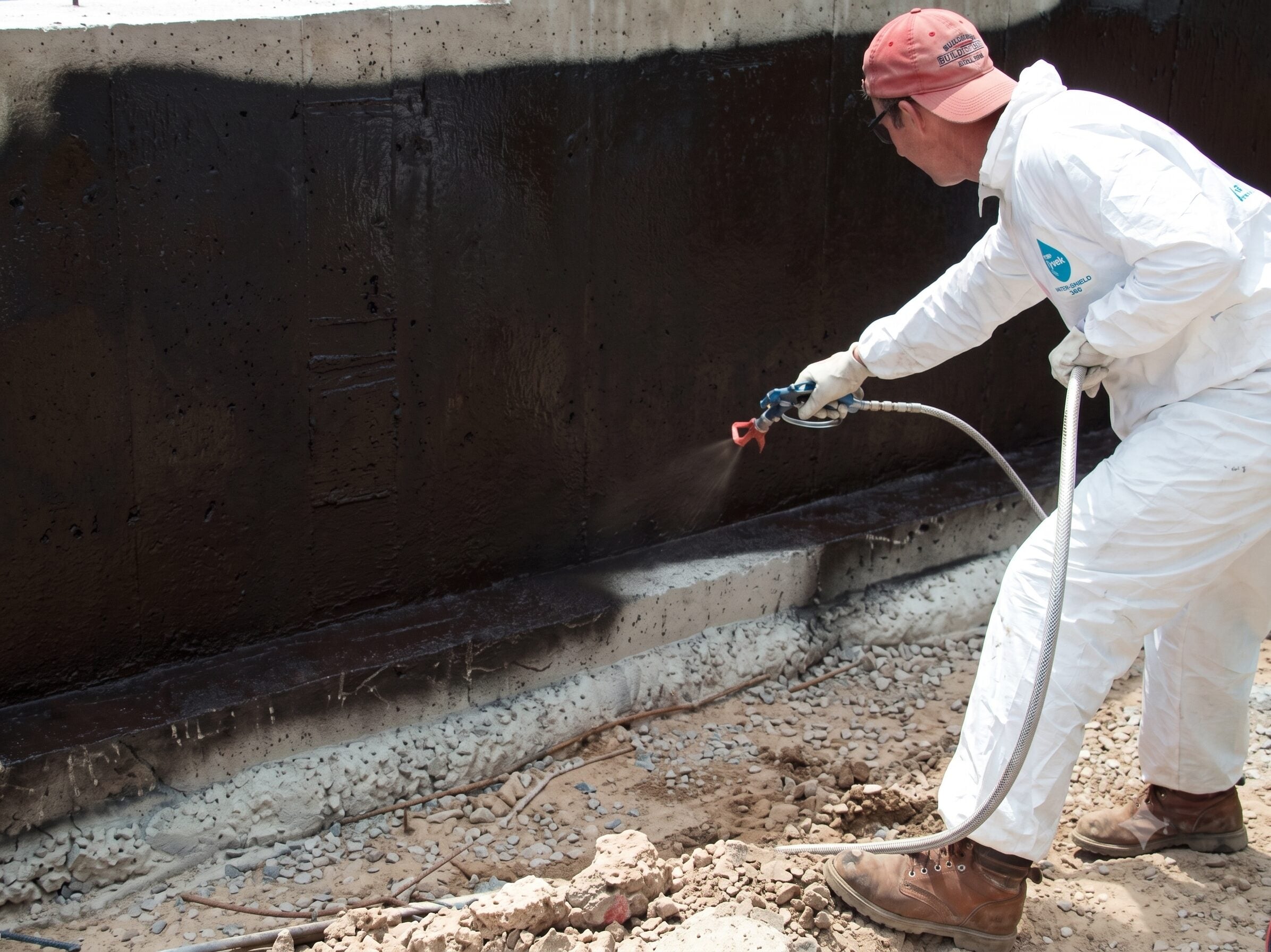
We excavated the active sections, applied a spray-based waterproofing membrane rated for hydrostatic pressure to the properly prepared foundation face, installed a drainage board, and addressed the penetrations and transitions that had been driving lateral moisture migration through the wall. The following spring was the first in four years that the building did not generate a moisture call.
That outcome is what happens when the assessment starts with how water is moving through the building assembly, not with what product to apply to the interior surface where the damage is visible.
Technical Construction Solutions was founded by Freddy Lewis, whose fifteen years of field construction experience include highway undersealing and below-grade void filling at the infrastructure level. That background produces a fundamentally different diagnostic approach to foundation moisture than a waterproofing contractor whose experience begins and ends with residential sealers. Below-grade moisture pathways, hydrostatic pressure behavior, and the interaction between drainage management and membrane performance are construction systems questions, calling for professional solutions from trusted Minot insulation and coating installations. The judgment to answer them correctly comes from years of working at that scale in the field.
If your Minot building has recurring moisture infiltration, a foundation facing post-flood hydrostatic conditions, or previous waterproofing that failed before it should have, a free estimate is the right starting point.
Waterproofing Services in Minot, ND
Below-Grade Foundation Waterproofing
For residential, commercial, and institutional buildings across Minot, Minot Air Force Base adjacent properties, and the surrounding Ward County area, below-grade foundation waterproofing stops moisture at the point where hydrostatic pressure, post-flood soil saturation, and freeze-thaw cycling create the most consistent and damaging stress on a foundation assembly.
Minot's 2011 Souris River flood changed the moisture conditions that below-grade building assemblies in parts of this city face permanently. Sections of Minot that experienced prolonged inundation or ground saturation during that event carry elevated water table conditions and soil moisture profiles that conventional damp-proofing, the thin bituminous coating that most foundations received at original construction, was never engineered to handle. A damp-proofing layer resists incidental soil moisture. It does not resist sustained hydrostatic pressure. For Minot foundations in flood-legacy areas, the performance gap between damp-proofing and genuine waterproofing is not a technical distinction. It is the difference between a foundation that holds through wet spring conditions and one that generates moisture calls every March.
On new construction, below-grade waterproofing starts with a spray-applied or sheet-applied membrane bonded to the properly prepared foundation wall before backfill, combined with a drainage plane and protection board that maintains membrane integrity as soil settles and shifts through Minot's freeze-thaw season. Addressing those details correctly at the construction stage costs a fraction of what remediation costs after backfill is in and moisture damage has started appearing on finished interior surfaces.
On existing structures where active moisture entry has been identified, the assessment process determines whether full perimeter excavation is warranted or whether targeted sections address the active pathways. The right scope for the actual problem, not the widest scope that fits a proposal.
Spray-Applied Waterproofing Membranes
Foundation walls with irregular surfaces, multiple penetrations, and complex wall-to-footing transitions are where brush-applied sealers and sheet systems consistently underperform. Every penetration point, every transition detail, and every corner is a location where sheet systems leave gaps and brush products leave thin spots. Those are exactly the locations where Minot's post-flood hydrostatic pressure finds the path of least resistance into the building assembly.
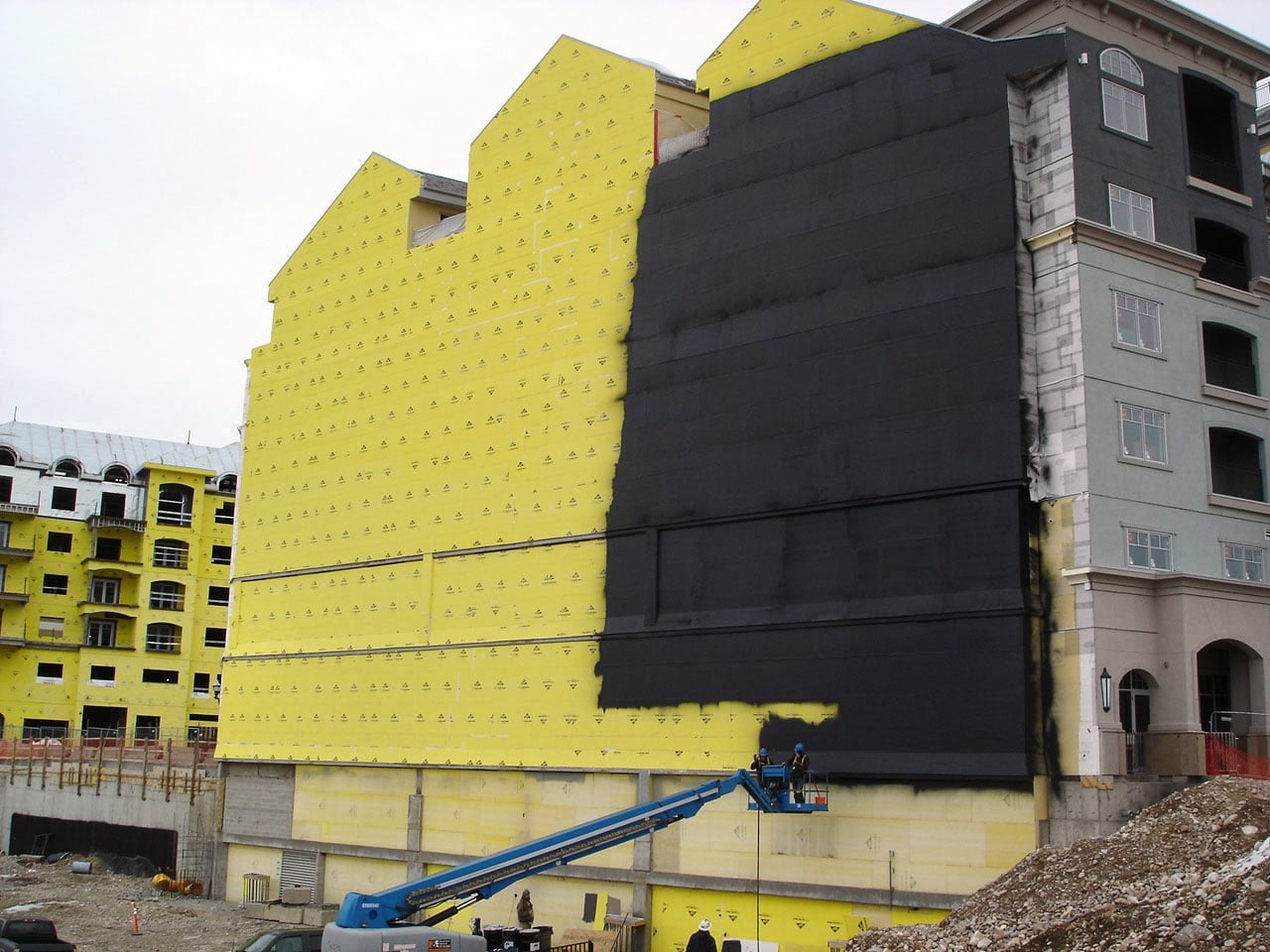
Spray-applied waterproofing membranes bond directly to the prepared substrate and cure into a seamless, fully adhered film across the complete treated surface, including every penetration, transition, and irregular geometry that other application methods cannot cover continuously. For Minot foundations where the moisture exposure is hydrostatic rather than incidental, that seamless coverage is what a membrane needs to perform through repeated freeze-thaw cycles and sustained moisture contact without failing at the details.
Membrane system selection is based on substrate condition, hydrostatic exposure level, and the specific moisture history of that section of the Minot building stock, not on what product is fastest to apply. A membrane applied correctly to a properly prepared surface in Minot's flood-legacy moisture environment outperforms one applied quickly to a surface that was not ready to receive it by a margin that compounds with every wet season the building goes through.
Foundation Drainage and Moisture Management
A waterproofing membrane performs at its rated specification when drainage is managed correctly at the foundation perimeter. A membrane holding water against it under sustained hydrostatic load faces a fundamentally different performance challenge than one with a properly graded drainage plane moving water away from the wall face before it reaches sustained contact pressure.
For residential and commercial projects across Minot, foundation drainage systems, perforated drain tile, drainage board, and properly graded backfill work alongside the waterproofing membrane to reduce the hydrostatic load on the wall face and move water away from the foundation before it accumulates to the pressure levels that Minot's post-flood soil conditions can generate. Addressing drainage and membrane together at the same project stage is significantly less expensive than returning to correct drainage after the membrane has already been stressed through multiple wet seasons on an under-drained site.
Air Barriers and Foundation Moisture Control in Minot, ND
A foundation that has been properly waterproofed at the exterior face can still develop moisture and energy performance problems if Minot's persistent northwest wind is driving air infiltration through gaps in the above-grade envelope. In Minot's building environment, foundation moisture management and air barrier performance are connected problems. Addressing one without the other produces results that do not hold through a full Minot winter.
How Minot's Wind Exposure Drives Air Infiltration Into Building Assemblies
Minot experiences some of the most sustained and directionally consistent wind exposure of any market in the upper Midwest. The city's position on the Souris River plain gives northwest winds an unobstructed run at building envelopes with consistent pressure that other North Dakota markets simply do not face at the same intensity. In winter, that wind pressure works against every gap in the building assembly continuously, from the rim joist and wall-to-foundation transition at the lower level to every penetration point and framing gap in the above-grade wall assembly.
Air moves from high pressure to low pressure through a building envelope. In a Minot building under northwest wind load during January, that movement finds every gap at the rim joist, the foundation-to-wall transition, and below-grade wall penetrations, drawing outside air and moisture-laden soil air inward and depositing it on cold surfaces inside the framing and lower-level assembly. A foundation wall that has been waterproofed at the exterior face can still generate interior moisture damage if the air pathway at the rim joist above it is left open to Minot's wind-driven infiltration pressure.
This is one of the most common failure modes in Minot foundation moisture remediation: treating the below-grade wall face while leaving the air entry points at the rim joist and wall transition above it unaddressed. The moisture damage returns. The waterproofing gets blamed. The actual driver, air infiltration carrying moisture into the framing cavity from above the membrane line, remains active.
Spray Foam Air Sealing at the Foundation and Rim Joist Level
Spray foam applied to the rim joist, wall-to-foundation transition, and below-grade wall penetrations stops air movement at the building envelope plane, where Minot's northwest wind and stack-effect infiltration pressure create the most sustained stress on the lower building assembly.
Foam bonds directly to framing and foundation material, fills the irregular gaps and voids that no other air sealing method addresses reliably across Minot's varied residential and commercial framing conditions, and provides insulation value at the rim joist, one of the highest heat-loss locations in any building envelope in a climate zone that regularly sees sustained sub-zero temperatures for months at a time. For new construction across Minot and Ward County, spray foam air sealing at the foundation level is the detail that produces a measurable difference between a building that performs at its designed energy standard through a Minot winter and one that consistently falls short. For retrofit projects on existing buildings, it is frequently the one correction that resolves recurring lower-level moisture problems that multiple previous remediation attempts failed to close because they never addressed the air pathway.
Spray-Applied Air Barriers for Commercial Buildings in Minot
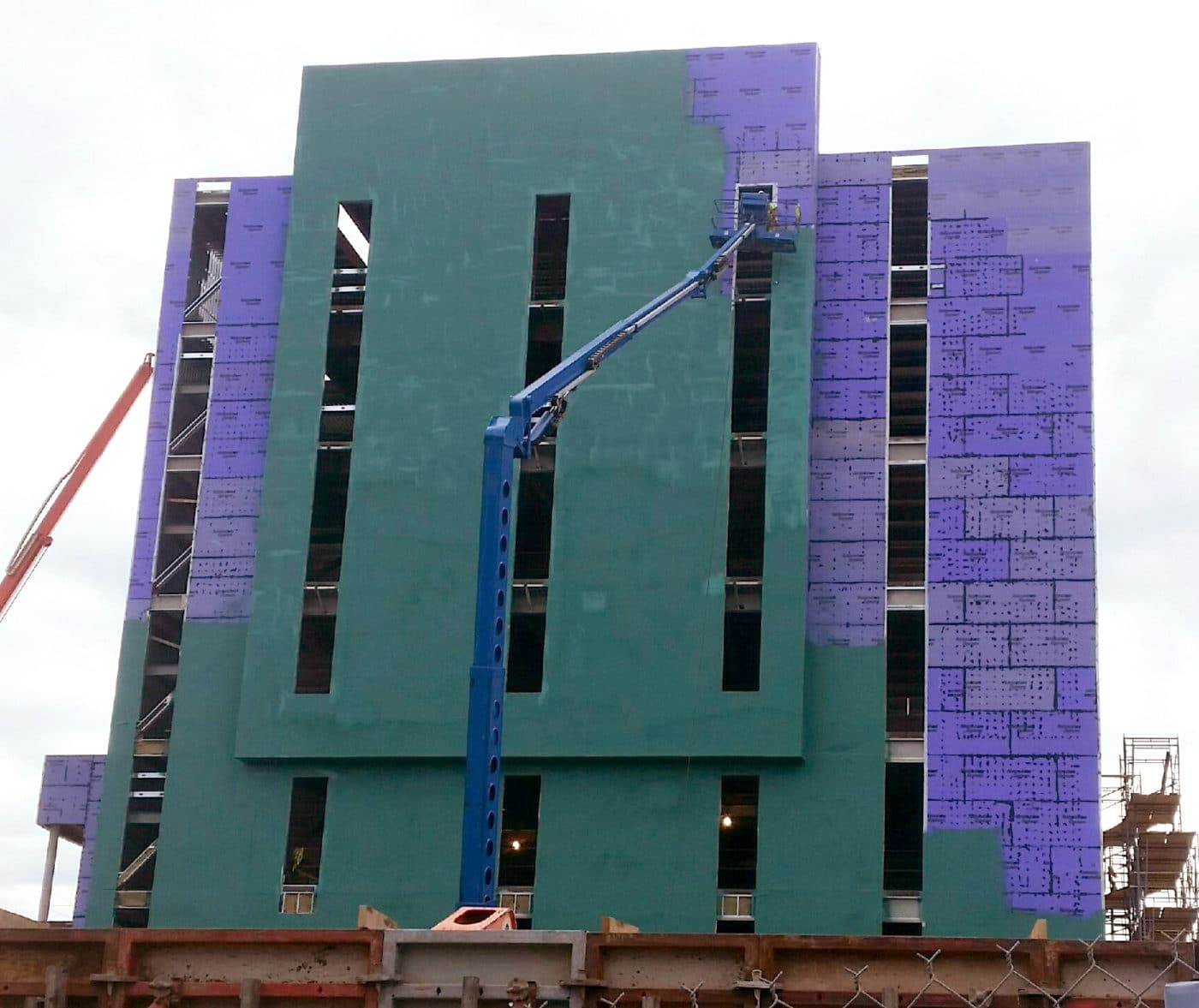
For commercial construction and large renovation projects across Minot, including properties near the commercial development along North Broadway, facilities in the industrial areas off 16th Street, and institutional buildings serving Minot State University and Trinity Health, spray-applied air barrier systems deliver continuous, fully adhered coverage across the complete wall assembly.
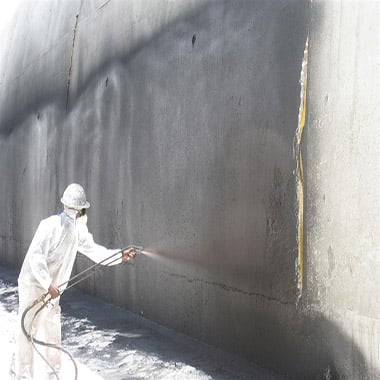
Every penetration point, structural transition, and framing gap in a commercial wall assembly is a location where tape-detailed or mechanically fastened sheet systems leave infiltration pathways that Minot's wind pressure will find and work through. A spray-applied air barrier bonds directly to the sheathing substrate and cures into a continuous membrane that covers every surface in the treated area, including the complex geometry around window openings, mechanical penetrations, and structural connections, where sheet systems require multiple tape details that each represent a potential failure point.
For general contractors managing commercial construction schedules in Minot's compressed build season, spray application produces a complete, verified air control layer without the sequencing delays that tape-detailed systems require at complex geometry. In a market where every week of the usable construction window matters, that schedule efficiency has direct budget implications for projects where the air barrier installation gates the cladding phase.
See Air Barrier and Waterproofing Systems in Action
A look at how continuous air barrier membranes and deck waterproofing systems are installed to deliver the unbroken coverage Minot's wind exposure, freeze-thaw cycling, and post-flood hydrostatic conditions demand.
Air Barrier Installation
How a fluid applied air and vapor barrier membrane is installed at rough openings and across the wall assembly for continuous coverage.
Deck Waterproofing System
A look at a fluid applied membrane waterproofing system in action, the kind of seamless, fully bonded performance specified for foundations and below grade assemblies.
Why Equipment Capacity Changes the Outcome
of Minot Waterproofing Projects
Spray-applied waterproofing membranes and air barrier systems require consistent output pressure, correct material temperature through Minot's wide seasonal temperature range, and even film thickness across large continuous surfaces to perform at their rated specifications. Equipment that cannot maintain those variables through a full application session produces thin spots and coverage gaps at the locations of highest moisture and air pressure stress, which in Minot's post-flood hydrostatic environment are exactly the locations where the assembly cannot afford a failure.
TCS runs multiple dedicated spray rigs and operates a 44-foot commercial trailer that carries membrane materials, foam, lifts, and full application equipment for large-scale projects in a single mobilization. For Minot property owners and facility managers coordinating waterproofing and air sealing work within active construction schedules or around occupied building operations, single-mobilization readiness reduces both project duration and total operational disruption cost. In a market where the window for below-grade exterior work closes as reliably as any in the country, a contractor who arrives prepared to work is not a courtesy. It is a schedule requirement.
"A general contractor TCS worked with on a large commercial project in the Minot market noted afterward that TCS arrived with material temperatures already managed and equipment calibrated, and moved directly into continuous application on the first morning without the warm-up delay and output variability he had experienced with the previous membrane applicator on a comparable project. The job ran on schedule from the first day to the last."
Why Minot Property Owners and Contractors Trust Technical Construction Solutions
Souris River Valley Flood Awareness
Minot's 2011 flood left hydrostatic pressure conditions and soil saturation profiles across parts of the city that damp-proofing cannot handle. Every waterproofing system TCS specifies accounts for that post-flood moisture reality, protecting your structural layout correctly.
Foam-First Air Barrier Expertise
Minot's persistent northwest winds create intense sustained air infiltration pressure on building envelopes. Foam-based air barriers, bonded directly to the substrate, are the only application that reliably closes every structural framing gap in that high-wind exposure environment.
15+ Years Field Experience
Freddy Lewis's highway undersealing and below-grade infrastructure background provides the systems-level judgment that below-grade waterproofing demands here. Saturated foundation moisture problems in this market are solved correctly through technical infrastructure-scale field discipline.
Highway-Grade Precision Standards
The same precision and durability metrics that large-scale infrastructure void work requires apply directly to below-grade foundation waterproofing in Minot's challenging sub-base configurations. That execution standard stays uniform across every project scope.
Multi-Rig Schedule Optimization
Minot's usable construction window is among the shortest in the country. TCS's multi-rig setups allow waterproofing and air barrier jobs to be completed at the pace that Minot's build season requires, preventing open-envelope weather vulnerabilities.
Fair Pricing & On Time Performance
Every estimate reflects required preparation depth and moisture testing with no hidden site fees. Floor coatings frequently close build sequences where winter shuts the calendar down fast—our team delivers on time to protect that window.
Get a Free Waterproofing and Air Barrier Estimate in Minot, ND
A Minot building with foundation moisture entry points left open and air infiltration pathways unaddressed does not just cost more to heat. It costs more to own, in repair cycles that recur every wet season, in material deterioration that accelerates inside compromised wall assemblies, and in the interior damage that compounds while the actual entry points remain active beneath surface treatments that were never going to hold.
Start with a free estimate. One conversation is enough to assess the building envelope, identify where moisture is entering and how air infiltration is contributing to the problem, and give you a clear picture of what the right waterproofing and air barrier system will cost, no pressure, no obligation.