
Top Insulation Contractors in South Dakota, Foam-First. Field-Proven.
Not a contractor who quotes South Dakota work and shows up with a single rig, partial materials, and a crew that has never worked in a Black Hills winter or on the open grassland plains east of the Missouri River. A foam-first insulation operation with the construction background, the multi-rig equipment capacity, and the full system range to match the right insulation to your building, your climate zone, and your project window.
Why Choose Technical Construction Solutions for Insulation Across South Dakota?
South Dakota presents a contractor reliability problem that most property owners in this state have already experienced at least once. The building season compresses fast. A project that needs to be weathered in before October becomes a major problem if the insulation contractor delays mobilization, shows up underequipped, or quotes a scope they can't actually execute in the available window. In a state where a hard freeze can arrive before the calendar turns to winter, that kind of contractor failure doesn't just delay a project. It leaves a building exposed through a season it wasn't designed to handle without insulation in place.
A commercial building owner near Rapid City's west side, managing a large metal-framed storage and operations facility off Highway 44, had contracted with two separate insulation crews over the prior 18 months. The first showed up with insufficient foam material to cover the pole barn ceiling volume and had to stop mid-project. The second scheduled a start date and then pushed it three weeks, citing equipment availability, finally arriving with a rig that couldn't maintain consistent output temperature in the late-fall ambient conditions. Neither job was completed correctly before winter set in.
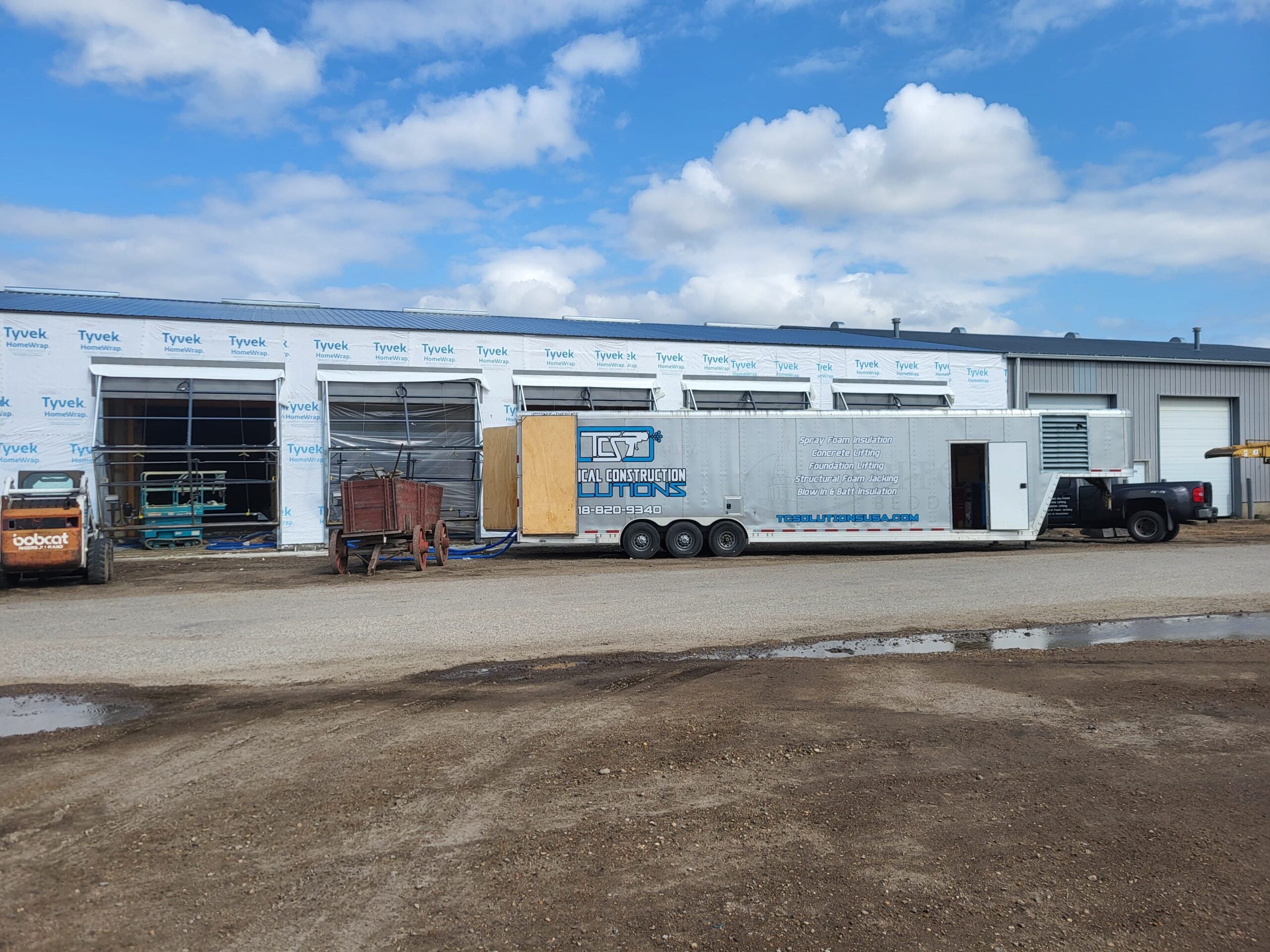
When TCS arrived, the 44-foot commercial trailer carried full material for the entire scope, the rigs were sized for the building volume, and the crew completed the full ceiling and wall assembly in a single mobilization before the first hard freeze of that season. The building owner said afterward that the difference wasn't the foam product or the price. It was that TCS treated the project window as a real constraint, not a suggestion.
That operational discipline isn't incidental. It's the direct result of building a company around equipment capacity from day one rather than scaling up reactively when jobs demand it.
Technical Construction Solutions was founded by Freddy Lewis, who spent 15 years in highway construction, including infrastructure-level work that demanded the same project window precision that South Dakota's climate imposes on commercial and agricultural insulation work. That background shapes how every SD project gets planned before a rig leaves the yard.
If your South Dakota building is losing heat, your energy bills reflect an insulation system that isn't performing, or you're working with a project window that can't absorb another contractor delay, a free estimate is where to start.
Insulation Services Across South Dakota
Spray Foam Insulation
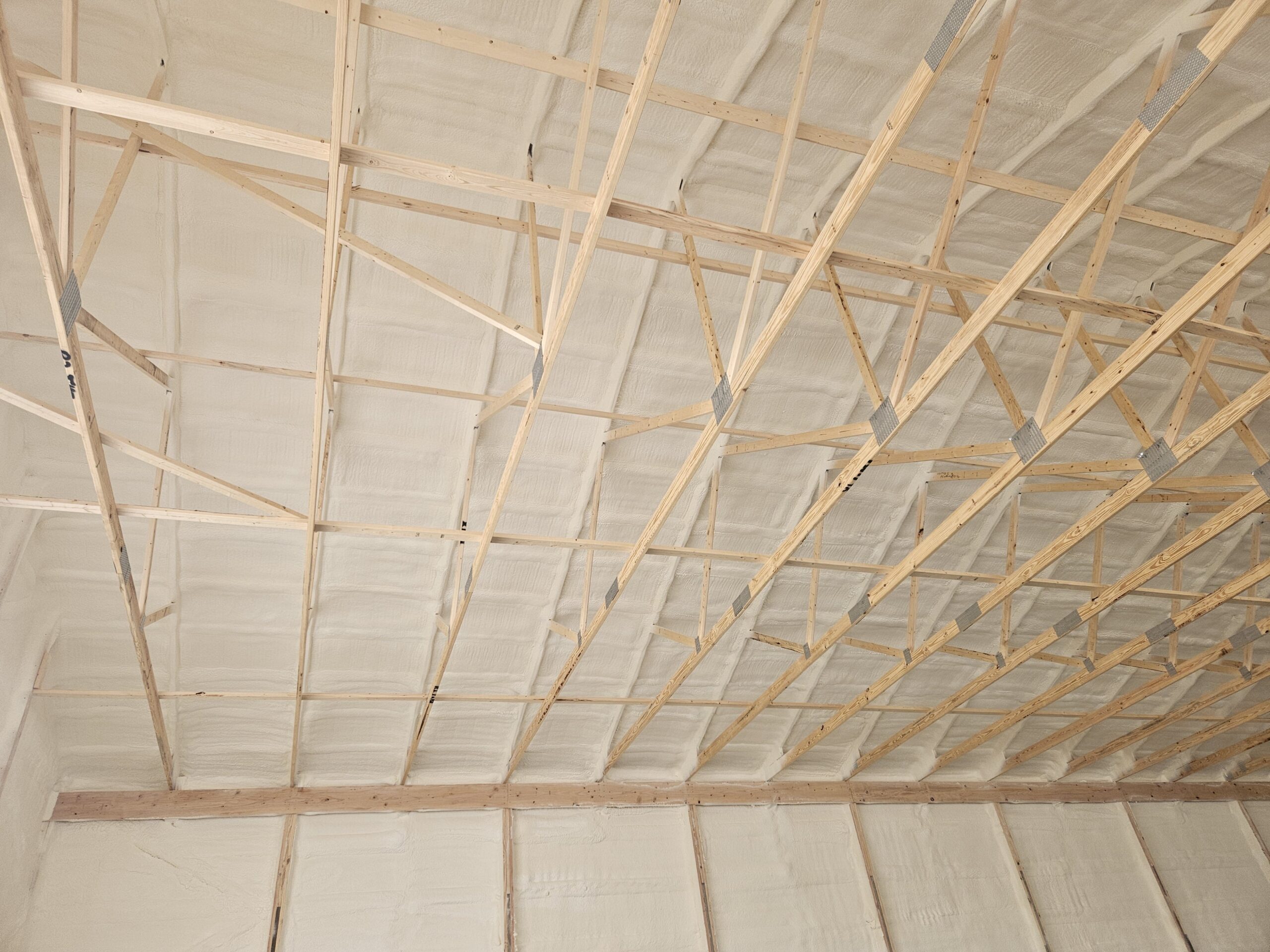
Spray foam is the highest-performance insulation system available for air sealing and thermal control in South Dakota's climate, and the air sealing function is as critical as the thermal function in a state where eastern plains wind exposure drives cold air through every unsealed gap and every framing bypass with a force that moderate-climate insulation specifications are not calibrated to address.
Closed-cell spray foam bonds directly to the substrate and cures into a rigid, continuous barrier that stops wind-driven air infiltration at the source rather than slowing it. For rim joists in Sioux Falls's Cathedral Historic District homes and the newer construction in Harrisburg and Tea, cathedral ceilings across Black Hills residential and commercial construction in Rapid City, crawl spaces in Pierre-area homes where Missouri River corridor ground moisture adds to the infiltration load, and agricultural buildings throughout the James River Valley where ceiling deck and ridge seam sealing determines whether a heated building holds temperature, closed-cell spray foam outperforms every alternative system.
Open-cell foam handles interior applications where vapor permeability and sound control matter alongside thermal performance. Each application in each building gets assessed before any product is specified, because the right foam for the rim joist is not always the right foam for the interior partition wall above it.
Learn More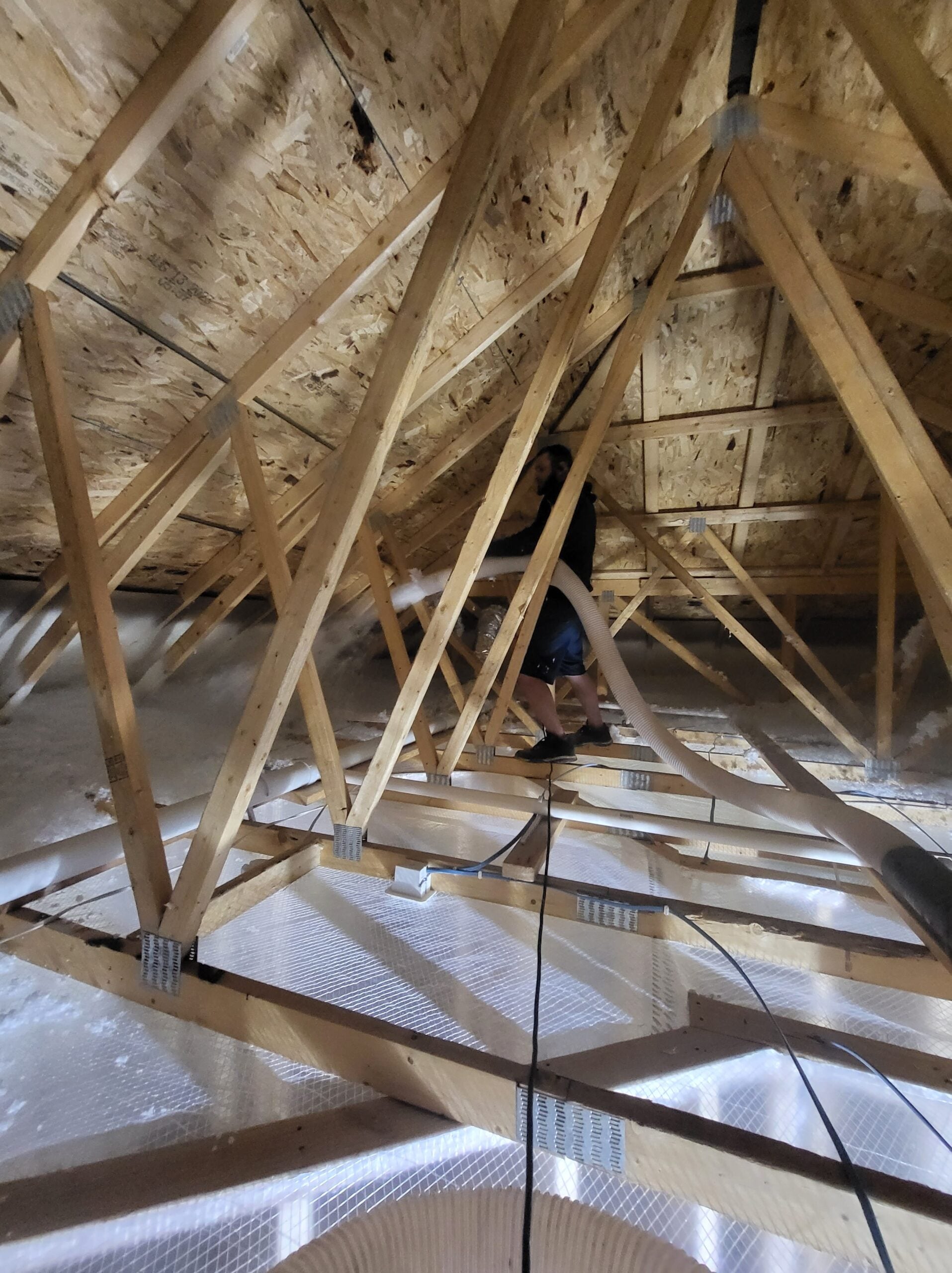
Blown-In and Batt Insulation
South Dakota's older residential housing stock, across the established neighborhoods in Sioux Falls's north end, the mid-century residential blocks in Aberdeen and Watertown, the farmhouses built throughout the Coteau des Prairies, and the older commercial buildings along Pierre's Capitol Avenue, carries a significant inventory of attic assemblies insulated to standards from thirty or forty years ago that have settled well below their original rated depth and well below what South Dakota's climate zone now demands from a building envelope.
Blown-in insulation is the most practical and cost-effective correction for most of those buildings. Strong thermal performance at depth, fast installation without opening finished ceilings, and a cost structure that makes meaningful improvement accessible without a major renovation. For new construction and renovation projects across Sioux Falls's growing southwest corridor, the expanding residential developments in Brookings and Watertown, and commercial remodel projects across the state, fiberglass batts in open wall framing during the framing phase deliver reliable thermal performance at a cost per square foot that keeps construction budgets on schedule. Both systems perform to rated values only when installation discipline holds across the full project, and this crew applies the same coverage and air sealing standard at every cavity in the building, not just the accessible ones near the attic hatch or the front section of a wall run.
Learn More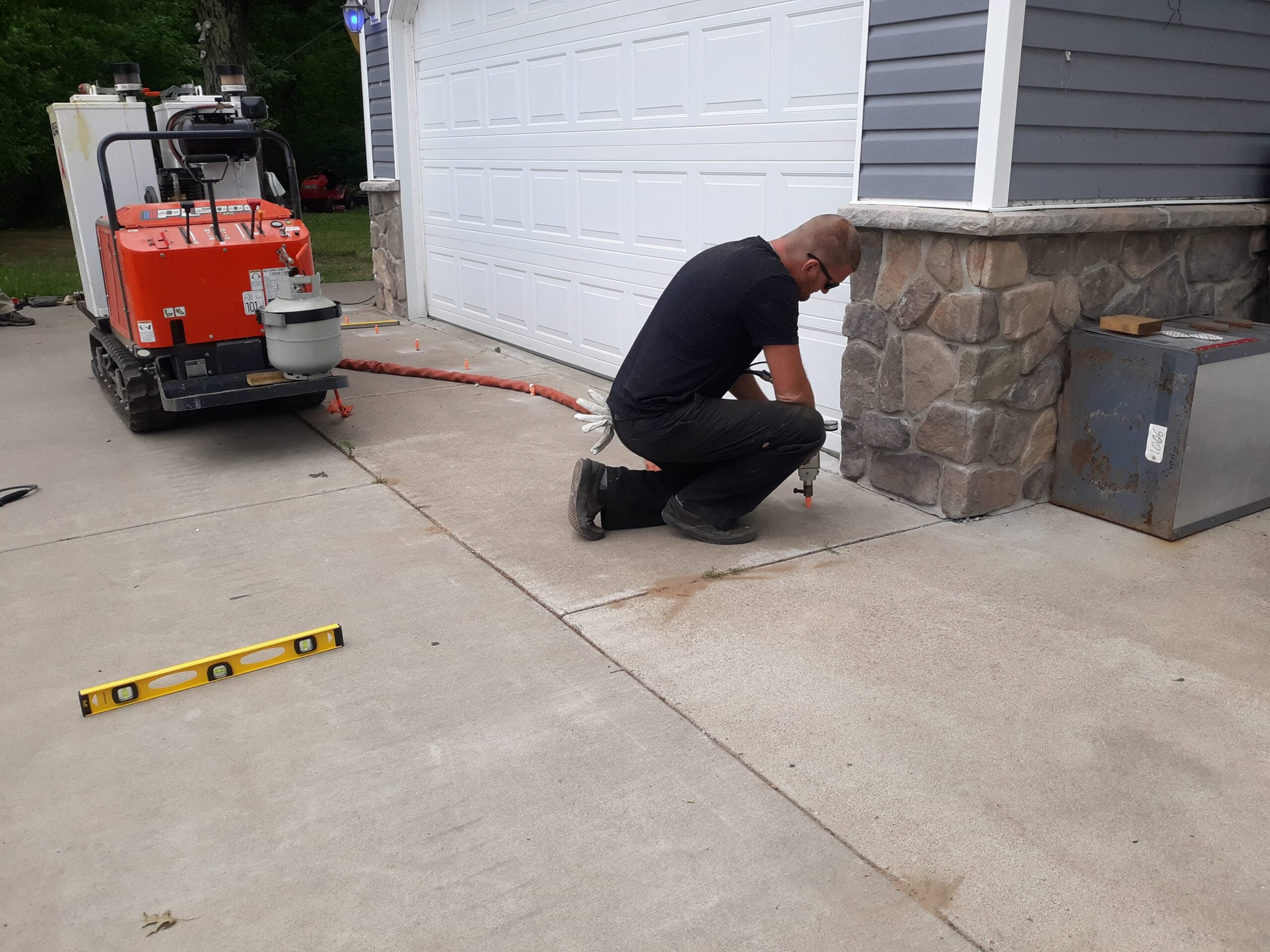
Concrete Lifting and Slab Leveling
Settled and uneven concrete across South Dakota properties is a condition that Pierre clay's shrink-swell behavior, seasonal moisture cycling along the Missouri River corridor, and the frost penetration depths that South Dakota's winters produce consistently drive across every property type in the state. Driveway aprons that have settled at the garage threshold, sidewalk panels that have heaved along residential and commercial properties in Sioux Falls and Rapid City, and out-of-level approach slabs at commercial and agricultural facilities throughout the state are all signs of subbase movement that compounds with each successive freeze-thaw cycle when the void driving it is not addressed.
Structural foam injection fills the void causing the settlement, lifts the slab back to grade, and stabilizes the subbase without excavation, without the cure window of a full concrete replacement, and without removing concrete that still has structural life remaining. On Pierre clay subgrade, the lightweight foam adds negligible load to soil that is already under compression stress from the clay's shrink-swell cycling, which is the specific advantage over mudjacking that makes foam lifting the correct system for most South Dakota concrete settlement conditions.
Learn More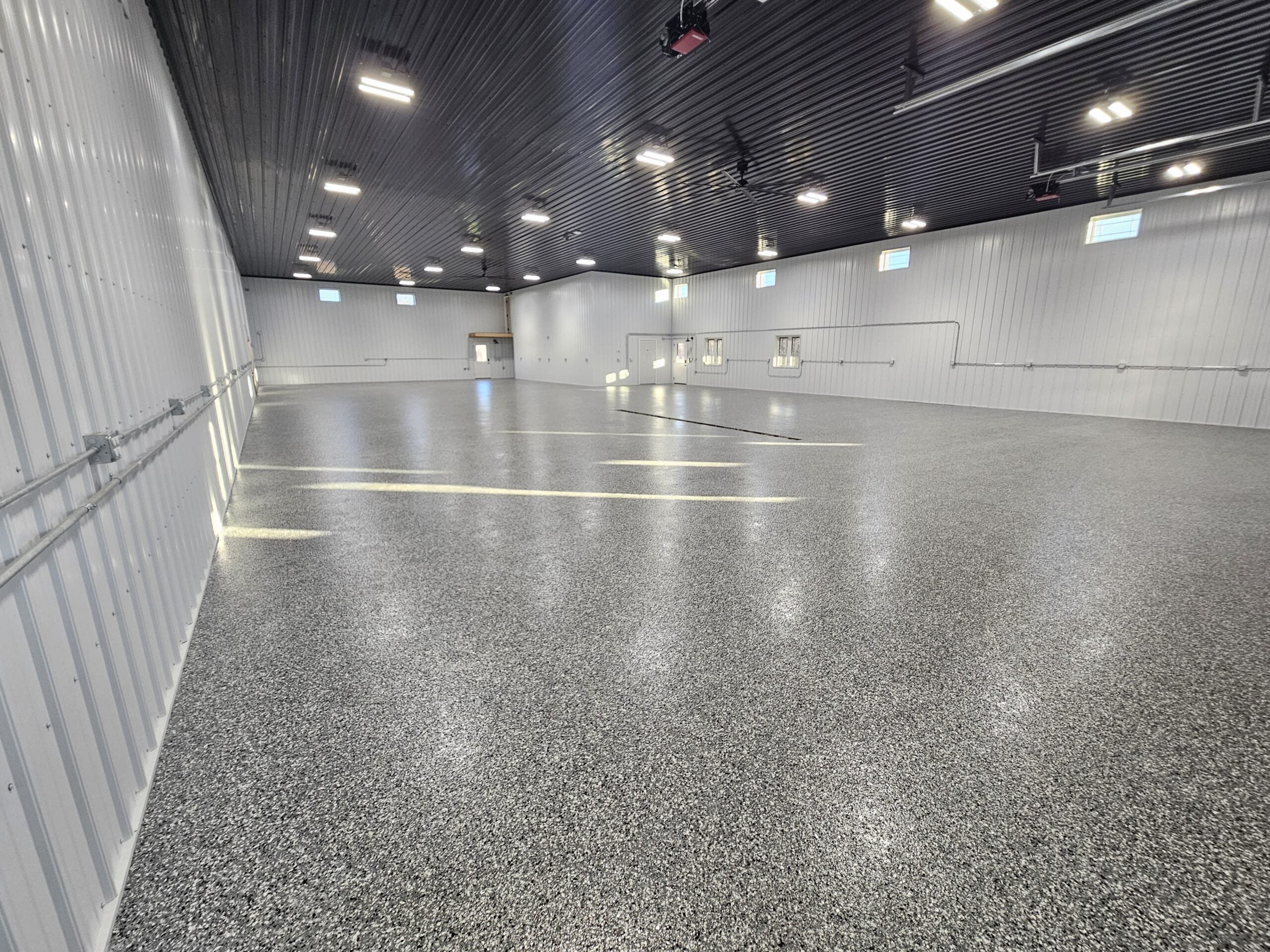
Concrete Floor Coatings
Garage floors, shop spaces, and commercial facility floors across South Dakota absorb a combination of road salt tracked in from treated highways from October through April, agricultural chemical exposure in farm and grain handling environments, and the moisture vapor that Pierre clay pushes up through unsealed concrete during the post-snowmelt period. A properly installed floor coating changes what that slab surface has to absorb, protecting it from the staining, chemical attack, and surface wear that bare concrete accumulates through years of South Dakota's seasonal working conditions.
The difference between a coating that holds through South Dakota winters and one that peels before the second spring comes back to whether the slab was actually assessed and prepared before the product was applied. Moisture vapor emission rates on Pierre clay subgrade, chloride contamination from road salt infiltration in high-traffic zones, and surface profile depth all determine whether the coating system bonds to concrete or to the conditions sitting on the surface when the crew shows up. This crew tests and prepares before any product is opened, every time.
Learn More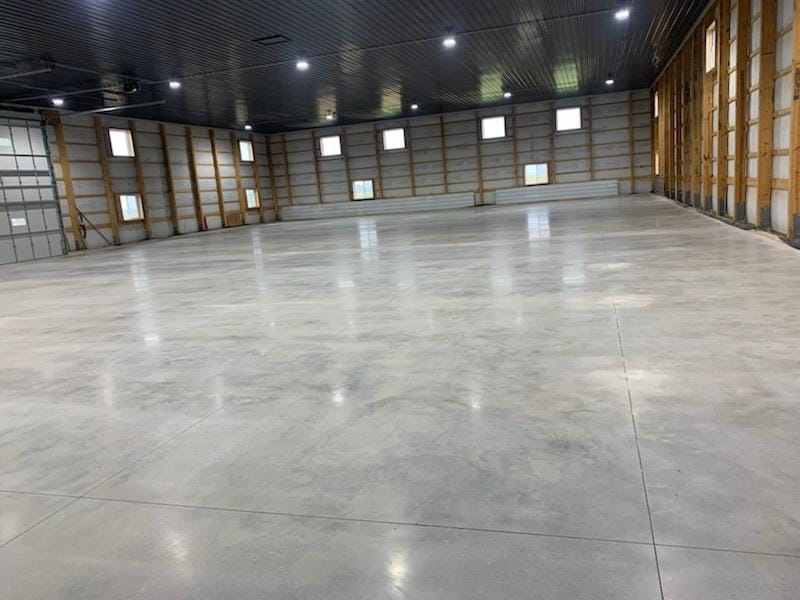
Concrete Polishing
Polished concrete takes a different approach than floor coating systems by refining the slab surface itself into a dense, durable, low-maintenance finished floor rather than applying a bonded layer that sits above the concrete. For commercial lobbies and retail spaces along Sioux Falls's 41st Street and Minnesota Avenue corridors, agricultural processing facilities in the James River Valley, showrooms and medical facilities in Rapid City, and residential interiors across the state, polished concrete resists staining, holds up under continuous traffic, and has nothing to delaminate or peel because there is no applied layer in the assembly.
The process uses progressively finer diamond tooling to grind and refine the slab surface, with densifier applied at the correct stage to harden the concrete from within. The finished surface is sealed to reduce porosity and improve stain resistance under the use conditions that South Dakota commercial and agricultural facilities generate across the full calendar year. A crew that understands concrete structurally at the sub-surface level produces a polished result that maintains its appearance and performance over years of heavy use, because the refinement decisions throughout the grinding progression are driven by reading how that specific slab is responding, not by a fixed sequence applied identically to every floor regardless of slab density or condition.
Learn More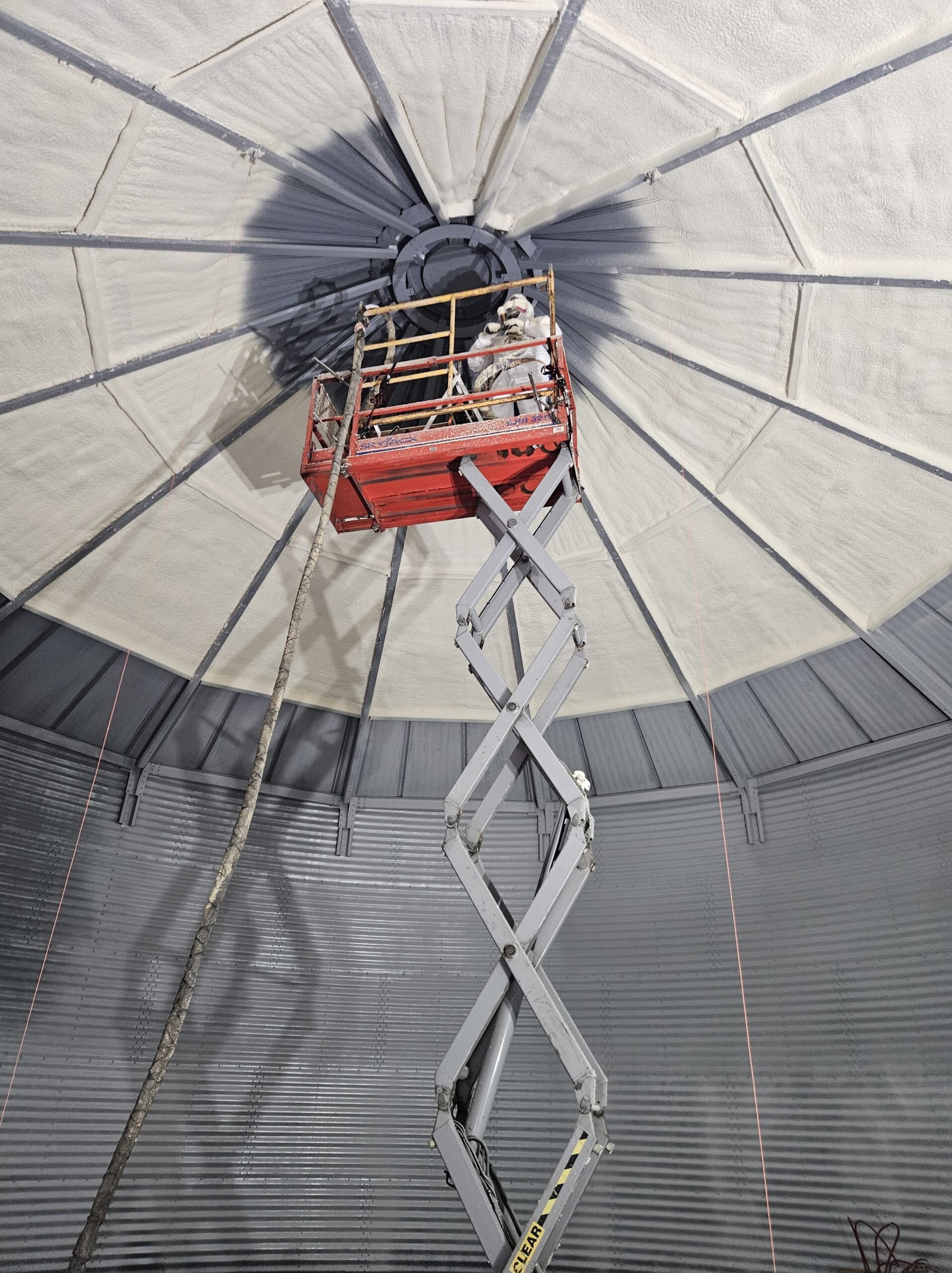
Spray Foam Roof Systems
A commercial or agricultural roof losing energy through air gaps, degraded insulation, or an aging membrane costs the building owner money every month it operates without correction. For commercial buildings along Sioux Falls's expanding I-229 development corridor, the retail and medical facilities in Rapid City, and the grain storage buildings and agricultural processing facilities common throughout eastern South Dakota's production corridor, spray foam roofing addresses air sealing, insulation, and weatherproofing in a single application. A protective elastomeric coating applied over the cured foam handles UV exposure and the freeze-thaw stress that South Dakota roofs absorb through a winter season that delivers heavy snow loads in the Black Hills and sustained freeze-thaw cycling across the eastern plains.
The seamless foam surface eliminates the seam failures and penetration gaps that conventional roofing develops over time, and the system installs directly over many existing roof assemblies, removing the tear-off cost and building disruption of full replacement.
Learn More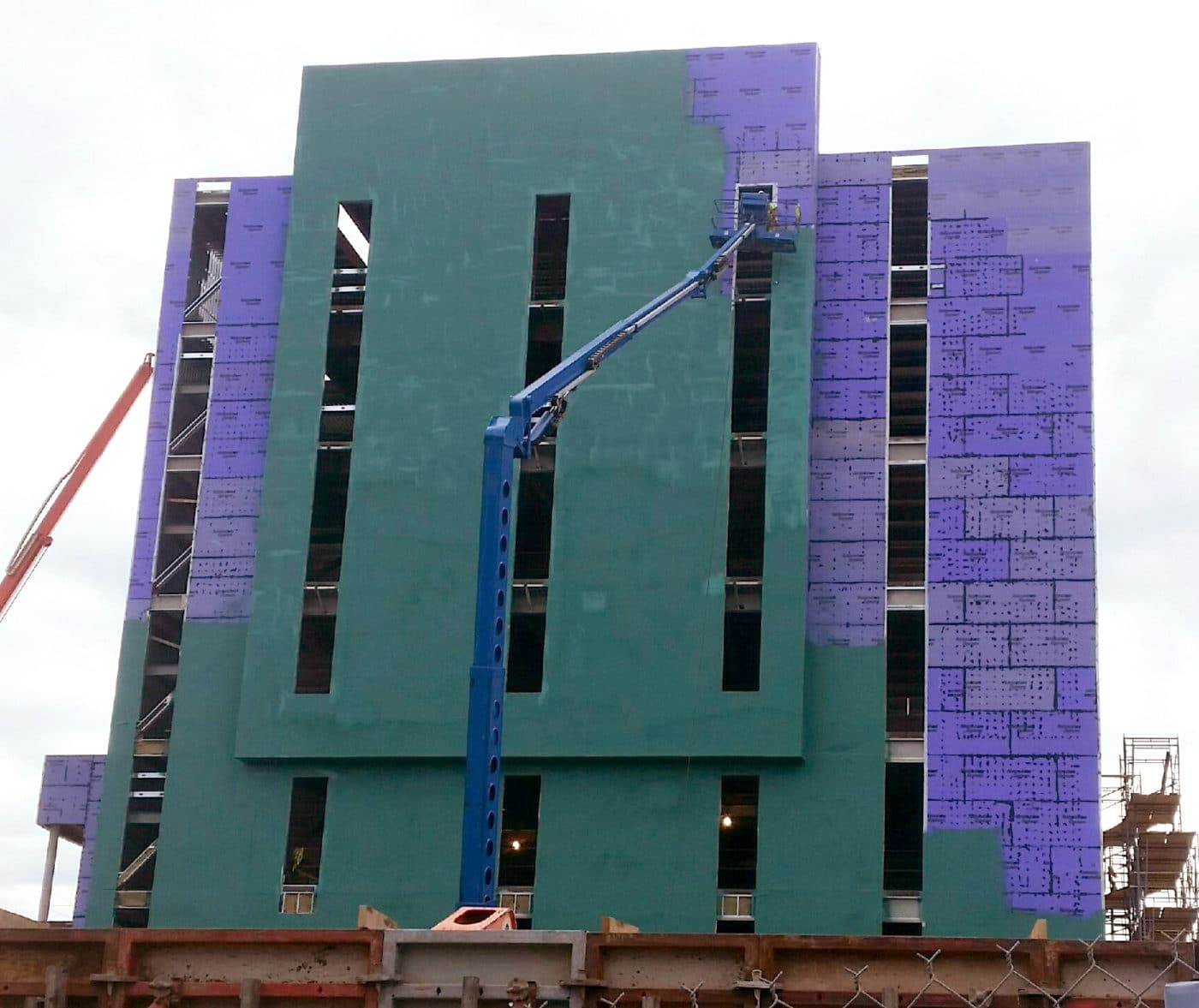
Waterproofing and Air Barriers
Water intrusion and uncontrolled air movement cause more long-term structural damage in South Dakota buildings than most property owners account for until the interior damage is already visible behind finished surfaces. South Dakota's Pierre clay holds moisture against foundation walls for weeks after spring snowmelt, generating hydrostatic pressure that interior sealers applied to the wrong side of the wall cannot resist. Above-grade air infiltration through construction joints, rim joist gaps, and unsealed penetrations on the windward face compounds the foundation moisture problem by carrying exterior humidity into the building assembly through every gap the wind finds.
Waterproofing and air barrier systems close both entry points, at the exterior membrane level where hydrostatic pressure originates and at the above-grade building envelope where air pressure differentials drive moisture infiltration. For South Dakota homes and commercial buildings with basement moisture issues, foundation walls showing water intrusion during spring thaw, or crawl spaces with persistent moisture from Pierre clay ground conditions, proper exterior waterproofing changes the long-term structural performance of everything above it.
Learn MoreThe Equipment Advantage: Why South Dakota Projects Demand More Than a Single Rig
South Dakota's geography makes the single-rig contractor problem more expensive here than in almost any other market. A project located outside Mobridge, near the Standing Rock border, or in the ranching communities of Harding County in the northwest corner of the state, is not a job where a crew can make a quick supply run to the nearest distributor and be back before the workday ends. When the material runs short or the equipment fails mid-project, the property owner absorbs the cost of a partially insulated building through whatever weather arrives before the crew comes back.
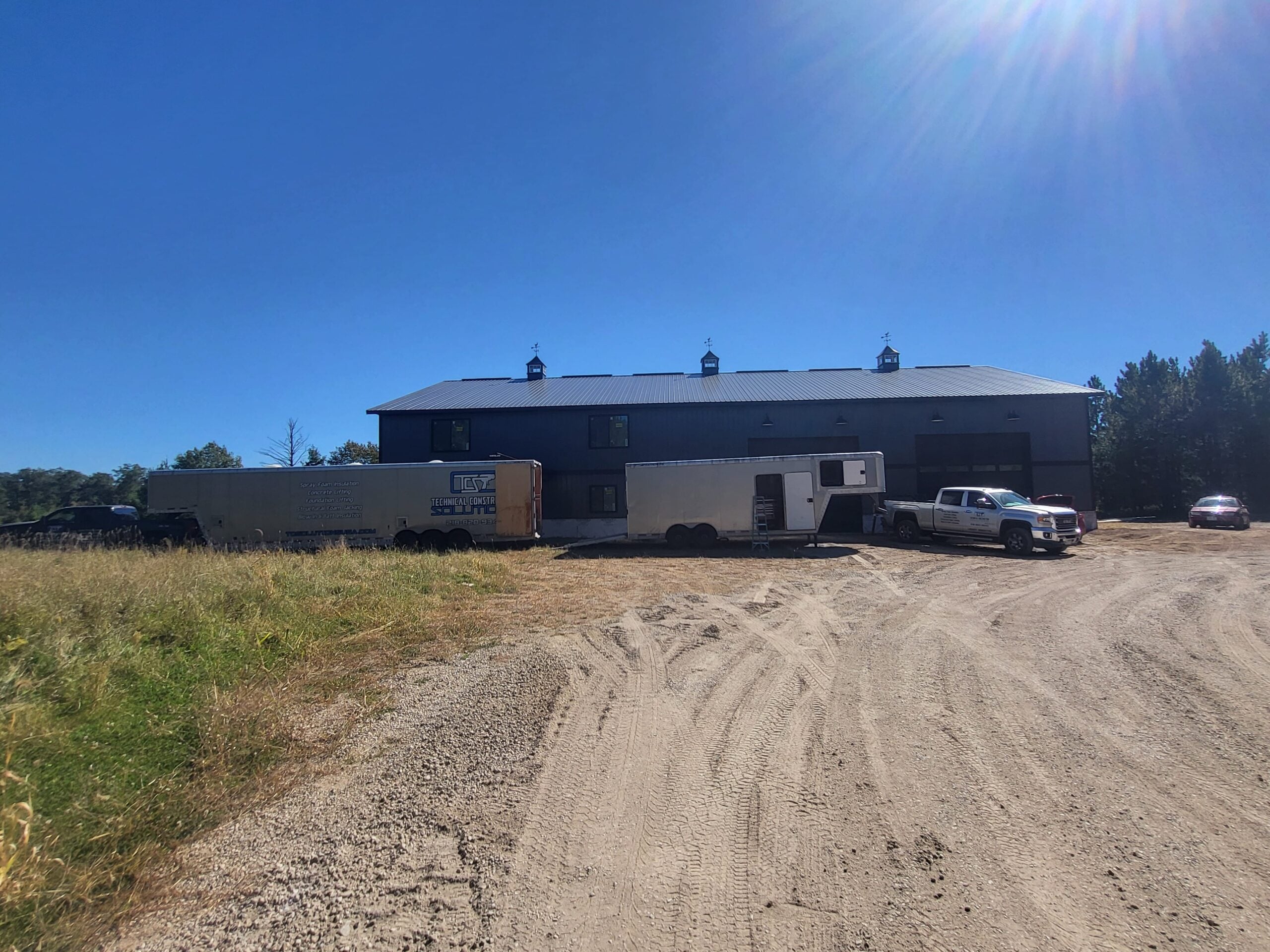
TCS runs three dedicated spray foam rigs, two fiberglass rigs, and a 44-foot commercial trailer that carries ten sets of foam, multiple scissor lifts, and full application equipment in a single mobilization. For South Dakota projects located hours from the nearest supply depot, the single-trip capacity is what makes it possible to commit to a start date and a finish date rather than a start date and a hope.
A general contractor managing a commercial build near Watertown put it plainly after TCS completed a large insulation scope in a single mobilization: the previous insulation crew had taken three trips and still left sections incomplete. TCS arrived once, finished everything in the agreed window, and the building was closed in before the first October freeze.
That is what operational readiness looks like on a South Dakota job site, and it is the standard every project gets planned to before the first rig leaves.
Why South Dakota Property Owners and Contractors Trust Technical Construction Solutions
Highway Construction Experience That Changes How Buildings Get Diagnosed.
Freddy Lewis founded TCS after 15 years in structural field work, including highway lifting, undersealing, and infrastructure-level projects where diagnostic accuracy and execution precision were non-negotiable. South Dakota projects get assessed the way a construction professional reads a building, not the way a product salesperson does. Moisture movement, air infiltration paths, thermal bridging, and slab behavior all factor into the system recommendation before any material gets loaded on the rig.
Foam-First. Not Foam-Added.
TCS was built around spray foam technology from day one. Insulation, waterproofing, concrete lifting, and coatings are the entire company, not services added to a general contracting operation when the market asks for them. For South Dakota property owners evaluating who to trust with a building envelope project, that foam-first identity reflects a depth of product knowledge and application discipline that generalist contractors don't carry.
Three Rigs. Single Mobilization. No Second Trips.
Three operational spray foam rigs and two fiberglass rigs allow TCS to arrive at a South Dakota project with the capacity to complete the full scope in a single trip. For property owners in remote South Dakota locations who have already experienced the cost of a contractor who couldn't finish what they started, that capacity is the commitment that matters before any system discussion begins.
Built for Northern Climate Extremes.
Every insulation system TCS specifies for South Dakota is engineered for the freeze-thaw cycling, deep frost penetration, and wind-driven thermal stress that defines building performance across this state from October through April. A system that performs adequately in a moderate climate can fail under the conditions South Dakota delivers. Every product and installation decision accounts for that specifically.
Accurate Estimates. No Prep Steps Skipped.
Every estimate reflects the exact material depth and preparation the project requires. No low-ball bids that cut prep steps to win the job and pass the performance deficit onto the building owner. The price reflects the work done right, and the work gets done the way the price says it will.
On Time. On Budget. Inside Your Project Window.
South Dakota's compressed building season makes schedule reliability more valuable here than in most markets. Projects TCS commits to in South Dakota finish on the agreed timeline and within the outlined budget, without the delays that under-equipped contractors transfer onto property owners who can't afford them.
Get a Free Insulation Estimate Anywhere in South Dakota
The right insulation system for your South Dakota building is the one matched to your specific spaces, your climate zone, and your project window. It is not the system that happens to be on the truck of the contractor who finally returned your call after two others didn't show up.
Technical Construction Solutions serves homeowners, contractors, and commercial clients across South Dakota, including the Black Hills region, the Sioux Falls metro, the Missouri River corridor, the northern plains communities east of the river, and the agricultural areas throughout the state. For larger commercial, industrial, and agricultural projects, the team travels across South Dakota, Minnesota, North Dakota, Wisconsin, and Iowa with the equipment capacity to complete full project scopes in a single mobilization.
Start with a free estimate. One conversation is enough to assess your building, identify the right system for each space, and give you a clear picture of what it will cost. No pressure. No obligation.
Proudly serving South Dakota statewide, with the equipment capacity to travel for commercial and industrial projects across the Upper Midwest.