
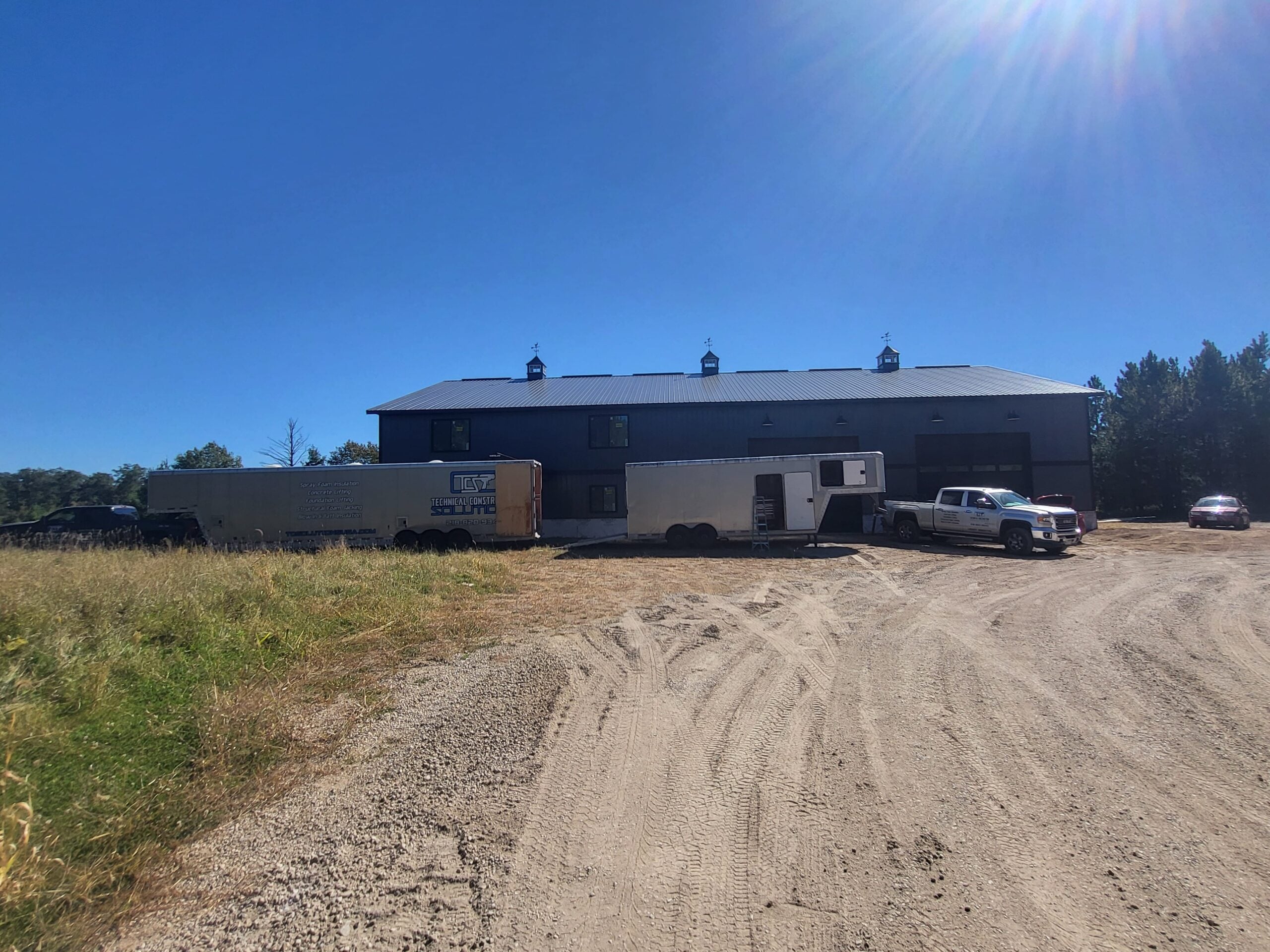
Dickinson's Insulation Hub Serving Western North Dakota
Not a one-system contractor who fits every building into the same solution. A construction-backed insulation operation with the equipment, field experience, and system range to match the right insulation to your building, your budget, and this climate.
Why Dickinson Property Owners Choose Technical Construction Solutions
Dickinson sits in a rough climate band that most insulation contractors from outside western North Dakota underestimate. The Badlands region west of town and the coulees and breaks along the Heart River create localized wind exposure that drives cold air infiltration into building envelopes at a rate that flat-terrain markets do not see. When a contractor shows up with one product and routes it through every space in the building without accounting for air pressure differentials, moisture behavior, or the way Dickinson's wind loads interact with different wall assemblies, the insulation passes inspection, and the energy bills do not move.
A commercial property owner on the east side of Dickinson near Patterson Lake contacted Technical Construction Solutions after paying for a spray foam application two seasons prior that never produced the heating cost improvement the contractor had promised. The existing foam had been applied at a depth that satisfied minimum code, but the rim joists and crawl space penetrations had not been addressed as air movement pathways before the foam went in. A proper building envelope assessment found three distinct failure zones the first contractor had missed entirely. Correcting those zones took less than a day and produced the performance the building had been waiting two winters to deliver.
That kind of diagnostic discipline comes from field experience in structural systems, not from learning insulation on one or two product types and scaling up the sales volume. Technical Construction Solutions was founded by Freddy Lewis, who brought 15 years of heavy highway construction background into this business before the first rig was ever staged. That foundation shapes how every Dickinson building gets assessed: the full envelope, not just the accessible surfaces.
If your Dickinson property is not performing the way your insulation investment should have produced, or if you are in the planning phase of a new build and want the thermal envelope specified correctly before framing begins, start with a free estimate.
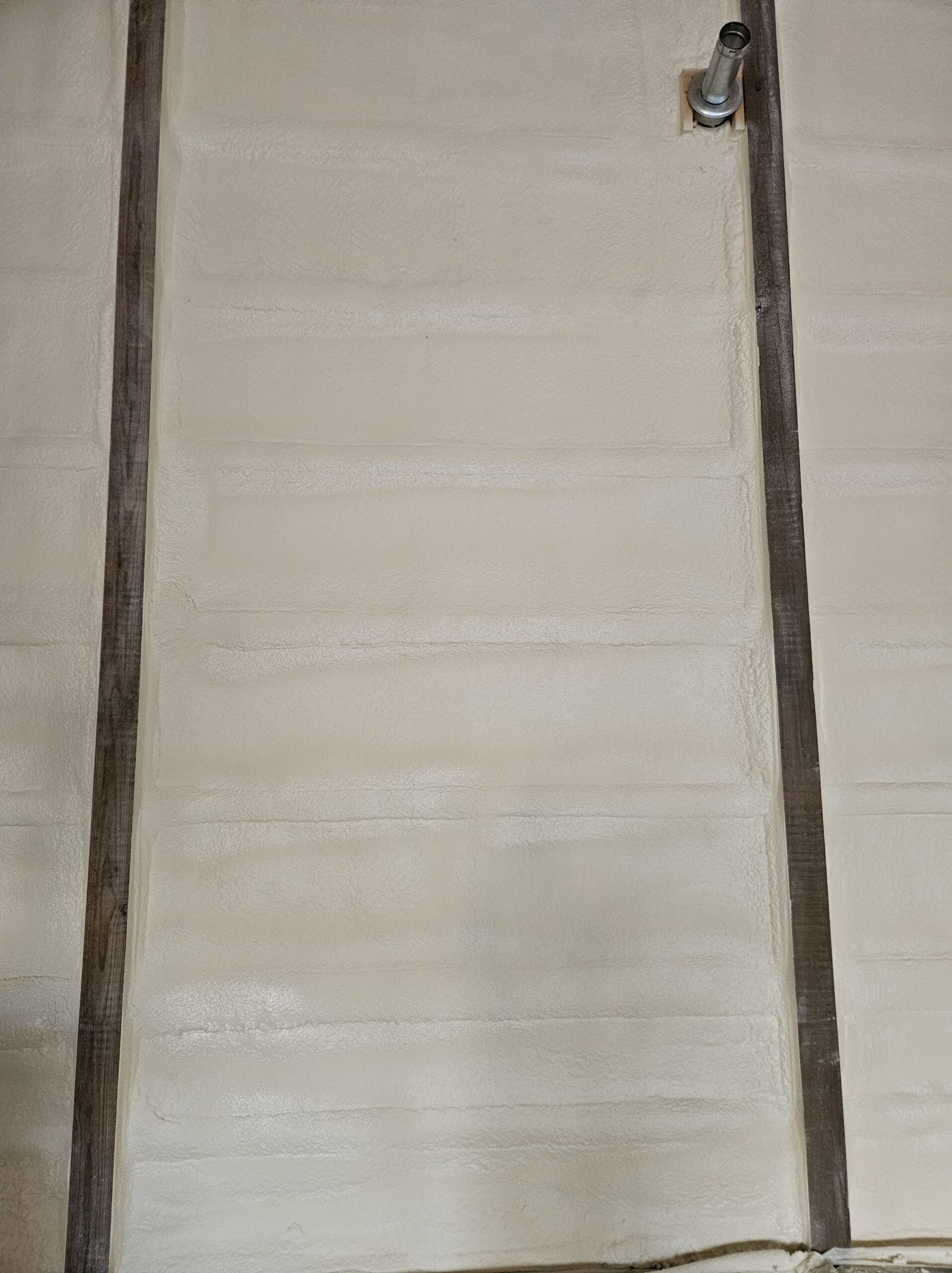
Spray Foam Insulation
Spray foam is the only insulation system that simultaneously addresses thermal resistance and air infiltration in a single application, and in Dickinson's building environment, the air infiltration function is as critical as the thermal function at many locations in the building envelope. Rim joists in homes across the established residential blocks north and west of downtown, crawl spaces beneath older Dickinson properties where cold air enters through every gap in the foundation perimeter, and attic assemblies in the newer residential development pushing southwest toward Patterson Lake are all locations where air movement is the primary driver of heat loss, not just thermal conductance through the insulated surface.
Closed-cell spray foam bonds permanently to the substrate, expands to fill every irregular gap and framing void, and creates a continuous air barrier that holds against Dickinson's sustained westerly wind pressure at every location it covers. Open-cell foam serves interior applications where vapor permeability and sound control matter alongside thermal performance at a lower project cost. Each application gets assessed individually before a product is specified.
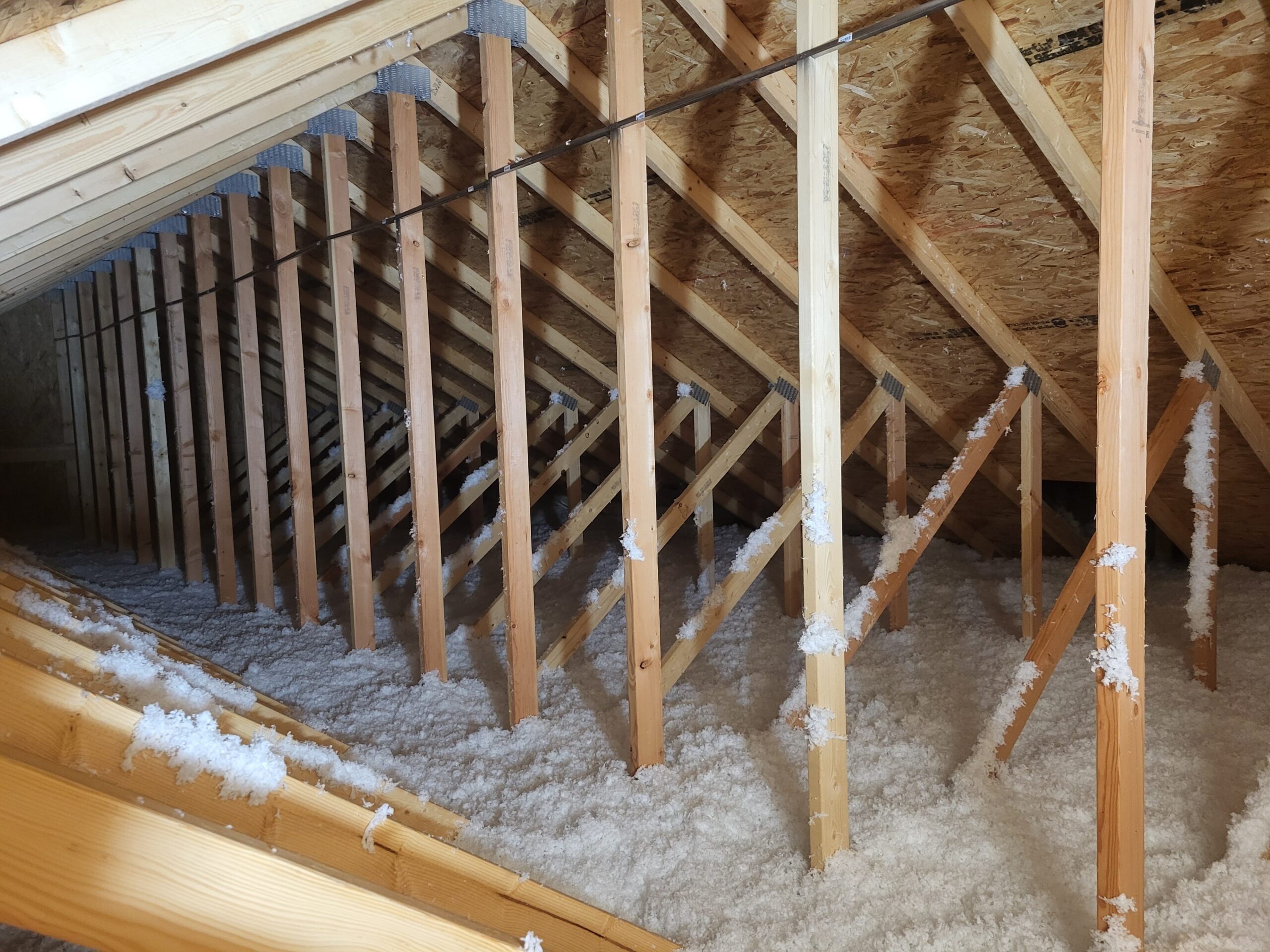
Blown-In and Batt Insulation
Dickinson's residential housing stock carries a significant inventory of homes, particularly in the established neighborhoods east of downtown near the rail corridor and in the residential areas that spread north along the older city grid, where attic insulation was installed to the energy code standards of the 1970s and 1980s and has either settled substantially or was never adequate for what Stark County's climate zone actually demands from a ceiling assembly. Blown-in insulation added over existing settled material, brought to correct depth across the full attic floor from eave to eave, is the fastest path to meaningful performance improvement in most of those buildings without opening finished ceilings or committing to spray foam cost in an application where blown-in is genuinely the right system.
For new construction and active renovation projects across Dickinson where wall framing is exposed, and budget control is a real project constraint, fiberglass batts installed correctly, full cavity coverage, correct facing orientation for North Dakota's cold-climate vapor requirements, no compression, no voids at electrical boxes or plumbing rough-in, deliver reliable thermal performance at a cost per square foot that keeps residential construction budgets on track. Both systems perform at their rated values only when the installation discipline holds across every cavity in the assembly, including the irregular ones that require extra effort to get right.
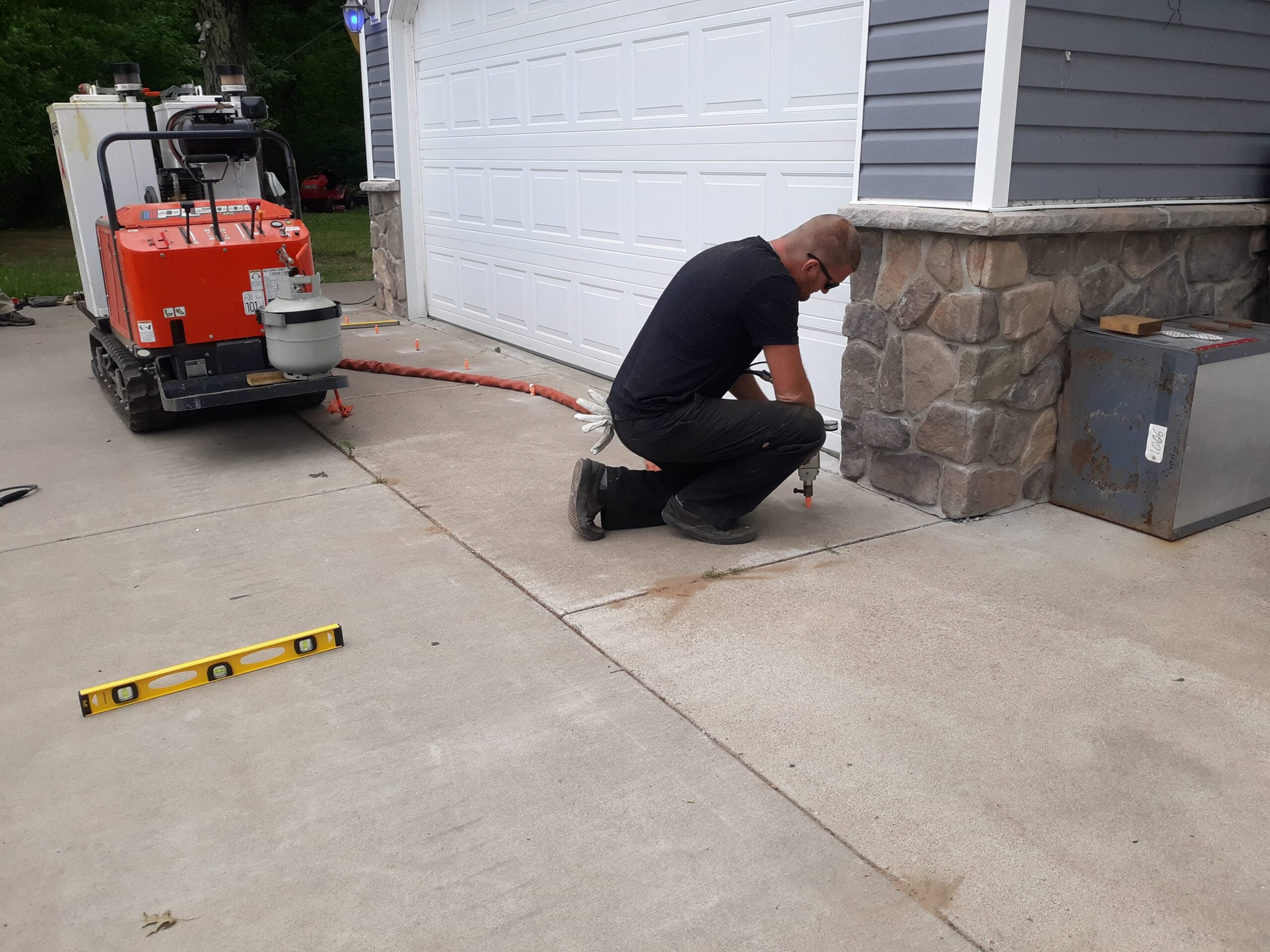
Concrete Lifting and Slab Leveling
Settled and uneven concrete is one of the most consistent property conditions across Dickinson, and the cause is not difficult to identify once you understand what Dickinson's clay soil does through an annual freeze-thaw cycle. Clay retains moisture through the spring thaw window and releases it slowly as summer temperatures build. That moisture retention and release cycle, combined with the frost penetration depths that western North Dakota produces every winter, creates ongoing sub-base movement beneath concrete slabs across every property type in Stark County.
Driveway aprons that have settled at the garage approach in neighborhoods off Villard Street, sidewalk panels that heaved at the joint through two hard winters on the commercial blocks downtown, and concrete approaches at service and industrial facilities along the Highway 22 corridor are all conditions that worsen with each successive freeze cycle if the sub-base void driving the settlement is not addressed directly. Structural foam injection fills those voids, lifts the slab back to original grade, and stabilizes the sub-base without excavation, without the cure time of a full replacement pour, and without the cost of removing concrete that still has structural life remaining in it.
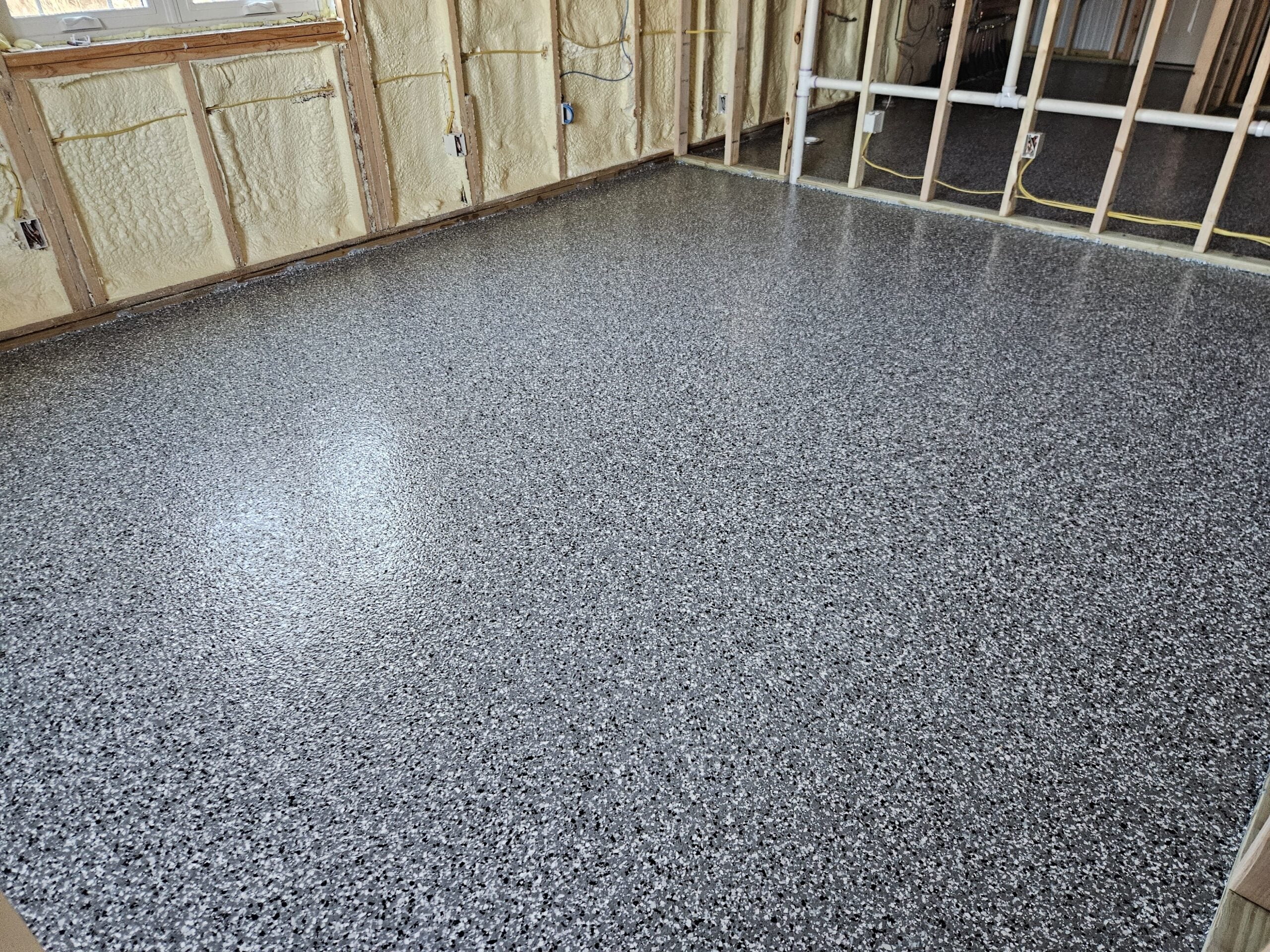
Concrete Floor Coatings
Garage floors, shop spaces, and commercial facility floors across Dickinson absorb a specific and concentrated form of punishment that most floor coating specifications written for moderate climates do not fully account for. Road salt and chemical deicers come in on vehicle undercarriages and boots from October through April, which covers the majority of the operating year in western North Dakota. Sub-zero overnight temperatures create thermal shock conditions on coated floor surfaces when warm vehicles park on slabs that are near or below freezing, stressing adhesion bonds repeatedly through the long heating season. Dickinson's clay soil moisture profile pushes vapor through concrete slabs at rates that vary by soil saturation and slab age, and that vapor pressure is the most common cause of floor coating delamination in this market.
A floor coating that holds through multiple Dickinson winters starts at the substrate preparation stage, not at the product selection stage. Grinding the slab to the correct surface profile for the selected system, removing contamination, prior sealers, and anything that competes with the adhesion bond, and verifying that moisture vapor emission is within specification before a product is opened are the steps that determine whether the coating investment holds for years or starts lifting at the edges before the first full winter ends.
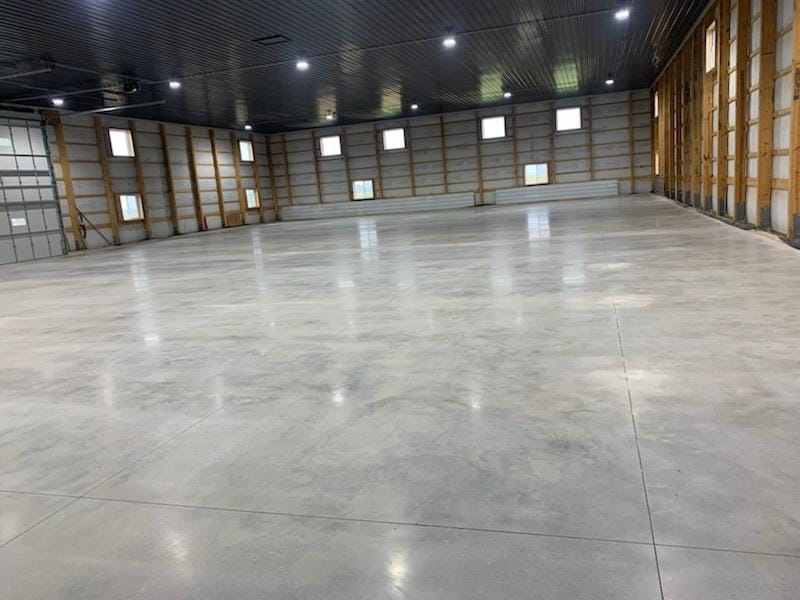
Concrete Polishing
For commercial lobbies, retail spaces, showrooms, medical and professional offices, and residential interiors across Dickinson, polished concrete offers a floor surface that performs where applied coating systems are most vulnerable in this market. There is no adhesion bond to fail under vapor pressure, no applied layer to delaminate under thermal shock from sub-zero vehicle parking, and no coating edge to lift under Dickinson's road salt chemical exposure. The concrete itself becomes the finished surface, refined through progressive diamond grinding and hardened from within by penetrating densifier, then sealed to reduce surface porosity and improve stain resistance through Dickinson's variable seasonal humidity.
For Dickinson property owners managing buildings where clay soil vapor transmission is an active concern in the slab, polished concrete removes the primary failure mechanism that makes conventional coatings unreliable in moisture-active slab environments. A slab that cannot hold a coating bond through Dickinson's moisture and thermal conditions may be an excellent candidate for polishing, which does not depend on that bond for its performance or longevity.
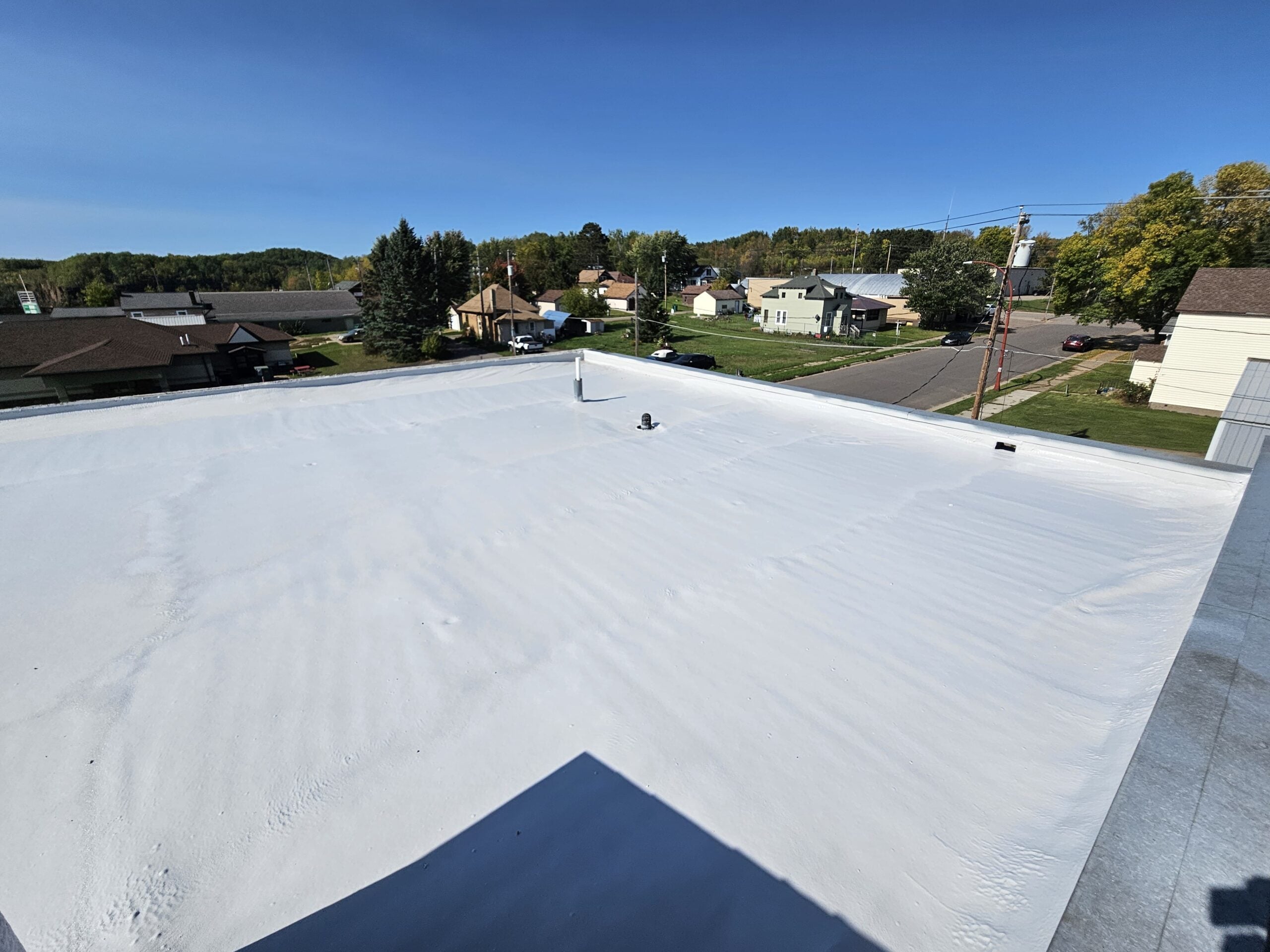
Spray Foam Roof Systems
Commercial and agricultural roofs across Dickinson lose energy, generate moisture calls, and require repeated patch cycles for a consistent underlying reason: the seams, fastener points, and adhesive laps that conventional flat roofing systems depend on are exactly the locations that Dickinson's westerly wind load and freeze-thaw cycling attack most aggressively and most continuously over time.
For commercial buildings along the Highway 22 south corridor, service facilities in the industrial zones east of downtown, and the agricultural storage buildings and large pole barn structures common throughout Stark County's farming and ranching operations, spray foam roofing addresses air sealing, insulation, and weatherproofing in a single application with no seam lines, no fastener points, and no adhesive bonds to fail under the wind uplift and thermal cycling that Dickinson roofs absorb through a heating season that runs nearly half the calendar year. The protective elastomeric topcoat applied over the cured foam handles UV and weather exposure, and when that topcoat reaches the end of its service life, it can be reapplied directly over the existing foam without removing the roof system beneath it.
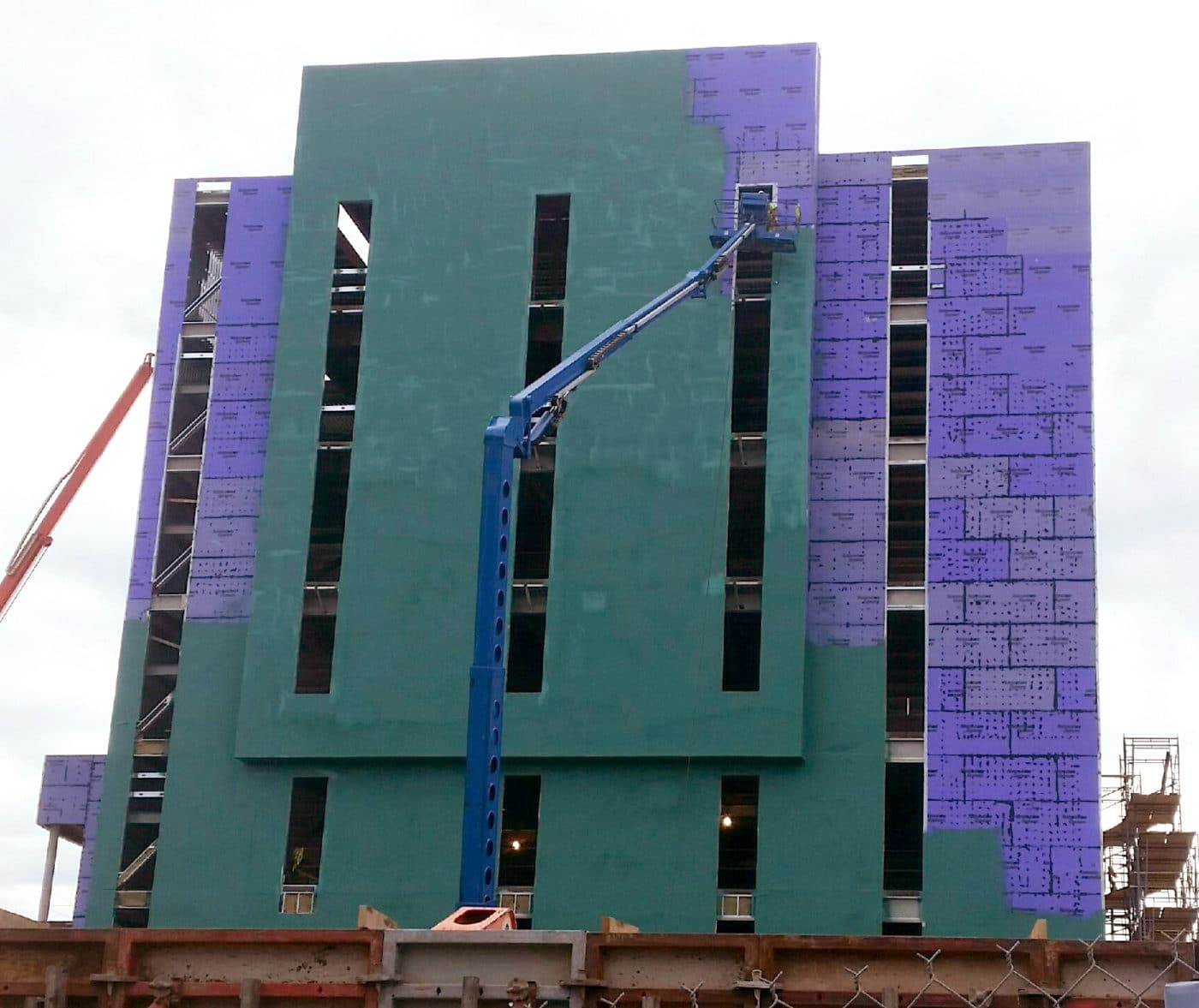
Waterproofing and Air Barriers
Water intrusion and uncontrolled air movement cause more long-term structural damage in Dickinson buildings than almost any other condition, and both are frequently invisible until they have already produced moisture damage, framing deterioration, or mold growth behind finished surfaces. Dickinson's clay soil retains moisture against foundation walls through extended post-thaw periods that produce sustained hydrostatic pressure levels that standard damp-proofing was never designed to resist. Westerly winds drive cold air against building envelopes with consistent force from October through March, finding every gap at the rim joist, wall-to-foundation transition, and penetration points in the above-grade assembly.
Waterproofing and air barrier systems stop water and air movement at the actual point of entry rather than managing damage after it has already penetrated the assembly. For Dickinson homes and commercial buildings with recurring lower-level moisture, foundation walls showing signs of water intrusion after wet springs, or crawl spaces with condensation and moisture management problems, a proper exterior waterproofing system addresses the condition at the foundation face rather than treating the interior surfaces where the moisture eventually becomes visible.
Three Rigs and a 44-Foot Trailer.
What That Actually Means for Dickinson Projects.
Single-rig insulation contractors are common across western North Dakota. For a residential attic or a single crawl space, one rig is sufficient, and the scheduling works. For a large commercial development in Dickinson's growing southwest industrial district, a multi-building agricultural complex in Stark County, or a new residential subdivision where multiple homes need insulation within the same compressed framing window, one rig creates a scheduling bottleneck that the rest of the construction sequence has to work around.
Technical Construction Solutions stages three dedicated spray foam rigs, a 44-foot commercial trailer carrying ten sets of foam and multiple lifts, and the operational capacity to service multiple Dickinson projects simultaneously without any single project waiting behind the one currently running. For Dickinson general contractors managing construction timelines where the insulation phase directly gates the drywall, mechanical rough-in, and finish schedule, that available capacity is a concrete operational advantage, not a marketing talking point. Projects finish on the schedule they were planned around, because the equipment capacity to meet that schedule is already in place when the project starts.
Why Dickinson Contractors and Property Owners Work With Technical Construction Solutions
The Full Building Envelope, Not Just the Visible Surfaces
Every TCS assessment covers moisture movement, air infiltration pathways, and thermal behavior across the complete building envelope. Dickinson buildings lose heat in ways that a surface-level look does not reveal, and the assessment approach that finds root causes is the same one that produces insulation recommendations that actually move energy costs.
Field Experience That Reads Dickinson's Climate Correctly
Fifteen-plus years of heavy highway construction experience before TCS was founded means this operation understands how buildings behave under structural stress, sustained cold, and freeze-thaw cycling. Western North Dakota's climate conditions are not a variable this crew adjusts for after the fact. They are the baseline standard every system is specified to meet.
Six Systems. One Honest Recommendation.
Spray foam, blown-in, batt, pole barn insulation, crawl space systems, and under-slab applications are all in the operation. The recommendation for any given space in a Dickinson building is made on the basis of what that space actually requires, including the cases where batts or blown-in deliver better results at a lower cost than spray foam for a particular application.
Equipment Capacity Built for Western North Dakota's Scale
Three spray foam rigs and a 44-foot commercial trailer mean TCS can handle the scale that Dickinson's commercial and agricultural project market requires without the scheduling constraints that smaller operations pass along to their clients. Large pole barn projects, multi-phase commercial work, and slab installations with compressed pour-date windows all have the equipment capacity they need from the first day of mobilization.
Accurate Estimates. No Low-Ball Bids.
Estimates reflect the exact material depth and preparation that the project actually requires. TCS does not win jobs by removing prep steps from the bid and collecting the savings on the back end. The price presented is the job done correctly, so Dickinson property owners and contractors can build an accurate budget from the estimate stage forward.
Fully Licensed and Insured for Every Dickinson Project
Every project is backed by full licensing and insurance. In a trade where fly-by-night operators without proper coverage are more common than they should be, that standard protects Dickinson property owners on every job, regardless of size or complexity.
Get a Free Insulation Estimate in Dickinson, ND
The insulation system your Dickinson building needs is the one matched to each specific space, to the air infiltration and moisture conditions present at each location in the envelope, and to the thermal demands that western North Dakota's heating season places on the building year-round. That match does not come from a contractor who carries one product and routes it through every application.
One conversation with a TCS structural specialist is enough to assess your building, identify the right system for each space, and give you a clear, honest cost picture. No padding. No obligation.